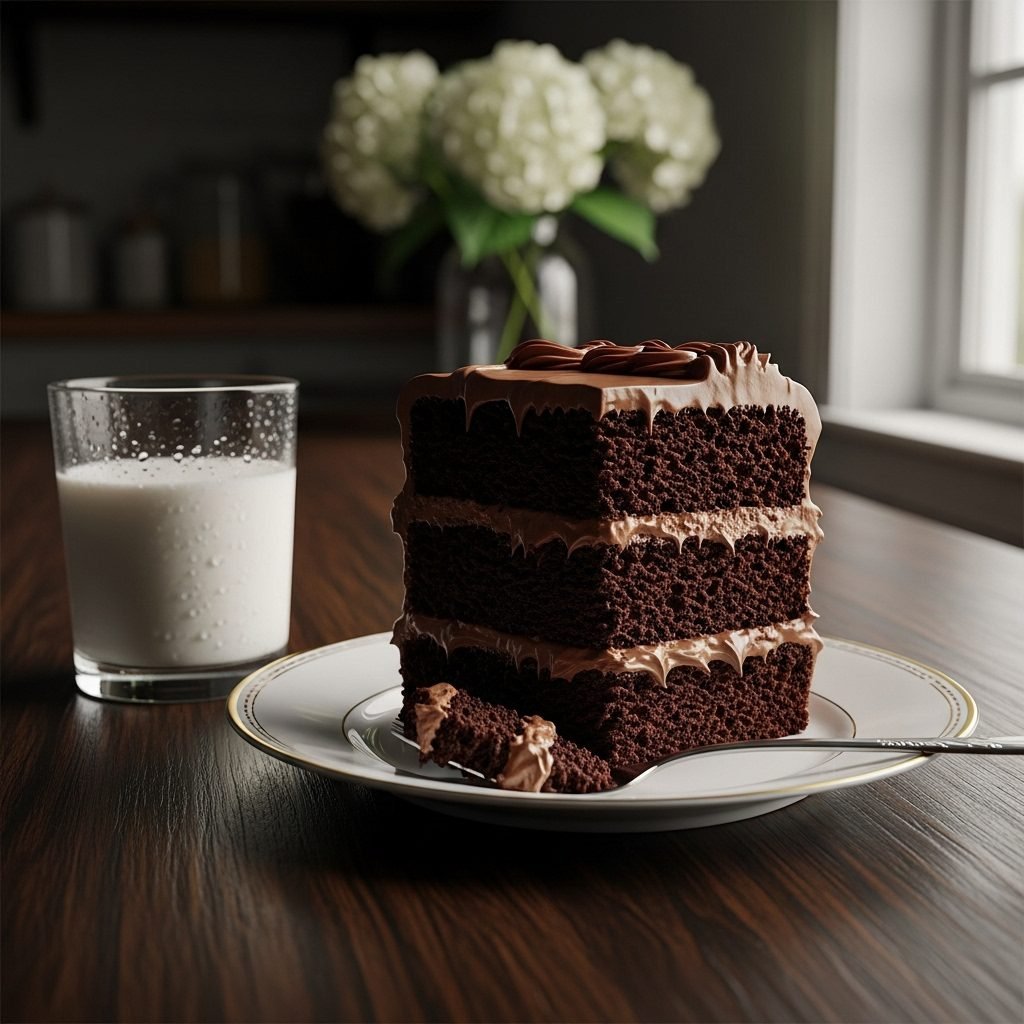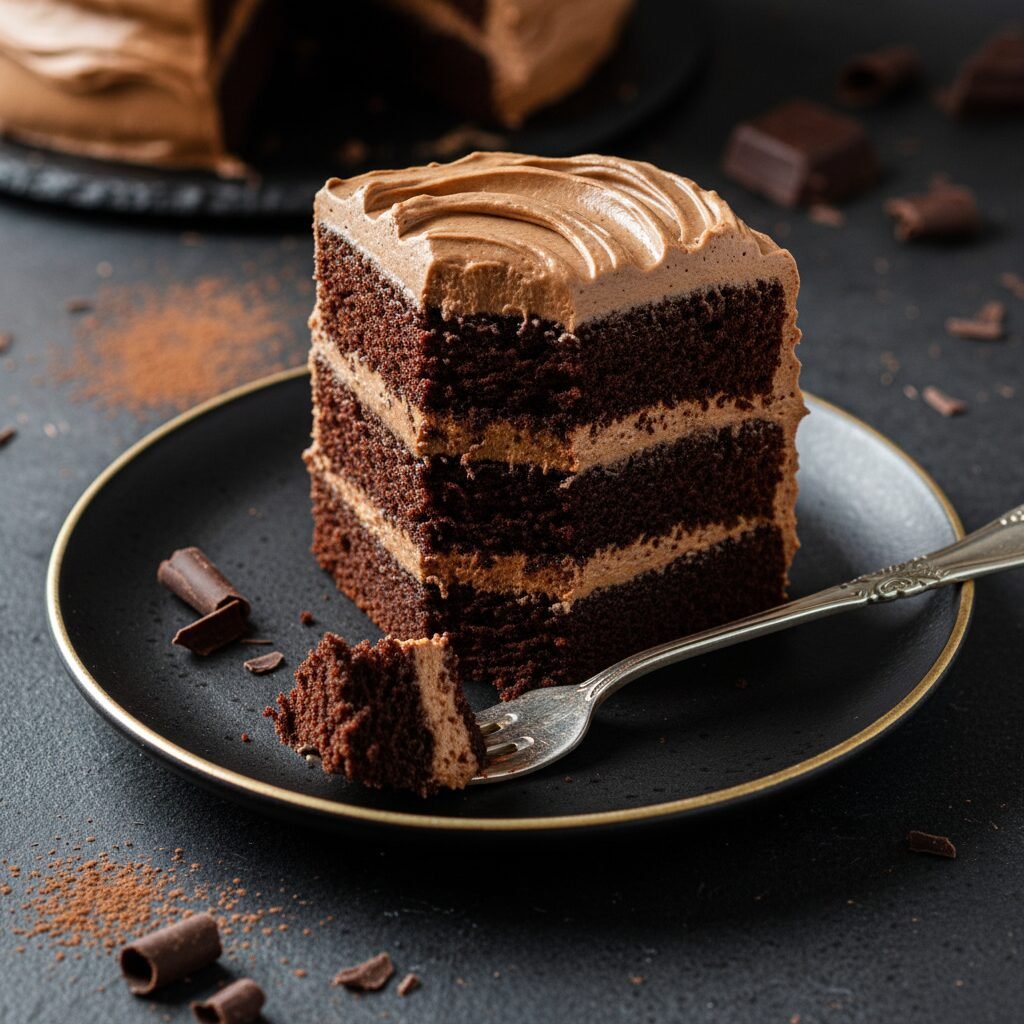
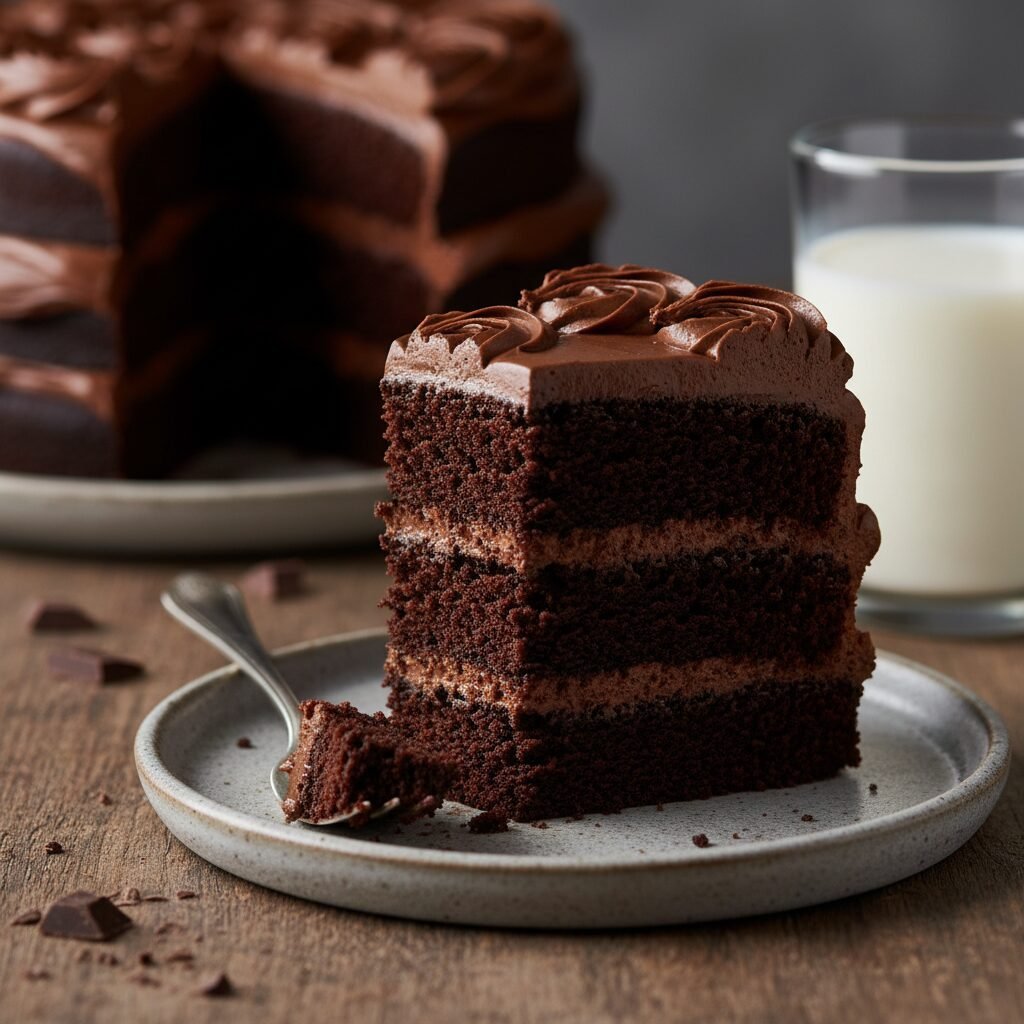
Moist Chocolate Layer Cake With Sour Cream Recipe
Discover the secret to the most decadent, tender, and rich chocolate cake imaginable. This Moist Chocolate Layer Cake with Sour Cream recipe guarantees a melt-in-your-mouth texture that stays fresh for days, paired perfectly with a silky fudge buttercream.
30 minutes
35 minutes
1 hour 5 minutes
12-14 servings
Dessert
Baking
American
Vegetarian
For any home baker, the quest for the perfect chocolate cake is often fraught with disappointment. We have all experienced the heartbreak of a cake that looks stunning on the counter but crumbles into a dry, flavorless disappointment upon the first bite. This recipe for Moist Chocolate Layer Cake with Sour Cream is the definitive answer to that culinary dilemma. It is not just a dessert; it is a masterclass in texture and flavor balance.
The magic of this cake lies in its crumb. It is incredibly dark, dense enough to hold its shape, yet impossibly soft and tender. Unlike sponge cakes that rely heavily on air, this cake relies on the chemical reaction between acidic ingredients and baking soda to create a lift that is buoyant but substantial. The inclusion of sour cream is the game-changer here. It adds a richness that milk alone cannot achieve, and its acidity tenderizes the gluten strands in the flour, ensuring that the cake never becomes tough or rubbery.
Furthermore, the flavor profile is deepened by the use of hot coffee, which blooms the cocoa powder, awakening its complex, fruity, and bitter notes without making the cake taste like a mocha latte. This is a cake for true chocolate lovers—those who crave that deep, dark chocolate hit that lingers on the palate. Whether you are celebrating a milestone birthday, a holiday gathering, or simply the fact that it is Friday, this cake commands attention. It is a centerpiece dessert that looks professional but comes together with a simple whisk and bowl method, proving that extraordinary results do not always require extraordinary effort.
History & Origins
The history of chocolate cake is a fascinating journey that mirrors the evolution of chocolate processing itself. For centuries, chocolate was consumed primarily as a beverage. It wasn’t until 1828, when Coenraad van Houten invented the cocoa press, that cocoa butter could be separated from the roasted cacao beans, leaving behind a dry cake that could be ground into cocoa powder. This invention paved the way for chocolate to be used as an ingredient in baking rather than just a drink.
However, early ‘chocolate cakes’ in the mid-19th century were often yellow cakes served with chocolate frosting or cakes consumed while drinking chocolate. The first recipes for actual chocolate cake batter began appearing in cookbooks in the late 1800s. The famous ‘Devil’s Food Cake’ emerged around the turn of the 20th century, distinguished by its dark color and moist texture, often attributed to the reaction between baking soda and non-Dutch processed cocoa powder.
The addition of sour cream to baking is a practice deeply rooted in Eastern European culinary traditions, which heavily influenced American baking throughout the 20th century. Immigrants brought recipes that utilized cultured dairy products like sour cream, buttermilk, and kefir to preserve moisture and add flavor. By the mid-20th century, American housewives began incorporating sour cream into their standard cake mixes and scratch recipes to combat the dryness often associated with cocoa-heavy batters. This evolution transformed the humble chocolate cake into the rich, moist, and tangy masterpiece we know and love today.
Why This Recipe Works
This recipe succeeds where others fail due to a precise balance of fat, acidity, and temperature. First and foremost, the sour cream. Sour cream is a powerhouse ingredient containing roughly 20% fat and a high level of acidity. The fat coats the flour proteins (gluten), shortening the strands and preventing the cake from becoming tough. The acidity reacts vigorously with the baking soda, creating carbon dioxide bubbles that give the cake a superior rise and a tender, airy structure despite its richness.
Secondly, we use oil instead of butter for the batter. While butter tastes great, it contains water and solidifies at room temperature. Oil remains liquid at room temperature, which means your cake stays sensationally moist and soft for days, whereas butter-based cakes can dry out faster.
Thirdly, the ‘blooming’ technique. We pour boiling hot coffee directly into the batter at the end. This heat dissolves the cocoa powder and sugar completely, ensuring a smooth batter, but more importantly, it ‘blooms’ the cocoa. This process releases flavor compounds trapped in the cocoa solids, resulting in a more intense, robust chocolate flavor that cold liquids simply cannot extract. The combination of these scientific principles results in a cake that is structurally sound for layering yet melts away in your mouth.
Why You’ll Love This Recipe
- ✓Incredibly moist texture that lasts for days.
- ✓Deep, robust chocolate flavor enhanced by hot coffee.
- ✓Sturdy crumb perfect for stacking and layering.
- ✓Tangy undertone from sour cream balances the sweetness.
- ✓Simple mixing method requires no electric mixer for the batter.
- ✓Versatile recipe that pairs with any frosting.
Equipment You’ll Need
- ✓Two 9-inch round cake pans
- ✓Large mixing bowl
- ✓Medium mixing bowl
- ✓Whisk
- ✓Rubber spatula
- ✓Measuring cups and spoons
- ✓Wire cooling rack
- ✓Parchment paper
- ✓Electric mixer (for frosting)
Ingredients
- ✓2 cups (400g) granulated sugar
- ✓1 3/4 cups (220g) all-purpose flour
- ✓3/4 cup (75g) unsweetened cocoa powder (Dutch-processed preferred)
- ✓1 1/2 teaspoons baking powder
- ✓1 1/2 teaspoons baking soda
- ✓1 teaspoon salt
- ✓2 large eggs, room temperature
- ✓1 cup (240ml) whole milk, room temperature
- ✓1/2 cup (120ml) vegetable oil or canola oil
- ✓2 teaspoons pure vanilla extract
- ✓1/2 cup (120g) full-fat sour cream, room temperature
- ✓1 cup (240ml) boiling hot coffee (or boiling water)
- ✓For the Frosting: 1 cup (227g) unsalted butter, softened
- ✓3 cups (360g) powdered sugar
- ✓1/2 cup (50g) cocoa powder
- ✓1/4 cup (60ml) heavy cream
- ✓1 teaspoon vanilla extract
Instructions
- Preheat your oven to 350°F (175°C). Grease two 9-inch round cake pans with butter or cooking spray and line the bottoms with parchment paper. Dust the sides with a little cocoa powder to prevent sticking.
- In a large mixing bowl, whisk together the sugar, flour, cocoa, baking powder, baking soda, and salt until fully combined and free of lumps.
- In a separate medium bowl, whisk together the eggs, milk, oil, vanilla extract, and sour cream until smooth and creamy.
- Pour the wet ingredient mixture into the dry ingredients. Use a whisk or electric mixer on low speed to mix until just combined. Do not overmix.
- Carefully pour the boiling hot coffee into the batter. Whisk gently by hand until the water is fully incorporated. The batter will be very thin and liquidy; this is normal.
- Divide the batter evenly between the two prepared cake pans.
- Bake in the center of the preheated oven for 30-35 minutes, or until a wooden toothpick inserted into the center comes out clean or with just a few moist crumbs attached.
- Remove the cakes from the oven and let them cool in the pans for about 10-15 minutes. Then, run a knife around the edges and carefully invert them onto a wire rack to cool completely before frosting.
- To make the frosting: In a large bowl, beat the softened butter until creamy. Add the cocoa powder and powdered sugar alternately with the heavy cream, beating on low speed until incorporated.
- Increase the speed to high and whip the frosting for 2-3 minutes until fluffy and glossy. Add vanilla and a pinch of salt if desired.
- Once the cakes are completely cool, frost the top of one layer, place the second layer on top, and cover the top and sides with the remaining frosting.
Expert Cooking Tips
- ✓Use room temperature ingredients (eggs, sour cream, milk) to ensure the batter emulsifies properly.
- ✓Do not skip the parchment paper; this cake is very moist and can stick to the bottom of the pan without it.
- ✓Weigh your flour using a kitchen scale for the most accurate results; too much flour leads to a dry cake.
- ✓Use high-quality cocoa powder for the best flavor. Dutch-processed cocoa gives a darker color and mellower flavor.
- ✓Don’t panic at the thin batter. The liquid evaporates during baking, leaving behind a moist structure.
- ✓Tap the pans on the counter before baking to release any large air bubbles.
- ✓Let the cakes cool completely before frosting, or the butter in the frosting will melt and slide off.
Substitutions and Variations
This recipe is quite forgiving with substitutions, though the original ingredients yield the best results. If you don’t have sour cream, full-fat Greek yogurt is an excellent 1:1 substitute that provides similar acidity and texture. Regular plain yogurt can also work but may be slightly thinner. For the oil, you can use melted coconut oil or melted butter, though vegetable or canola oil keeps the cake moistest. If you prefer not to use coffee, boiling water works perfectly fine; the cake will just taste slightly less intense. For a gluten-free version, substitute the all-purpose flour with a high-quality 1:1 gluten-free baking flour blend that includes xanthan gum. For the milk, you can use buttermilk for extra tang, or a plant-based milk like almond or oat milk for a dairy-free batter (though you must also swap the sour cream for a dairy-free yogurt).
Common Mistakes to Avoid
The most common mistake is overmixing the batter after adding the flour. Once the wet and dry ingredients meet, gluten begins to form. Overmixing leads to a tough, rubbery cake rather than a tender one. Another error is opening the oven door too early. This cake relies on steam and heat to rise; opening the door releases that heat and can cause the center to collapse. Wait until at least 25 minutes have passed before checking. Using cold ingredients is another pitfall; cold eggs and sour cream don’t mix as smoothly with oil, leading to an uneven batter. Finally, frosting the cake while it is still warm is a disaster waiting to happen. The residual heat will melt your buttercream, causing the layers to slide apart.
Serving Suggestions
This rich cake pairs beautifully with a cold glass of milk to cut through the sweetness. For a more elegant presentation, serve slices with a dollop of unsweetened whipped cream and a handful of fresh raspberries or strawberries. The tartness of fresh berries complements the deep chocolate flavor perfectly. A scoop of vanilla bean ice cream is also a classic accompaniment, especially if you gently warm the slice in the microwave for 10 seconds before serving. For coffee lovers, an espresso or cappuccino is the ideal beverage match.
Storage and Reheating Tips
Because this cake contains sour cream and oil, it stays moist for a long time. You can store the frosted cake at room temperature in an airtight cake carrier for up to 3 days. If your kitchen is very warm, or if you want to keep it longer, store it in the refrigerator for up to 5 days. However, always let the cake come to room temperature before serving, as cold chocolate cake can taste dry and the frosting will be hard. To freeze, wrap individual slices or the unfrosted cake layers tightly in plastic wrap, then foil. They can be frozen for up to 3 months. Thaw in the refrigerator overnight.
Nutrition Facts (Estimated)
| Serving Size | 1 slice |
| Calories | 580 |
| Fat | 32g |
| Saturated Fat | 10g |
| Unsaturated Fat | 20g |
| Trans Fat | 0g |
| Cholesterol | 65mg |
| Sodium | 320mg |
| Carbohydrates | 72g |
| Fiber | 4g |
| Sugar | 45g |
| Protein | 6g |
Frequently Asked Questions
Can I use butter instead of oil for the batter?
Yes, you can use melted butter, but the cake may not be quite as moist as the oil version. Oil is 100% fat and liquid at room temperature, which keeps the cake softer.
Will the cake taste like coffee?
No, the cake will not taste like coffee. The hot coffee simply enhances the chocolate flavor, making it richer and more intense.
Why is my batter so thin?
The batter is supposed to be thin! The large amount of liquid ensures the cake hydrates the cocoa and flour fully, resulting in a very moist crumb after baking.
Can I make this into cupcakes?
Absolutely. This recipe makes about 24-30 standard cupcakes. Bake them for 18-22 minutes at 350°F.
What kind of cocoa powder should I use?
You can use either natural or Dutch-processed cocoa. Dutch-processed will give you a darker color and a fudgier flavor, while natural cocoa is slightly more acidic and lighter.
Can I use low-fat sour cream?
Technically yes, but full-fat sour cream provides the best texture and richness. Low-fat versions may result in a slightly less tender crumb.
Why did my cake sink in the middle?
This usually happens if the oven door was opened too early, the oven temperature was too low, or there was too much leavening (baking powder/soda).
How do I know when it is done?
Insert a toothpick into the center. If it comes out with wet batter, it needs more time. If it comes out clean or with a few moist crumbs, it is ready.
Conclusion
This Moist Chocolate Layer Cake with Sour Cream is more than just a recipe; it is a reliable staple that you will turn to time and time again. Whether you are a novice baker or a seasoned pro, the ease of preparation combined with the professional-quality results makes this a winner. The deep flavor, the tender crumb, and the joy of sharing a homemade dessert are what baking is all about. So, brew some coffee, grab your whisk, and prepare to bake the best chocolate cake of your life. Don’t forget to share a slice with someone special—or keep it all to yourself; we won’t judge!