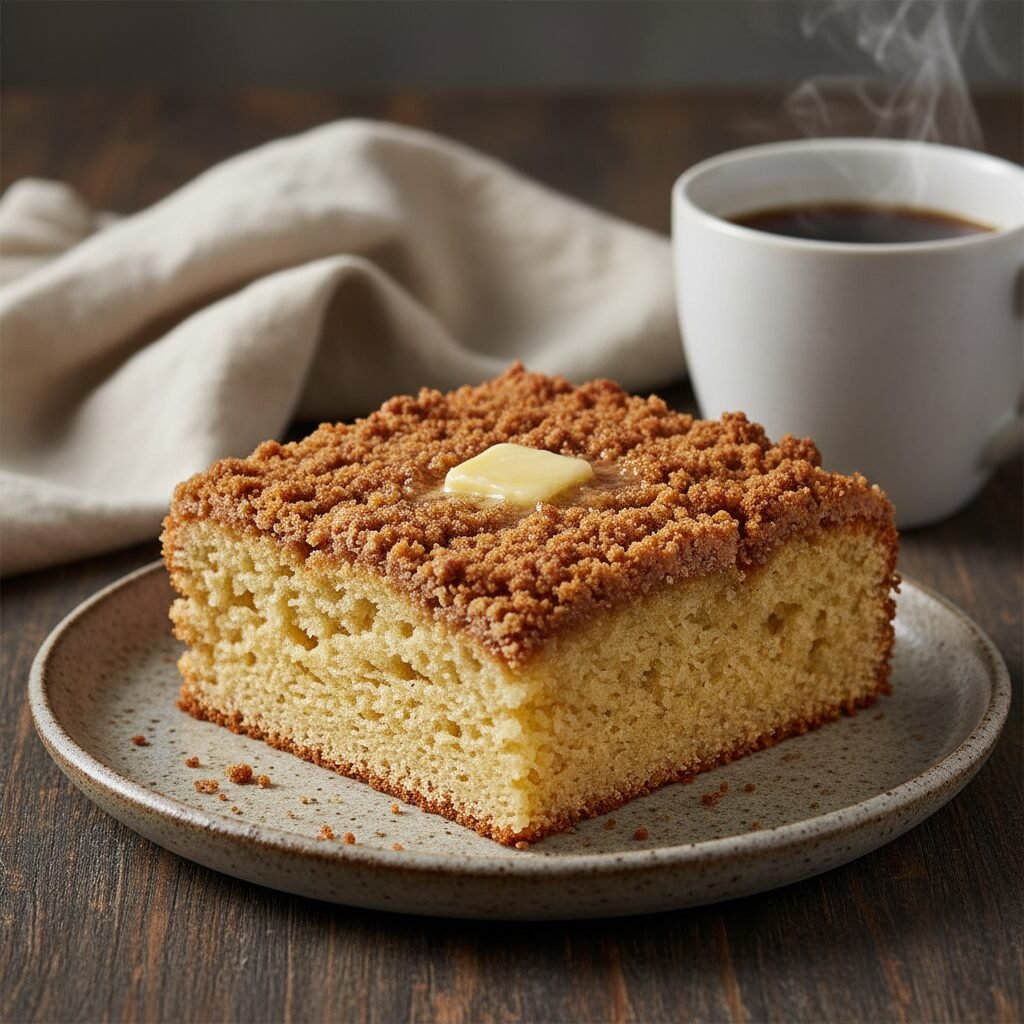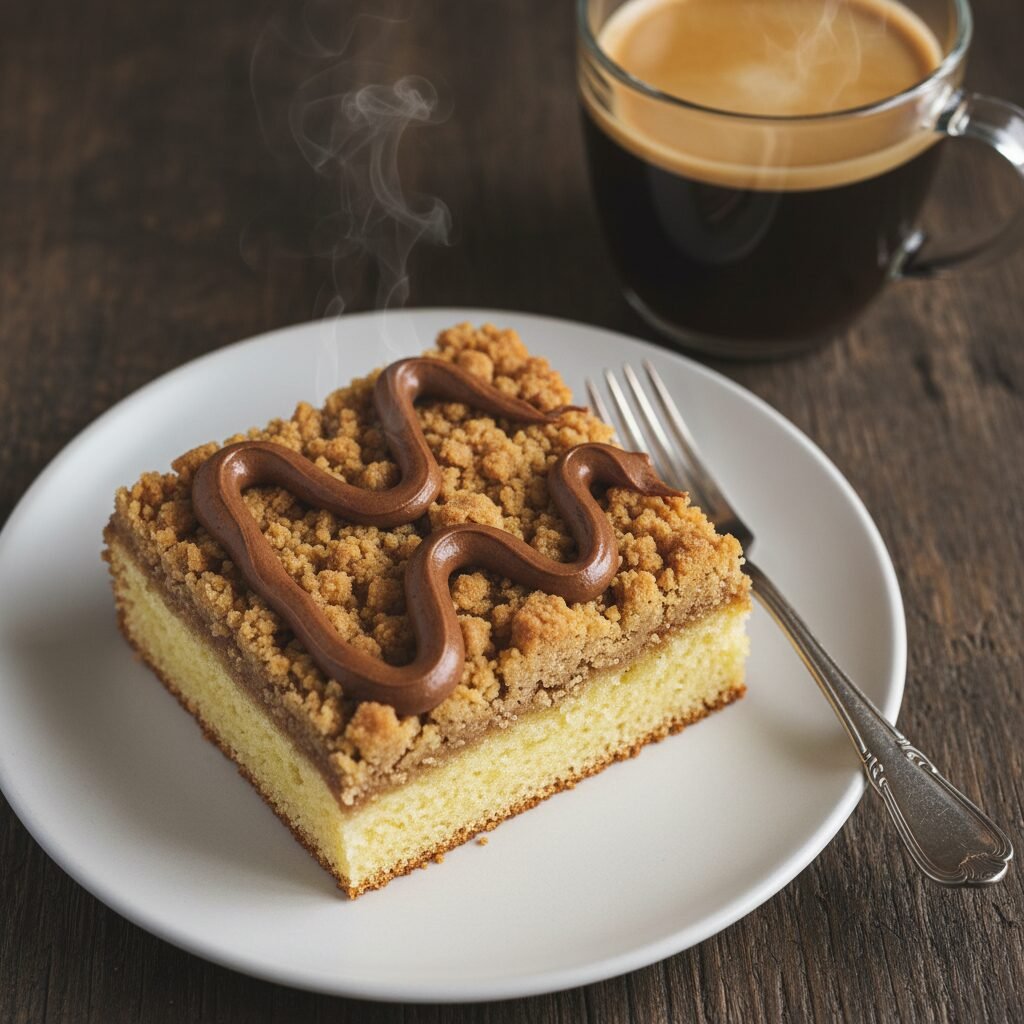
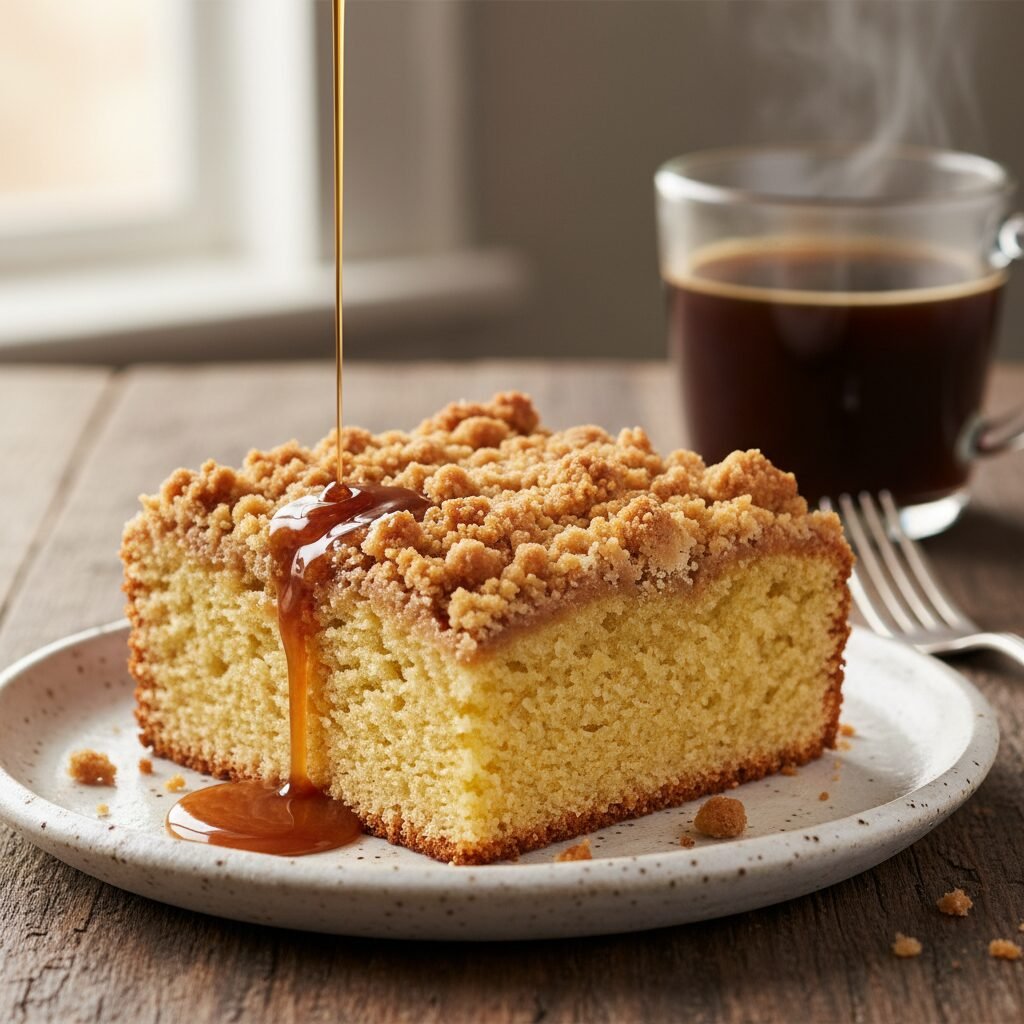
Moist Coffee Cake With Crumb Topping With Coffee Glaze Recipe
Wake up to the aroma of cinnamon and espresso with this bakery-style coffee cake. Featuring a tender, sour cream-enriched crumb, a mile-high buttery streusel topping, and a drizzle of bold espresso glaze, it is the perfect companion for your morning cup of joe.
20 minutes
45 minutes
1 hour 5 minutes
12 servings
Breakfast / Dessert
Baking
American
Vegetarian
There are few things in the culinary world as comforting as a warm slice of coffee cake on a lazy Sunday morning. However, this is not just any standard coffee cake; this is a celebration of texture and deep, roasted flavors. While traditional coffee cakes are named for their ability to accompany coffee rather than containing it, we decided to break the mold. This Moist Coffee Cake with Crumb Topping and Coffee Glaze bridges the gap between the drink and the dessert. The base is an incredibly tender, moist yellow cake enriched with rich sour cream and pure vanilla extract, providing a sturdy yet soft canvas. But the real star of the show is the topping: a thick, buttery, cinnamon-spiced streusel that crumbles perfectly with every bite. To elevate this classic to gourmet status, we finish it with a robust espresso glaze that cuts through the sweetness of the brown sugar, adding a sophisticated depth that true coffee lovers will adore. Whether you are hosting a brunch, looking for a decadent afternoon snack, or simply treating yourself, this recipe promises a bakery-quality result right from your home oven. The interplay between the soft cake, the crunchy, sandy crumb, and the sticky, aromatic glaze creates a symphony of textures that makes it impossible to stop at just one slice.
History & Origins
The history of coffee cake is a delicious journey that spans centuries and continents, deeply rooted in the coffeehouse culture of Northern and Central Europe. The concept originated in the 17th century, shortly after coffee was introduced to Europe. In Germany and Scandinavia, it became customary to serve sweet, yeasted breads alongside coffee, known as ‘Kaffekuchen’ in German. These early iterations were more akin to sweet breads or brioche, often filled with nuts, dried fruits, and spices. As European immigrants, particularly those from Germany and Scandinavia, made their way to America, they brought their cherished recipes with them. However, the American evolution of coffee cake took a distinct turn with the advent of chemical leaveners like baking powder and baking soda in the late 19th and early 20th centuries. This allowed home bakers to move away from time-consuming yeast doughs to quicker, batter-based cakes. The mid-20th century saw the rise of the ‘crumb cake’ style, heavily influenced by New York and New Jersey bakeries, where the ratio of crumb to cake became a competitive sport. The introduction of sour cream into the batter became a hallmark of American coffee cake, ensuring a moistness that could last for days. While traditional versions rarely contained coffee, our modern adaptation nods to the artisanal coffee movement by infusing the glaze with real espresso, marrying the historical accompaniment with the flavor of the beverage itself.
Why This Recipe Works
This recipe succeeds where many others fail due to a meticulous balance of fat, acidity, and hydration. First, the inclusion of full-fat sour cream is non-negotiable. The acidity in the sour cream tenderizes the gluten strands in the flour, resulting in a crumb that is velvety and soft rather than tough or chewy. Furthermore, the high fat content in the sour cream, combined with unsalted butter, ensures the cake remains moist for days after baking. For the crumb topping, we use melted butter rather than cold butter. While cold butter creates a sandy texture, melted butter allows the flour and sugar to clump together into large, satisfying nuggets that bake into crunchy cookies on top of the cake. The ratio of brown sugar to white sugar in the topping is also crucial; the molasses in the brown sugar adds a depth of flavor and a slight chewiness that contrasts with the crisp exterior. Finally, the espresso glaze serves a functional purpose beyond just flavor. The bitterness of the coffee balances the intense sweetness of the crumb topping, preventing the dessert from becoming cloying. The glaze sets slightly as it cools, adding a delicate sheen and a final layer of texture that ties the entire dish together.
Why You’ll Love This Recipe
- ✓Features a double dose of coffee flavor in the batter and the glaze.
- ✓Uses sour cream for an incredibly moist and tender crumb texture.
- ✓Boasts a thick, bakery-style streusel topping that stays crunchy.
- ✓The espresso glaze adds a sophisticated finish and balances the sweetness.
- ✓Can be made without a stand mixer—just simple bowls and a whisk.
- ✓Freezes beautifully for a grab-and-go breakfast treat.
Equipment You’ll Need
- ✓9×9 inch square baking pan or 9×13 inch pan
- ✓Large mixing bowl
- ✓Medium mixing bowl
- ✓Whisk
- ✓Rubber spatula
- ✓Parchment paper
- ✓Wire cooling rack
- ✓Small bowl for glaze
Ingredients
- ✓For the Crumb Topping:
- ✓1 1/2 cups all-purpose flour
- ✓3/4 cup light brown sugar, packed
- ✓1/3 cup granulated sugar
- ✓1 tablespoon ground cinnamon
- ✓1/4 teaspoon salt
- ✓1/2 cup unsalted butter, melted
- ✓For the Cake:
- ✓2 cups all-purpose flour
- ✓1 teaspoon baking powder
- ✓1/2 teaspoon baking soda
- ✓1/2 teaspoon salt
- ✓1/2 cup unsalted butter, softened to room temperature
- ✓3/4 cup granulated sugar
- ✓2 large eggs, room temperature
- ✓1 cup full-fat sour cream
- ✓2 teaspoons pure vanilla extract
- ✓For the Coffee Glaze:
- ✓1 cup powdered sugar, sifted
- ✓2 tablespoons strong brewed espresso or very strong coffee, cooled
- ✓1 tablespoon milk (optional, for consistency)
Instructions
- 1. Preheat your oven to 350°F (175°C). Grease a 9×9 inch square baking pan (for a taller cake) or a 9×13 inch pan (for a thinner cake) and line it with parchment paper, leaving an overhang on the sides for easy removal.
- 2. Make the Crumb Topping: In a medium bowl, whisk together the 1.5 cups flour, brown sugar, granulated sugar, cinnamon, and salt. Pour in the melted butter and use a fork to mix until large, moistened clumps form. Do not overmix into a paste; you want distinct crumbs. Set aside.
- 3. Prepare the Dry Ingredients: In a separate medium bowl, whisk together the 2 cups flour, baking powder, baking soda, and salt until well combined.
- 4. Cream Butter and Sugar: In a large bowl (or stand mixer), beat the softened butter and 3/4 cup granulated sugar together on medium-high speed until light and fluffy, about 3-4 minutes.
- 5. Add Wet Ingredients: Beat in the eggs one at a time, scraping down the bowl after each addition. Mix in the vanilla extract and the sour cream until combined. The mixture might look slightly curdled; this is normal.
- 6. Combine: Reduce the mixer speed to low. Gradually add the dry ingredients to the wet ingredients, mixing only until just combined and no streaks of flour remain. Do not overmix.
- 7. Assemble: Pour the cake batter into the prepared pan and smooth the top with a spatula. Evenly distribute the crumb topping over the batter, breaking up any overly large chunks with your fingers.
- 8. Bake: Bake for 40-50 minutes (check earlier if using a 9×13 pan), or until a toothpick inserted into the center comes out clean or with just a few moist crumbs attached. The topping should be golden brown.
- 9. Cool: Remove from the oven and place the pan on a wire rack. Allow the cake to cool for at least 20 minutes in the pan.
- 10. Make the Glaze: While the cake cools, whisk together the powdered sugar and brewed espresso in a small bowl until smooth. If the glaze is too thick, add milk one teaspoon at a time until it reaches a pourable consistency.
- 11. Finish: Drizzle the coffee glaze over the warm cake. Allow the glaze to set for 10 minutes before slicing and serving.
Expert Cooking Tips
- ✓Ensure all refrigerated ingredients (butter, eggs, sour cream) are at room temperature before starting. This creates a smoother emulsion and a better rise.
- ✓Measure your flour correctly by spooning it into the measuring cup and leveling it off, rather than scooping directly from the bag, to avoid a dense cake.
- ✓If you are using a glass baking dish, reduce the oven temperature by 25°F as glass conducts heat faster and can burn the edges.
- ✓For extra large crumbs, squeeze the topping mixture in your fist to form a ball, then gently break it apart into chunks.
- ✓Don’t skip the salt in the crumb topping; it is essential to pop the cinnamon flavor and cut the sugar.
Substitutions and Variations
This recipe is quite versatile regarding substitutions. If you do not have sour cream, full-fat plain Greek yogurt is an excellent 1:1 substitute that maintains the tang and moisture. For a dairy-free version, use a high-quality plant-based butter and a dairy-free yogurt alternative, though the texture may vary slightly. If you prefer a nuttier profile, feel free to add 1/2 cup of chopped walnuts or pecans to the crumb topping mixture. For the glaze, if you don’t have an espresso machine, you can dissolve 1 teaspoon of instant coffee granules in 2 tablespoons of hot water. To make this gluten-free, swap the all-purpose flour for a high-quality 1:1 gluten-free baking flour blend that includes xanthan gum.
Common Mistakes to Avoid
The most common mistake with coffee cake is overbaking, which leads to a dry texture. Because the crumb topping hides the cake, it can be hard to judge doneness visually. Rely on the toothpick test. Another error is overmixing the batter after adding the flour; this develops too much gluten and results in a tough, rubbery cake instead of a tender one. Regarding the crumb topping, using hot melted butter can sometimes melt the sugar too much, resulting in a hard shell rather than crumbs; ensure your melted butter has cooled slightly before mixing. Finally, glazing the cake the moment it comes out of the oven will cause the glaze to melt and disappear into the crumb; waiting 20 minutes ensures the glaze sits beautifully on top.
Serving Suggestions
This coffee cake is best served warm or at room temperature. It is the ultimate companion to a hot cup of black coffee, a latte, or a cold brew to echo the flavors in the glaze. For a dessert presentation, serve a slice with a dollop of lightly sweetened whipped cream or a scoop of vanilla bean ice cream. Fresh berries, such as raspberries or blackberries, also make a lovely garnish that adds a fresh, acidic contrast to the rich, buttery cake.
Storage and Reheating Tips
Store leftover coffee cake in an airtight container at room temperature for up to 3 days. The crumb topping may lose some crispness over time. To extend freshness, you can store it in the refrigerator for up to 1 week, though this may dry out the crumb slightly, so reheating is recommended. For freezing, wrap individual slices tightly in plastic wrap and then in aluminum foil. Freeze for up to 3 months. Thaw at room temperature or warm in the microwave for 20-30 seconds before eating to revive the soft texture.
Nutrition Facts (Estimated)
| Serving Size | 1 slice |
| Calories | 420 |
| Fat | 18g |
| Saturated Fat | 10g |
| Unsaturated Fat | 7g |
| Trans Fat | 0g |
| Cholesterol | 65mg |
| Sodium | 210mg |
| Carbohydrates | 60g |
| Fiber | 1g |
| Sugar | 32g |
| Protein | 5g |
Frequently Asked Questions
Can I make this coffee cake ahead of time?
Yes, this cake actually tastes even better the next day as the flavors have time to meld. Just be aware that the crumb topping is crunchiest on the day it is baked.
Why did my crumb topping sink to the bottom?
This usually happens if the batter is too thin or if the crumbs are too heavy and dense. Ensure your batter is thick (do not add extra liquid) and don’t pack the crumbs down when you sprinkle them on top.
Can I double the recipe?
Yes, you can double the ingredients and bake it in two 9×9 pans or a large jelly roll pan, though baking times will need to be monitored closely.
Does the cake taste strongly of coffee?
The cake base itself is vanilla-flavored. The coffee flavor comes primarily from the glaze. If you skip the glaze, it is a traditional cinnamon coffee cake. If you want more coffee flavor, add a teaspoon of espresso powder to the cake batter.
Can I use a Bundt pan?
It is not recommended for this specific recipe because the heavy crumb topping is designed to sit on top. In a Bundt pan, the crumb would end up at the bottom and might burn or stick to the pan.
Why is my cake dry?
You likely overbaked it or measured the flour incorrectly (too much flour). Always spoon and level your flour.
Can I use salted butter?
Yes, but if you do, reduce the added salt in the recipe by half to prevent the cake from tasting too salty.
Can I add fruit to the batter?
Yes, folding in a cup of blueberries or diced apples works well. Toss the fruit in a tablespoon of flour first to prevent sinking.
Is the glaze necessary?
Not strictly, the cake is delicious without it, but the glaze adds the ‘coffee’ element to the name and provides a nice visual finish.
How do I cut it neatly without ruining the crumbs?
Use a serrated knife and use a gentle sawing motion. Make sure the cake has cooled completely before cutting for the neatest squares.
Conclusion
This Moist Coffee Cake with Crumb Topping and Coffee Glaze is more than just a breakfast recipe; it is a reason to slow down and savor the moment. The combination of the buttery, cinnamon-rich streusel and the bold kick of the espresso glaze creates a flavor profile that is both nostalgic and exciting. Whether you are a seasoned baker or a novice in the kitchen, this recipe is forgiving, rewarding, and guaranteed to impress anyone lucky enough to get a slice. So brew a fresh pot of coffee, preheat your oven, and get ready to fill your home with the most inviting scents imaginable. We hope this becomes a staple in your recipe box for years to come.