Moist Coffee Walnut Cake Recipe
Experience the perfect marriage of robust espresso and earthy walnuts in this incredibly moist cake. Topped with a silky coffee buttercream and crunchy toasted nuts, it is the ultimate comfort bake for brunch or dessert. This foolproof recipe guarantees a tender crumb every single time.
25 minutes
30 minutes
55 minutes
12 servings
Dessert
Baking
British-American
Vegetarian
There is something undeniably comforting about the aroma of coffee wafting through the kitchen, not just from a brewing pot, but from the oven. This Moist Coffee Walnut Cake is a celebration of that warmth, bringing together the sophisticated bitterness of espresso with the buttery, earthy crunch of toasted walnuts. For many home bakers, finding a coffee cake that retains moisture without becoming dense is a challenge. Often, coffee sponges can dry out or lack that punchy flavor we crave. This recipe changes the game. We have engineered the batter to hold maximum moisture, using a specific blend of sugars and fats that ensures every bite melts in your mouth.
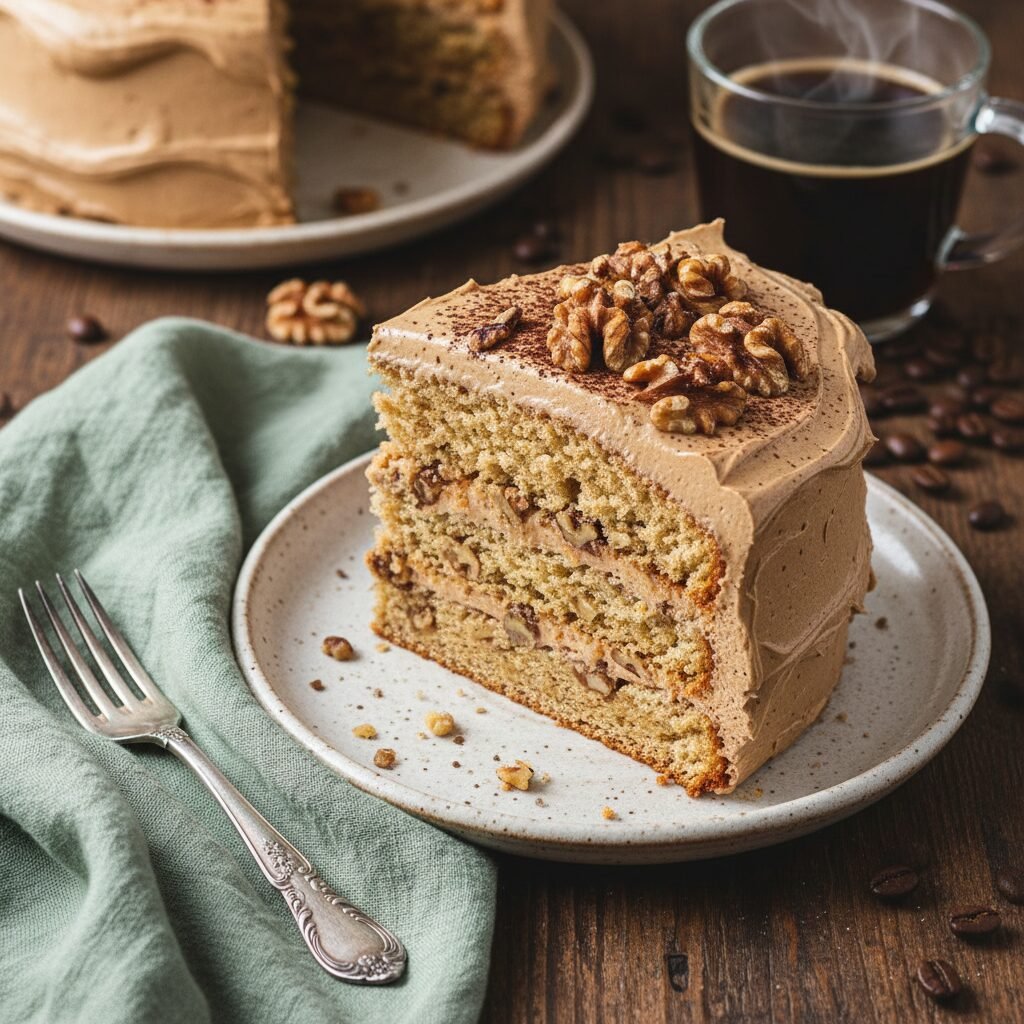
Whether you are hosting a Sunday brunch, looking for the perfect accompaniment to your afternoon tea, or simply craving a slice of something sweet and sophisticated, this cake delivers. The espresso buttercream is whipped to airy perfection, providing a creamy contrast to the tender sponge and the bite of the walnuts. It’s a cake that feels rustic yet elegant, suitable for a casual family gathering or a festive holiday table. As you slice into it, you’ll notice the beautiful speckling of nuts and the rich, golden hue of the coffee-infused crumb. It is not just a cake; it is an experience—a cozy hug on a plate that begs to be shared, though you might find yourself wanting to keep the last slice for yourself.
History & Origins
The pairing of coffee and walnuts in baking is a classic combination that has stood the test of time, particularly in British baking traditions, though its roots and popularity have spread globally. The concept of the sponge cake itself dates back to the Renaissance, but it wasn’t until the invention of baking powder in the 19th century that the light, airy cakes we know today became possible. The classic ‘Coffee and Walnut Cake’ is a staple of the English tea table, often associated with the rise of coffee culture in Europe.
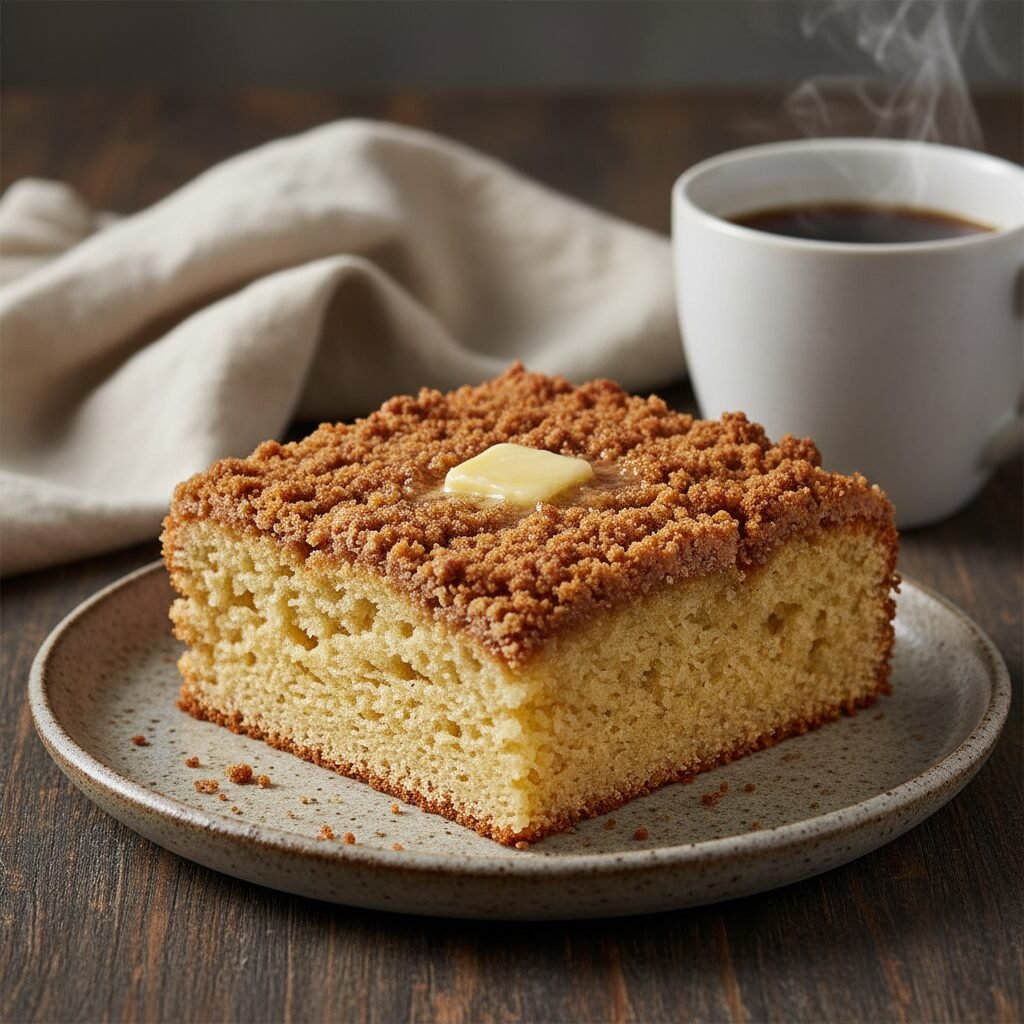
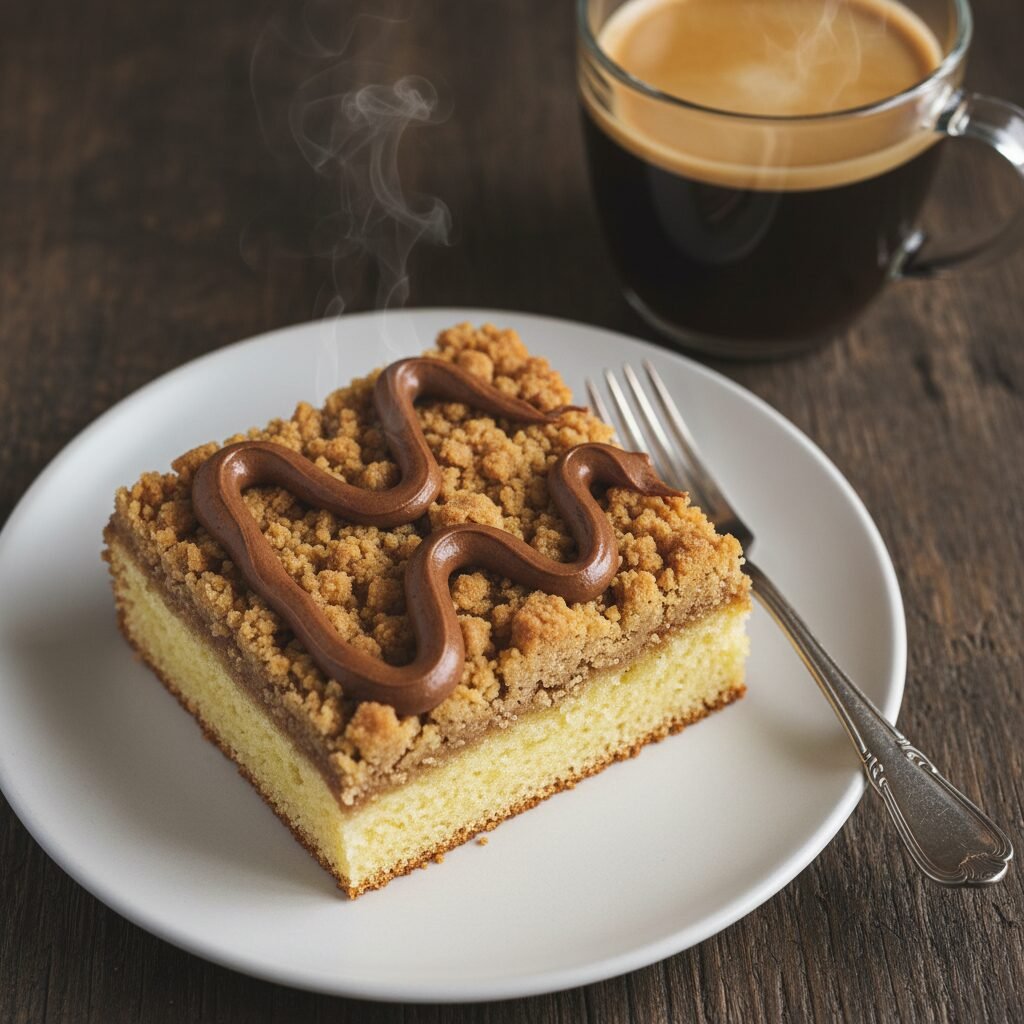
As coffee houses flourished in London and across Europe in the 17th and 18th centuries, the beverage became a symbol of intellect and social gathering. Naturally, bakers began experimenting with incorporating this prized ingredient into their confections. The addition of walnuts likely stems from the abundance of the nut in European agriculture and its ability to provide a textural contrast to soft sponges. In the United States, ‘coffee cake’ evolved slightly differently, often referring to a streusel-topped cake intended to be eaten *with* coffee, rather than one flavored *of* coffee. However, this recipe bridges that gap, bringing the distinct coffee flavor into the batter itself, honoring the European tradition while embracing the American love for rich, moist, frosted layer cakes. Over decades, this flavor profile has remained a favorite because it balances sweetness with the depth of roasted beans and nuts, proving that some classics never go out of style.
Why This Recipe Works
This recipe succeeds where others fail due to three critical factors: the fat ratio, the coffee concentration, and the walnut preparation. First, we utilize a combination of unsalted butter and a splash of oil. While butter provides that unmistakable rich flavor and aeration when creamed with sugar, oil is liquid at room temperature, which ensures the cake stays soft and moist for days, not just hours. Second, we use instant espresso powder dissolved in a minimal amount of hot water rather than brewed coffee. Brewed coffee adds too much liquid for the amount of flavor it imparts, often throwing off the batter’s hydration balance. Espresso powder delivers an intense coffee kick without diluting the structure.
Finally, the treatment of the walnuts is paramount. We insist on toasting the walnuts before adding them to the batter. Raw walnuts can be waxy and slightly bitter, but toasting them releases their essential oils, amplifies their nuttiness, and ensures they remain crunchy within the soft crumb. Furthermore, coating the chopped walnuts in a teaspoon of flour prevents them from sinking to the bottom of the cake pans, ensuring an even distribution of crunch in every forkful. These scientific tweaks result in a cake that is structurally sound yet incredibly tender.
Why You’ll Love This Recipe
- ✓Intense coffee flavor using concentrated espresso powder.
- ✓Stays moist for days thanks to a butter-oil blend.
- ✓Crunchy, toasted walnuts in every bite.
- ✓Silky, easy-to-make espresso buttercream frosting.
- ✓Perfect balance of sweetness and sophisticated bitterness.
- ✓Elegant rustic presentation suitable for any occasion.
Equipment You’ll Need
- ✓Two 8-inch round cake pans
- ✓Stand mixer or electric hand mixer
- ✓Large mixing bowls
- ✓Wire cooling rack
- ✓Rubber spatula
- ✓Measuring cups and spoons
- ✓Parchment paper
- ✓Small offset spatula for frosting
Ingredients
- ✓2 1/2 cups All-purpose flour
- ✓2 1/2 tsp Baking powder
- ✓1/2 tsp Salt
- ✓1 cup Unsalted butter, softened
- ✓1 1/4 cups Granulated sugar
- ✓1/4 cup Brown sugar, packed
- ✓4 Large eggs, room temperature
- ✓2 tbsp Instant espresso powder dissolved in 1 tbsp hot water
- ✓1/2 cup Whole milk, room temperature
- ✓1/4 cup Vegetable oil or canola oil
- ✓1 1/2 cups Walnuts, toasted and roughly chopped
- ✓For the Buttercream: 1 1/2 cups Unsalted butter, softened
- ✓3 1/2 cups Powdered sugar, sifted
- ✓1 tbsp Instant espresso powder dissolved in 1 tsp hot water
- ✓1 tsp Vanilla extract
- ✓Pinch of salt
Instructions
- Preheat your oven to 350°F (175°C). Grease two 8-inch round cake pans with butter and line the bottoms with parchment paper.
- Spread the walnuts on a baking sheet and toast in the oven for 5-7 minutes until fragrant. Let them cool completely, then chop roughly. Toss with 1 tablespoon of the flour to prevent sinking.
- In a medium bowl, whisk together the remaining flour, baking powder, and salt. Set aside.
- In a large bowl or stand mixer, cream the softened butter, granulated sugar, and brown sugar on medium-high speed for about 3-4 minutes until pale and fluffy.
- Add the eggs one at a time, beating well after each addition and scraping down the sides of the bowl.
- Mix the dissolved espresso mixture, oil, and vanilla extract into the batter until combined.
- Reduce mixer speed to low. Add the flour mixture in three parts, alternating with the milk, starting and ending with the flour. Mix only until just combined to avoid over-mixing.
- Gently fold in the toasted, flour-coated walnuts using a rubber spatula.
- Divide the batter evenly between the prepared cake pans. Smooth the tops.
- Bake for 25-30 minutes, or until a toothpick inserted into the center comes out clean or with a few moist crumbs.
- Remove from the oven and let the cakes cool in the pans for 10 minutes, then turn them out onto a wire rack to cool completely.
- While the cakes cool, make the buttercream. Beat the butter on high speed until creamy and pale (about 5 minutes).
- Gradually add the powdered sugar, one cup at a time, mixing on low speed until incorporated. Add the dissolved espresso, vanilla, and salt. Whip on high for another 3 minutes until airy.
- Once cakes are completely cool, frost the top of one layer, place the second layer on top, and cover the top and sides with the remaining buttercream. Garnish with extra walnut halves.
Expert Cooking Tips
- ✓Ensure all dairy ingredients (eggs, milk, butter) are at room temperature to prevent the batter from curdling.
- ✓Do not skip the step of toasting the walnuts; it significantly deepens the flavor profile.
- ✓Dissolve the espresso powder in a very small amount of hot water to create a concentrated paste rather than a liquid.
- ✓Weigh your flour using a kitchen scale for the most accurate results, or use the spoon-and-level method.
- ✓Wait until the cakes are absolutely cool before frosting, or the butter in the buttercream will melt and slide off.
- ✓If the buttercream is too soft, chill it for 10 minutes before frosting.
- ✓Tap the cake pans on the counter before baking to release any large air bubbles.
Substitutions and Variations
This recipe is quite versatile if you need to make swaps. For the flour, you can use cake flour for an even lighter crumb, though all-purpose works perfectly for structure. If you are gluten-free, a high-quality 1:1 gluten-free baking flour blend (preferably with xanthan gum) can be substituted directly. For the sugar, you can use all granulated sugar if you lack brown sugar, though the brown sugar adds a hint of caramel depth and moisture. If you don’t have walnuts, pecans are an excellent alternative that pairs beautifully with coffee; hazelnuts are another sophisticated option. For the coffee element, if you do not have instant espresso powder, instant coffee granules work, but you may need to increase the quantity slightly for the same flavor impact. Do not use liquid brewed coffee as a direct substitute for the powder unless you reduce the milk, which can alter the chemistry. Finally, for the oil, melted coconut oil or light olive oil can be used instead of vegetable oil, adding a subtle nuance to the flavor.
Common Mistakes to Avoid
The most common mistake with this cake is over-mixing the batter once the flour is added. Over-mixing develops the gluten too much, leading to a dense, rubbery texture rather than a tender crumb. Mix on low speed and stop as soon as the flour streaks disappear. Another frequent error is using cold ingredients. If your butter or eggs are cold, they won’t emulsify properly, resulting in a greasy or uneven batter. In terms of baking, opening the oven door too early can cause the cakes to sink in the middle due to the sudden drop in temperature. Wait until at least 20 minutes have passed before checking. Lastly, failing to cool the espresso mixture before adding it to the buttercream can melt the butter, causing your frosting to become soupy and unworkable. Ensure your espresso ‘shot’ is room temperature before whipping it in.
Serving Suggestions
This Moist Coffee Walnut Cake is a showstopper that looks beautiful on a rustic wooden board or a ceramic cake stand. Serve generous slices with a hot cup of fresh coffee or an espresso to echo the flavors in the cake. For a dessert variation, it pairs wonderfully with a dollop of unsweetened whipped cream or a scoop of vanilla bean ice cream to cut through the richness of the buttercream. If you want to elevate the presentation, drizzle a little salted caramel sauce over the slice just before serving, or dust the top with cocoa powder. It is perfect for afternoon tea, birthday celebrations, or as a comforting finish to a Sunday roast dinner.
Storage and Reheating Tips
To keep this cake fresh, store it in an airtight cake carrier at room temperature for up to 3 days. The buttercream acts as a seal, keeping the sponge moist. If you live in a very hot or humid climate, you may need to store it in the refrigerator to prevent the frosting from melting; however, be sure to let it come to room temperature for an hour before serving to soften the butter and relax the crumb. For longer storage, you can freeze individual slices. Wrap each slice tightly in plastic wrap, followed by a layer of aluminum foil. They will keep in the freezer for up to 3 months. Thaw unwrapped at room temperature when you are ready to eat.
Nutrition Facts (Estimated)
| Serving Size | 1 slice |
| Calories | 580 |
| Fat | 38g |
| Saturated Fat | 16g |
| Unsaturated Fat | 20g |
| Trans Fat | 0.5g |
| Cholesterol | 85mg |
| Sodium | 210mg |
| Carbohydrates | 54g |
| Fiber | 2g |
| Sugar | 42g |
| Protein | 6g |
Frequently Asked Questions
Can I use decaf coffee for this recipe?
Absolutely. Decaf instant espresso powder works perfectly and allows you to enjoy the cake late at night without the caffeine kick.
Why did my walnuts sink to the bottom?
Nuts are heavy and can sink in a light batter. Coating them in a tablespoon of flour before folding them in provides friction that helps suspend them evenly throughout the cake.
Can I bake this in a 9×13 pan instead of rounds?
Yes, you can bake this in a 9×13 inch rectangular pan. You will likely need to increase the baking time to 35-40 minutes. Keep an eye on it and use the toothpick test.
Is the coffee flavor very strong?
The flavor is distinct but not overpowering. It balances with the sugar and butter. If you want a milder flavor, reduce the espresso powder by half.
Can I make the cake layers ahead of time?
Yes, you can bake the layers, let them cool completely, wrap them tightly in plastic wrap, and freeze them for up to a month. Frost them while they are still frozen for easier handling.
What if I don’t have a stand mixer?
A hand mixer works just as well. You can even mix it by hand with a whisk and a wooden spoon, though creaming the butter and sugar will require some serious elbow grease.
Can I use brewed coffee instead of milk?
Technically yes, but it will make the coffee flavor very intense and you lose the richness that the fat and protein in the milk provide. We recommend sticking to milk for the best texture.
How do I know when the buttercream is done?
The buttercream should be pale, almost white, and fluffy. If it looks yellow or feels gritty, keep whipping. The longer you whip, the lighter and smoother it becomes.
Can I use margarine instead of butter?
We recommend real butter for flavor and structure. Margarine has a higher water content and different melting point, which can affect the texture of the sponge and the stability of the frosting.
Conclusion
This Moist Coffee Walnut Cake is more than just a recipe; it is a reliable companion for your baking adventures. Whether you are a novice baker or a seasoned pro, the combination of simple techniques and premium ingredients guarantees a result that tastes like it came from a high-end bakery. The contrast between the soft, coffee-infused sponge, the crunchy toasted walnuts, and the creamy, sweet frosting is truly irresistible. We hope this cake becomes a new tradition in your home, bringing warmth and joy to your table. Don’t forget to pin this recipe for later and share your creations with us on social media—we love seeing how you make it your own!