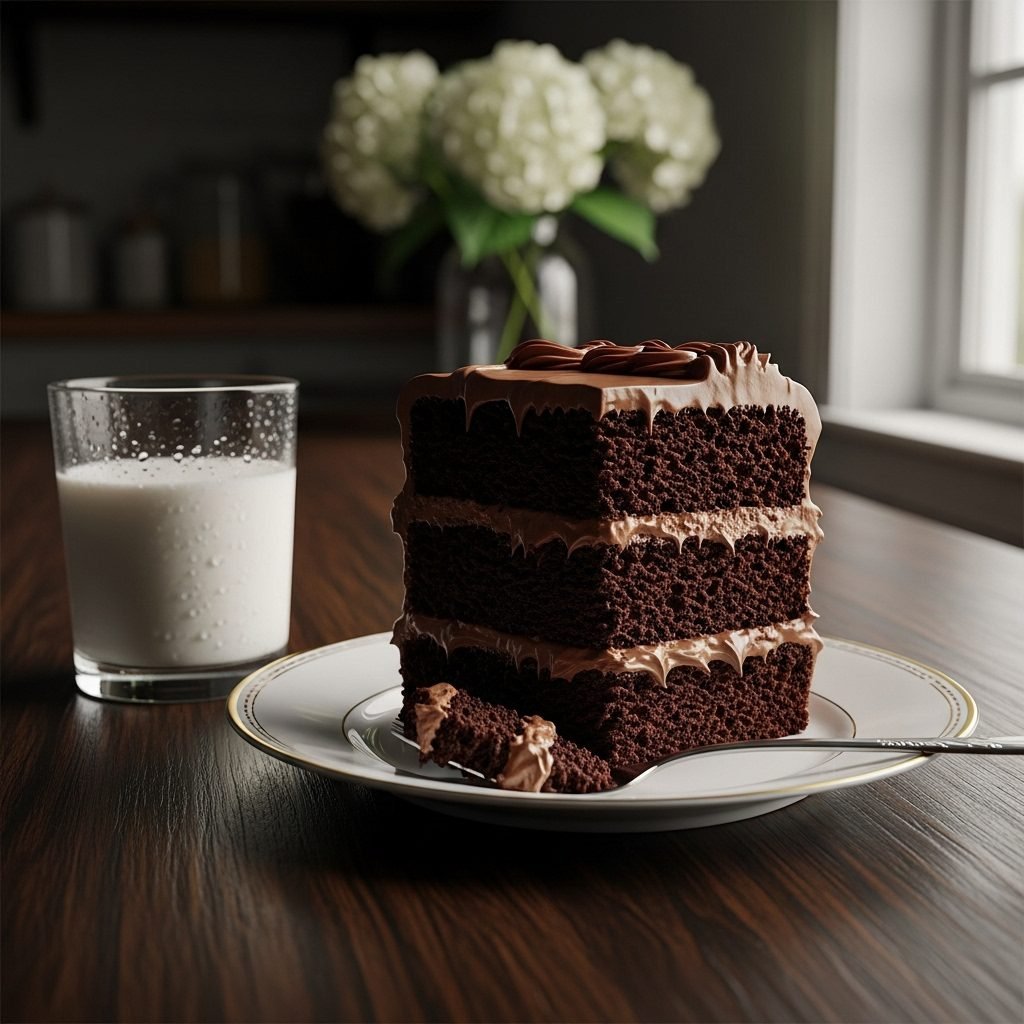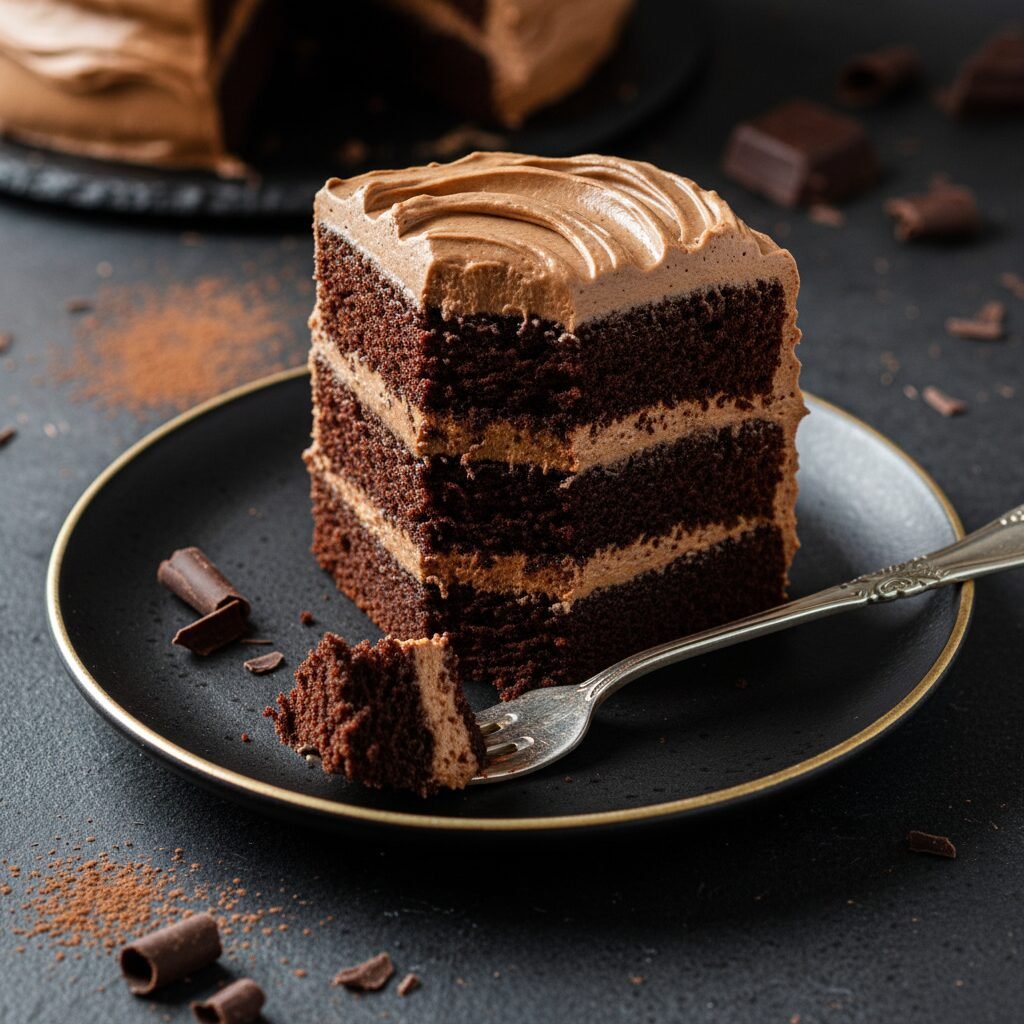
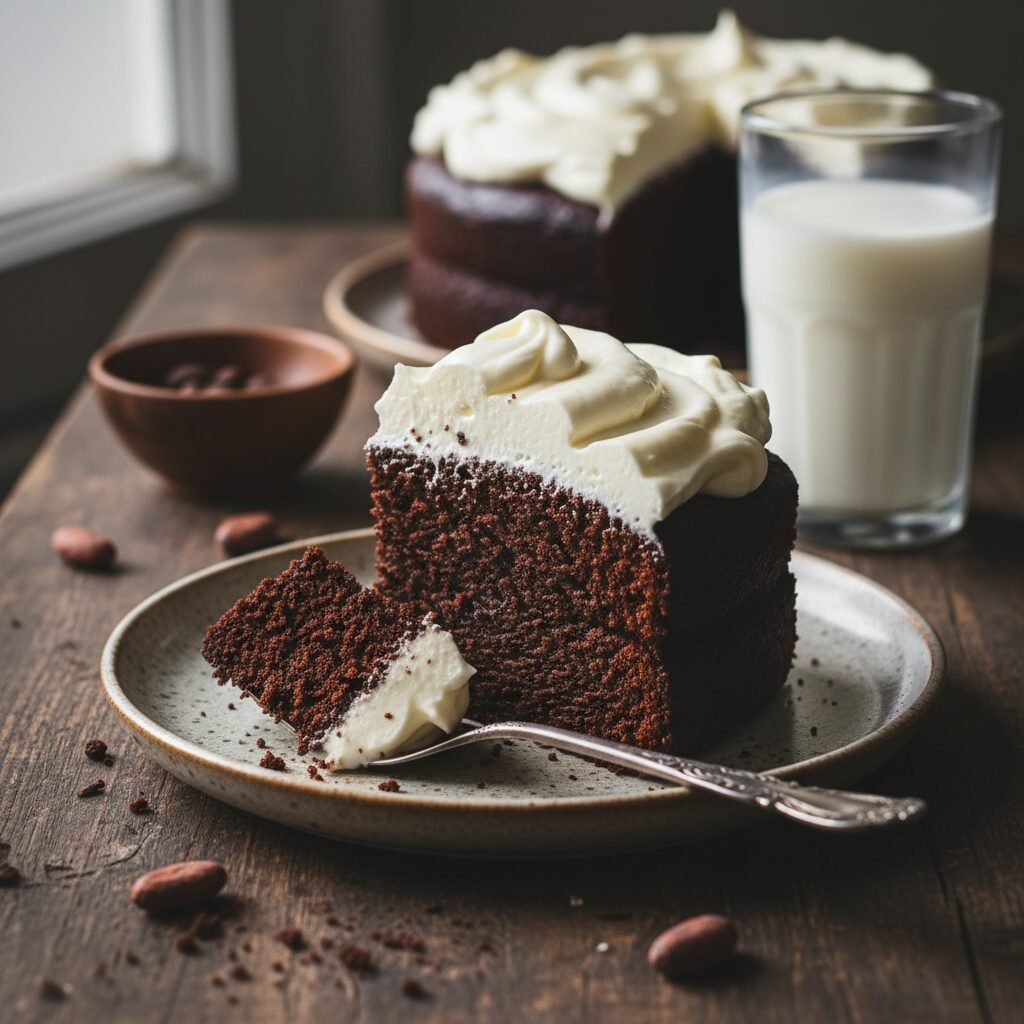
Moist Dark Chocolate Cake With Vanilla Frosting Recipe
This isn’t just another cake recipe; it is the gold standard for celebrations. Featuring incredibly moist, fudge-like dark chocolate layers paired with a cloud-like, whipped vanilla buttercream, this recipe strikes the perfect balance of deep cocoa richness and sweet, creamy nostalgia.
30 minutes
35 minutes
1 hour 45 minutes (includes cooling)
12-14 servings
Dessert
Baking
American
Vegetarian
There are few things in the culinary world as universally comforting and celebratory as a slice of chocolate cake. However, the quest for the ‘perfect’ chocolate cake is often fraught with disappointment. We have all been there: the cake looks beautiful, but the first bite reveals a dry, crumbly texture that requires a glass of milk just to wash down. Or perhaps the flavor is lackluster, tasting more like sugar than actual chocolate. This recipe for Moist Dark Chocolate Cake with Vanilla Frosting is the answer to those baking prayers. It is designed to be the only chocolate cake recipe you will ever need in your repertoire.
What sets this cake apart is its unapologetically deep flavor profile and its texture, which remains tender and moist for days. By utilizing high-quality dark cocoa powder and a specific mixing method, we achieve a crumb that is velvety and soft, almost leaning towards a fudge brownie but with the lightness of a sponge. The contrast is key here. While the cake itself is dark, brooding, and intensely chocolatey, the frosting is bright, sweet, and airy. The classic combination of ‘black and white’—dark chocolate and vanilla bean—creates a sophisticated interplay of flavors that appeals to both children and adults alike. Whether you are baking for a milestone birthday, a holiday gathering, or simply because you survived a long week, this cake promises to deliver a bakery-quality experience right from your home kitchen. Prepare your senses for the aroma of blooming cocoa that will fill your home, signaling that something truly delicious is on the way.
History & Origins
The history of chocolate cake is a fascinating journey that mirrors the evolution of baking technology and ingredient availability. In the early American colonies, chocolate was primarily consumed as a beverage. It wasn’t until the mid-19th century that cooks began incorporating chocolate into baked goods, though these early iterations were often yellow cakes with a chocolate glaze rather than the chocolate-infused batters we know today. The real turning point came with the improvement of cocoa powder extraction processes, specifically the method developed by Conrad Van Houten in 1828, which allowed for a finer, fat-reduced cocoa powder that blended easily with flour.
The specific lineage of this ‘Dark Chocolate’ cake can be traced back to the early 20th century with the rise of ‘Devil’s Food Cake.’ The name was allegedly derived to describe the cake’s rich, dark color and dense texture—a direct contrast to the light and airy ‘Angel Food Cake.’ Interestingly, the reddish-dark hue of early Devil’s Food cakes was often a result of a chemical reaction between natural cocoa powder and high amounts of baking soda. Over the decades, as ‘Dutch-process’ cocoa (which is alkalized) became more popular, cakes became darker in color and milder in acidity, leading to the deep, midnight-style cakes we adore today. The pairing with vanilla frosting became a mid-century staple in American households, popularized by the post-war boom of convenience cooking and the iconic imagery of birthday parties in the 1950s. This recipe honors that history by using modern techniques to maximize moisture while retaining that classic, nostalgic flavor profile.
Why This Recipe Works
The science behind this recipe is centered entirely on moisture retention and flavor intensification. First and foremost, we use oil instead of butter for the cake batter. While butter provides great flavor in vanilla cakes, it consists of 80% fat and 20% water, and it solidifies at room temperature. Vegetable oil, being 100% fat and liquid at room temperature, coats the flour proteins more effectively and ensures the cake stays incredibly moist and soft, even when stored in the refrigerator.
Secondly, the inclusion of hot coffee is a non-negotiable technique for a truly ‘dark’ chocolate flavor. Pouring boiling hot liquid over the cocoa powder ‘blooms’ it, dissolving the cocoa solids and releasing the essential oils trapped within. This amplifies the chocolate flavor significantly without making the cake taste like coffee. Furthermore, we use buttermilk, which is acidic. This acidity reacts with the baking soda to create carbon dioxide bubbles, giving the heavy batter a necessary lift and tenderizing the gluten strands in the flour. Finally, the frosting relies on whipping room-temperature butter for a significantly long time before adding sugar, creating a pale, aerated base that melts in your mouth, providing the necessary textural contrast to the dense cake.
Why You’ll Love This Recipe
- ✓Uses hot coffee to bloom the cocoa for intense chocolate flavor.
- ✓Oil-based batter ensures the cake stays moist for days.
- ✓Perfect balance of bitter dark chocolate and sweet vanilla.
- ✓No stand mixer required for the cake batter.
- ✓High-yield recipe perfect for parties and events.
- ✓Frosting is whipped to a cloud-like consistency.
Equipment You’ll Need
- ✓Two 9-inch round cake pans
- ✓Large mixing bowl
- ✓Whisk
- ✓Stand mixer or hand mixer (for frosting)
- ✓Parchment paper
- ✓Wire cooling rack
- ✓Offset spatula
- ✓Measuring cups and spoons
Ingredients
- ✓2 cups all-purpose flour
- ✓2 cups granulated sugar
- ✓3/4 cup dark unsweetened cocoa powder
- ✓2 teaspoons baking soda
- ✓1 teaspoon baking powder
- ✓1 teaspoon salt
- ✓2 large eggs, room temperature
- ✓1 cup buttermilk, room temperature
- ✓1/2 cup vegetable oil (or canola oil)
- ✓2 teaspoons vanilla extract
- ✓1 cup freshly brewed strong hot coffee
- ✓1 cup unsalted butter, softened (for frosting)
- ✓3 cups powdered sugar (for frosting)
- ✓2 tablespoons heavy cream (for frosting)
- ✓1 tablespoon vanilla bean paste or vanilla extract (for frosting)
- ✓Pinch of salt (for frosting)
Instructions
- Preheat your oven to 350°F (175°C). Grease two 9-inch round cake pans with butter or cooking spray and line the bottoms with parchment paper. Dust the sides with a little cocoa powder.
- In a large bowl, sift together the flour, sugar, cocoa powder, baking soda, baking powder, and salt. Whisk thoroughly to ensure the dry ingredients are evenly distributed.
- In a separate medium bowl, whisk together the eggs, buttermilk, vegetable oil, and vanilla extract until combined.
- Pour the wet ingredients into the dry ingredients and mix with a whisk or electric mixer on low speed until just combined. Do not overmix.
- Slowly pour in the hot coffee while whisking gently. The batter will be very thin and liquidy; this is completely normal and ensures a moist cake.
- Divide the batter evenly between the two prepared cake pans. Tap the pans gently on the counter to release any large air bubbles.
- Bake for 30-35 minutes, or until a wooden toothpick inserted into the center comes out clean or with just a few moist crumbs attached.
- Remove cakes from the oven and let them cool in the pans for about 10-15 minutes. Then, carefully run a knife around the edges and invert them onto a wire rack to cool completely before frosting.
- While the cakes cool, make the frosting. In the bowl of a stand mixer fitted with the paddle attachment, beat the softened butter on medium-high speed for 5 minutes until it is very pale and creamy.
- Reduce speed to low and gradually add the powdered sugar, one cup at a time. Once all sugar is incorporated, increase speed to high and beat for another 3 minutes.
- Add the vanilla bean paste, heavy cream, and a pinch of salt. Beat for 1 more minute until the frosting is fluffy and smooth.
- To assemble, place one cake layer on your serving platter. Spread a generous layer of vanilla frosting over the top. Place the second cake layer on top.
- Use the remaining frosting to cover the top and sides of the cake. Use an offset spatula to create swirls or smooth the sides depending on your preference.
Expert Cooking Tips
- ✓Measure flour correctly: Use a kitchen scale or the ‘spoon and level’ method to avoid a dense cake.
- ✓Room temperature ingredients: Ensure eggs and buttermilk are at room temperature to allow the batter to emulsify properly.
- ✓Don’t skip the parchment: Lining the pans guarantees the cakes won’t stick, preserving those perfect edges.
- ✓Use good cocoa: The quality of your cocoa powder dictates the flavor. Splurge on a high-quality Dutch-process cocoa if possible.
- ✓Cool completely: Never frost a warm cake, or the butter in the frosting will melt and the layers will slide apart.
- ✓Bloom the cocoa: The hot coffee step is crucial. If you don’t drink coffee, use boiling water, but coffee enhances the chocolate flavor best.
Substitutions and Variations
This recipe is quite resilient, but careful substitutions are needed to maintain the texture. If you do not have buttermilk, you can make a ‘sour milk’ substitute by adding one tablespoon of white vinegar or lemon juice to a cup of whole milk and letting it sit for 5 minutes. For a gluten-free version, use a high-quality 1:1 gluten-free baking flour blend that includes xanthan gum; the texture will change slightly but remains delicious. If you want to avoid caffeine, decaf coffee works perfectly, or simply use boiling hot water—though the chocolate flavor may be slightly less robust. Coconut oil can be substituted for vegetable oil, but be sure to melt it first and ensure all other ingredients are room temperature so it doesn’t solidify in the batter. For the frosting, you can use milk instead of heavy cream, though the texture will be slightly less rich.
Common Mistakes to Avoid
The most common mistake with this cake is overbaking. Because the batter is dark, it is hard to see visual browning cues. Rely on the toothpick test and start checking at the 30-minute mark. Another frequent error is overmixing the batter after adding the flour; this develops gluten and leads to a tough, rubbery cake rather than a tender one. When making the frosting, a common mistake is not beating the butter long enough before adding sugar. You want the butter to be almost white and aerated to avoid a greasy, yellow buttercream. Finally, using cold ingredients often causes the batter to look curdled; while it usually bakes out okay, a smooth emulsion creates a better rise.
Serving Suggestions
This cake is a showstopper on its own, but it pairs beautifully with fresh berries to cut through the richness. A pile of fresh raspberries or sliced strawberries on top adds a pop of color and acidity. For a true indulgence, serve a slice slightly warmed (microwave for 10 seconds) with a scoop of vanilla bean ice cream. A tall glass of cold milk is the classic accompaniment, but a hot espresso or a glass of red wine (like a Cabernet Sauvignon) also complements the dark chocolate notes perfectly.
Storage and Reheating Tips
Because this cake is oil-based, it stays moist at room temperature longer than butter cakes. Store the frosted cake in a cake keeper or cover the cut section with plastic wrap at room temperature for up to 3 days. If your kitchen is very hot, store it in the fridge, but let it come to room temperature before eating for the best flavor and texture. The cake layers can be baked ahead of time, wrapped tightly in plastic wrap, and frozen for up to 3 months. Thaw the layers in the refrigerator overnight before assembling and frosting.
Nutrition Facts (Estimated)
| Serving Size | 1 slice |
| Calories | 680 |
| Fat | 38g |
| Saturated Fat | 14g |
| Unsaturated Fat | 22g |
| Trans Fat | 0g |
| Cholesterol | 85mg |
| Sodium | 340mg |
| Carbohydrates | 85g |
| Fiber | 4g |
| Sugar | 52g |
| Protein | 7g |
Frequently Asked Questions
Can I make this recipe into cupcakes?
Yes! This batter makes excellent cupcakes. Fill cupcake liners about 2/3 full and bake at 350°F for 18-22 minutes. It should yield about 24 cupcakes.
Why is the batter so runny?
The batter is intentionally thin because of the high liquid content (coffee, buttermilk, oil). This hydration is what evaporates during baking to create steam, resulting in a super moist and light crumb.
Can I use natural cocoa powder instead of Dutch-process?
Yes, you can. This recipe uses baking soda, which reacts well with natural cocoa. However, Dutch-process cocoa will give you a darker color and a fudgier, less acidic flavor profile.
My frosting is too sweet, what can I do?
Add a pinch more salt to cut the sweetness. You can also add a tablespoon of cornstarch or a little more heavy cream and whip it longer to increase the volume, which disperses the sugar sensation.
Why did my cake sink in the middle?
This usually happens if the oven door was opened too early during baking, causing the temperature to drop before the structure set. It can also happen if there is too much leavening (baking soda/powder) measured.
Can I use melted butter instead of oil in the cake?
You can, but the cake will be denser and will dry out faster. Oil is superior for chocolate cake specifically because it keeps the cake soft even when cool.
How do I get flat cake layers?
You can use ‘cake strips’ soaked in water wrapped around the pan, which cools the edges and promotes even rising. Alternatively, simply trim the domed tops with a serrated knife before frosting—and eat the scraps as a chef’s snack!
Can I leave the coffee out?
You can substitute the coffee with hot water. The cake will still be moist, but the chocolate flavor won’t be quite as deep or intense.
Conclusion
There is something truly magical about placing a homemade chocolate cake on the table. It signals care, celebration, and a love for the simple pleasures in life. This Moist Dark Chocolate Cake with Vanilla Frosting is more than just a recipe; it’s a reliable companion for your most cherished moments. The deep, complex chocolate notes combined with the sweet, creamy embrace of the vanilla frosting create a harmony that store-bought cakes simply cannot replicate. We hope this cake becomes a tradition in your home, baked with love and devoured with joy. Happy baking!