Moist Espresso Chocolate Cake With Espresso Buttercream Recipe
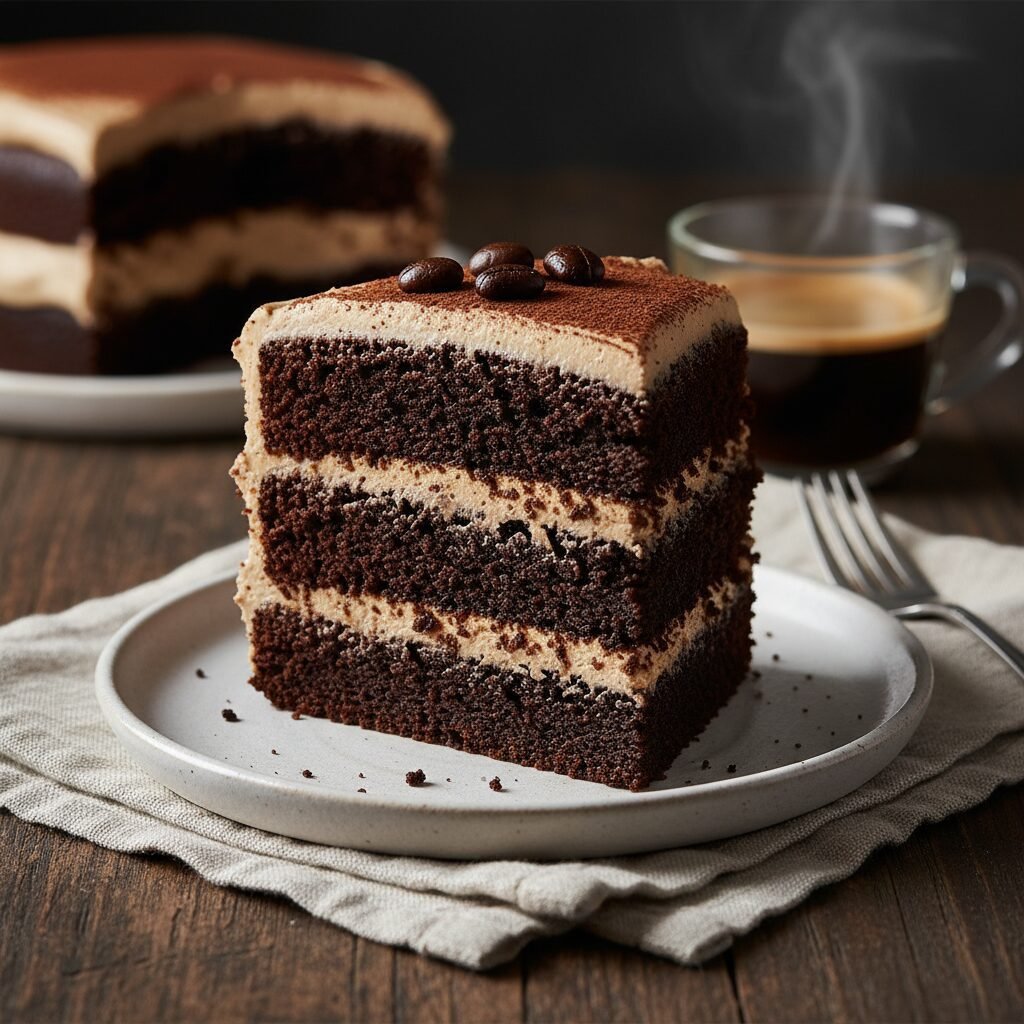
This is the coffee lover’s dream dessert: an incredibly moist, deep-dark chocolate cake infused with freshly brewed espresso. Topped with a velvety, whipped espresso buttercream, it delivers a double dose of caffeine and cocoa in every decadent bite.
30 minutes
35 minutes
1 hour 45 minutes
12-14 servings
Dessert
Baking
American
Vegetarian
If there is one cake that has the power to silence a room, it is this Ultimate Moist Espresso Chocolate Cake. For years, I have been on a quest to find the perfect balance between a chocolate cake that is deeply fudgy yet light enough to not feel like a brick, and a frosting that packs a punch without being cloyingly sweet. This recipe is the culmination of that journey. It is not just a chocolate cake with a hint of coffee; it is a celebration of the mocha flavor profile, where the espresso elevates the cocoa to new heights of richness. The cake layers are impossibly dark, almost black, thanks to the reaction between Dutch-processed cocoa and baking soda, and they stay moist for days thanks to a specific blend of oil and buttermilk. But the real star might just be the Espresso Buttercream. Unlike standard chocolate frostings that can sometimes fall flat, this buttercream is infused with concentrated espresso, cutting through the sugar and adding a sophisticated, roasted depth that mirrors the aroma of your favorite coffee shop. Whether you are baking for a birthday, a dinner party, or just a Tuesday night craving, this cake promises a sensory experience that is both comforting and elegantly complex. It is the kind of dessert that begs for a tall glass of cold milk or, dare I say, another cup of coffee on the side.
History & Origins
The marriage of chocolate and coffee is a tale as old as the global trade routes that popularized them. The term ‘Mocha’ itself derives from the port city of Mocha in Yemen, which was a major marketplace for coffee from the 15th to the 18th century. The coffee beans exported from this region were known for their distinct chocolatey undertones. Over time, Europeans began combining chocolate and coffee in drinks, realizing that the bitterness of the coffee enhanced the floral and earthy notes of the cacao. As for the cake itself, this recipe traces its lineage back to the classic American ‘Devil’s Food Cake’ of the early 20th century. Unlike the denser, butter-based British chocolate cakes, Devil’s Food Cake utilized baking soda and often hot liquid to create a reddish-dark hue and a lighter, airier crumb. The addition of hot coffee instead of hot water became a secret weapon for bakers in the mid-1900s. They discovered that the hot liquid ‘bloomed’ the cocoa powder, releasing flavorful oils that cold mixing could not achieve. This recipe honors that tradition but modernizes it with the addition of instant espresso powder in the frosting, a trick that became popular in the gourmet food waves of the 1990s and 2000s, transforming a simple home-baked good into a bakery-quality showstopper.
Why This Recipe Works
The science behind this cake is what makes it fail-proof and superior to other recipes. First and foremost is the use of hot espresso in the batter. When boiling hot liquid is poured over cocoa powder, it dissolves the cocoa butter and releases the flavor compounds in a process called ‘blooming.’ This ensures the chocolate flavor is profound and immediate, rather than muted. Secondly, we use vegetable oil instead of butter for the cake sponge. While butter adds flavor, it contains water and solidifies at room temperature, which can lead to a drier cake sensation. Oil remains liquid at room temperature, guaranteeing that the cake stays sensationally moist and tender on the palate for days. The acidity from the buttermilk and the brown sugar reacts vigorously with the baking soda, creating a powerful lift that counteracts the heavy cocoa, resulting in a crumb that is soft, not dense. Finally, the buttercream uses a high ratio of heavy cream and dissolved espresso powder. By dissolving the espresso in the cream before whipping it into the butter, we avoid grainy flecks of coffee and ensure a smooth, silky emulsion that melts in your mouth.
Why You’ll Love This Recipe
- ✓Intense chocolate flavor amplified by hot espresso
- ✓Stays incredibly moist for up to 4 days
- ✓Silky, high-caffeine buttercream frosting
- ✓Simple one-bowl mixing method for the cake
- ✓Perfect balance of sweet and bitter notes
Equipment You’ll Need
- ✓Stand mixer or electric hand mixer
- ✓Two 8-inch round cake pans
- ✓Wire cooling rack
- ✓Parchment paper
- ✓Large mixing bowl
- ✓Whisk
- ✓Offset spatula
- ✓Measuring cups and spoons
Ingredients
- ✓2 cups granulated sugar
- ✓1 3/4 cups all-purpose flour
- ✓3/4 cup Dutch-processed cocoa powder
- ✓1 1/2 teaspoons baking powder
- ✓1 1/2 teaspoons baking soda
- ✓1 teaspoon salt
- ✓2 large eggs, room temperature
- ✓1 cup whole milk buttermilk, room temperature
- ✓1/2 cup vegetable oil or canola oil
- ✓2 teaspoons pure vanilla extract
- ✓1 cup freshly brewed strong hot espresso or strong coffee
- ✓1 cup unsalted butter, softened (for frosting)
- ✓3 cups powdered sugar (for frosting)
- ✓1/4 cup heavy cream (for frosting)
- ✓1 tablespoon instant espresso powder (for frosting)
- ✓1 teaspoon vanilla extract (for frosting)
- ✓Pinch of salt (for frosting)
Instructions
- Preheat your oven to 350°F (175°C). Grease two 8-inch round cake pans with butter and dust with cocoa powder, or line the bottoms with parchment paper for easy release.
- In the bowl of a stand mixer or a large mixing bowl, whisk together the sugar, flour, cocoa, baking powder, baking soda, and salt until fully combined and no lumps remain.
- Add the eggs, buttermilk, oil, and vanilla extract. Beat on medium speed for about 2 minutes. The batter should look smooth and slightly lighter in color.
- Reduce the mixer speed to the lowest setting and carefully pour in the boiling hot espresso. Mix just until combined. The batter will be very thin and liquid; this is normal and essential for the moisture.
- Divide the batter evenly between the prepared pans. Bake for 30 to 35 minutes, or until a wooden toothpick inserted into the center comes out clean or with just a few moist crumbs.
- Cool the cakes in the pans for 10 minutes, then remove them from the pans and transfer to a wire rack to cool completely before frosting.
- While the cakes cool, prepare the buttercream. In a small bowl, dissolve the instant espresso powder into the heavy cream and vanilla extract. Stir until smooth.
- In a large bowl, beat the softened butter on medium-high speed until pale and creamy, about 3 minutes.
- Gradually add the powdered sugar, one cup at a time, mixing on low speed until incorporated. Increase to high speed and beat for 2 minutes until fluffy.
- Pour in the espresso-cream mixture and a pinch of salt. Whip on medium-high speed for another 3-4 minutes until the buttercream is silky, airy, and holds soft peaks.
- Once the cakes are completely cool, level the tops if necessary. Place one layer on a serving plate, spread a thick layer of espresso buttercream over the top, and stack the second layer. Frost the top and sides of the cake with the remaining buttercream.
- Garnish with chocolate-covered espresso beans or a dusting of cocoa powder if desired.
Expert Cooking Tips
- ✓Ensure your baking powder and baking soda are fresh; expired leaveners are the number one cause of flat cakes.
- ✓Do not skip the boiling water/coffee step; it blooms the cocoa and ensures the cake isn’t dry.
- ✓Use room temperature eggs and buttermilk to ensure the batter emulsifies properly without curdling.
- ✓Chill the cake layers for 20 minutes before frosting to make them firmer and easier to handle.
- ✓If the buttercream is too soft, refrigerate it for 10 minutes before piping or spreading.
Substitutions and Variations
If you do not have buttermilk, you can make a sour milk substitute by adding one tablespoon of white vinegar or lemon juice to a cup of whole milk and letting it sit for 5 minutes. For a gluten-free version, substitute the all-purpose flour with a high-quality 1:1 gluten-free baking flour blend that contains xanthan gum. If you want to avoid caffeine but keep the flavor, use decaffeinated coffee and decaf instant espresso powder. Coconut oil can be substituted for vegetable oil for a subtle coconut flavor, but ensure it is melted before adding. For the frosting, if you prefer a less sweet option, you can use a Swiss Meringue Buttercream base infused with the espresso mixture instead of the American buttercream listed here.
Common Mistakes to Avoid
The most common mistake is over-baking the cake. Because the batter is dark, it is hard to see visual cues of browning. Rely on the toothpick test and start checking at the 30-minute mark. Another error is frosting the cake while it is still slightly warm. This will cause the butter in the frosting to melt, leading to sliding layers and a greasy finish. Be careful not to over-mix the batter after adding the flour; while the liquid step is forgiving, too much agitation earlier on can develop gluten and make the cake tough. Finally, using cheap, natural cocoa powder instead of Dutch-processed can affect the rise and acidity balance; try to stick to Dutch-processed for that deep, dark color and mellow flavor.
Serving Suggestions
This cake is rich and intense, so it pairs beautifully with something creamy to cut through the dark chocolate. Serve slices with a dollop of unsweetened whipped cream or a scoop of vanilla bean ice cream. For a sophisticated finish, garnish the top of the cake with chocolate shavings, chocolate-covered espresso beans, or a light dusting of sea salt flakes to contrast the sweetness. It is best served at room temperature where the buttercream is soft and luscious.
Storage and Reheating Tips
Store the frosted cake at room temperature in an airtight cake carrier for up to 3 days. The sugar in the frosting acts as a preservative for the butter. If you live in a very hot or humid climate, store it in the refrigerator but allow it to come to room temperature for at least an hour before serving. Unfrosted cake layers can be wrapped tightly in plastic wrap and frozen for up to 3 months. Thaw in the refrigerator overnight before frosting.
Nutrition Facts (Estimated)
| Serving Size | 1 slice |
| Calories | 650 |
| Fat | 38g |
| Saturated Fat | 18g |
| Unsaturated Fat | 18g |
| Trans Fat | 0g |
| Cholesterol | 95mg |
| Sodium | 320mg |
| Carbohydrates | 78g |
| Fiber | 4g |
| Sugar | 55g |
| Protein | 6g |
Frequently Asked Questions
Can I make this cake as cupcakes?
Yes, this recipe works perfectly for cupcakes. It will yield approximately 24 standard cupcakes. Bake them at 350°F for 18-22 minutes.
Can I use instant coffee for the cake batter?
Absolutely. Dissolve 2 teaspoons of instant coffee or espresso powder in 1 cup of boiling water to replace the brewed coffee.
Why is the batter so runny?
The batter is intentionally thin because of the high liquid content (milk, oil, coffee). This ensures the cocoa hydrates fully and the cake remains moist after baking. Do not add more flour.
Is the coffee flavor very strong?
In the cake, the coffee enhances the chocolate but doesn’t taste overwhelmingly like a latte. However, the buttercream has a distinct espresso profile. If serving to children, you might want to use a plain vanilla or chocolate frosting instead.
Can I use butter instead of oil in the cake?
You can, but the texture will change. Butter cakes are denser and tend to dry out faster than oil cakes. We recommend sticking to oil for the moistest crumb, or doing a 50/50 split.
My cake sank in the middle, what happened?
This usually happens if the oven door was opened too early, causing a temperature drop, or if the cake was under-baked. It can also happen if there was too much leavening (baking soda/powder).
Do I have to use Dutch-processed cocoa?
This recipe relies on the specific acidity balance of Dutch-processed cocoa. If you use natural cocoa, the cake may be lighter in color and slightly more acidic, though it will still be edible.
How do I get smooth sides on the buttercream?
Use a turntable and a metal bench scraper. Run the scraper under hot water and dry it off; the heat will slightly melt the outer layer of butter for a glass-smooth finish.
Can I freeze the frosted cake?
Yes, you can freeze individual slices wrapped in plastic and foil, or freeze the whole cake for up to a month. Thaw in the fridge.
What is the best brand of espresso powder?
King Arthur Flour, DeLallo, and Medaglia D’Oro are excellent brands for baking. Avoid using standard instant coffee granules for the frosting as they may not dissolve as smoothly.
Conclusion
Baking this Moist Espresso Chocolate Cake is more than just following a recipe; it is about creating a moment of indulgence for yourself and your loved ones. The deep, dark layers and the caffeine-kicked frosting create a dessert that is memorable, sophisticated, and undeniably delicious. Whether you are an experienced baker or a novice, this forgiving batter and straightforward buttercream will make you look like a pro. So brew a fresh pot of coffee, preheat that oven, and get ready to enjoy the best chocolate cake you have ever tasted.