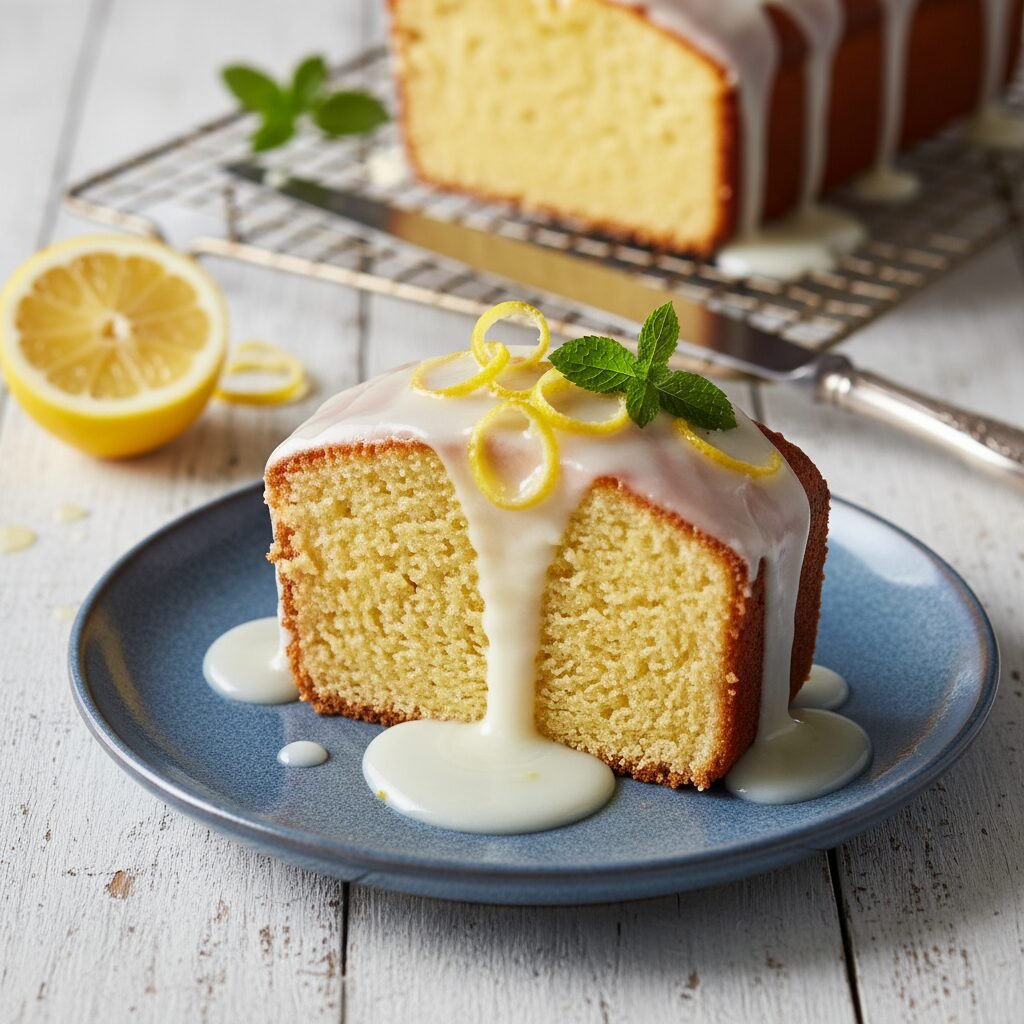

Moist Lemon Cake With Lemon Glaze Recipe
Bring a burst of sunshine into your kitchen with this incredibly moist lemon cake. Infused with fresh lemon zest and topped with a zippy, sweet tart glaze, this easy-to-make loaf offers the perfect tender crumb for breakfast, brunch, or dessert.
15 minutes
50 minutes
1 hour 5 minutes
1 Loaf (8-10 slices)
Dessert
Baking
American
Vegetarian
There is something undeniably cheerful about a lemon cake. It is the culinary equivalent of a bright, sunny morning after a week of rain. This Moist Lemon Cake with Lemon Glaze is not just another citrus dessert; it is a celebration of texture and flavor balance that transforms simple pantry staples into a masterpiece of baking. The allure of this specific recipe lies in its crumb—a texture that manages to be dense and satisfying like a traditional pound cake, yet remarkably tender and light on the palate. Unlike many sponge cakes that can turn dry within a day, this loaf relies on a specific combination of fat sources and acidity to retain moisture for days, making every slice as good as the first.
When you bite into a slice, the first thing you notice is the glaze. It provides that initial sugary crunch and an aggressive hit of tart lemon juice that wakes up the taste buds. As you break through the crust, the interior offers a soft, velvety mouthfeel, perfumed with the floral oils of lemon zest. It is a recipe that bridges the gap between a casual morning coffee companion and an elegant afternoon tea offering. Whether you are an experienced baker looking to perfect your citrus game or a novice wanting a foolproof recipe that impresses guests, this lemon cake delivers on all fronts. We dive deep into the science of lemon baking, ensuring that the flavor isn’t just a whisper of citrus, but a bold declaration. Prepare your zester and preheat your oven, because this is about to become the most requested item in your baking repertoire.
History & Origins
The history of the lemon cake is a fascinating journey that intertwines the ancient migration of citrus fruits with the evolution of European baking traditions. Lemons, originally native to the foothills of the Himalayas in north-western India, traveled slowly across the globe. They were introduced to the Mediterranean region by Arab traders around the 10th and 11th centuries, eventually becoming a staple in Italian and Spanish agriculture. However, the concept of a ‘lemon cake’ as we know it today has roots in the English ‘pound cake’ tradition of the early 1700s. The original pound cake recipe was simple: a pound each of flour, butter, eggs, and sugar. While delicious, these cakes were incredibly dense and lacked the aromatic complexity of modern desserts.
As baking powder and baking soda were introduced in the 19th century, bakers began experimenting with lighter textures. Simultaneously, the Victorian era saw a rise in the popularity of ‘tea cakes,’ where citrus zest—previously used mostly in savory dishes or candied forms—began to be incorporated into batters for its refreshing aroma. In the United States, the 20th century brought the advent of convenient baking fats like vegetable oil and the widespread availability of cultured dairy products like sour cream, both of which revolutionized the texture of cakes. The modern ‘Lemon Loaf,’ often popularized by American coffee shop culture in the late 1990s and early 2000s, represents the pinnacle of this evolution: a shift away from dry, airy sponges toward rich, moist, yogurt-or-sour-cream-enhanced batters that prioritize intense flavor and shelf stability.
Why This Recipe Works
This recipe succeeds where many others fail due to three critical scientific principles: the mechanical release of essential oils, the balance of fats, and the role of acidity. First, the ‘rubbing method.’ By massaging the lemon zest directly into the granulated sugar before adding any wet ingredients, the abrasive sugar crystals tear open the zest’s oil cells. This infuses the entire batter with a deep, floral lemon flavor that juice alone cannot achieve.
Second, the fat profile. While butter provides excellent flavor, it is about 20% water and solidifies at room temperature, which can lead to a firmer, drier cake. Vegetable oil remains liquid at room temperature, coating the flour proteins and preventing gluten over-development, which ensures the cake stays moist and tender for days. We use a hybrid approach: oil for moisture and texture, and a high-fat dairy product (Greek yogurt or sour cream) for richness.
Third, the acidity. The acid from the lemon juice and the yogurt reacts with the baking soda and baking powder. This reaction creates carbon dioxide bubbles, giving the cake a lift and a lighter crumb, while the acidity also tenderizes the gluten strands. The result is a cake that is dense enough to slice cleanly but melts in your mouth.
Why You’ll Love This Recipe
- ✓Stays moist for up to 4 days thanks to the oil and yogurt base.
- ✓Uses the ‘sugar-rubbing’ technique for maximum lemon aroma.
- ✓Requires only one bowl for the batter, minimizing cleanup.
- ✓Perfect balance of sweet cake and tart, zingy glaze.
- ✓Freezes beautifully for meal prep or make-ahead desserts.
- ✓Versatile enough for breakfast, brunch, or dessert.
Equipment You’ll Need
- ✓9×5 inch Loaf Pan
- ✓Large Mixing Bowl
- ✓Whisk
- ✓Microplane Zester
- ✓Rubber Spatula
- ✓Cooling Rack
- ✓Measuring Cups and Spoons
Ingredients
- ✓1 1/2 cups All-Purpose Flour
- ✓1 cup Granulated Sugar
- ✓2 tbsp Fresh Lemon Zest (approx. 2 lemons)
- ✓1/2 tsp Salt
- ✓2 tsp Baking Powder
- ✓3 Large Eggs, room temperature
- ✓1 cup Plain Greek Yogurt or Sour Cream
- ✓1/2 cup Vegetable Oil (or Canola Oil)
- ✓2 tbsp Fresh Lemon Juice
- ✓1 tsp Vanilla Extract
- ✓1 cup Powdered Sugar (for glaze)
- ✓2-3 tbsp Fresh Lemon Juice (for glaze)
Instructions
- Preheat your oven to 350°F (175°C). Grease a 9×5 inch loaf pan generously with butter or cooking spray, or line it with parchment paper leaving an overhang for easy removal.
- In a large mixing bowl, combine the granulated sugar and fresh lemon zest. Use your clean fingertips to rub the zest into the sugar for about 60 seconds until the sugar looks like wet sand and is very fragrant.
- Whisk the flour, baking powder, and salt into the lemon-sugar mixture until well combined.
- In a separate medium bowl or large measuring cup, whisk together the eggs, Greek yogurt (or sour cream), vegetable oil, 2 tablespoons of lemon juice, and vanilla extract until smooth and emulsified.
- Pour the wet ingredients into the dry ingredients. Use a rubber spatula to gently fold the mixture together. Do not overmix; stop as soon as the streaks of flour disappear to ensure a tender crumb.
- Pour the batter into the prepared loaf pan and smooth the top with the spatula.
- Bake for 50-60 minutes, or until a toothpick inserted into the center comes out clean or with just a few moist crumbs attached. If the top starts browning too quickly after 40 minutes, tent loosely with aluminum foil.
- Remove the cake from the oven and let it cool in the pan for about 10-15 minutes. Then, carefully lift it out using the parchment paper or invert it onto a wire cooling rack to cool completely.
- While the cake cools, prepare the glaze. In a small bowl, whisk together the powdered sugar and 2-3 tablespoons of lemon juice. Add the juice slowly until you reach your desired consistency (thicker is better for a nice white drizzle).
- Once the cake is completely cool to the touch, drizzle the glaze over the top, letting it drip down the sides. Let the glaze set for 15 minutes before slicing.
Expert Cooking Tips
- ✓Room temperature ingredients are crucial. Cold eggs or yogurt can cause the batter to seize or bake unevenly.
- ✓Do not skip rubbing the zest into the sugar. This releases the lemon oils and makes a huge difference in flavor intensity.
- ✓Measure flour correctly by spooning it into the cup and leveling it off, rather than scooping directly from the bag, to avoid a dense cake.
- ✓Tent with foil if the top browns too fast. Lemon cakes have a high sugar content and can darken quickly.
- ✓Let the cake cool completely before glazing. If the cake is too warm, the glaze will melt and soak in rather than sitting beautifully on top.
Substitutions and Variations
This recipe is quite forgiving with substitutions. If you do not have Greek yogurt, full-fat sour cream is the best alternative and provides a very similar texture. In a pinch, you can use buttermilk, though the batter will be thinner, and you may need to reduce the lemon juice slightly. For the oil, any neutral oil like canola, vegetable, or grapeseed works perfectly; melted coconut oil can also be used but will impart a slight coconut flavor. If you want to make this gluten-free, swap the all-purpose flour for a high-quality 1:1 gluten-free baking flour blend that contains xanthan gum. For a dairy-free version, use a dairy-free yogurt alternative (like coconut or almond yogurt) and ensure it is plain and unsweetened.
Common Mistakes to Avoid
The most common mistake is overmixing the batter. Once the wet and dry ingredients meet, the gluten begins to develop. If you mix too vigorously, the cake will be tough and rubbery rather than tender. Another frequent issue is underbaking. Because this is a moist, dense batter, it can sometimes look done on top while being raw in the middle; always trust the toothpick test. Using bottled lemon juice instead of fresh is a flavor killer—bottled juice lacks the brightness and floral notes of fresh citrus. Lastly, glazing too early is a tragic error; patience is key to getting that beautiful, stark white icing layer.
Serving Suggestions
This lemon cake shines when served simply with a cup of Earl Grey tea or black coffee, as the bitterness of the drink cuts through the sweetness of the glaze. For a more elaborate dessert, serve a slice with a dollop of mascarpone cheese and fresh berries (blueberries or raspberries pair exceptionally well). It is also fantastic lightly toasted in a skillet with a little butter for breakfast, served alongside yogurt and fruit.
Storage and Reheating Tips
To store, wrap the cooled cake tightly in plastic wrap or store it in an airtight container at room temperature for up to 4 days. The oil in the recipe keeps it moist. If you live in a very hot or humid climate, you may prefer to store it in the refrigerator, but bring it to room temperature before serving for the best texture. For long-term storage, wrap individual slices in plastic wrap and then foil, and freeze for up to 3 months. Thaw on the counter for an hour before eating.
Nutrition Facts (Estimated)
| Serving Size | 1 Slice |
| Calories | 340 |
| Fat | 16g |
| Saturated Fat | 3g |
| Unsaturated Fat | 12g |
| Trans Fat | 0g |
| Cholesterol | 45mg |
| Sodium | 180mg |
| Carbohydrates | 46g |
| Fiber | 1g |
| Sugar | 28g |
| Protein | 4g |
Frequently Asked Questions
Can I use Meyer lemons for this recipe?
Absolutely. Meyer lemons are sweeter and less acidic than standard lemons. If you use them, the cake will have a more floral, subtle lemon flavor. You might want to reduce the sugar slightly or add a splash of standard lemon juice to the glaze to maintain the tart balance.
Why did my cake sink in the middle?
A sinking center usually means the cake was underbaked. The structure hadn’t set enough to hold its weight. It can also be caused by opening the oven door too early, causing a temperature drop, or using too much leavening (baking powder).
Can I make this as muffins instead of a loaf?
Yes, this batter works great for muffins. Bake them at 350°F (175°C) for 18-22 minutes. The yield will be approximately 12 standard muffins.
Do I have to use a stand mixer?
No, a stand mixer is actually not recommended for this recipe as it makes it too easy to overmix. A simple whisk and a rubber spatula are the best tools to ensure a tender crumb.
Why is my glaze transparent instead of white?
If the glaze is transparent, it likely has too much liquid or was applied to a hot cake. Add more powdered sugar to thicken it into a paste-like consistency, and ensure the cake is cool.
Can I reduce the sugar in the recipe?
You can reduce the sugar in the cake batter by about 1/4 cup without ruining the texture, but reducing it further may affect the moisture and structure. The sugar helps keep the cake tender.
Can I add poppy seeds to this recipe?
Yes! Lemon and poppy seed is a classic combination. Add 1 to 2 tablespoons of poppy seeds to the dry ingredients step.
What if I don’t have a zest tool?
If you don’t have a microplane or zester, you can use the finest side of a box grater. Be careful only to grate the yellow skin and avoid the bitter white pith underneath.
Conclusion
This Moist Lemon Cake with Lemon Glaze is more than just a sweet treat; it is a reliable, comforting recipe that brings a bright spark to any occasion. By mastering the simple techniques of rubbing zest into sugar and balancing your fats, you elevate a standard loaf into a bakery-quality delight. Whether you are wrapping it up as a thoughtful gift for a neighbor or slicing it for a Sunday morning family breakfast, the result is always the same: smiles and requests for the recipe. Enjoy the process of baking this sunshine-filled loaf, and savor every zesty bite.