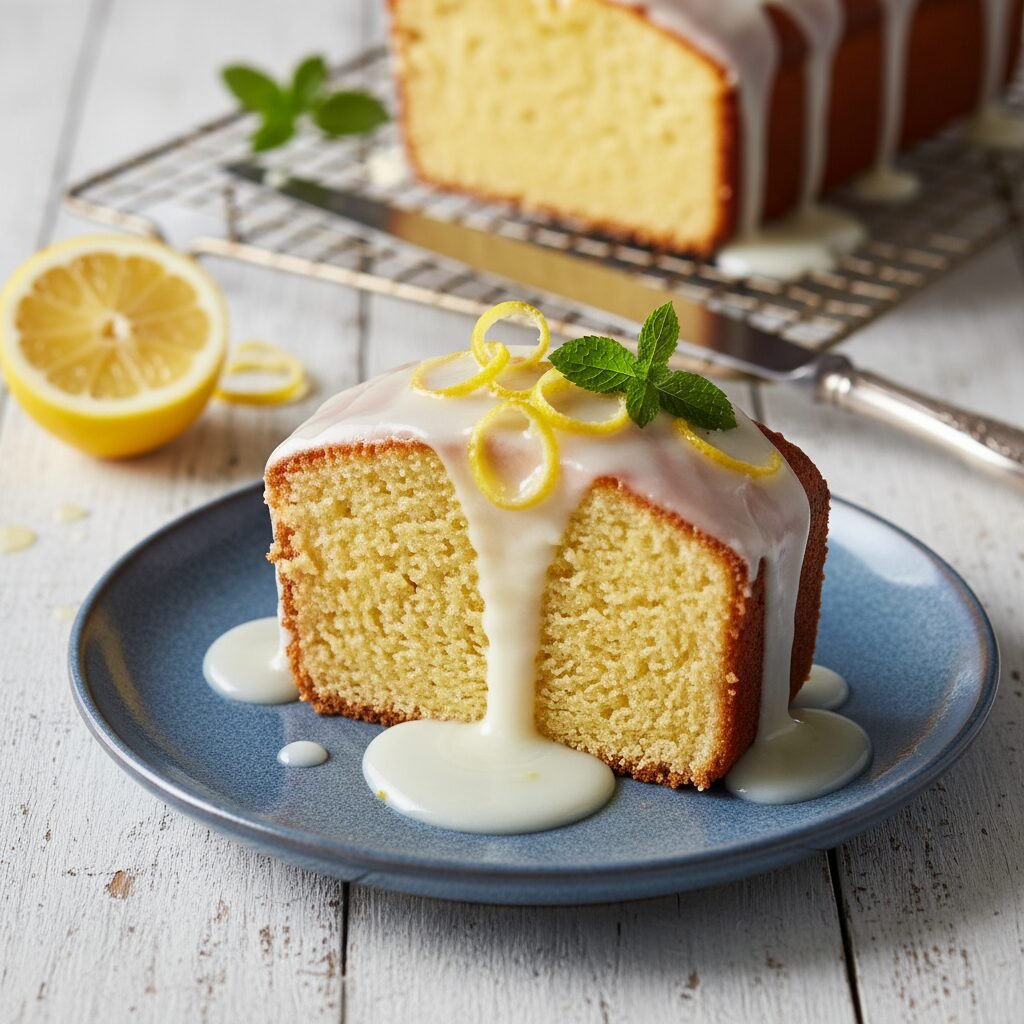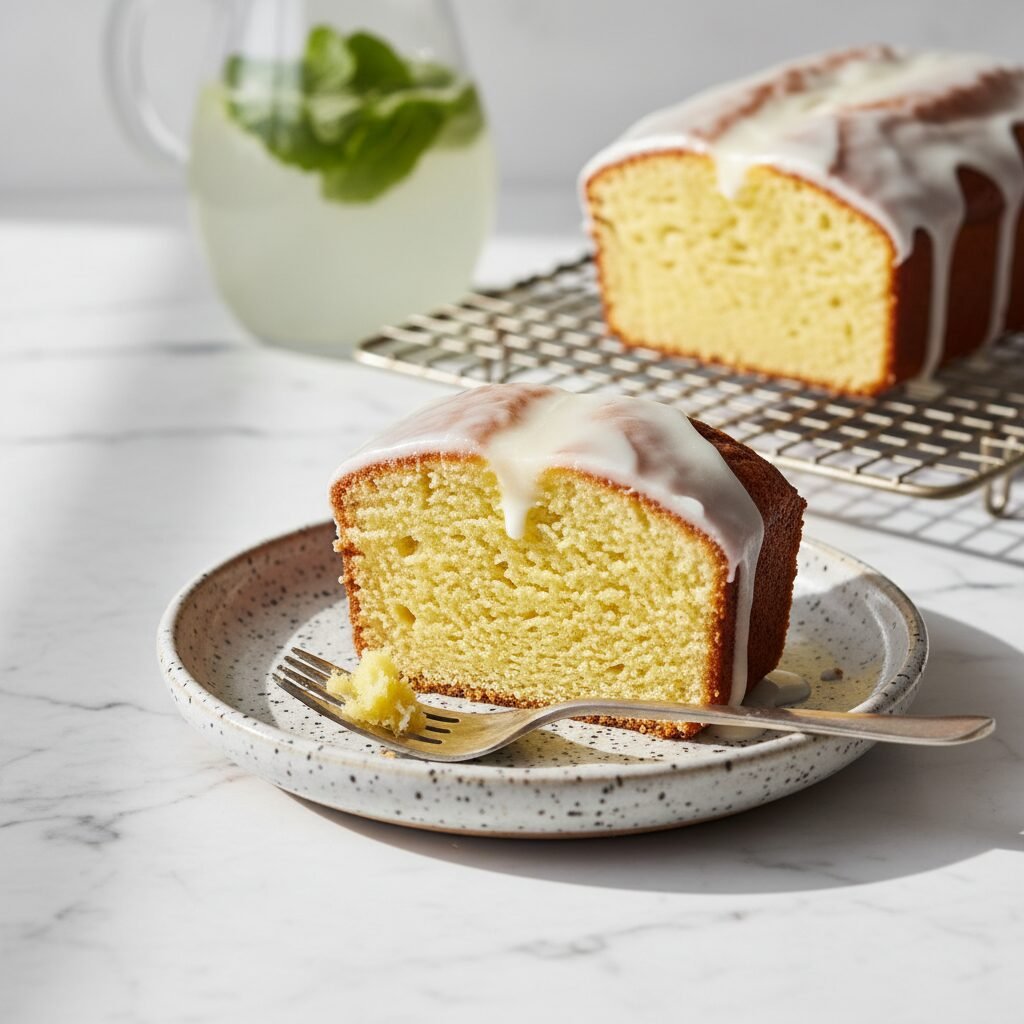
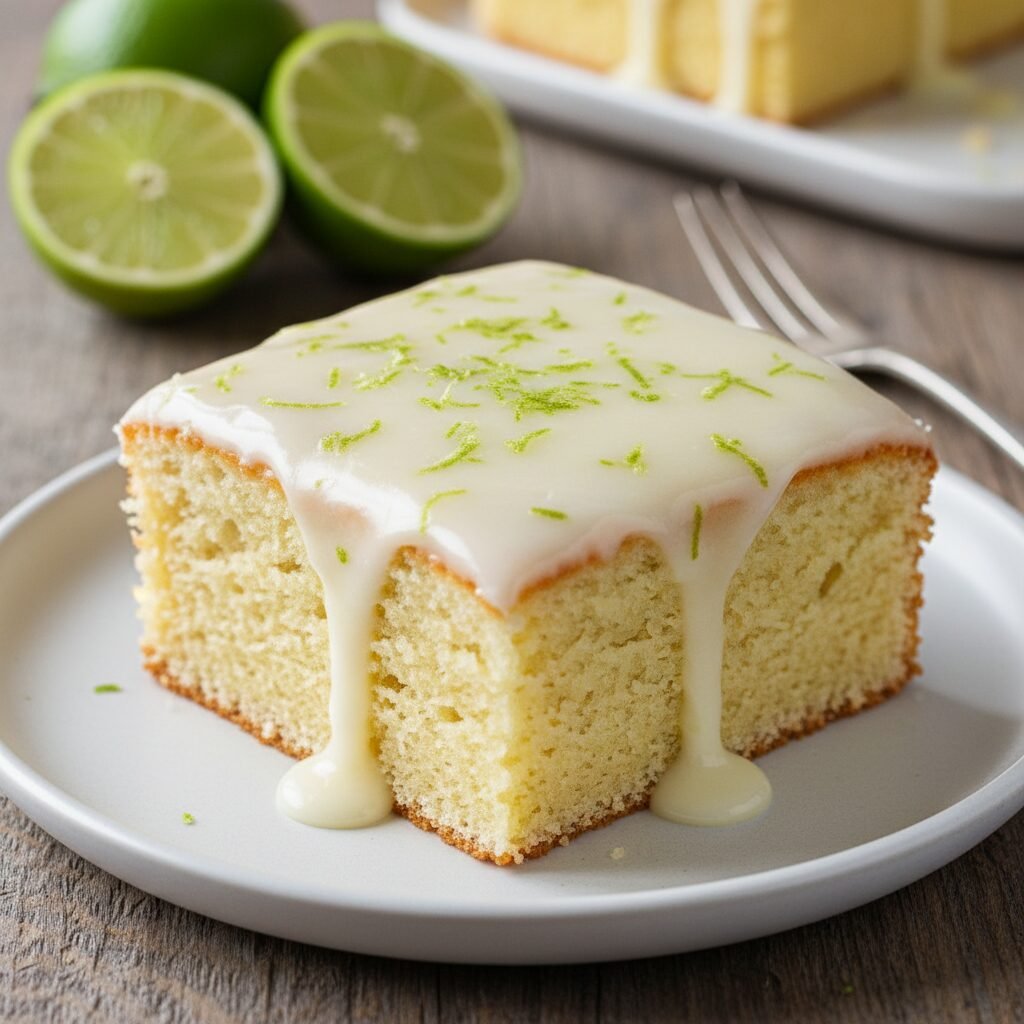
Moist Lime Snack Cake Recipe
This incredibly moist lime snack cake is the perfect balance of tangy and sweet, featuring a tender crumb infused with fresh lime zest and yogurt. It comes together in one bowl and is topped with a zippy lime glaze that makes every bite sing.
15 minutes
35 minutes
50 minutes
9 servings
Dessert
Baking
American
Vegetarian
There is something undeniably cheerful about citrus desserts. While chocolate comforts and vanilla soothes, citrus awakens the palate with a bright, sunny disposition that feels like a burst of sunshine on a cloudy day. This Moist Lime Snack Cake is the epitome of that joyful culinary experience. It is not a towering layer cake requiring hours of decoration, nor is it a fussy tart demanding delicate pastry work. Instead, it is a humble, reliable, and utterly delicious ‘snack cake’—a category of baking that champions ease, accessibility, and the simple pleasure of a mid-afternoon treat. The texture is the star of the show here: a crumb so tender and moist that it practically melts in your mouth, thanks to the strategic use of Greek yogurt and vegetable oil. The flavor profile walks a tightrope between the floral sweetness of the cake batter and the sharp, acidic punch of fresh lime juice. As it bakes, the kitchen fills with an aroma that is equal parts buttery warmth and zesty freshness. Finished with a simple powdered sugar glaze that sets into a sweet-tart shell, this cake is versatile enough to serve as a morning accompaniment to coffee, a lunchbox surprise, or a light dessert after a heavy meal. It captures the essence of uncomplicated home baking, proving that you do not need elaborate techniques to create something truly memorable.
History & Origins
The concept of the ‘snack cake’ is deeply rooted in mid-20th-century American culinary history, though its lineage traces back much further. Historically, cakes were often elaborate affairs reserved for celebrations, but as baking powder became commercially available and reliable in the late 19th century, ‘everyday cakes’ became more feasible for the home cook. The term ‘snack cake’ really found its footing in the post-WWII era, coinciding with the rise of convenience culture in the 1950s and the marketing of boxed cake mixes in the 1970s—specifically the famous ‘Snacking Cakes’ lines that required only water and a fork to mix. However, the flavor profile of this lime cake has a more global trajectory. Limes, native to Southeast Asia, traveled via trade routes to the Middle East and North Africa before being introduced to the Americas by Spanish explorers. In the United States, limes found a spiritual home in Florida, giving rise to the iconic Key Lime Pie. This snack cake recipe borrows from the Southern tradition of citrus-infused baking, where acidic ingredients like buttermilk or sour cream were often used to tenderize wheat gluten. It represents a modern fusion of the convenient American square cake and the timeless, zesty flavors that have been prized in tropical cuisines for centuries. It is a nod to the era of the ‘coffee klatch,’ where neighbors would gather for a simple slice of cake and conversation, prioritizing flavor and hospitality over ornamental presentation.
Why This Recipe Works
This recipe succeeds where many dry, lackluster fruit cakes fail because of three specific scientific principles: fat selection, acidity, and flavor infusion. First, we use vegetable oil instead of butter as the primary fat. While butter adds flavor, it is solid at room temperature, which can lead to a firmer, drier texture once the cake cools. Oil remains liquid at room temperature, ensuring the cake stays incredibly soft and moist for days. Second, the inclusion of Greek yogurt (or sour cream) is crucial. The acidity in the yogurt reacts with the baking powder to create a superior rise, while the milk solids and fats add richness. More importantly, the acid breaks down the gluten strands in the flour, preventing toughness and resulting in a plush, velvety crumb. Finally, the method of ‘rubbing’ the lime zest into the granulated sugar before mixing is a game-changer. The abrasive texture of the sugar crystals ruptures the oil glands in the zest, releasing potent essential oils that permeate the entire batter far more effectively than simply stirring the zest in at the end. This ensures that every single crumb is infused with aromatic lime flavor, rather than just having pockets of zest.
Why You’ll Love This Recipe
- ✓Incredibly moist texture due to Greek yogurt and oil
- ✓Bright, zesty flavor from fresh lime zest and juice
- ✓Simple one-bowl preparation method
- ✓Perfect balance of sweet and tart
- ✓Keeps well for days without drying out
- ✓No fancy equipment required
Equipment You’ll Need
- ✓8×8 inch square baking pan
- ✓Large mixing bowl
- ✓Whisk
- ✓Microplane or zester
- ✓Rubber spatula
- ✓Measuring cups and spoons
- ✓Citrus juicer
Ingredients
- ✓1 cup granulated sugar
- ✓2 tablespoons fresh lime zest (approx. 2-3 limes)
- ✓1 1/2 cups all-purpose flour
- ✓2 teaspoons baking powder
- ✓1/2 teaspoon salt
- ✓3/4 cup plain Greek yogurt (full fat recommended)
- ✓3 large eggs, room temperature
- ✓1/2 cup vegetable oil (or canola oil)
- ✓1 teaspoon vanilla extract
- ✓1 cup powdered sugar (for glaze)
- ✓2-3 tablespoons fresh lime juice (for glaze)
Instructions
- Preheat your oven to 350°F (175°C). Grease an 8×8 inch baking pan with non-stick spray or line it with parchment paper for easy removal.
- In a large mixing bowl, combine the granulated sugar and fresh lime zest. Use your fingertips to rub the zest into the sugar for about 1-2 minutes until the mixture looks like wet sand and is very fragrant. This releases the lime oils.
- Whisk the eggs into the sugar-zest mixture one at a time until well combined and slightly pale.
- Add the Greek yogurt, vegetable oil, and vanilla extract to the bowl. Whisk vigorously until the wet ingredients are fully emulsified and smooth.
- In a separate small bowl, sift together the flour, baking powder, and salt. (Alternatively, sprinkle them over the wet ingredients if you are careful to avoid clumps).
- Gently fold the dry ingredients into the wet mixture using a rubber spatula. Mix only until no streaks of flour remain. Do not overmix, or the cake will be tough.
- Pour the batter into the prepared baking pan and smooth the top with the spatula.
- Bake for 30-35 minutes, or until a toothpick inserted into the center comes out clean or with just a few moist crumbs attached. The top should be light golden brown.
- Remove the cake from the oven and let it cool in the pan for at least 15-20 minutes.
- While the cake cools, prepare the glaze. Whisk together the powdered sugar and 2 tablespoons of fresh lime juice. If the glaze is too thick, add more juice a teaspoon at a time until it reaches a pourable consistency.
- Pour the glaze over the slightly warm cake, spreading it to the edges. Let the glaze set before slicing into squares.
Expert Cooking Tips
- ✓Use room temperature eggs and yogurt to ensure the batter emulsifies properly without curdling.
- ✓Zest the limes before you juice them; it is much harder to zest a squeezed lime.
- ✓Do not skip the step of rubbing the zest into the sugar; it significantly boosts the citrus aroma.
- ✓Check the cake at the 30-minute mark to prevent overbaking, which can dry out the crumb.
- ✓If you prefer a thicker, frosting-like topping, use less lime juice and more powdered sugar.
- ✓Tap the pan on the counter before baking to release any large air bubbles.
Substitutions and Variations
This recipe is quite forgiving and allows for several substitutions. If you do not have Greek yogurt, full-fat sour cream is an excellent 1:1 substitute that provides the same acidity and richness. In a pinch, you can also use buttermilk, though the batter will be slightly thinner. For the oil, any neutral oil like canola, grapeseed, or light olive oil works well; melted butter can be used for flavor, but the cake may not stay moist as long. To make this gluten-free, substitute the all-purpose flour with a high-quality 1:1 gluten-free flour blend that includes xanthan gum. If you want to vary the citrus, lemons or oranges work beautifully using the exact same measurements. For a lower sugar option, you can reduce the sugar in the cake by 1/4 cup, though this may slightly alter the texture.
Common Mistakes to Avoid
The most common mistake with this cake is overmixing the batter after adding the flour. Overmixing develops gluten, turning a tender cake into a rubbery one; always stop mixing as soon as the flour disappears. Another issue is zesting too deeply; be careful to only remove the green outer layer of the lime skin, as the white pith underneath is bitter and will ruin the flavor profile. Baking the cake in a pan that is too large (like a 9×13) will result in a very flat, dry cake, so stick to an 8×8 or 9×9 inch pan. Finally, applying the glaze while the cake is piping hot will cause it to melt completely and soak in, disappearing rather than forming a nice layer on top. Wait until it is warm, not hot.
Serving Suggestions
This Moist Lime Snack Cake is versatile in its presentation. For a casual afternoon treat, serve it simply as is, perhaps with a cup of Earl Grey tea or a cold glass of milk. To elevate it for a dessert course, serve a slice with a dollop of lightly sweetened whipped cream and a garnish of fresh berries, such as raspberries or blackberries, which contrast beautifully with the lime. In the summer, it pairs wonderfully with a scoop of vanilla bean ice cream or coconut sorbet. You can also garnish with thin lime wheels or candied lime peel for a professional bakery look.
Storage and Reheating Tips
Because this cake is oil-based, it stays moist at room temperature for quite a while. Store the cake in an airtight container on the counter for up to 3 days. If you live in a very hot or humid climate, you may prefer to store it in the refrigerator for up to 5 days, though allow it to come to room temperature before eating for the best texture. The cake also freezes beautifully. To freeze, wrap individual slices tightly in plastic wrap and then place them in a freezer-safe bag for up to 3 months. Thaw on the counter for an hour before serving.
Nutrition Facts (Estimated)
| Serving Size | 1 square |
| Calories | 285 |
| Fat | 12g |
| Saturated Fat | 2g |
| Unsaturated Fat | 9g |
| Trans Fat | 0g |
| Cholesterol | 35mg |
| Sodium | 180mg |
| Carbohydrates | 40g |
| Fiber | 1g |
| Sugar | 22g |
| Protein | 4g |
Frequently Asked Questions
Can I use bottled lime juice instead of fresh?
While you can use bottled juice for the glaze, fresh lime juice is highly recommended for the best flavor. More importantly, you absolutely need fresh lime zest for the cake batter, which you cannot get from a bottle.
Why did my cake sink in the middle?
Cakes usually sink because the oven door was opened too early, causing a temperature drop, or because the batter was over-leavened (too much baking powder). Ensure your oven is fully preheated and avoid opening the door until the minimum bake time has passed.
Can I double this recipe?
Yes, you can double the ingredients and bake it in a 9×13 inch pan. You will likely need to increase the baking time by 5-10 minutes. Keep an eye on it and test with a toothpick.
My glaze is too runny, how do I fix it?
If the glaze is too thin, simply whisk in more powdered sugar a tablespoon at a time until it reaches your desired consistency. If it’s too thick, add a few drops of lime juice.
Can I make this cake vegan?
To make it vegan, use a plant-based yogurt (like coconut or soy yogurt) and a flax egg or commercial egg replacer. The texture might be slightly denser, but it will still be delicious.
Is it necessary to sift the flour?
Sifting helps aerate the flour and prevents lumps, which is helpful for a light snack cake. If you don’t have a sifter, whisk the flour in a bowl before measuring to lighten it up.
Can I use a different size pan?
An 8×8 or 9×9 inch pan is ideal. A loaf pan can be used, but the baking time will increase significantly (likely 45-55 minutes) and the edges might darken before the center is done.
How do I know when the cake is exactly done?
The cake is done when the edges pull away slightly from the pan, the top springs back when gently pressed, and a toothpick inserted into the center comes out clean or with a few moist crumbs.
Conclusion
This Moist Lime Snack Cake is a testament to the beauty of simplicity in baking. It requires minimal effort yet delivers a sophisticated, vibrant flavor that appeals to both adults and children. Whether you are a novice baker looking for a foolproof recipe or a seasoned pro seeking a quick and satisfying treat, this cake is sure to earn a permanent spot in your recipe box. The zesty aroma that fills your kitchen is just the prelude to the delightful, tangy bite that awaits. So, grab those limes, preheat your oven, and get ready to enjoy a slice of sunshine.