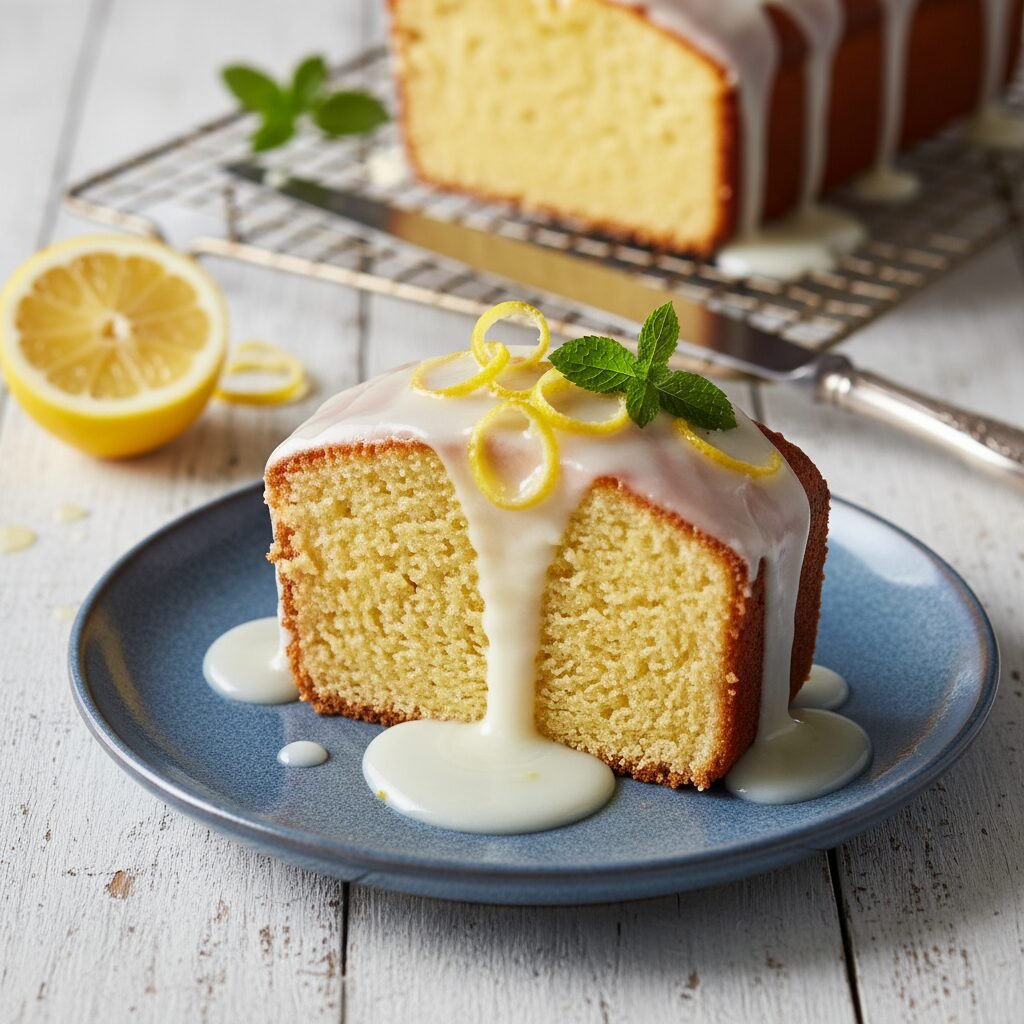
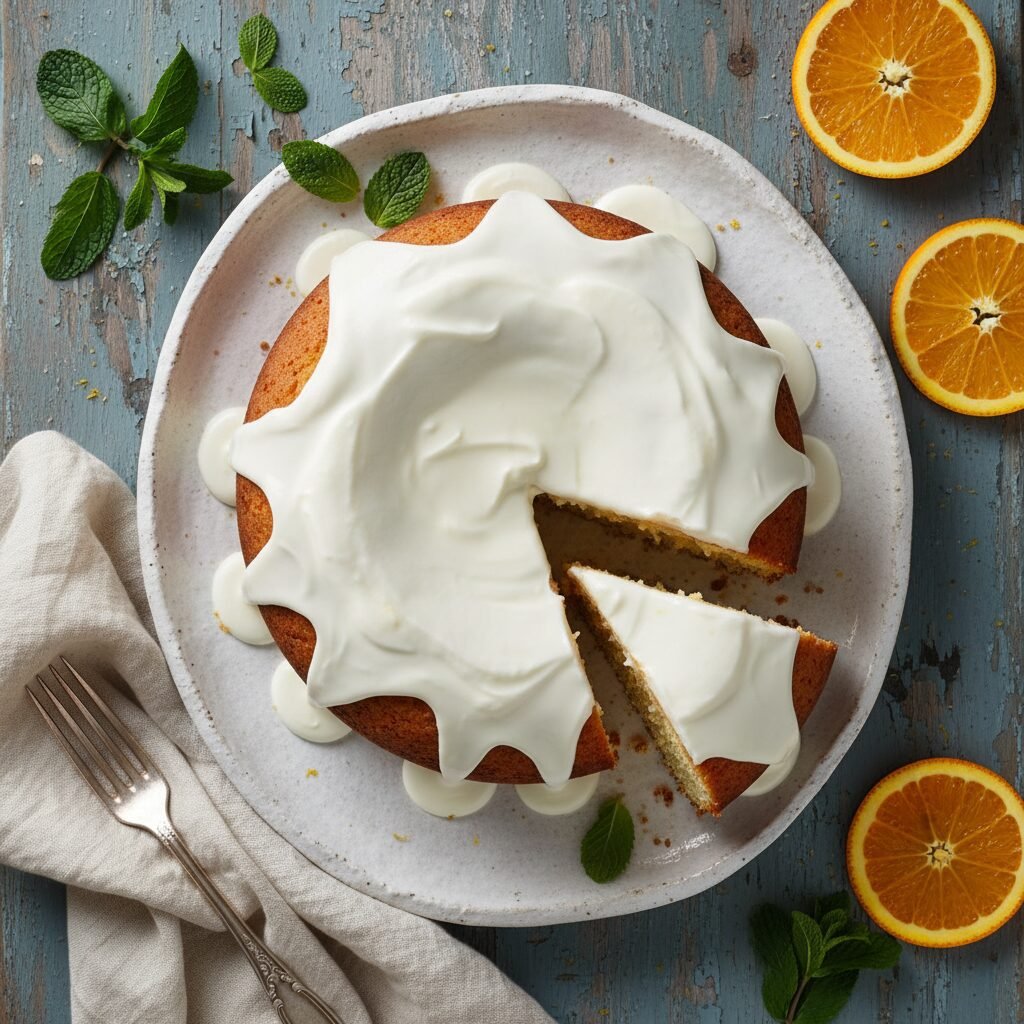
Moist Orange Cake With Yogurt Glaze Recipe
This incredibly tender orange cake is infused with fresh citrus zest and enriched with Greek yogurt for a crumb that stays moist for days. Topped with a simple, tangy yogurt glaze, it is the perfect balance of sweet and tart, making it an ideal companion for your morning coffee or an afternoon treat.
20 minutes
50 minutes
1 hour 10 minutes
1 Loaf (10-12 servings)
Dessert / Breakfast
Baking
French-American
Vegetarian
There is something undeniably cheerful about baking with citrus. As the zest hits the sugar, releasing those essential oils, the entire kitchen fills with a fragrance that feels like bottled sunshine. This Moist Orange Cake with Yogurt Glaze is my ode to that feeling. It is not just another pound cake; it is a meticulously tested recipe designed to banish dry, crumbly cakes from your repertoire forever. The secret weapon here is the combination of Greek yogurt and oil. While butter provides flavor, oil ensures the cake remains soft even after sitting on the counter for a few days, and the yogurt adds a subtle tang that cuts through the sweetness while tenderizing the gluten. This cake bridges the gap between a humble breakfast loaf and an elegant dessert. It is rustic enough to slice thickly for a Tuesday morning breakfast but sophisticated enough, with its glossy, dripping glaze, to serve to guests at a weekend brunch. The texture is dense yet fluffy, a paradox that only the best yogurt cakes achieve. Every bite bursts with the brightness of fresh orange juice and the floral notes of the zest, wrapped in a creamy, sugary glaze that hardens just enough to provide a satisfying texture contrast. Whether you are a novice baker or a seasoned pro, this recipe delivers high-impact flavor with minimal effort, proving that sometimes the simplest ingredients yield the most luxurious results.
History & Origins
The lineage of this orange yogurt cake can be traced back to the beloved French classic, ‘Gâteau au Yaourt’ (Yogurt Cake). In France, this is often the very first cake a child learns to bake. The traditional method uses the yogurt pot itself as a measuring cup—a system of ratios that is as foolproof as it is charming. This simplicity made it a household staple across Europe, often served as a ‘goûter’ (after-school snack) or a simple tea cake. Historically, the incorporation of fermented dairy products like yogurt, sour cream, or buttermilk into cakes became popular in the early 20th century as baking soda and baking powder became more refined. The acidity in these dairy products was found to react beautifully with chemical leaveners, creating a lighter lift and a more tender crumb than milk alone could achieve. As for the citrus element, the sweet orange (Citrus sinensis) has a storied past, traveling from ancient China to the Mediterranean and eventually to the Americas. Oranges were once a symbol of immense luxury and status in Europe, often gifted during holidays. By combining the rustic, practical French yogurt cake technique with the bright, sun-ripened flavors of American citrus cultivation, this recipe represents a modern fusion of comfort baking traditions. It takes the humble ‘pot cake’ concept and elevates it with a saturation of flavor that celebrates the global journey of the orange from a rare luxury to a beloved kitchen staple.
Why This Recipe Works
This recipe succeeds where others fail due to the specific interaction between the ingredients’ acidity and fat content. First, we use the ‘rubbing in’ method for the zest and sugar. By massaging the orange zest into the granulated sugar with your fingertips before adding any liquid, you abrasive action breaks the oil cells in the zest, infusing the sugar crystals with potent citrus flavor that permeates the entire batter, rather than just having specs of zest that offer occasional bursts of flavor. Second, the choice of fat is critical. While butter tastes great, it is 80-82% fat and roughly 18% water; when it cools, it solidifies, which can make a cake feel dry or dense at room temperature. Vegetable oil, however, remains liquid at room temperature, coating the flour proteins and preventing them from bonding too strongly with the liquid (gluten formation). This results in a sensation of ‘moistness’ that lasts for days. Finally, the Greek yogurt plays a dual role. Its high protein content adds structure, allowing us to use less egg which can sometimes make a cake rubbery, and its acidity (lactic acid) breaks down gluten strands for a tender crumb while activating the baking soda for a superior rise. The glaze, made with yogurt instead of milk, mirrors the tangy flavor profile of the cake, creating a cohesive taste experience from the crust to the center.
Why You’ll Love This Recipe
- ✓Stays moist for up to 4 days thanks to the yogurt-oil blend.
- ✓Infused with real orange zest for natural, vibrant citrus flavor.
- ✓No fancy equipment needed; can be made with a whisk and two bowls.
- ✓The glaze adds a creamy, tangy finish that balances the sweetness.
- ✓Versatile: Works as a breakfast loaf, afternoon snack, or dessert.
- ✓Freezes beautifully for meal prep or unexpected guests.
Equipment You’ll Need
- ✓9×5 inch Loaf Pan
- ✓Microplane or Zester
- ✓Large Mixing Bowl
- ✓Medium Mixing Bowl
- ✓Whisk
- ✓Rubber Spatula
- ✓Wire Cooling Rack
- ✓Measuring Cups and Spoons
Ingredients
- ✓1 1/2 cups All-purpose flour
- ✓2 tsp Baking powder
- ✓1/2 tsp Kosher salt
- ✓1 cup Granulated sugar
- ✓1 tbsp Fresh orange zest (approx. 1 large orange)
- ✓3/4 cup Plain Greek yogurt (whole milk or 2%)
- ✓1/2 cup Vegetable oil (or any neutral oil like canola or grapeseed)
- ✓2 Large eggs, room temperature
- ✓1 tsp Vanilla extract
- ✓1/4 cup Freshly squeezed orange juice
- ✓1 cup Powdered sugar (for glaze)
- ✓2 tbsp Plain Greek yogurt (for glaze)
- ✓1-2 tsp Fresh orange juice (for glaze consistency)
Instructions
- Preheat your oven to 350°F (175°C). Grease a 9×5 inch loaf pan generously with non-stick spray or butter, and line the bottom with parchment paper for easy removal.
- In a medium bowl, whisk together the flour, baking powder, and salt until well combined. Set aside.
- In a large mixing bowl, combine the granulated sugar and fresh orange zest. Using your clean fingertips, rub the zest into the sugar for about 1-2 minutes until the sugar looks like wet sand and is incredibly fragrant. This step is crucial for maximum flavor.
- Add the Greek yogurt, vegetable oil, eggs, and vanilla extract to the sugar mixture. Whisk vigorously until the mixture is smooth and creamy.
- Gradually stir the dry ingredients into the wet ingredients. Stop mixing when there are still a few streaks of flour visible.
- Pour in the 1/4 cup of fresh orange juice. Gently fold the batter with a spatula just until combined and smooth. Do not overmix, or the cake will be tough.
- Pour the batter into the prepared loaf pan and smooth the top with your spatula.
- Bake for 45-55 minutes, or until a toothpick inserted into the center comes out clean or with just a few moist crumbs attached. The top should be golden brown and domed.
- Remove from the oven and let the cake cool in the pan for 10-15 minutes. Then, run a knife around the edges and carefully invert it onto a wire rack to cool completely.
- While the cake cools, make the glaze. In a small bowl, whisk together the powdered sugar, 2 tablespoons of Greek yogurt, and 1 teaspoon of orange juice. Add more juice sparingly until you reach a thick, pourable consistency.
- Once the cake is completely cool to the touch, pour the glaze over the top, letting it drip down the sides. Let the glaze set for 15 minutes before slicing.
Expert Cooking Tips
- ✓Room Temperature Ingredients: Ensure your eggs and yogurt are at room temperature to prevent the batter from separating or curdling.
- ✓Zest First: Always zest your orange before juicing it; it is nearly impossible to zest a squeezed orange.
- ✓Don’t Overmix: When combining wet and dry ingredients, stop as soon as the flour disappears to keep the cake tender.
- ✓The Toothpick Test: Check the cake at the 45-minute mark. Wet batter means it needs more time; moist crumbs mean it is perfect.
- ✓Cool Completely: Do not glaze a warm cake, or the glaze will simply melt and soak into the sponge rather than sitting on top.
- ✓Greek Yogurt: Use full-fat or 2% Greek yogurt for the richest texture; non-fat can lead to a drier crumb.
- ✓Parchment Sling: Leave an overhang of parchment paper on the long sides of the pan to easily lift the cake out.
Substitutions and Variations
This recipe is quite adaptable. If you do not have vegetable oil, you can use melted coconut oil or a light olive oil, though olive oil will lend a slightly savory, fruity note that pairs well with citrus. For the yogurt, sour cream is an excellent 1:1 substitute that provides similar richness and acidity. If you are out of Greek yogurt, regular plain yogurt works, but the batter might be slightly thinner; avoid flavored yogurts to control the sugar content. To make this gluten-free, swap the all-purpose flour for a high-quality 1:1 Gluten-Free Baking Flour blend that contains xanthan gum. If you prefer lemons or grapefruits, you can swap the zest and juice measurements exactly for a different citrus profile. For a lower sugar option, you can reduce the sugar in the cake to 3/4 cup, though the texture may change slightly.
Common Mistakes to Avoid
The most common mistake with this cake is over-baking. Because of the oil and yogurt, the cake is naturally moist, but leaving it in the oven too long will dry it out. Start checking early. Another error is zesting too deep; only remove the bright orange outer layer of the skin. The white pith underneath is bitter and will ruin the flavor profile. Additionally, skipping the step of rubbing the zest into the sugar is a missed opportunity for flavor; simply stirring it in doesn’t release the oils effectively. Finally, adding the glaze while the cake is hot is a frequent error. Patience is key; the cake must be cool for that beautiful, thick white drip effect.
Serving Suggestions
This cake is versatile enough for several occasions. For a breakfast spread, serve thick slices alongside a bowl of mixed berries and a hot cappuccino. For dessert, elevate it by serving a slice with a dollop of mascarpone cheese or whipped cream and some candied orange peel. It also pairs beautifully with Earl Grey tea, as the bergamot in the tea complements the orange zest in the cake. If you are hosting a brunch, arrange slices on a platter garnished with fresh mint leaves and edible flowers for a stunning presentation.
Storage and Reheating Tips
This cake stores exceptionally well due to the oil content. Keep it in an airtight container at room temperature for up to 3 days. If you live in a very hot or humid climate, you may want to store it in the refrigerator for up to 5 days, but bring it to room temperature before eating for the best texture. To freeze, wrap individual slices or the whole unglazed cake tightly in plastic wrap, then a layer of aluminum foil. It can be frozen for up to 3 months. Thaw on the counter overnight. It is best to freeze the cake without the glaze and add fresh glaze after thawing.
Nutrition Facts (Estimated)
| Serving Size | 1 slice |
| Calories | 285 |
| Fat | 14g |
| Saturated Fat | 2g |
| Unsaturated Fat | 11g |
| Trans Fat | 0g |
| Cholesterol | 35mg |
| Sodium | 180mg |
| Carbohydrates | 36g |
| Fiber | 1g |
| Sugar | 22g |
| Protein | 5g |
Frequently Asked Questions
Can I use store-bought orange juice instead of fresh?
Yes, you can, but fresh is always better. Store-bought juice often has added sugar and lacks the bright, acidic ‘zing’ of fresh juice. Since you need oranges for the zest anyway, juicing them is highly recommended.
Why did my cake sink in the middle?
Sinking usually happens if the oven door was opened too early, causing a temperature drop, or if the cake was underbaked. It can also happen if there was too much leavening (baking powder) or if the batter was overmixed.
Can I bake this in a bundt pan?
Absolutely! This recipe fits a 6-cup bundt pan nicely. If using a standard large 10-12 cup bundt pan, you should double the recipe to ensure it fills the pan. Adjust baking time accordingly, usually adding 10-15 minutes for a larger volume.
Can I make this dairy-free?
Yes. Use a plant-based Greek-style yogurt (like almond or coconut based) and ensure your milk alternative is thick. The texture might be slightly different, but it works well.
My glaze is too runny, how do I fix it?
Simply add more powdered sugar, one tablespoon at a time, whisking until it thickens. If it’s too thick, add orange juice one drop at a time.
Can I add mix-ins like nuts or chocolate?
Yes! 1/2 cup of chopped walnuts, pecans, or dark chocolate chips would be delicious. Toss them in a teaspoon of flour before adding to the batter to prevent them from sinking to the bottom.
Do I have to use a mixer?
No, this cake is very forgiving. You can easily make it by hand with a whisk and a spatula. Just ensure you whisk the wet ingredients thoroughly to emulsify the eggs and oil.
Is the yogurt glaze necessary?
Not strictly, but it adds a lot to the cake. If you prefer a less sweet option, you can simply dust the cooled cake with powdered sugar or serve it plain.
Conclusion
This Moist Orange Cake with Yogurt Glaze is truly a keeper—a recipe that delivers high reward for low effort. It captures the essence of sunny days and comforting home baking in a single loaf. Whether you are baking it for a Sunday brunch, a gift for a neighbor, or just a treat for yourself, the bright citrus flavor and impossibly tender crumb are sure to bring a smile to anyone’s face. Don’t forget to pin this recipe to your favorite dessert board so you can find it whenever the craving for something sweet and tangy strikes!