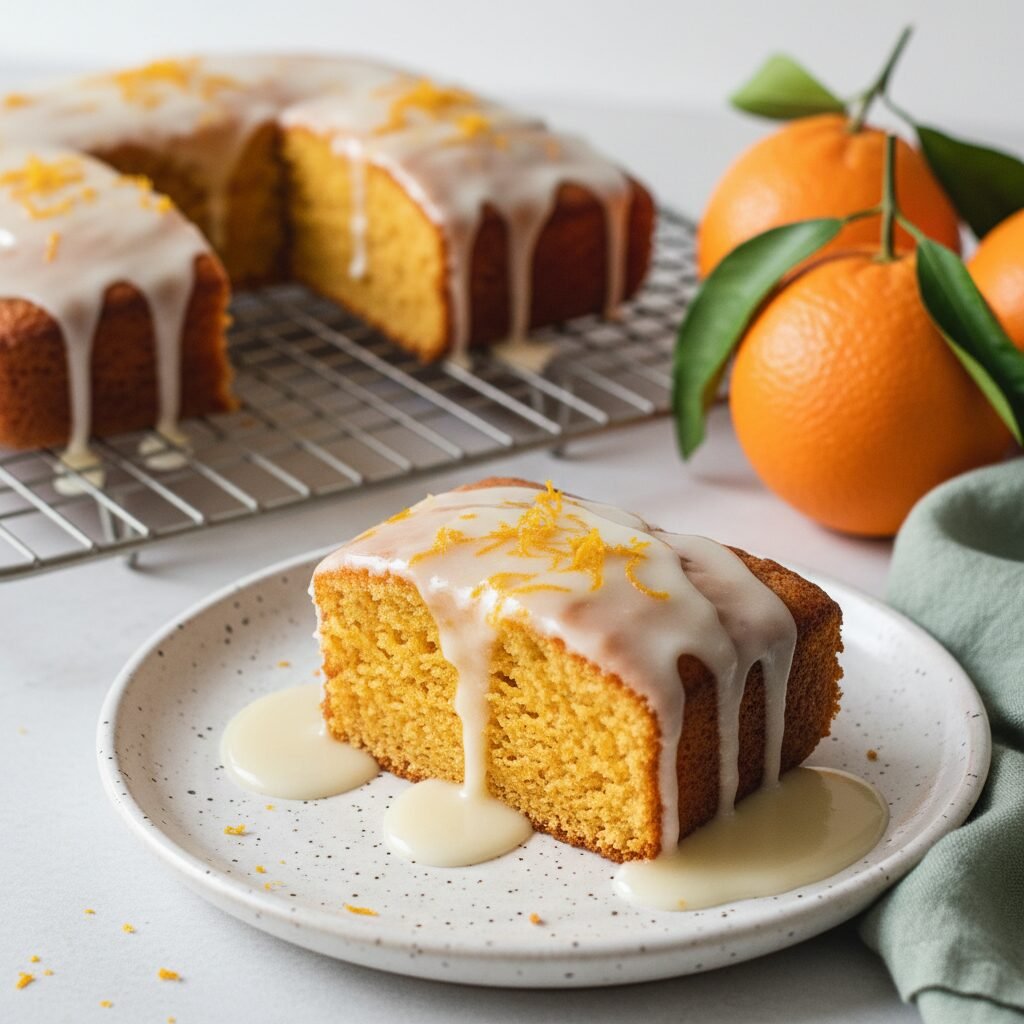
Moist Orange Snack Cake Recipe
Brighten up your day with this incredibly tender and aromatic orange snack cake. Bursting with fresh citrus flavor and topped with a sweet, zesty glaze, this one-bowl wonder is the perfect easy dessert or afternoon pick-me-up.
15 minutes
35 minutes
50 minutes
9-12 servings
Dessert
Baking
American
Vegetarian
There is something undeniably cheerful about citrus desserts. In the depths of winter or the height of summer, the vibrant, zesty aroma of fresh oranges has the power to lift spirits instantly. This Moist Orange Snack Cake is my love letter to that sensation—a recipe that prioritizes texture and authentic flavor above all else. Unlike heavy, buttercream-laden layer cakes, a ‘snack cake’ is designed for casual enjoyment. It is the kind of treat you can slice right out of the baking pan, perhaps with a cup of coffee in hand, without the need for a special occasion.
The magic of this particular recipe lies in its crumb. We are aiming for a texture that is impossibly soft, almost plush, yet sturdy enough to hold up to a generous pouring of tart orange glaze. By utilizing both fresh orange juice and a significant amount of zest, we bypass the artificial notes often found in store-bought orange treats. The result is a sophisticated, floral citrus profile that dances on the palate. This cake bridges the gap between a morning coffee cake and a decadent evening dessert. It is humble in appearance but spectacular in taste, making it a staple recipe for busy parents, novice bakers, and anyone who appreciates the simple joy of homemade baking. Whether you are hosting a brunch, looking for a lunchbox addition, or simply craving something sweet and tangy, this orange snack cake delivers pure sunshine in every bite.
History & Origins
The concept of the ‘snack cake’ is deeply rooted in mid-20th-century American home baking, though its lineage can be traced back much further. During the 1950s and 1960s, as convenience cooking began to rise, the ‘snacking cake’ emerged as a distinct category. These were cakes that were simple to prepare—often requiring only one bowl—and were baked in square or rectangular pans rather than elaborate round layers. They were meant to be kept on the counter, readily available for after-school treats or unexpected guests.
However, the use of oranges in cakes has a more ancient and global history. Oranges, originally cultivated in Southeast Asia, traveled the trade routes to the Mediterranean and eventually to the Americas. In Mediterranean cuisine, olive oil cakes flavored with whole boiled oranges or zest have been staples for centuries, celebrated for their moist texture and longevity. The American version of the orange cake often evolved from the classic pound cake, adapted with the addition of citrus juices and zests as access to fresh produce improved with the expansion of the railway systems connecting Florida and California groves to the rest of the country.
This specific recipe pays homage to those vintage ‘pan cakes’ found in community cookbooks from the 1970s, where practicality met flavor. It strips away the complexity of creaming butter and sugar, leaning instead on the science of oil-based batters which were popularized during wartime rationing and remained popular for the superior moisture they provided. Today, the orange snack cake represents a return to honest, unpretentious baking—a slice of culinary history that champions the natural flavor of the fruit.
Why This Recipe Works
This recipe succeeds where others fail due to a specific balance of fat, acidity, and method. First, we use oil instead of butter as the primary fat. While butter provides flavor, it contains water and milk solids that can dry out a cake over time. Oil is 100% fat and remains liquid at room temperature, coating the flour proteins more effectively to inhibit gluten formation. This results in a tender, stay-fresh crumb that remains moist for days.
Secondly, the inclusion of Greek yogurt (or sour cream) is crucial. The acidity in the yogurt reacts with the baking soda to create carbon dioxide bubbles, giving the cake a superior lift and a fluffy, open texture. Furthermore, the protein and fat in the yogurt add richness without heaviness.
Regarding flavor, we use the ‘rubbing method’ for the sugar and zest. By massaging the orange zest into the granulated sugar before adding liquid ingredients, we mechanically release the essential oils from the zest. This infuses the sugar itself with orange essence, ensuring the flavor is distributed evenly throughout the batter rather than locked in distinct bits of zest. Finally, the glaze is applied while the cake is still slightly warm. This allows a portion of the glaze to seep into the upper crust of the cake, creating a sticky, marmalade-like layer that locks in moisture and intensifies the citrus punch.
Why You’ll Love This Recipe
- ✓Requires only one bowl for the batter, minimizing cleanup.
- ✓Uses fresh orange zest and juice for authentic, non-artificial flavor.
- ✓Stays moist for up to 4 days thanks to the oil and yogurt base.
- ✓Versatile enough for breakfast, brunch, or dessert.
- ✓Can be made gluten-free easily with a standard 1:1 flour blend.
- ✓The glaze adds a perfect tart-sweet finish that forms a delicate crust.
Equipment You’ll Need
- ✓8×8 inch square baking pan
- ✓Large mixing bowl
- ✓Whisk
- ✓Rubber spatula
- ✓Microplane or zester
- ✓Citrus juicer
- ✓Measuring cups and spoons
- ✓Wire cooling rack
Ingredients
- ✓1 1/2 cups All-Purpose Flour
- ✓1 cup Granulated Sugar
- ✓1/2 tsp Salt
- ✓1 tsp Baking Powder
- ✓1/4 tsp Baking Soda
- ✓3 large Eggs, room temperature
- ✓1/2 cup Vegetable Oil (or any neutral oil)
- ✓1/2 cup Greek Yogurt or Sour Cream
- ✓2 tbsp Fresh Orange Zest (approx. 2 oranges)
- ✓1 tsp Vanilla Extract
- ✓1/4 cup Freshly Squeezed Orange Juice
- ✓GLAZE: 1 cup Powdered Sugar
- ✓GLAZE: 2-3 tbsp Freshly Squeezed Orange Juice
- ✓GLAZE: 1 tsp Orange Zest (optional for garnish)
Instructions
- Preheat your oven to 350°F (175°C). Grease an 8×8 inch square baking pan with non-stick spray or line it with parchment paper leaving an overhang for easy removal.
- In a large mixing bowl, combine the granulated sugar and 2 tablespoons of fresh orange zest. Use your fingertips to rub the zest into the sugar until it resembles wet sand and is very fragrant. This releases the essential oils.
- Whisk the eggs into the sugar-zest mixture until pale and slightly frothy, about 1-2 minutes.
- Add the vegetable oil, Greek yogurt (or sour cream), vanilla extract, and 1/4 cup fresh orange juice. Whisk until the wet ingredients are completely combined and smooth.
- In a separate medium bowl (or directly into the wet bowl if you are careful), sift together the flour, baking powder, baking soda, and salt.
- Gently fold the dry ingredients into the wet ingredients using a rubber spatula. Mix just until no streaks of flour remain. Do not overmix, or the cake will be tough.
- Pour the batter into the prepared baking pan and smooth the top with the spatula.
- Bake for 30-35 minutes, or until a toothpick inserted into the center comes out clean or with just a few moist crumbs attached. The top should be golden brown.
- While the cake bakes, prepare the glaze. Whisk together the powdered sugar and 2 tablespoons of orange juice in a small bowl. Add more juice, a teaspoon at a time, until you reach a pourable but thick consistency.
- Remove the cake from the oven and let it cool in the pan for about 10 minutes. While the cake is still warm (but not piping hot), pour the glaze over the top, spreading it to the edges. The warmth will help the glaze set and soak in slightly.
- Let the cake cool completely on a wire rack before slicing into squares. Garnish with extra zest if desired.
Expert Cooking Tips
- ✓Rub the zest into the sugar: This step is non-negotiable for the best flavor. It prevents the zest from clumping and ensures every bite is citrusy.
- ✓Use room temperature ingredients: Ensure your eggs and yogurt are at room temperature to allow the batter to emulsify properly, leading to a better rise.
- ✓Don’t overmix: Once the flour is added, stop mixing as soon as the white streaks disappear. Overmixing develops gluten and makes the cake rubbery.
- ✓Check your baking powder: Since this is a simple cake, the leavening agents must be fresh. If they are expired, the cake will be dense.
- ✓Zest before juicing: It is much harder to zest an orange after you have squeezed the juice out of it. Zest first, juice second.
- ✓Glaze consistency: If you prefer a thick, white icing layer, use less juice. For a translucent, soaking glaze, use slightly more juice.
Substitutions and Variations
Baking is a science, but there is room for flexibility in this recipe. If you do not have vegetable oil, you can use melted coconut oil, canola oil, or even a light olive oil for a more Mediterranean flavor profile. For the dairy component, full-fat sour cream is an excellent swap for Greek yogurt; buttermilk can also work, though the batter will be thinner and may require slightly less time to bake. If you are out of fresh oranges, you can use blood oranges, tangerines, or even lemons (though you may want to increase the sugar slightly for lemons). For a gluten-free version, substitute the all-purpose flour with a high-quality 1:1 gluten-free baking flour blend that contains xanthan gum. Almond flour cannot be swapped 1:1 here without altering the structure significantly. To reduce refined sugar, you can use a granulated monk fruit sweetener for the cake, though the texture may be slightly drier.
Common Mistakes to Avoid
The most common mistake with this cake is overbaking. Because it is a moist, oil-based cake, it can go from perfectly tender to dry very quickly. Start checking it at the 30-minute mark. Another error is skipping the zest or using dried zest. The majority of the orange flavor comes from the oils in the zest, not the juice; omitting it results in a bland, sweet cake. Additionally, measuring flour by scooping the cup directly into the bag often packs the flour down, leading to too much flour and a dense cake. Always use the ‘spoon and level’ method or a kitchen scale. Finally, do not glaze the cake the moment it comes out of the oven; if the cake is too hot, the glaze will simply melt completely and disappear into the crumb, making it soggy rather than glazed.
Serving Suggestions
This cake is incredibly versatile. For a simple presentation, serve it as is, cut into squares on a nice platter. It pairs beautifully with a hot cup of Earl Grey tea or a dark roast coffee, as the citrus notes complement the tannins in the beverages. For a more dessert-forward approach, serve a warm slice with a dollop of whipped cream or a scoop of vanilla bean ice cream. In the summer, garnish the plate with fresh berries—raspberries or strawberries work particularly well with orange. You can also dress it up for a brunch spread by garnishing with candied orange slices or edible flowers like nasturtiums or pansies.
Storage and Reheating Tips
One of the best features of this oil-based cake is its shelf life. It can be stored at room temperature in an airtight container for up to 3 days without losing much moisture. In fact, the flavor often improves on the second day as the orange oils meld with the crumb. If you live in a very hot or humid climate, you may want to store it in the refrigerator for up to 5 days, but let it come to room temperature before eating for the best texture. For long-term storage, the unglazed cake freezes beautifully. Wrap the whole cake or individual slices tightly in plastic wrap, then foil, and freeze for up to 3 months. Thaw at room temperature. If the cake is already glazed, it can still be frozen, but the glaze may become slightly tacky upon thawing.
Nutrition Facts (Estimated)
| Serving Size | 1 slice |
| Calories | 285 |
| Fat | 12g |
| Saturated Fat | 2g |
| Unsaturated Fat | 9g |
| Trans Fat | 0g |
| Cholesterol | 35mg |
| Sodium | 180mg |
| Carbohydrates | 42g |
| Fiber | 1g |
| Sugar | 22g |
| Protein | 4g |
Frequently Asked Questions
Can I bake this in a round cake pan?
Yes, absolutely. You can use a 9-inch round cake pan. The baking time should be roughly the same, but start checking at 30 minutes.
Why did my cake sink in the middle?
This usually happens if the oven door was opened too early during baking, causing a sudden temperature drop, or if the cake was underbaked. It can also result from using too much leavening (baking powder/soda).
Can I use bottled orange juice?
While you can, it is not recommended. Bottled juice often lacks the bright, floral acidity of fresh juice and can make the cake taste artificial. Since you need oranges for the zest anyway, use the fresh juice.
Can I make this cake dairy-free?
Yes. Substitute the Greek yogurt with a thick dairy-free yogurt (like coconut or almond based) or use a dairy-free sour cream alternative.
Can I make this into cupcakes?
Yes! This batter makes excellent cupcakes. Line a muffin tin with papers and bake for 18-22 minutes at 350°F. It should yield about 12 standard cupcakes.
My glaze is too runny, how do I fix it?
Simply add more powdered sugar, a tablespoon at a time, whisking until it reaches your desired thickness.
Can I use whole wheat flour?
You can substitute up to 50% of the all-purpose flour with white whole wheat flour. Using 100% regular whole wheat flour will likely make the cake too dense and heavy.
Do I need an electric mixer?
No. This recipe is designed to be made by hand with a whisk. In fact, using an electric mixer increases the risk of overmixing the batter.
Can I add mix-ins like chocolate chips?
Yes, dark chocolate chips or cranberries are delicious additions. Toss them in a teaspoon of flour before folding them into the batter to prevent them from sinking to the bottom.
Conclusion
This Moist Orange Snack Cake is proof that you do not need complicated techniques or fancy equipment to create a bakery-quality treat at home. It captures the essence of comfort baking: simple ingredients coming together to create something greater than the sum of their parts. Whether you are a seasoned pro or just starting your baking journey, this recipe is forgiving, reliable, and utterly delicious. The bright burst of citrus is a welcome refresher at any time of day, and the tender texture will have you reaching for a second slice before you’ve finished the first. We hope this cake brings a little bit of sunshine into your kitchen. Happy baking!