Moist Peach Cake With Crumb Topping Recipe
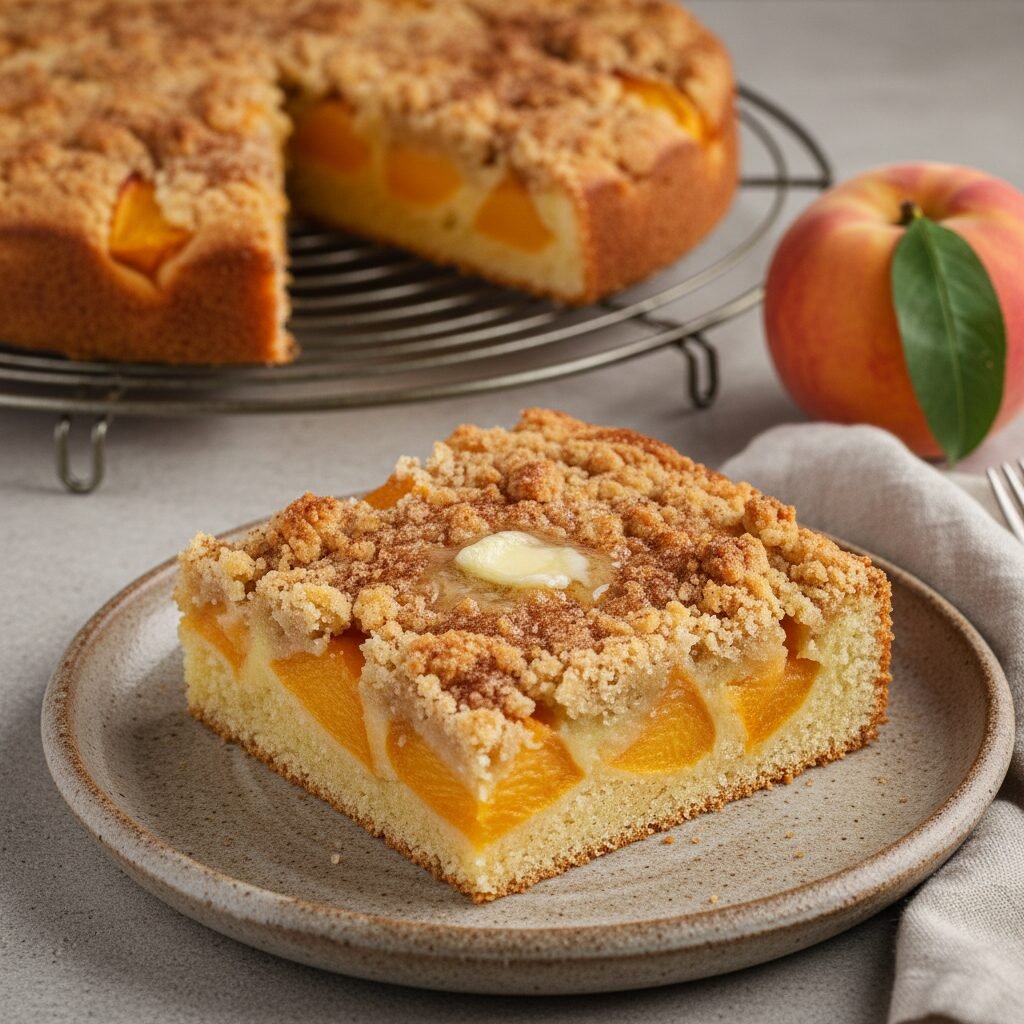
Experience the perfect balance of juicy, sweet peaches and a tender, melt-in-your-mouth crumb in this ultimate summer dessert. This moist peach cake features a rich, buttery streusel topping that adds a delightful crunch to every soft bite, making it an ideal companion for your morning coffee or an elegant after-dinner treat.
20 minutes
45 minutes
1 hour 5 minutes
9-12 servings
Dessert
Baking
American
Vegetarian
There are few aromas more inviting than the scent of sweet peaches baking in a warm oven, mingling with notes of vanilla, butter, and cinnamon. This Moist Peach Cake with Crumb Topping is the quintessential celebration of summer stone fruit, though it is robust enough to be enjoyed year-round with preserved fruit. As a food blogger who lives for texture, I believe this recipe strikes the holy grail of baking: a crumb that is dense enough to hold its shape yet incredibly moist and tender, contrasted by a streusel topping that provides a satisfying, buttery crunch.
The magic of this cake lies in its versatility. It sits comfortably on the breakfast table next to a steaming mug of dark roast coffee, masquerading as a ‘coffee cake,’ yet it is elegant enough to be served warm with a scoop of vanilla bean ice cream for a decadent dessert. Unlike many fruit cakes that can become soggy or heavy, this batter is specifically formulated to suspend the peach slices, creating pockets of jammy fruit throughout the golden sponge without compromising the structural integrity of the slice.
We use a combination of granulated sugar for structure in the cake and brown sugar in the topping for that deep, molasses-like richness that pairs so beautifully with peaches. Whether you have a basket of fresh peaches from the farmers market that are just on the verge of being too ripe, or you are looking to brighten up a winter day with canned peaches, this recipe is forgiving and consistently delicious. Prepare yourself for a baking experience that fills your kitchen with nostalgia and your plate with pure comfort.
History & Origins
The lineage of the peach cake is a fascinating journey that spans continents and centuries, merging the agricultural history of the peach with the baking traditions of Europe. The peach itself, *Prunus persica*, originated in Northwest China, where it was first domesticated and cultivated as early as 2000 BC. It was a symbol of immortality and friendship. From China, the fruit traveled the Silk Road to Persia (modern-day Iran), eventually reaching Greece and Rome, and finally spreading throughout Europe. Spanish explorers are credited with introducing the peach to the Americas in the 16th century, where it found a particularly hospitable climate in the southern United States.
The concept of the ‘crumb cake’ or ‘coffee cake’—a single-layer cake topped with a streusel—however, is largely derived from Central European traditions, specifically the German ‘Kaffeekuchen’. German immigrants bringing their baking traditions to America in the 19th and early 20th centuries introduced the idea of yeast-based and chemically leavened cakes topped with ‘Streusel’ (a crumbly topping of flour, butter, and sugar).
As these baking techniques took root in American soil, they naturally began to incorporate local ingredients. In the American South and Midwest, where peach orchards flourished, it became common practice to fold chopped fresh fruit into these batters. The ‘Peach Crumb Cake’ thus represents a culinary marriage between the Old World technique of streusel-topped cakes and the New World abundance of sweet stone fruit. Over the decades, the recipe has evolved from dense, yeast-leavened doughs to the quicker, chemically leavened (baking powder/soda) batters we prefer today for their tenderness and ease of preparation.
Why This Recipe Works
This recipe succeeds where others fail due to a few key scientific principles regarding moisture retention and texture contrast. First and foremost is the inclusion of sour cream (or full-fat Greek yogurt) in the batter. The acidity in these dairy products reacts with the baking soda to create carbon dioxide gas, which helps the cake rise, but more importantly, the acidity tenderizes the gluten strands in the flour. This results in a crumb that is soft and velvety rather than chewy or tough. Furthermore, the high fat content in the sour cream adds richness and ensures the cake stays moist for days after baking, preventing the ‘stale’ texture often associated with fruit cakes.
Secondly, the ‘reverse creaming’ or careful folding method ensures we do not overwork the batter. By gently folding in the peaches at the very end, we prevent the fruit from breaking down prematurely and bleeding too much juice into the batter, which can lead to a gummy texture.
Finally, the crumb topping uses melted butter rather than cold butter cut into flour. While cold butter is great for flaky pie crusts, using melted butter for this specific streusel creates distinct, cookie-like clumps that bake into a crisp, golden topography. This provides a necessary textural counterpoint to the soft fruit and tender cake. The ratio of flour to butter in the topping is calculated to ensure it stays crunchy and doesn’t melt into a greasy pool on top of the fruit.
Why You’ll Love This Recipe
- ✓Incredibly moist texture thanks to the secret ingredient: sour cream.
- ✓A generous, buttery cinnamon streusel topping that stays crunchy.
- ✓Versatile recipe that works with fresh, frozen, or canned peaches.
- ✓One-bowl method for the cake batter minimizes cleanup.
- ✓Perfect balance of sweetness, allowing the natural peach flavor to shine.
- ✓Freezes beautifully for make-ahead breakfast or dessert.
Equipment You’ll Need
- ✓9×9 inch square baking pan or 9-inch springform pan
- ✓Large mixing bowl
- ✓Medium mixing bowl (for crumb)
- ✓Electric hand mixer or stand mixer
- ✓Rubber spatula
- ✓Whisk
- ✓Measuring cups and spoons
- ✓Parchment paper
Ingredients
- ✓2 cups all-purpose flour (for the cake)
- ✓1 teaspoon baking powder
- ✓1/2 teaspoon baking soda
- ✓1/2 teaspoon salt
- ✓1/2 cup unsalted butter, softened to room temperature
- ✓3/4 cup granulated sugar
- ✓2 large eggs, room temperature
- ✓1 teaspoon pure vanilla extract
- ✓1 cup full-fat sour cream or Greek yogurt
- ✓2 cups fresh peaches, peeled and chopped into 1/2 inch chunks
- ✓— FOR THE CRUMB TOPPING —
- ✓3/4 cup all-purpose flour
- ✓1/2 cup light brown sugar, packed
- ✓1/2 teaspoon ground cinnamon
- ✓1/4 cup unsalted butter, melted
- ✓Pinch of salt
Instructions
- 1. Preheat your oven to 350°F (175°C). Grease a 9×9 inch square baking pan (or a 9-inch springform pan) with butter or non-stick spray, and line the bottom with parchment paper for easy removal.
- 2. Make the Crumb Topping: In a medium bowl, whisk together the 3/4 cup flour, brown sugar, cinnamon, and salt. Pour in the melted butter and use a fork to mix until moist clumps form. Set this bowl aside.
- 3. Prepare the Dry Ingredients: In a small bowl, whisk together the 2 cups flour, baking powder, baking soda, and salt. Set aside.
- 4. Cream Butter and Sugar: In a large mixing bowl using an electric hand mixer (or stand mixer with paddle attachment), beat the softened butter and granulated sugar together on medium-high speed for about 3-4 minutes until the mixture is pale, light, and fluffy.
- 5. Add Wet Ingredients: Add the eggs one at a time, beating well after each addition. Scrape down the sides of the bowl. Mix in the vanilla extract and the sour cream (or yogurt) until combined. The mixture might look slightly curdled; this is normal.
- 6. Combine: Reduce the mixer speed to low. Gradually add the dry flour mixture to the wet ingredients. Mix only until just combined and no streaks of flour remain. Do not overmix.
- 7. Fold in Peaches: Using a rubber spatula, gently fold the chopped peaches into the thick batter. Be careful not to crush the fruit excessively.
- 8. Assemble: Spread the batter evenly into the prepared baking pan, smoothing the top with your spatula. Sprinkle the prepared crumb topping generously and evenly over the batter.
- 9. Bake: Place in the center of the preheated oven and bake for 40-50 minutes. The cake is done when the top is golden brown and a toothpick inserted into the center comes out clean or with just a few moist crumbs attached (aim to avoid hitting a peach chunk for the test).
- 10. Cool: Remove from the oven and allow the cake to cool in the pan for at least 20-30 minutes. This allows the structure to set. Serve warm or at room temperature.
Expert Cooking Tips
- ✓Room Temperature Ingredients: Ensure your butter, eggs, and sour cream are at room temperature. This creates a smoother emulsion which traps more air, leading to a fluffier cake.
- ✓Don’t Overmix: Once the flour hits the liquid, gluten begins to form. Mix until just combined to ensure the cake remains tender and soft.
- ✓Peeling Peaches: If your peaches are very ripe, the skin might be tough. To peel easily, blanch them in boiling water for 30 seconds, then shock in ice water. The skins will slip right off.
- ✓Tossing Fruit in Flour: If your peaches are exceptionally juicy, toss them in a tablespoon of flour before folding them into the batter. This prevents them from sinking to the bottom.
- ✓Check for Doneness Early: Oven temperatures vary. Check the cake at the 40-minute mark. If the crumb topping is browning too fast but the center is raw, tent the pan loosely with aluminum foil.
- ✓The Right Pan: A metal pan will bake faster and yield crispier edges than a glass or ceramic dish. If using glass, reduce oven temp by 25°F and bake slightly longer.
Substitutions and Variations
This recipe is highly adaptable to various dietary needs and pantry staples.
**Fruit:** While peaches are the star, this base recipe works beautifully with nectarines (no peeling required), apricots, plums, or even apples and pears in the autumn. If using frozen peaches, do not thaw them beforehand; simply fold them in frozen and add a few minutes to the baking time. Canned peaches should be drained very thoroughly and patted dry with paper towels.
**Dairy:** If you don’t have sour cream, full-fat Greek yogurt is the best 1:1 substitute. In a pinch, buttermilk or plain yogurt works, though the batter will be slightly thinner. For a dairy-free version, use a high-quality plant-based butter stick and a thick coconut yogurt or dairy-free sour cream alternative.
**Flour:** For a gluten-free option, substitute the all-purpose flour with a high-quality 1:1 gluten-free baking flour blend (one that contains xanthan gum). Almond flour alone will not work as it lacks the structure needed to hold the fruit.
**Sugar:** You can swap the granulated sugar in the cake for cane sugar or coconut sugar, though coconut sugar will darken the crumb. In the topping, dark brown sugar can be used instead of light brown for a stronger molasses flavor.
Common Mistakes to Avoid
The most common mistake with fruit cakes is **using under-ripe fruit**. Hard, crunchy peaches will not soften enough during baking and lack the necessary sweetness. Always use fragrant, slightly soft peaches. Another pitfall is **over-mixing the batter**. Once the flour is added, stop mixing as soon as the white streaks disappear; over-mixing develops gluten and results in a rubbery, dense cake.
Be careful with **pan size**. Using a pan that is too small (like an 8×8 when the recipe calls for 9×9) can cause the center to remain raw while the edges burn. If you only have an 8×8 pan, you may need to bake longer at a slightly lower temperature and cover with foil. Finally, **cutting the cake too hot** is a tragedy! The cake structure is fragile while hot; cutting it immediately out of the oven will cause it to crumble and fall apart. Patience during the cooling phase is key to a clean slice.
Serving Suggestions
This cake is a chameleon that fits any time of day. For a **breakfast or brunch** setting, serve it warm with a dollop of honey-sweetened Greek yogurt or a side of fresh berries to cut the richness. It pairs exceptionally well with a latte or Earl Grey tea.
For **dessert**, elevate the dish by warming the slice and topping it with a scoop of vanilla bean ice cream or fresh whipped cream. A drizzle of salted caramel sauce or a dusting of powdered sugar adds a professional finish. If you want to emphasize the fruit, a fresh peach coulis or compote spooned over the top makes for a stunning presentation.
Storage and Reheating Tips
Because this cake is so moist, proper storage is essential to prevent it from spoiling.
**Room Temperature:** The cake can be stored in an airtight container at room temperature for up to 2 days. If your kitchen is particularly hot or humid, it is safer to move it to the fridge.
**Refrigerator:** Store in an airtight container in the fridge for up to 5 days. Note that the refrigerator can dry out baked goods, so ensure it is well-sealed. Warm slices in the microwave for 15-20 seconds before eating to revive the soft texture.
**Freezing:** This cake freezes exceptionally well. Wrap individual slices tightly in plastic wrap, then place them in a heavy-duty freezer bag. They can be frozen for up to 3 months. Thaw overnight in the fridge or on the counter for an hour before serving.
Nutrition Facts (Estimated)
| Serving Size | 1 slice |
| Calories | 340 |
| Fat | 14g |
| Saturated Fat | 8g |
| Unsaturated Fat | 5g |
| Trans Fat | 0g |
| Cholesterol | 55mg |
| Sodium | 180mg |
| Carbohydrates | 48g |
| Fiber | 2g |
| Sugar | 28g |
| Protein | 4g |
Frequently Asked Questions
Can I use canned peaches instead of fresh?
Yes, absolutely. Drain the canned peaches thoroughly and pat them dry with paper towels to remove excess syrup, which could make the batter soggy. Chop them as directed.
Why did my fruit sink to the bottom of the cake?
This happens if the batter is too thin or the fruit chunks are too heavy. This batter is designed to be thick to hold the fruit. If it still happens, try tossing your chopped peaches in a tablespoon of flour before folding them in.
Can I make this in a bundt pan?
It is possible, but you need to layer the batter and the crumb. Put half the batter in, sprinkle half the crumb, add the rest of the batter, and finish with the rest of the crumb. Note that the crumb on the bottom might stick, so grease the pan very well.
Can I reduce the sugar in this recipe?
You can reduce the sugar in the cake batter by about 1/4 cup without ruining the structure. However, reducing sugar in the crumb topping will affect the crunch and texture, so it is best to leave the topping as is.
Why is my crumb topping soggy?
A soggy topping usually means the cake was covered too early while still hot (trapping steam) or the fruit released too much moisture. Ensure the cake is fully cooled before covering.
Can I add nuts to the topping?
Yes! Chopped pecans, walnuts, or sliced almonds make a fantastic addition to the crumb topping. Add about 1/2 cup of chopped nuts to the flour/sugar mixture.
My cake is browning too fast but the center is jiggly. What do I do?
Tent the cake loosely with aluminum foil. This deflects the direct heat from the top, allowing the center to continue cooking without burning the crumb topping.
Can I make this recipe into muffins?
Yes. This batter makes excellent muffins. Line a muffin tin, fill cups 3/4 full, top with crumb, and bake at 375°F (190°C) for 18-22 minutes.
Conclusion
Whether you are an experienced baker or a novice in the kitchen, this Moist Peach Cake with Crumb Topping is a rewarding recipe that delivers on both flavor and comfort. It captures the fleeting essence of peach season in a form that can be shared and savored. The interplay of the tender, tangy cake with the sweet, spiced crunch of the topping creates a bite that is truly memorable. We hope this recipe becomes a staple in your home, bringing warmth and sweetness to your table. Don’t forget to pin this recipe for later and share your creations with us on social media!