Moist Pear Cake With Brown Sugar Glaze Recipe
This Moist Pear Cake is the ultimate fall dessert, featuring chunks of fresh sweet pears and a rich, crackly brown sugar glaze that adds the perfect crunch. It is incredibly easy to make and stays moist for days, making it a versatile treat for breakfast, tea time, or a decadent after-dinner sweet.
20 minutes
55 minutes
1 hour 15 minutes
10-12 servings
Dessert
Baking
American
Vegetarian
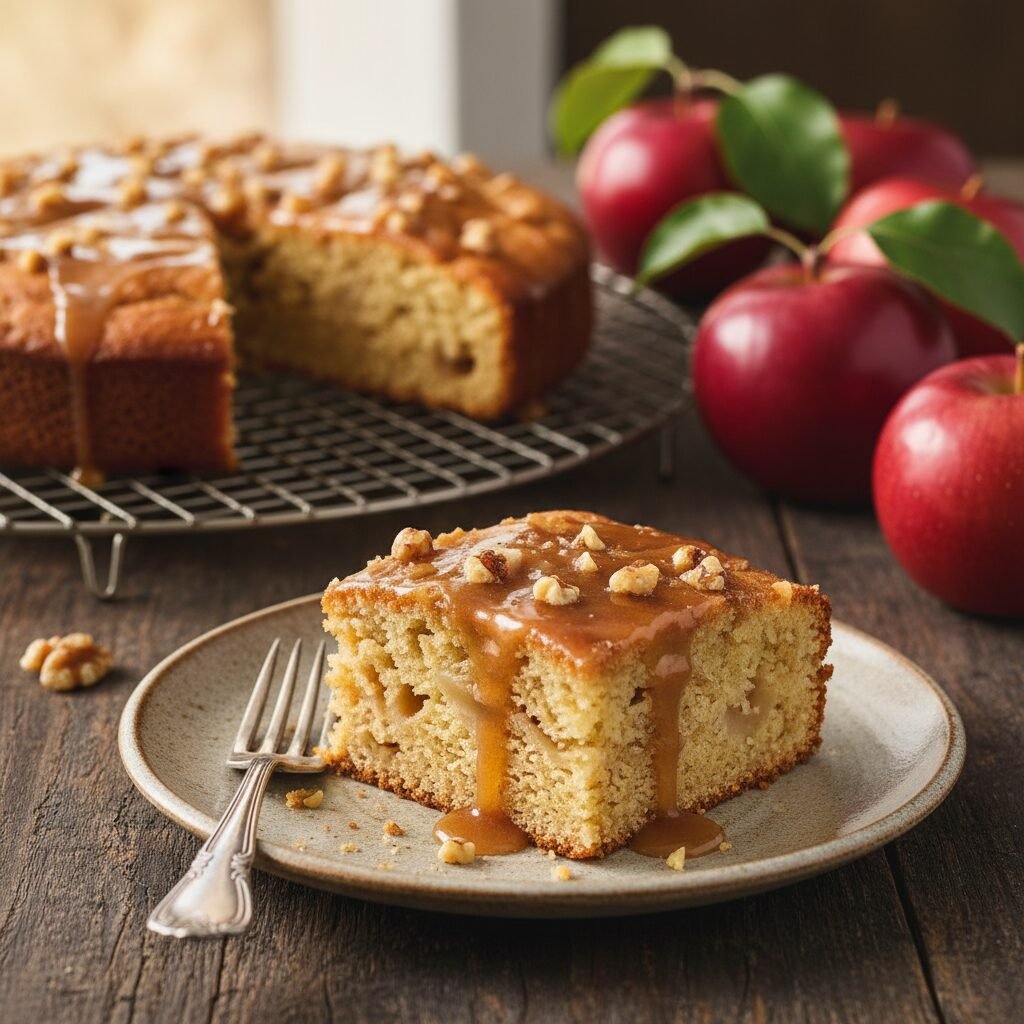
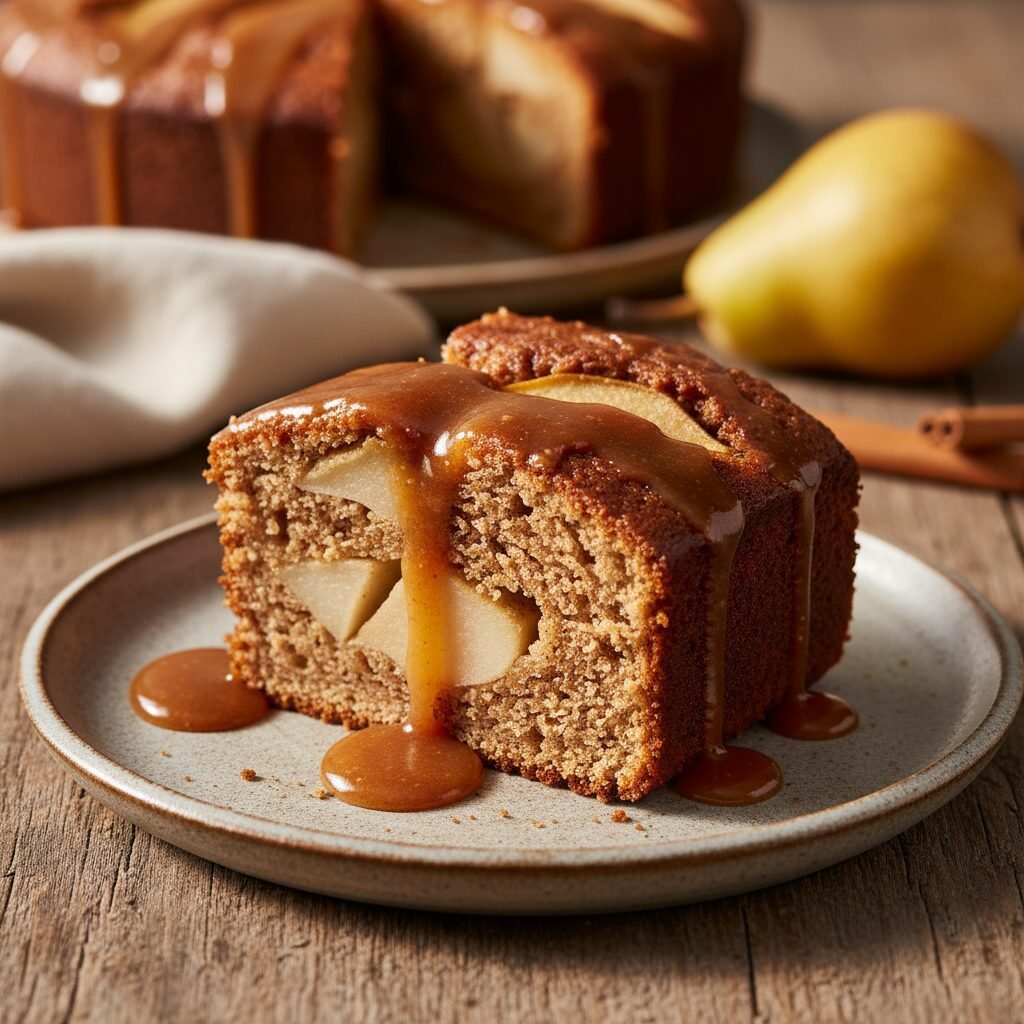
As the air turns crisp and the leaves begin to change, our cravings inevitably shift toward the warm, comforting spices of autumn. While apples often steal the spotlight during this season, the humble pear deserves a standing ovation of its own. This Moist Pear Cake with Brown Sugar Glaze is a celebration of that often-overlooked fruit, transforming it into a dessert that is rustic, elegant, and utterly irresistible. Imagine a cake so tender that it practically melts in your mouth, studded with generous pockets of soft, sweet pear that have caramelized gently in the oven. The batter itself is infused with hints of vanilla and cinnamon, creating a fragrant base that supports the delicate floral notes of the fruit without overpowering them. But the real showstopper here is the brown sugar glaze. Poured over the cake while it is still warm, the glaze seeps into the crumb, adding a deep, caramel-like richness, while the top sets into a delightful, crackly shell that provides a perfect textural contrast to the soft interior. This recipe is not just about taste; it is about the experience of baking. The scent that fills your kitchen—butter, sugar, and roasting fruit—is enough to bring the whole family running. Whether you are a seasoned baker or a novice in the kitchen, this recipe is forgiving and rewarding. It eschews complicated techniques for straightforward mixing and baking, proving that the best desserts are often the simplest ones made with high-quality, seasonal ingredients. It is the kind of cake that tastes even better the next day, as the flavors have time to meld and the moisture from the pears distributes further throughout the crumb. So, grab your mixing bowl and let’s give the pear its rightful moment of glory.
History & Origins
The tradition of incorporating fresh fruit into cakes is as old as baking itself, with roots stretching back to ancient civilizations where honey, nuts, and dried fruits were mixed into grain pastes. However, the specific lineage of the fresh pear cake can be traced most directly to the rustic country kitchens of Europe. In France, ‘Gâteau aux Poires’ is a beloved household staple, often served as a simple afternoon snack or a light dessert after a heavy meal. These early European versions were typically less sweet than their modern American counterparts, relying heavily on the natural fructose of the pear and often served with a dollop of unsweetened cream. As European immigrants traveled to North America, they brought these recipes with them, adapting them to the ingredients available in the New World. The introduction of affordable brown sugar in the Americas played a significant role in the evolution of this dish. Brown sugar, with its high molasses content, became a favored sweetener in American farmhouse cooking, pairing exceptionally well with orchard fruits like apples and pears. The concept of a ‘glaze’ poured over a warm cake is also a distinctly American innovation in this context, likely evolving from the sticky toppings of upside-down cakes or the icings of early coffee cakes. By the mid-20th century, community cookbooks across the United States were filled with variations of ‘Harvest Pear Cake’ or ‘Spiced Pear Loaf,’ cementing its status as a seasonal classic. Today, this recipe represents a fusion of that rustic European simplicity with the indulgent, caramel-forward profiles favored in modern American baking.
Why This Recipe Works
This recipe succeeds brilliantly because it addresses the two most common pitfalls of fruit cakes: dryness and lack of flavor integration. First, the moisture content is meticulously balanced. Pears are water-dense fruits, and as they bake, they release liquid into the batter. Many recipes fail to account for this, resulting in a soggy bottom or a gummy texture. This recipe uses a dense, oil-based batter rather than a purely butter-based one. Oil remains liquid at room temperature, ensuring the cake stays moist and tender for days, while the specific ratio of flour and leavening agents provides enough structure to suspend the pear chunks, preventing them from sinking to the bottom. Secondly, the flavor profile is enhanced by the ‘blooming’ of spices. By mixing the cinnamon and nutmeg with the sugar and oil before adding the flour, the fat-soluble flavor compounds in the spices are released more effectively, distributing a warmer, more potent aroma throughout the cake. Finally, the brown sugar glaze is not just a topping; it is a texture enhancer. By pouring it over the warm cake, a portion of the glaze permeates the upper crust, creating a sticky, toffee-like layer that bonds the icing to the cake, while the surface cools rapidly to form that signature crackle. The contrast between the soft, spiced crumb, the creamy baked pear, and the crisp sugary shell creates a sensory experience that keeps you coming back for another slice.
Why You’ll Love This Recipe
- ✓Stays incredibly moist for up to 4 days due to the oil-based batter.
- ✓The brown sugar glaze creates a delicious, crackly crust.
- ✓Perfect way to use up overripe pears.
- ✓Requires no fancy equipment; just a bowl and a whisk.
- ✓Can be frozen for up to 3 months for future treats.
- ✓Fills your home with the comforting scent of cinnamon and vanilla.
Equipment You’ll Need
- ✓Bundt pan or 9×13 inch baking dish
- ✓Large mixing bowl
- ✓Medium mixing bowl
- ✓Whisk
- ✓Rubber spatula
- ✓Peeler
- ✓Cutting board
- ✓Small saucepan for glaze
- ✓Cooling rack
Ingredients
- ✓3 cups all-purpose flour
- ✓1 teaspoon baking soda
- ✓1/2 teaspoon salt
- ✓1 teaspoon ground cinnamon
- ✓1/4 teaspoon ground nutmeg
- ✓3 large eggs, room temperature
- ✓1 1/2 cups granulated sugar
- ✓1 cup vegetable oil or canola oil
- ✓1 teaspoon vanilla extract
- ✓3 cups pears, peeled, cored, and chopped into 1/2 inch chunks (about 3-4 medium pears)
- ✓1 cup chopped walnuts or pecans (optional)
- ✓For the Glaze: 1/2 cup light brown sugar, packed
- ✓3 tablespoons unsalted butter
- ✓2 tablespoons milk
- ✓1/2 teaspoon vanilla extract
Instructions
- 1. Preheat your oven to 350°F (175°C). Grease and flour a 10-inch Bundt pan or a 9×13 inch baking pan thoroughly to prevent sticking.
- 2. In a medium bowl, whisk together the flour, baking soda, salt, cinnamon, and nutmeg until well combined. Set aside.
- 3. In a large mixing bowl, beat the eggs and granulated sugar together until the mixture is slightly pale and thickened.
- 4. Slowly pour in the vegetable oil and vanilla extract while whisking constantly until the mixture is smooth and glossy.
- 5. Gradually add the dry ingredient mixture to the wet ingredients. Stir with a rubber spatula or wooden spoon just until the flour disappears. Do not overmix, or the cake will be tough. The batter will be very thick.
- 6. Gently fold in the chopped pears and nuts (if using). The pears will release some moisture as you fold, loosening the batter slightly.
- 7. Pour the batter into the prepared pan and spread it evenly.
- 8. Bake for 50-60 minutes, or until a toothpick inserted into the center comes out clean or with just a few moist crumbs attached. If the top is browning too quickly, tent loosely with aluminum foil after 40 minutes.
- 9. While the cake is in its final minutes of baking, prepare the glaze. In a small saucepan over medium heat, combine the brown sugar, butter, and milk. Bring to a gentle boil, stirring constantly to dissolve the sugar. Let it boil for 1 minute, then remove from heat and stir in the vanilla extract.
- 10. Remove the cake from the oven. If using a Bundt pan, let it cool for 10 minutes before inverting onto a wire rack. If using a 9×13 pan, leave it in the pan.
- 11. While the cake is still warm, drizzle the glaze evenly over the top. Allow the cake to cool completely before slicing to let the glaze set and the structure firm up.
Expert Cooking Tips
- ✓Choose pears that are ripe but firm. If they are too mushy, they will disintegrate into the batter; too hard, and they won’t soften enough.
- ✓Don’t skimp on greasing the pan, especially if using a Bundt pan with intricate designs. Use a baking spray with flour for best results.
- ✓Room temperature eggs incorporate better into the batter, creating a more uniform structure.
- ✓If your glaze thickens too much before pouring, simply reheat it on the stove for a few seconds to loosen it up.
- ✓To prevent the nuts and pears from sinking, you can toss them in a tablespoon of the flour mixture before folding them into the batter.
- ✓Do not overmix the batter once the flour is added; this develops gluten and leads to a dense, rubbery cake.
Substitutions and Variations
This recipe is quite flexible and can be adapted to suit various dietary needs or pantry staples. If you don’t have pears, firm apples like Granny Smith or Honeycrisp make an excellent substitute, though the flavor profile will shift slightly. For the flour, you can use a 1:1 gluten-free baking flour blend if you are avoiding gluten; just ensure the blend contains xanthan gum. The vegetable oil can be replaced with melted coconut oil or applesauce for a lighter version, although applesauce will change the texture to be more bread-like. Brown sugar in the glaze can be swapped for dark brown sugar for a deeper molasses flavor, or even maple syrup, though the glaze will be thinner and less crackly. Walnuts can be substituted with pecans, almonds, or omitted entirely for a nut-free version. For a dairy-free cake, the batter is already dairy-free, but for the glaze, use a plant-based butter and almond or oat milk.
Common Mistakes to Avoid
The most common mistake with fresh fruit cakes is using under-ripe fruit. Hard pears will not release the necessary moisture or sweetness, resulting in a bland, dry cake. Conversely, over-mixing the batter is a frequent error that ruins the tender crumb, turning it tough. Another issue arises with the glaze; if you wait until the cake is completely cold to pour the glaze, it will just sit on top rather than melding with the crust. Pouring it while warm is crucial. Finally, failing to grease the Bundt pan properly often leads to heartbreak when the cake sticks and breaks upon inversion. Always be thorough with your greasing or use a parchment-lined rectangular pan if you are worried.
Serving Suggestions
This cake is versatile enough to be served at various temperatures and times of day. Serve it slightly warm with a scoop of vanilla bean ice cream or a dollop of whipped cream for a comforting dessert. For breakfast or brunch, it pairs beautifully with a hot cup of coffee or chai tea. A dusting of powdered sugar or a sprinkle of extra cinnamon on top can add a nice visual finish. If you are feeling fancy, serve slices with a side of poached pears or a drizzle of caramel sauce.
Storage and Reheating Tips
This cake stores exceptionally well due to the moisture from the pears and oil. Keep it in an airtight container at room temperature for up to 3 days. If you live in a very hot or humid climate, it is safer to store it in the refrigerator for up to 5 days, though you should bring it to room temperature before eating for the best texture. For long-term storage, wrap individual slices tightly in plastic wrap and then foil, and freeze for up to 3 months. Thaw overnight in the fridge or microwave for 20-30 seconds to revive that fresh-baked warmth.
Nutrition Facts (Estimated)
| Serving Size | 1 slice |
| Calories | 380 kcal |
| Fat | 16g |
| Saturated Fat | 4g |
| Unsaturated Fat | 11g |
| Trans Fat | 0g |
| Cholesterol | 45mg |
| Sodium | 210mg |
| Carbohydrates | 54g |
| Fiber | 3g |
| Sugar | 28g |
| Protein | 4g |
Frequently Asked Questions
Can I use canned pears instead of fresh?
Yes, you can use canned pears, but the texture will be softer. Ensure you drain them very thoroughly and pat them dry with paper towels to avoid adding excess liquid to the batter, which could make the cake soggy.
Why did my cake sink in the middle?
Sinking usually happens if the cake is underbaked or if the oven door was opened too early, causing a sudden temperature drop. It can also occur if there is too much leavening (baking soda) or too much liquid from very juicy pears.
Can I make this in a loaf pan?
Yes, this recipe can be split between two standard 9×5 inch loaf pans. You will likely need to adjust the baking time to roughly 45-55 minutes. Check with a toothpick starting at 40 minutes.
Do I have to peel the pears?
It is highly recommended to peel the pears. Pear skin can become tough and chewy when baked, which interferes with the soft, tender texture of the cake.
What is the best variety of pear to use?
Bartlett pears are excellent for their fragrance and sweetness. Bosc and Anjou are also great choices as they hold their shape well during baking. Avoid very soft varieties like Comice, which might turn into applesauce in the oven.
Can I reduce the sugar in the recipe?
You can reduce the sugar in the cake batter by about 1/4 cup without significantly affecting the structure. However, reducing it too much will affect the moisture and shelf life. The sugar in the glaze is essential for the texture and cannot be easily reduced.
Is this cake suitable for freezing?
Absolutely. This cake freezes beautifully. Wrap the cooled cake (whole or sliced) tightly in plastic wrap and then aluminum foil. It will keep for up to 3 months.
Can I add other fruits?
Yes, cranberries or raisins make a great addition. You can add about 1/2 cup of dried fruit along with the pears for extra texture and tartness.
Why is my glaze grainy?
A grainy glaze usually means the sugar didn’t dissolve completely. Make sure to bring the mixture to a boil and stir constantly until the sugar granules are fully melted into the butter and milk.
How do I know when the cake is done?
The toothpick test is best. Insert it into the thickest part of the cake. It should come out clean or with a few moist crumbs. If it has raw batter on it, it needs more time.
Conclusion
There is something truly special about a dessert that feels like home, and this Moist Pear Cake with Brown Sugar Glaze is exactly that. It bridges the gap between a morning coffee companion and a sophisticated dinner party finale. The combination of juicy pears, warm spices, and that irresistible sugary glaze ensures that every bite is packed with flavor and comfort. We hope this recipe becomes a staple in your fall baking rotation, bringing warmth and sweetness to your kitchen for years to come. Happy baking!