Moist Pear Cake With Pecan Crumble Recipe
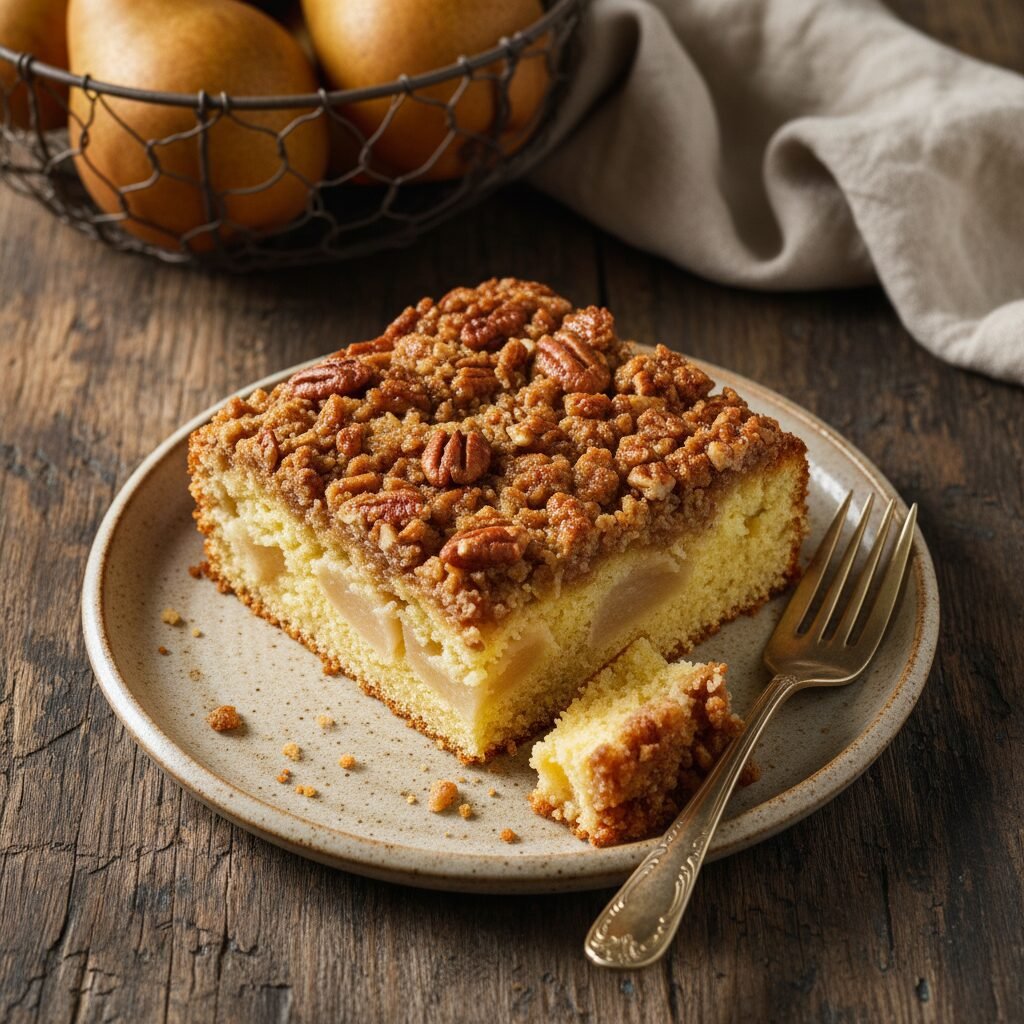
Embrace the cozy flavors of the season with this incredibly moist pear cake, featuring tender chunks of fresh fruit and a buttery, crunchy pecan crumble topping. Perfect for breakfast, brunch, or dessert, this recipe is a guaranteed crowd-pleaser that stays soft for days.
20 minutes
50 minutes
1 hour 10 minutes
9 servings
Dessert / Breakfast
Baking
American
Vegetarian
There is something undeniably magical about the transition into cooler weather that calls for the warmth of cinnamon, the richness of brown sugar, and the comfort of home-baked goods. While apples often steal the spotlight in autumn baking, the humble pear is the unsung hero of the orchard, offering a delicate floral sweetness and a texture that becomes melt-in-your-mouth tender when baked. This Moist Pear Cake with Pecan Crumble is a celebration of that often-overlooked fruit, transforming it into a centerpiece that rivals any apple pie or pumpkin bread. The base of the cake is engineered for supreme moisture, utilizing a combination of sour cream and butter to create a crumb that is dense enough to hold the fruit but light enough to remain fluffy. Every bite offers a contrast of textures: the soft, pillowy cake, the pockets of juicy, roasted pear, and the crowning glory—a thick, jagged layer of buttery pecan crumble. This isn’t just a cake; it is a sensory experience. As it bakes, the aroma of toasted nuts and spiced fruit fills the kitchen, creating an atmosphere of pure comfort. Whether you are serving this alongside a steaming cup of dark roast coffee for a Sunday brunch or topping it with a scoop of vanilla bean ice cream for an elegant dessert, this pear cake is versatile, forgiving, and utterly delicious. It bridges the gap between a morning coffee cake and an evening treat, proving that simple ingredients, when treated with care, can produce spectacular results.
History & Origins
The history of baking with pears dates back thousands of years, with the fruit itself originating in the Tian Shan mountain range of Central Asia before spreading across the globe. The ancient Romans were particularly fond of pears, cultivating dozens of varieties and often stewing them with honey and spices, a precursor to the flavor profiles we use today. However, the specific concept of a fruit-laden ‘snacking cake’ or ‘coffee cake’ topped with a crumble has roots deeply embedded in Central European baking traditions. The crumble topping, known as ‘streusel’ in Germany, originated in the 19th century. The word ‘streusel’ translates to ‘something scattered’ or ‘strewed,’ referring to the way the mixture of flour, sugar, and fat is crumbled over the top of pastries. Immigrants from Germany and Austria brought these techniques to the United States, where they evolved into the coffee cakes we know today. In American culinary history, the mid-20th century saw a boom in fruit-based cakes as home baking became a symbol of domestic comfort. Pears, specifically varieties like the Bartlett and Bosc, became staples in American orchards, leading to their incorporation into these European-style cakes. This recipe is a modern amalgamation of those ancient roots: the Roman love for the pear, the German mastery of the streusel, and the American penchant for moist, rich cakes leavened with baking powder and soda. It represents centuries of culinary evolution, distilled into one simple baking pan.
Why This Recipe Works
This recipe succeeds where many fruit cakes fail—texture and moisture balance. Often, fresh fruit cakes can turn out either soggy from the excess water released by the fruit or dry because the batter lacks sufficient fat to compensate. This recipe solves the moisture issue by using sour cream. The acidity in the sour cream tenderizes the gluten strands in the flour, resulting in a finer, softer crumb, while its high fat content ensures the cake stays moist for days without becoming greasy. Furthermore, we use a combination of brown and white sugar in the batter. The molasses in the brown sugar is hygroscopic, meaning it attracts and holds water, further preventing the cake from drying out. Regarding the fruit, cutting the pears into chunks rather than grating them is crucial; chunks create distinct pockets of flavor and prevent the batter from becoming a uniform mush. The crumble topping works because of the addition of pecans and the cold butter technique. The oils from the pecans toast during baking, infusing the topping with a nutty aroma, while keeping the butter cold until it hits the oven ensures the crumble stays jagged and crunchy rather than melting into a flat glaze. Finally, the ratio of flour to baking powder provides just enough lift to support the heavy fruit and crumble without the cake collapsing in the center.
Why You’ll Love This Recipe
- ✓Stays moist for up to 4 days thanks to the sour cream inclusion.
- ✓The pecan crumble adds a perfect textural contrast to the soft fruit.
- ✓Versatile enough for breakfast, brunch, or a late-night dessert.
- ✓Uses fresh pears for a natural, floral sweetness.
- ✓Freezer-friendly, making it perfect for meal prep or gifting.
Equipment You’ll Need
- ✓9×9 inch square baking pan or 9-inch round cake pan
- ✓Large mixing bowl
- ✓Medium mixing bowl
- ✓Whisk
- ✓Rubber spatula
- ✓Vegetable peeler
- ✓Knife and cutting board
- ✓Electric hand mixer (optional, hand mixing works too)
Ingredients
- ✓FOR THE CAKE:
- ✓2 cups all-purpose flour
- ✓1 teaspoon baking powder
- ✓1/2 teaspoon baking soda
- ✓1/2 teaspoon salt
- ✓1 teaspoon ground cinnamon
- ✓1/2 teaspoon ground ginger
- ✓1/2 cup unsalted butter, softened
- ✓3/4 cup granulated sugar
- ✓2 large eggs, room temperature
- ✓1 teaspoon pure vanilla extract
- ✓1/2 cup full-fat sour cream
- ✓2 cups fresh pears (Bartlett or Bosc), peeled, cored, and chopped into 1/2 inch cubes
- ✓FOR THE PECAN CRUMBLE:
- ✓1/2 cup all-purpose flour
- ✓1/2 cup light brown sugar, packed
- ✓1/2 teaspoon ground cinnamon
- ✓1/4 cup cold unsalted butter, cubed
- ✓1/2 cup pecans, roughly chopped
Instructions
- 1. Preheat your oven to 350°F (175°C). Grease a 9×9 inch baking pan with butter or non-stick spray and line it with parchment paper for easy removal.
- 2. Prepare the crumble topping first. In a medium bowl, whisk together the 1/2 cup flour, brown sugar, and 1/2 teaspoon cinnamon. Add the cold, cubed butter.
- 3. Using a pastry cutter or your fingers, work the butter into the dry ingredients until the mixture resembles coarse crumbs. Stir in the chopped pecans and set the bowl aside in the refrigerator to keep the butter cold.
- 4. In a medium bowl, whisk together the flour, baking powder, baking soda, salt, cinnamon, and ginger. Set aside.
- 5. In a large mixing bowl, cream the softened butter and granulated sugar together until light and fluffy (about 2-3 minutes with an electric mixer).
- 6. Add the eggs one at a time, beating well after each addition. Scrape down the sides of the bowl, then mix in the vanilla extract and sour cream until combined.
- 7. Gradually add the dry ingredients to the wet ingredients. Mix gently with a spatula just until the flour streaks disappear. Do not overmix.
- 8. Gently fold the chopped pears into the thick batter, ensuring they are evenly distributed.
- 9. Pour the batter into the prepared baking pan and spread it into an even layer using an offset spatula or the back of a spoon.
- 10. Sprinkle the chilled pecan crumble mixture generously and evenly over the top of the batter.
- 11. Bake in the center of the preheated oven for 45-55 minutes. A toothpick inserted into the center should come out clean or with a few moist crumbs (avoid hitting a pear chunk if possible).
- 12. Remove from the oven and allow the cake to cool in the pan for at least 20 minutes before slicing. This allows the structure to set.
Expert Cooking Tips
- ✓Use firm-ripe pears. If they are too soft, they will disintegrate into mush; if they are too green, they won’t have enough flavor.
- ✓Keep the crumble butter cold. If the butter melts before baking, the topping will spread instead of staying crumbly.
- ✓Don’t skip the parchment paper. The pears release sugar and juice that can caramelize and stick to the pan, making removal difficult without paper.
- ✓Room temperature ingredients (eggs and sour cream) emulsify better, leading to a more uniform cake texture.
- ✓Toast the pecans lightly before adding them to the crumble for an even deeper, nuttier flavor profile.
- ✓If the top is browning too quickly before the center is done, tent the pan loosely with aluminum foil.
Substitutions and Variations
This recipe is quite adaptable to various dietary needs and pantry staples. If you don’t have sour cream, full-fat Greek yogurt is an excellent 1:1 substitute that provides the same tangy moisture. For the fat, you can substitute the butter in the cake batter with a neutral oil (like canola or vegetable) for an even moister, albeit slightly less rich, cake. If you are out of pecans, walnuts are a classic alternative that pairs beautifully with pears; almonds or hazelnuts also work well for a different flavor profile. For a gluten-free version, use a high-quality 1:1 gluten-free all-purpose flour blend that includes xanthan gum. As for the fruit, while pears are the star, this base works wonderfully with apples or even firm peaches. If you want to reduce refined sugar, you can swap the granulated sugar for coconut sugar, though the texture may be slightly denser and darker.
Common Mistakes to Avoid
The most common mistake with this cake is overmixing the batter after adding the flour. Once the dry ingredients hit the wet, gluten begins to form. Too much agitation results in a tough, rubbery cake rather than a tender one. Another pitfall is using pears that are over-ripe; while great for smoothies, mushy pears release too much liquid during baking, creating a soggy pocket around the fruit that never fully bakes. Conversely, under-baking is a risk due to the moisture content. Trust the toothpick test, but ensure you aren’t piercing a piece of fruit, which will always come out wet. Finally, do not slice the cake while it is piping hot. The crumb needs time to set as it cools; slicing too early will cause the cake to fall apart.
Serving Suggestions
This cake is phenomenal when served slightly warm. For a decadent dessert, top a slice with a scoop of vanilla bean ice cream or a dollop of unsweetened whipped cream to cut through the sweetness. A drizzle of salted caramel sauce elevates it to restaurant quality. If serving for breakfast or brunch, it pairs beautifully with a hot latte or a chai tea, as the spices in the drink complement the ginger and cinnamon in the cake. A dusting of powdered sugar right before serving adds a professional finishing touch.
Storage and Reheating Tips
To store this cake, allow it to cool completely to room temperature. If you cover it while warm, the steam will get trapped and make the crumble topping soggy. Once cool, store it in an airtight container at room temperature for up to 2 days. For longer storage, keep it in the refrigerator for up to 5 days. This cake freezes beautifully; wrap individual slices tightly in plastic wrap and then in aluminum foil. Freeze for up to 3 months. To reheat, microwave a slice for 15-20 seconds or warm it in a toaster oven to crisp up the crumble.
Nutrition Facts (Estimated)
| Serving Size | 1 slice |
| Calories | 380 |
| Fat | 18g |
| Saturated Fat | 8g |
| Unsaturated Fat | 9g |
| Trans Fat | 0g |
| Cholesterol | 55mg |
| Sodium | 180mg |
| Carbohydrates | 48g |
| Fiber | 3g |
| Sugar | 24g |
| Protein | 5g |
Frequently Asked Questions
Can I use canned pears for this recipe?
It is not recommended. Canned pears are already cooked and carry a lot of excess moisture. They will likely turn to mush during the long bake time and could make the cake soggy. Fresh pears are best.
Do I have to peel the pears?
Yes, peeling is highly recommended. Pear skin can become tough and chewy when baked inside a cake, which disrupts the soft texture of the crumb.
Why did my crumble sink into the cake?
This usually happens if the batter is too thin or if the fruit pieces on top were too heavy. Ensure your batter is thick (don’t over-measure liquids) and try to spread the crumble gently rather than pressing it down.
Which variety of pear is best?
Bartlett and Bosc are the top choices. Bartletts break down slightly more for a jammy texture, while Bosc pears hold their shape very well. Anjou is also a decent alternative.
Can I make this cake dairy-free?
Yes. Use a plant-based butter block (not a spread) for the cake and crumble, and substitute the sour cream with a thick dairy-free yogurt, such as coconut or almond yogurt.
Can I bake this in a loaf pan?
Yes, but you will need to adjust the baking time. A loaf pan is deeper, so it will likely take 60-70 minutes to bake through. Watch the top to ensure it doesn’t burn.
Why is my cake dry?
Dry cake is usually the result of over-measuring flour (use the spoon-and-level method) or over-baking. Check the cake 5 minutes before the timer goes off.
Can I add other spices?
Absolutely. Cardamom, nutmeg, and allspice are wonderful additions. Add 1/4 teaspoon of any of these to the dry ingredients for a more complex spice profile.
How do I ripen pears quickly?
Place the pears in a brown paper bag with a banana or an apple. The ethylene gas released by the other fruit will speed up the ripening process. Check them daily.
Can I double the recipe?
Yes, you can double the ingredients and bake it in a 9×13 inch pan. You may need to add 5-10 minutes to the baking time.
Conclusion
This Moist Pear Cake with Pecan Crumble is more than just a recipe; it’s a comforting embrace on a plate. Whether you are an experienced baker or a novice in the kitchen, this cake rewards you with a sophisticated flavor profile and a texture that feels professionally made. It captures the essence of the harvest season, making it the perfect addition to your holiday table or your weekend morning routine. We hope this cake brings as much warmth to your home as it does to ours. Don’t forget to share your results and tag us on social media—we love seeing your delicious creations!