Moist Pear Coffee Cake Recipe
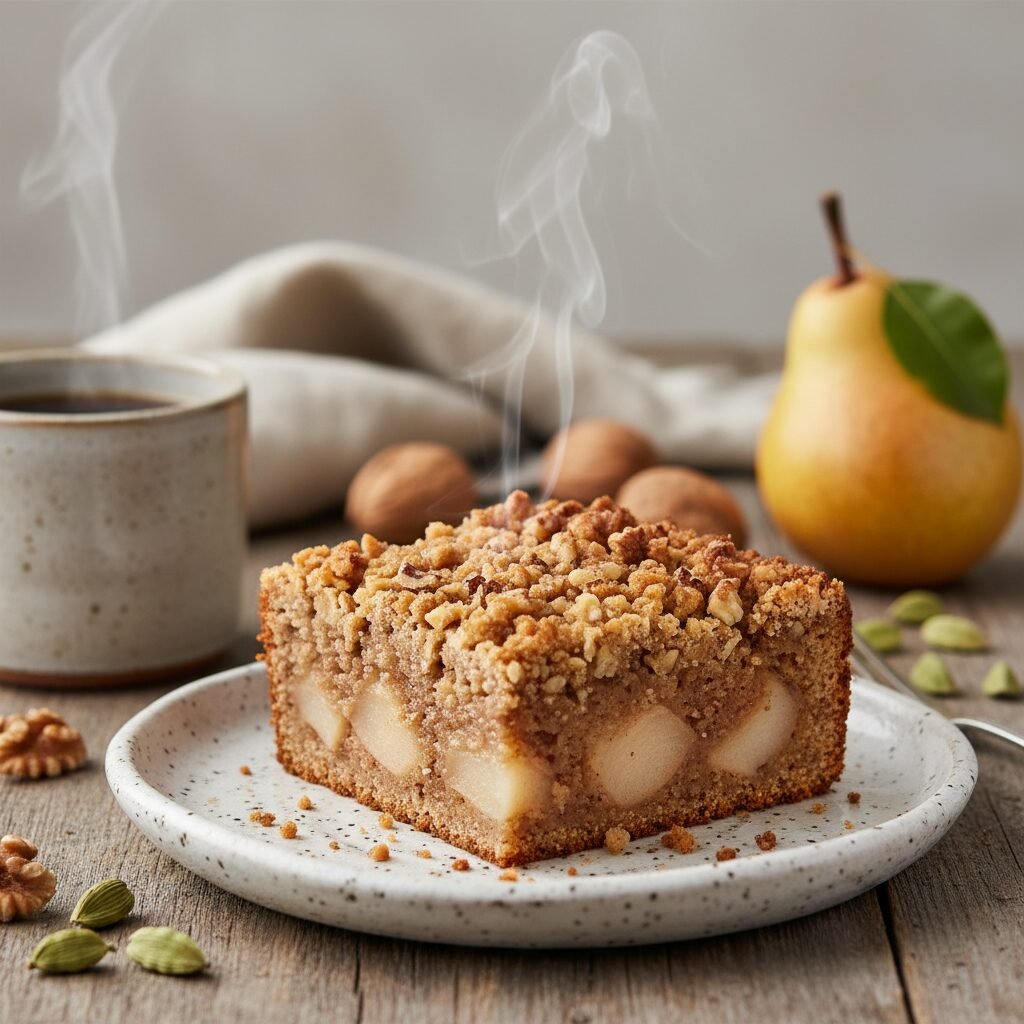
Embrace the cozy flavors of the season with this incredibly moist pear coffee cake, featuring tender chunks of fresh pears and a crunchy, buttery walnut streusel. Perfect for brunch or a comforting afternoon snack, this recipe elevates the humble pear into a show-stopping treat that pairs flawlessly with your favorite brew.
20 minutes
45 minutes
1 hour 5 minutes
12 servings
Breakfast / Dessert
Baking
American / European
Vegetarian
As the air turns crisp and the leaves begin to change, our cravings naturally shift from the bright berries of summer to the warm, spiced comforts of autumn baking. While apples and pumpkins often steal the spotlight, the pear is an unsung hero of fall desserts, offering a delicate sweetness and a melt-in-your-mouth texture that is simply unmatched. This Moist Pear Coffee Cake is a celebration of that subtle elegance. Imagine a cake crumb that is tender and dense, enriched with sour cream and studded with pockets of juicy, soft pear that almost dissolve on your tongue. Now, top that with a generous layer of golden, buttery walnut streusel infused with aromatic cardamom and cinnamon. The contrast between the soft, moist cake and the crunchy, spiced topping creates a symphony of textures in every bite. This isn’t just a breakfast cake; it is a centerpiece for your holiday brunch table, a comforting companion for a rainy afternoon, and a guaranteed way to impress guests without spending hours in the kitchen. The magic lies in the balance of flavors—the floral notes of the ripe pears cut through the richness of the buttery batter, while the spices add a warmth that lingers pleasantly. Whether you are a seasoned baker or just starting out, this recipe is designed to be foolproof, delivering bakery-quality results right from your home oven. So, brew a fresh pot of coffee, grab your favorite mixing bowl, and let’s fill your kitchen with the irresistible aroma of spiced pears and brown sugar.
History & Origins
The concept of ‘coffee cake’ has a rich and varied history that traces its roots back to Northern and Central Europe. Originally known as ‘Kaffekuchen’ in Germany, these cakes were not flavored with coffee but were specifically designed to be eaten alongside the beverage. In the 17th century, as coffee consumption spread across Europe, the tradition of enjoying a sweet, yeast-based bread or cake during ‘coffee time’ became a cultural staple. These early versions were often more bread-like, filled with dried fruits, nuts, and spices. As European immigrants brought their culinary traditions to America, the coffee cake evolved. By the late 19th and early 20th centuries, American bakers began adapting recipes to utilize chemical leaveners like baking powder and baking soda instead of yeast, resulting in the quicker, more cake-like texture we recognize today. The addition of a ‘streusel’ topping—a crumbly mixture of flour, butter, and sugar—remained a beloved German influence that became a defining characteristic of the American coffee cake. The incorporation of fresh fruits like pears into these cakes likely stems from the need to use up abundant seasonal harvests. Pears, with their high water content and subtle flavor, were perfect for keeping cakes moist over several days. In many rural American communities, fruit-forward coffee cakes became a way to celebrate the orchard harvest, bridging the gap between a practical breakfast and a decadent dessert. Today, the pear coffee cake stands as a testament to this trans-Atlantic culinary journey, blending European coffee culture with American ingenuity and seasonal appreciation.
Why This Recipe Works
This recipe succeeds where many others fail because it meticulously addresses the two most common pitfalls of fruit-based cakes: dryness and sogginess. First, the moisture balance is engineered to perfection. We use a combination of butter and sour cream (or full-fat Greek yogurt) in the batter. Butter provides that classic rich flavor, while the acidity in the sour cream tenderizes the gluten strands in the flour, resulting in a crumb that is soft and plush rather than tough. Furthermore, the sour cream adds density and moisture that keeps the cake fresh for days. Second, the choice of pear matters. We recommend using firm-ripe Bosc or Bartlett pears. These varieties hold their shape well during baking but soften enough to become tender. By dicing the pears rather than grating them, we create distinct pockets of fruit that burst with flavor without turning the surrounding batter into mush. The streusel topping works because we use cold butter cut into the dry ingredients, ensuring the crumbs stay distinct and crunchy rather than melting into a flat glaze. Finally, the addition of cardamom in the spice blend complements the floral notes of the pear far better than cinnamon alone, elevating the flavor profile from standard to gourmet. The chemical leavening is balanced to support the heavy fruit and topping, ensuring the cake rises beautifully without collapsing under the weight.
Why You’ll Love This Recipe
- ✓Incredibly moist crumb thanks to sour cream and fresh pears.
- ✓Crunchy, buttery walnut streusel topping adds texture.
- ✓Perfect balance of spices with cinnamon and cardamom.
- ✓Uses fresh seasonal pears for natural sweetness.
- ✓Freezes beautifully for make-ahead breakfasts.
- ✓Simple preparation with no special equipment required.
Equipment You’ll Need
- ✓9×9 inch square baking pan or 9-inch springform pan
- ✓Electric hand mixer or stand mixer
- ✓Large mixing bowl
- ✓Medium mixing bowl
- ✓Small bowl for streusel
- ✓Whisk
- ✓Rubber spatula
- ✓Peeler and knife
Ingredients
- ✓2 cups All-Purpose Flour
- ✓1 tsp Baking Powder
- ✓1/2 tsp Baking Soda
- ✓1/2 tsp Salt
- ✓1/2 cup Unsalted Butter, softened
- ✓3/4 cup Granulated Sugar
- ✓2 Large Eggs, room temperature
- ✓1 tsp Vanilla Extract
- ✓1/2 cup Sour Cream or Greek Yogurt
- ✓2 cups Ripe Pears, peeled, cored, and diced (approx. 2-3 pears)
- ✓For the Streusel: 1/2 cup All-Purpose Flour
- ✓For the Streusel: 1/2 cup Brown Sugar, packed
- ✓For the Streusel: 1 tsp Ground Cinnamon
- ✓For the Streusel: 1/2 tsp Ground Cardamom
- ✓For the Streusel: 1/4 cup Cold Unsalted Butter, cubed
- ✓For the Streusel: 1/2 cup Chopped Walnuts or Pecans
Instructions
- 1. Preheat your oven to 350°F (175°C). Grease a 9×9 inch square baking pan or a 9-inch springform pan with butter or non-stick spray, and line the bottom with parchment paper for easy removal.
- 2. Prepare the streusel topping: In a small bowl, whisk together 1/2 cup flour, brown sugar, cinnamon, cardamom, and chopped walnuts. Add the cold, cubed butter and use your fingers or a pastry cutter to work the butter into the dry ingredients until the mixture resembles coarse crumbs. Place this in the refrigerator while you make the batter.
- 3. In a medium bowl, whisk together the 2 cups of flour, baking powder, baking soda, and salt until well combined. Set aside.
- 4. In a large mixing bowl or the bowl of a stand mixer, cream the softened butter and granulated sugar together on medium-high speed for about 3-4 minutes, or until the mixture is pale, light, and fluffy.
- 5. Add the eggs one at a time, beating well after each addition. Scrape down the sides of the bowl. Mix in the vanilla extract.
- 6. Reduce the mixer speed to low. Add half of the flour mixture to the butter mixture and mix until just combined. Add the sour cream (or yogurt) and mix until incorporated. Add the remaining flour mixture and mix until no dry streaks remain. Do not overmix.
- 7. Gently fold in the diced pears using a rubber spatula, being careful not to crush the fruit.
- 8. Pour the batter into the prepared baking pan and smooth the top with your spatula. The batter will be thick.
- 9. Remove the streusel from the refrigerator and sprinkle it evenly over the top of the batter.
- 10. Bake in the preheated oven for 40-50 minutes, or until a toothpick inserted into the center comes out clean or with just a few moist crumbs attached. If the top browns too quickly, tent loosely with aluminum foil.
- 11. Remove from the oven and let the cake cool in the pan on a wire rack for at least 20 minutes before slicing. This allows the structure to set.
- 12. Serve warm or at room temperature, optionally dusted with powdered sugar.
Expert Cooking Tips
- ✓Ensure all refrigerated ingredients (eggs, sour cream) are at room temperature before mixing to prevent the batter from curdling.
- ✓Do not overmix the batter once the flour is added; overmixing activates the gluten and leads to a tough, rubbery cake.
- ✓Use pears that are ripe but firm. If they are too soft or mushy, they will release too much liquid and make the cake soggy.
- ✓Chilling the streusel topping before baking helps the butter hold its shape, resulting in a crunchier crumb.
- ✓If using a glass baking dish, you may need to reduce the oven temperature by 25°F to prevent the edges from burning.
- ✓Toss the diced pears in a teaspoon of flour before folding them into the batter to prevent them from sinking to the bottom.
Substitutions and Variations
This recipe is quite versatile and allows for several substitutions depending on your dietary needs or pantry staples. If you do not have sour cream, full-fat plain Greek yogurt is an excellent 1:1 substitute that maintains the moisture and tang. For a dairy-free version, you can use a high-quality plant-based butter and a dairy-free yogurt alternative, though the texture may vary slightly. If you have a nut allergy, simply omit the walnuts in the streusel or replace them with pumpkin seeds or rolled oats for a different kind of crunch. While pears are the star here, this base recipe works wonderfully with apples, peaches, or even plums. For the flour, you can substitute up to 50% of the all-purpose flour with whole wheat pastry flour for a nuttier flavor. A gluten-free 1:1 baking flour blend can also be used; just ensure it contains xanthan gum. If you don’t have cardamom, you can increase the cinnamon or add a pinch of nutmeg or ground ginger for a different spice profile.
Common Mistakes to Avoid
The most common mistake when making this cake is overmixing the batter. Once the wet and dry ingredients interact, gluten begins to form. Mixing too vigorously will result in a dense, bread-like texture rather than a tender cake. Another frequent error is using pears that are either rock-hard or overly ripe. Hard pears won’t soften enough during baking, providing an unpleasant crunch, while over-ripe pears will disintegrate and make the batter watery. Additionally, be careful not to overbake. Because of the moisture from the fruit and sour cream, the cake might look done on the outside while still being raw in the middle, or conversely, it might dry out if left too long. Trust the toothpick test. Finally, don’t skip the step of chilling the streusel; if the butter in the topping melts too fast in the oven, you will end up with a greasy flat top instead of lovely crumbs.
Serving Suggestions
This Moist Pear Coffee Cake is best served warm, shortly after baking, when the streusel is at its crispest and the pears are tender. It pairs exceptionally well with a hot cup of dark roast coffee or an Earl Grey tea, which complements the bergamot notes often found in cardamom. For a decadent dessert course, serve a slice with a scoop of vanilla bean ice cream or a dollop of lightly sweetened whipped cream. A drizzle of salted caramel sauce over the top adds a luxurious finish that highlights the sweetness of the pears. If serving for brunch, it looks beautiful on a platter dusted with confectioners’ sugar and garnished with a few fresh pear slices or a sprig of mint.
Storage and Reheating Tips
To store this cake, allow it to cool completely to room temperature. If you cover it while it’s still warm, the steam will get trapped and make the streusel topping soggy. Once cool, store the cake in an airtight container at room temperature for up to 2 days. For longer storage, keep it in the refrigerator for up to 5 days; the cold will firm up the texture, so we recommend reheating slices in the microwave for 15-20 seconds before eating. This cake also freezes very well. Wrap individual slices tightly in plastic wrap and then place them in a zip-top freezer bag. They can be frozen for up to 3 months. Thaw overnight in the refrigerator or on the counter for an hour before reheating.
Nutrition Facts (Estimated)
| Serving Size | 1 slice |
| Calories | 340 |
| Fat | 16g |
| Saturated Fat | 8g |
| Unsaturated Fat | 7g |
| Trans Fat | 0g |
| Cholesterol | 45mg |
| Sodium | 180mg |
| Carbohydrates | 45g |
| Fiber | 2g |
| Sugar | 22g |
| Protein | 5g |
Frequently Asked Questions
Can I use canned pears instead of fresh?
Yes, you can use canned pears, but the texture will be softer. Ensure you drain them very thoroughly and pat them dry with paper towels to avoid adding excess liquid to the batter.
Why did my streusel sink into the cake?
This usually happens if the batter is too thin or the streusel is too heavy. Ensure your batter is thick (spoonable, not pourable) and that you haven’t used warm butter for the streusel. Chilling the streusel helps prevent this.
Can I bake this in a bundt pan?
While possible, a bundt pan can be tricky for this specific recipe because the heavy streusel is usually placed on top. If you use a bundt pan, put half the batter in, sprinkle a layer of streusel, add the rest of the batter, and bake. Note that cooking times will increase.
Do I have to peel the pears?
It is highly recommended to peel the pears. Pear skin can become tough and chewy when baked, which interferes with the soft texture of the cake.
Can I make this cake ahead of time?
Absolutely. This cake actually tastes even better the next day as the spices have time to meld and the moisture from the pears distributes throughout the crumb. Just store it properly to keep the topping crisp.
What kind of pears are best?
Bartlett, Bosc, or Anjou pears are best for baking. They hold their shape well and have a good balance of sweetness and acidity. Avoid Comice pears as they are too watery.
Can I reduce the sugar in this recipe?
You can reduce the sugar in the cake batter by about 1/4 cup without significantly affecting the structure, but reducing sugar in the streusel may affect its crunchiness.
Why is my cake dry?
Dry cake is usually the result of overbaking or measuring flour incorrectly. Always spoon and level your flour rather than scooping the cup directly into the bag, which packs it down.
Conclusion
There is something truly special about a homemade coffee cake sitting on the counter, inviting you to take a moment for yourself amidst a busy day. This Moist Pear Coffee Cake with Cardamom Walnut Streusel is more than just a recipe; it’s a comforting ritual of chopping fruit, mixing spices, and waiting for that golden timer to ding. The combination of juicy autumn pears and crunchy, spiced nuts creates a texture and flavor profile that feels both nostalgic and sophisticated. We hope this cake becomes a new tradition in your home, whether for a festive holiday morning or a simple Tuesday treat. If you try this recipe, don’t forget to leave a comment and let us know how it turned out—we love hearing about your baking adventures! Happy baking!