Moist Pear Loaf Cake Recipe
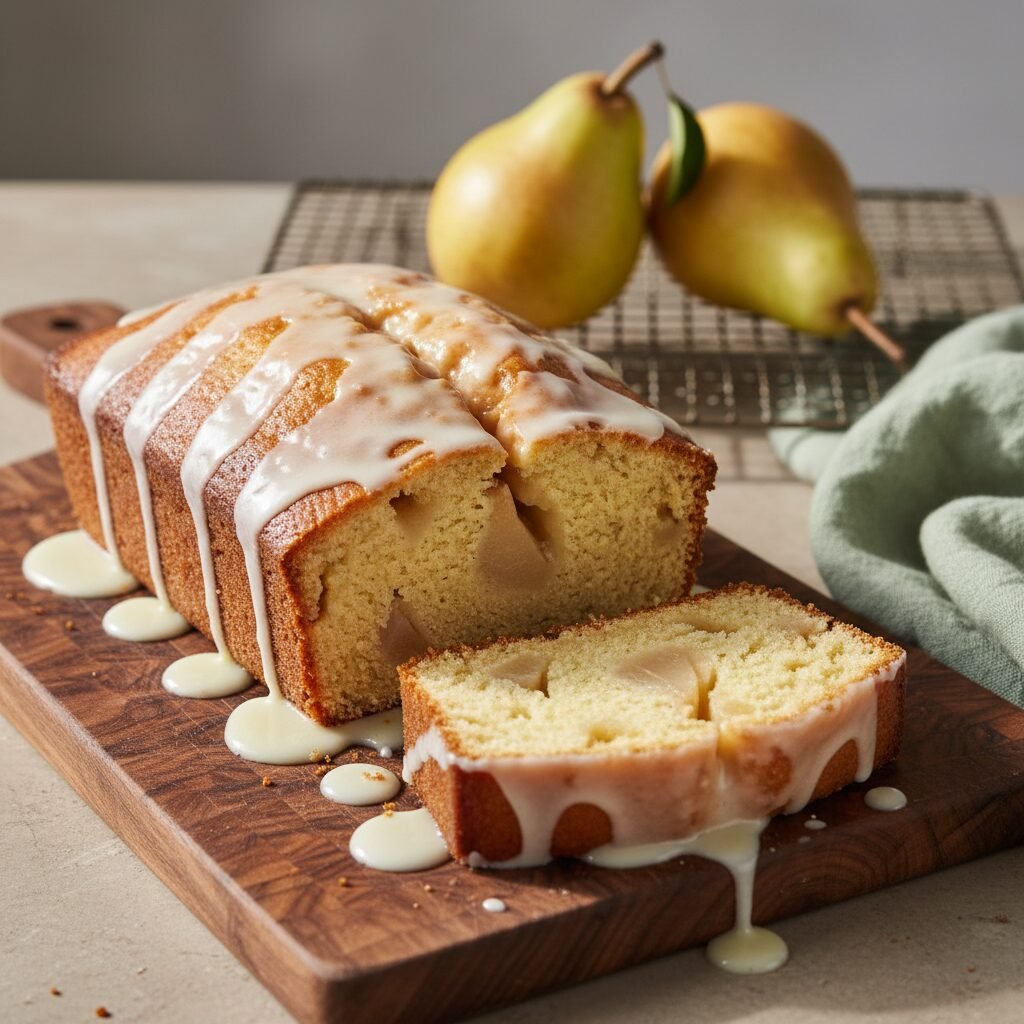
Embrace the cozy flavors of the season with this incredibly moist pear loaf cake. Packed with chunks of sweet, ripe pears and warm spices, then topped with a silky vanilla bean glaze, this recipe is the perfect companion for your morning coffee or afternoon tea.
20 minutes
55 minutes
1 hour 15 minutes
1 Loaf (8-10 slices)
Dessert
Baking
American
Vegetarian
When autumn rolls around, apples and pumpkins often steal the spotlight, dominating our Pinterest feeds and bakery windows. However, there is an unsung hero of fall baking that deserves equal, if not more, adoration: the humble pear. This Moist Pear Loaf Cake is my love letter to this delicate, floral fruit. It is a recipe that bridges the gap between a comforting breakfast quick bread and an elegant afternoon dessert. The magic of this loaf lies in its texture. Unlike dry, crumbly cakes that require a gallon of tea to wash down, this loaf is impossibly moist, tender, and dense in the best way possible.
We achieve this luxurious crumb by using a combination of vegetable oil and Greek yogurt rather than relying solely on butter. The oil ensures the cake stays soft for days, while the yogurt adds a subtle tang that cuts through the sweetness of the brown sugar. Every bite is studded with tender chunks of fresh pear that melt in your mouth, releasing little pockets of juice that infuse the surrounding sponge with flavor. Spiced gently with cinnamon, nutmeg, and a hint of ginger, the aroma that fills your kitchen while this bakes is nothing short of intoxicating. To finish, a simple yet decadent vanilla bean glaze is drizzled over the top, settling into the cracks and crevices of the golden crust. Whether you have a surplus of orchard-picked pears or just picked up a few beauties at the grocery store, this recipe is the absolute best way to showcase their natural sweetness.
History & Origins
The lineage of the loaf cake, or ‘quick bread,’ is a fascinating journey through culinary innovation. While fruit-studded cakes have existed for centuries—dating back to the Roman hearty cakes of barley, pomegranate seeds, nuts, and raisins—the specific texture of the modern loaf cake is a relatively newer invention. Historically, cakes were leavened with yeast, requiring long rising times and resulting in a bread-like consistency. It wasn’t until the widespread availability of chemical leaveners like pearl ash, and later baking soda and baking powder in the 19th century, that the ‘quick bread’ became a staple in American and European kitchens. This allowed home cooks to produce sweet, chemically leavened loaves in under an hour, bypassing the temperamental nature of yeast.
Pears themselves have a history as rich as their flavor. Cultivated for over 3,000 years, pears were revered in ancient China as a symbol of immortality and were a favorite delicacy among European aristocracy during the Renaissance. In the 17th century, French horticulturists dedicated their lives to breeding new pear varieties with buttery textures, moving away from the gritty wild pears of the past. This dedication to texture paved the way for the baking pears we use today, like the Bartlett and Bosc. The concept of incorporating fresh chunks of moisture-rich fruit like pears into a batter became popular in the 20th century as a way to extend the shelf life of cakes and utilize seasonal harvests before they spoiled. This Pear Loaf Cake is a modern descendant of those early preservation efforts, combining ancient fruit with Victorian-era baking chemistry.
Why This Recipe Works
This recipe succeeds where many fruit cakes fail because it meticulously balances moisture content with structural integrity. A common problem with fresh fruit cakes is the ‘soggy bottom’ phenomenon, where the excess water from the fruit seeps into the batter, preventing it from baking through. To combat this, we use a thicker batter with a robust flour backbone that can suspend the pear chunks evenly without them sinking. Furthermore, the choice of fat is crucial. While butter offers flavor, it is 80% fat and 20% water; when it cools, it solidifies. Vegetable oil, however, is 100% fat and remains liquid at room temperature. By using oil as the primary fat source, we guarantee a cake that remains soft and moist on the counter for days, rather than drying out.
The addition of Greek yogurt serves a dual purpose: it adds acidity to activate the baking soda (ensuring a good rise) and contributes protein structure that keeps the crumb tender but not mushy. We also use a mix of brown and white sugars. Brown sugar contains molasses, which is hygroscopic—meaning it attracts and holds onto water molecules—further locking in moisture. Finally, the spice blend is specifically tailored to pears; ginger and nutmeg highlight the floral notes of the fruit without overpowering it like cinnamon sometimes can. The result is a scientifically balanced loaf that delivers consistent, bakery-quality results every time.
Why You’ll Love This Recipe
- ✓Stays moist for up to 4 days without drying out.
- ✓Uses simple pantry staples and fresh seasonal fruit.
- ✓No mixer required – can be made with just two bowls and a whisk.
- ✓Freezer-friendly for make-ahead breakfasts.
- ✓Versatile: works as breakfast, snack, or dessert.
- ✓The vanilla glaze adds a professional bakery finish.
Equipment You’ll Need
- ✓9×5 inch Loaf Pan
- ✓Large Mixing Bowl
- ✓Medium Mixing Bowl
- ✓Whisk
- ✓Rubber Spatula
- ✓Vegetable Peeler
- ✓Cutting Board
- ✓Knife
- ✓Wire Cooling Rack
Ingredients
- ✓2 cups (250g) All-purpose flour
- ✓1 teaspoon Baking soda
- ✓1/2 teaspoon Baking powder
- ✓1/2 teaspoon Salt
- ✓1 teaspoon Ground cinnamon
- ✓1/2 teaspoon Ground ginger
- ✓1/4 teaspoon Ground nutmeg
- ✓2 large Eggs, room temperature
- ✓1/2 cup (100g) Granulated white sugar
- ✓1/2 cup (100g) Light brown sugar, packed
- ✓1/2 cup (120ml) Vegetable oil (or canola/grapeseed oil)
- ✓1/2 cup (120g) Plain Greek yogurt or sour cream
- ✓1 teaspoon Pure vanilla extract
- ✓2 cups (approx. 2-3 medium) Ripe pears, peeled, cored, and diced into 1/2 inch cubes
- ✓FOR THE GLAZE: 1/2 cup Powdered sugar
- ✓FOR THE GLAZE: 1-2 tablespoons Milk or heavy cream
- ✓FOR THE GLAZE: 1/2 teaspoon Vanilla bean paste or extract
Instructions
- Preheat your oven to 350°F (175°C). Grease a 9×5 inch loaf pan generously with non-stick spray or butter, and line it with parchment paper, leaving an overhang on the sides for easy removal.
- In a medium bowl, whisk together the flour, baking soda, baking powder, salt, cinnamon, ginger, and nutmeg until well combined and no lumps remain. Set aside.
- In a large mixing bowl, whisk the eggs together with the granulated sugar and brown sugar until the mixture is smooth and slightly paler in color (about 1 minute).
- Add the vegetable oil, Greek yogurt (or sour cream), and vanilla extract to the egg mixture. Whisk vigorously until the wet ingredients are fully emulsified and creamy.
- Pour the dry ingredients into the wet ingredients. Switch to a rubber spatula and gently fold the batter. Stop when there are still a few streaks of flour visible.
- Add the diced pears to the bowl. Continue to fold gently just until the flour is fully incorporated and the pears are evenly distributed. Do not overmix, or the cake will be tough.
- Pour the batter into the prepared loaf pan and smooth the top with the spatula. Tap the pan gently on the counter once to release any large air bubbles.
- Bake on the middle rack for 50-60 minutes. Check the loaf at the 40-minute mark; if the top is browning too quickly, loosely tent it with aluminum foil.
- The cake is done when a toothpick inserted into the center comes out clean or with just a few moist crumbs attached (no raw batter).
- Remove from the oven and let the cake cool in the pan for 15-20 minutes. Then, use the parchment paper handles to lift it out and place it on a wire rack to cool completely before glazing.
- To make the glaze: Whisk the powdered sugar, vanilla, and 1 tablespoon of milk in a small bowl. Add more milk a teaspoon at a time until you reach a pourable but thick consistency. Drizzle over the cooled cake.
Expert Cooking Tips
- ✓Use pears that are ripe but firm. If they are too mushy, they will disintegrate into the batter; too hard, and they won’t soften enough.
- ✓Room temperature ingredients (eggs and yogurt) emulsify better, creating a more uniform crumb structure.
- ✓Don’t skip lining the pan. Pear juice can caramelize and stick to the metal, making removal difficult without parchment paper.
- ✓Toss the pear chunks in a teaspoon of the flour mixture before adding to the batter if you are worried about them sinking (though this thick batter usually holds them well).
- ✓Wait for the cake to cool completely before glazing. If the cake is warm, the glaze will melt and run right off.
- ✓If using vanilla bean paste in the glaze, you’ll get beautiful little black speckles that look very professional.
Substitutions and Variations
This recipe is quite forgiving and allows for several substitutions. For the flour, you can substitute a 1:1 Gluten-Free All-Purpose Flour blend (look for one with xanthan gum) to make this gluten-free. If you want a nuttier flavor, swap 1/2 cup of the all-purpose flour for whole wheat flour. For the fat, melted coconut oil or light olive oil can replace the vegetable oil, though olive oil will lend a slight savory note. If you don’t have Greek yogurt, full-fat sour cream is an excellent 1:1 substitute; buttermilk can also work, though the batter will be slightly thinner. Regarding the fruit, while this is a pear loaf, apples work brilliantly as a direct substitute. You can also add 1/2 cup of chopped walnuts or pecans for crunch. If you prefer to reduce refined sugar, you can swap the granulated sugar for coconut sugar, but keep the texture in mind as it may darken the loaf significantly.
Common Mistakes to Avoid
The most common mistake with this recipe is overmixing the batter. Once the flour hits the wet ingredients, gluten development begins. If you whisk or stir too vigorously, the resulting loaf will be rubbery and dense rather than tender and moist. Always fold gently by hand. Another issue is underbaking. Because of the high moisture content from the pears and oil, this loaf takes a while to bake. If you pull it out too early, the center will be raw and gummy. Trust the toothpick test, and don’t be afraid to let it bake the full hour. Also, using rock-hard, unripe pears will result in crunchy fruit bits inside the soft cake, which is texturally unpleasant. Ensure your pears yield slightly to pressure near the stem before using.
Serving Suggestions
This moist pear loaf cake is versatile enough for various serving styles. For a cozy breakfast, serve a thick slice slightly warmed in the toaster oven or microwave, topped with a pat of salted butter or a dollop of ricotta cheese and honey. It pairs exceptionally well with a dark roast coffee or an Earl Grey tea, as the bergamot in the tea complements the citrusy notes of the ginger in the cake. For dessert, skip the glaze and instead serve a warm slice with a scoop of vanilla bean ice cream and a drizzle of salted caramel sauce. It also makes a fantastic addition to a holiday brunch spread alongside savory quiches.
Storage and Reheating Tips
Because this cake is so moist, it stores very well. Keep it in an airtight container at room temperature for up to 3 days. If you live in a particularly hot or humid climate, store it in the refrigerator for up to 1 week, but let it come to room temperature before eating for the best flavor. To freeze, wrap the completely cooled loaf (or individual slices) tightly in plastic wrap, then a layer of aluminum foil or place in a freezer-safe Ziploc bag. It will keep in the freezer for up to 3 months. Thaw overnight on the counter before serving. Do not glaze the cake if you plan to freeze the whole loaf; add the glaze fresh after thawing.
Nutrition Facts (Estimated)
| Serving Size | 1 slice |
| Calories | 340 |
| Fat | 14g |
| Saturated Fat | 2g |
| Unsaturated Fat | 11g |
| Trans Fat | 0g |
| Cholesterol | 35mg |
| Sodium | 180mg |
| Carbohydrates | 52g |
| Fiber | 3g |
| Sugar | 28g |
| Protein | 5g |
Frequently Asked Questions
Do I have to peel the pears?
Yes, for this recipe, it is highly recommended to peel the pears. Pear skin can become tough and chewy when baked inside a cake, interfering with the soft, tender texture of the loaf. Peeling ensures a consistent melt-in-your-mouth experience.
What is the best variety of pear to use?
Bartlett and Bosc pears are the top choices for baking. Bartlett pears break down slightly more, becoming very soft and jammy, while Bosc pears hold their shape better. Anjou pears are also a decent option. Avoid Comice pears as they are too watery.
Can I use canned pears?
Fresh is best, but you can use canned pears in a pinch. Make sure to drain them thoroughly and pat them dry with paper towels to remove excess syrup or water, otherwise, the batter will become too wet and may not bake through properly.
Why did my cake sink in the middle?
Sinking usually happens if the cake was underbaked (the structure wasn’t set) or if the oven door was opened too frequently early in the baking process, causing a temperature drop. It can also occur if there was too much leavening (baking soda/powder).
Can I make this into muffins instead?
Absolutely! This batter works great for muffins. Line a standard muffin tin and fill cups about 3/4 full. Bake at 375°F (190°C) for 18-22 minutes. The yield will be approximately 12-14 muffins.
Can I reduce the sugar in this recipe?
You can reduce the white sugar by about 1/4 cup without drastically affecting the texture. However, try not to reduce the brown sugar, as its acidity is needed to react with the baking soda and its moisture is key to the loaf’s texture.
Can I use butter instead of oil?
You can use melted butter, but the cake will have a slightly different texture—more dense and pound-cake-like, and it may dry out faster. A mix of half butter and half oil is a great compromise for flavor and moisture.
How do I ripen pears quickly?
If your pears are rock hard, place them in a brown paper bag with a banana or an apple. These fruits release ethylene gas, which speeds up the ripening process. Leave them on the counter for 1-2 days.
My glaze is too runny, how do I fix it?
Simply add more powdered sugar, a tablespoon at a time, whisking until it thickens. If it’s too thick, add milk a few drops at a time. Humidity can affect how much liquid the sugar absorbs.
Is this cake dairy-free?
It can be easily made dairy-free by using a dairy-free yogurt (like coconut or almond milk yogurt) and using almond milk or oat milk for the glaze. The batter uses oil instead of butter, so it is naturally butter-free.
Conclusion
There is something profoundly grounding about baking with seasonal fruit, and this Moist Pear Loaf Cake captures that feeling perfectly. It is a recipe that rewards you with minimal effort and maximum flavor—a true crowd-pleaser that looks rustic yet elegant on any table. Whether you are baking for a holiday gathering, a school bake sale, or simply to treat yourself on a rainy Sunday, this loaf is guaranteed to become a recurring favorite in your recipe box. The combination of warm spices, tender fruit, and that sweet vanilla glaze creates a symphony of flavors that embodies the essence of comfort food. Don’t forget to snap a picture of your beautiful creation before it disappears!