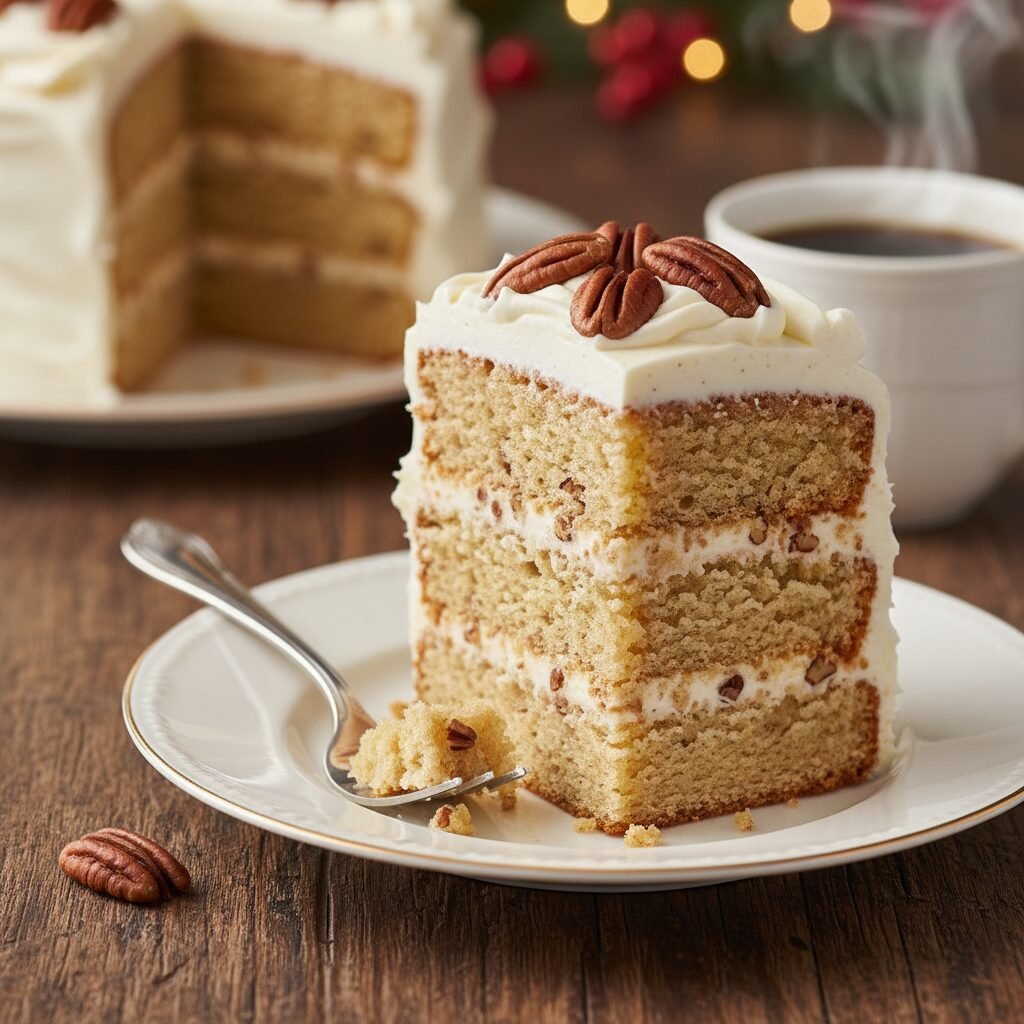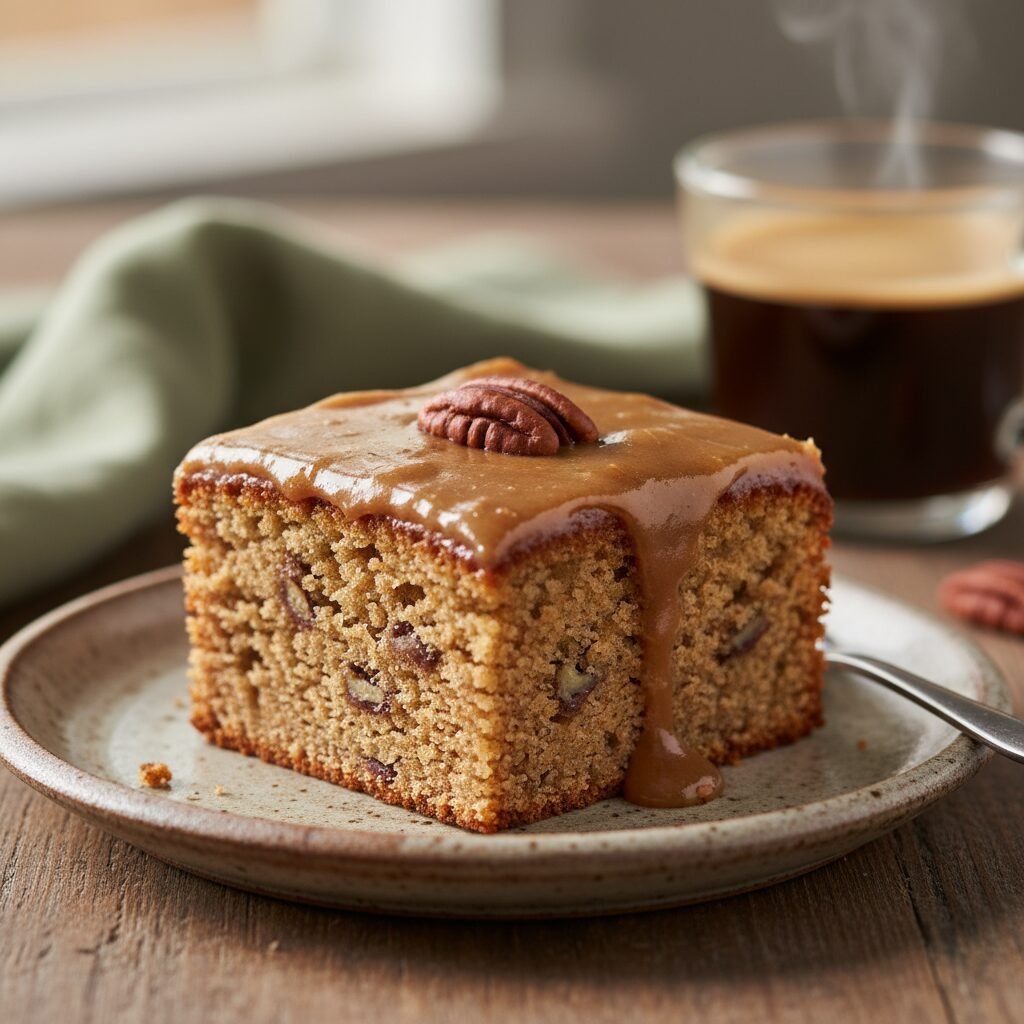
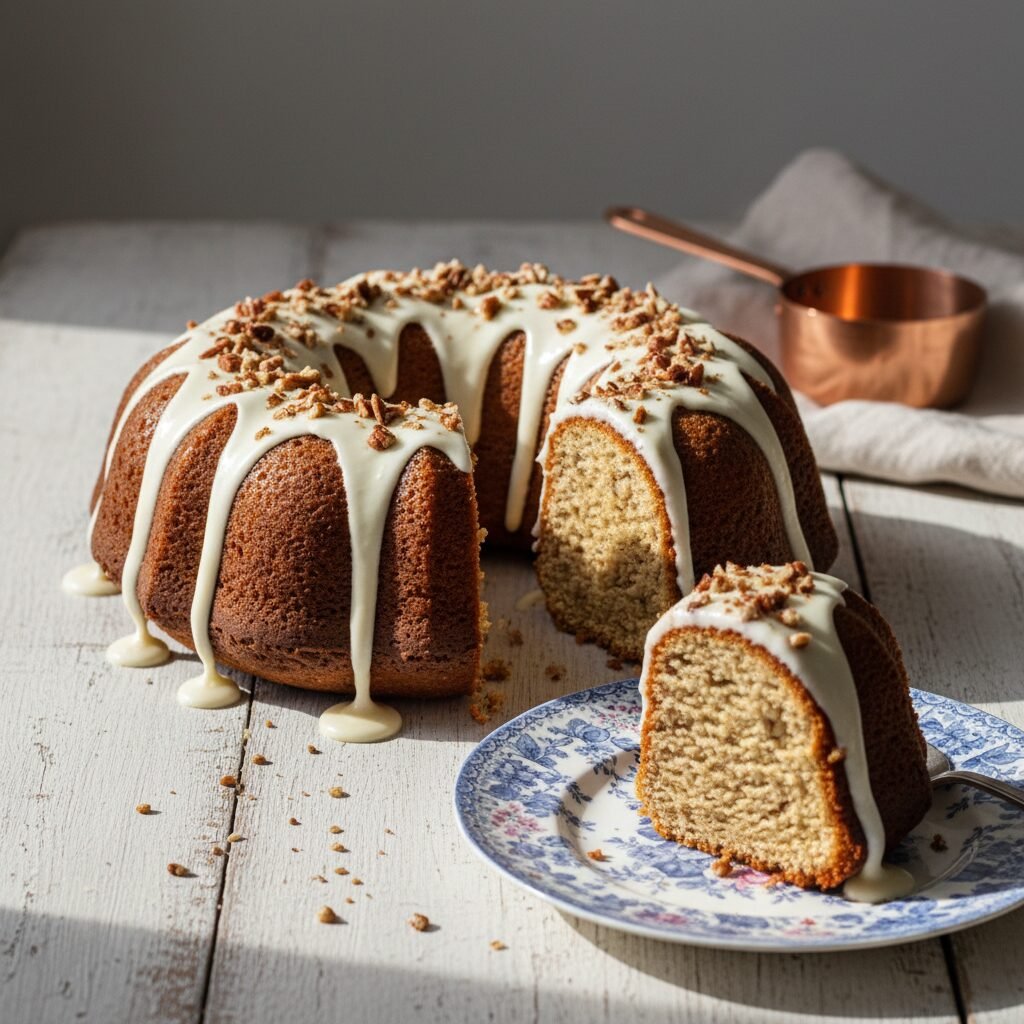
Moist Pecan Bundt Cake Recipe
Discover the secret to the most tender, melt-in-your-mouth Pecan Bundt Cake you’ve ever tasted. Infused with brown sugar, toasted pecans, and a hint of cinnamon, this recipe guarantees a moist crumb every time. It’s the perfect Southern-inspired dessert for holidays, coffee breaks, or whenever you need a slice of comfort.
20 minutes
60 minutes
1 hour 35 minutes
12-16 servings
Dessert
Baking
American (Southern)
Vegetarian
There is something undeniably comforting about a Bundt cake. It sits majestically on the counter, its ridges and curves catching the light, promising a slice of home-baked happiness. But not all Bundt cakes are created equal. Too often, we slice into a beautiful cake only to find it dry, crumbly, or lacking in depth. That ends today. This Moist Pecan Bundt Cake recipe is the result of years of tweaking and testing to find the absolute perfect balance of density, tenderness, and flavor. It is a celebration of the humble pecan, elevated by a batter that refuses to dry out.
The magic begins the moment you toast the pecans. The aroma fills the kitchen, nutty and rich, setting the stage for what’s to come. We don’t just throw raw nuts into this batter; we wake up their oils first, ensuring every bite has a crunch that contrasts beautifully with the velvety soft cake. The flavor profile leans heavily into warm, caramelized notes thanks to a generous amount of dark brown sugar and a whisper of cinnamon and vanilla. It tastes like autumn, like holidays at Grandma’s, and like a professional bakery treat all rolled into one.
What truly sets this recipe apart, however, is its texture. We’ve all had ‘coffee cakes’ that require a gallon of coffee to wash down. This cake stands on its own. It is incredibly moist—bordering on creamy in the center—thanks to a specific combination of fats and dairy. It’s sturdy enough to hold its shape but tender enough to melt on your tongue. Topped with a tangy, sweet cream cheese glaze that cascades down the fluted sides, this cake is a showstopper that requires surprisingly little effort. Whether you are a seasoned baker or a novice with a new Bundt pan, this recipe is your ticket to dessert stardom.
History & Origins
The history of the Bundt cake is a fascinating journey that bridges Old World European traditions with mid-century American innovation. The cake’s lineage can be traced back to the European ‘Gugelhupf’ or ‘Kugelhopf,’ a yeast-based brioche-style cake baked in a fluted, ring-shaped pan. These cakes were popular in Germany, Austria, and Alsace for centuries. However, the Bundt cake as we know it in America is a relatively modern phenomenon, inextricably linked to the invention of the Bundt pan itself.
In 1950, H. David Dalquist, the founder of Nordic Ware in Minneapolis, was approached by a group of women from the local Hadassah society. They wanted a modern version of the traditional ceramic Gugelhupf pans they remembered from their heritage, but made of lighter, more conductive aluminum. Dalquist created the cast aluminum pan and trademarked the name ‘Bundt’ (adding a ‘t’ to the German word ‘Bund,’ meaning an alliance or gathering, to trademark the name). For over a decade, the pan sold poorly and was nearly discontinued.
The turning point came in 1966 during the Pillsbury Bake-Off. A contestant named Ella Helfrich used the Nordic Ware pan to create the ‘Tunnel of Fudge’ cake. She won second place, but her cake won the hearts of America. Overnight, the demand for Bundt pans skyrocketed, surpassing the demand for tin pans. The Bundt cake became a staple of American kitchens, symbolizing hospitality and ease.
Simultaneously, the pecan has a deep-rooted history in North American cuisine. Native to the southern United States and northern Mexico, pecans were a staple food source for Native Americans long before European settlers arrived. The name ‘pecan’ comes from the Algonquin word requiring a stone to crack. As Southern cuisine developed, pecans became the star of pies, pralines, and cakes. Combining the European-style ring cake with the indigenous American pecan created a fusion that is now a hallmark of Southern hospitality. This recipe honors that history, blending the structural elegance of the Bundt form with the rich, native flavor of American pecans.
Why This Recipe Works
This recipe succeeds where many others fail because it relies on the science of baking to ensure moisture retention without sacrificing structure. The primary challenge with Bundt cakes is their long bake time; because the batter is dense and the pan is deep, the exterior can dry out before the interior is cooked. To combat this, we utilize a ‘tri-fat’ system: butter, oil, and sour cream.
Butter is essential for flavor; it provides that distinct, milky richness that oil simply cannot replicate. However, butter is about 18-20% water. When that water evaporates, the cake can become dry. This is where vegetable oil comes in. Oil is 100% fat and remains liquid at room temperature, which coats the flour proteins (gluten) more effectively than butter, preventing them from becoming tough and ensuring the cake stays moist for days. The third component, full-fat sour cream, adds acidity. This acidity reacts with the baking soda to create lift, but more importantly, it breaks down gluten strands to tenderize the crumb, resulting in a velvety texture.
Furthermore, we use a mix of white granulated sugar and dark brown sugar. Brown sugar contains molasses, which is hygroscopic—meaning it attracts and holds onto water molecules from the air. This keeps the cake soft long after it has cooled. Finally, the technique of tossing the toasted pecans in a tablespoon of flour before folding them into the batter provides friction, preventing the heavy nuts from sinking to the bottom of the pan during the bake. This ensures an even distribution of crunch in every single slice.
Why You’ll Love This Recipe
- ✓Stays moist for up to 5 days thanks to the sour cream and oil blend.
- ✓Rich, nutty flavor profile with toasted pecans in every bite.
- ✓Freezer-friendly, making it perfect for making ahead of holidays.
- ✓The cream cheese glaze provides the perfect tangy contrast to the sweet cake.
- ✓No fancy decorating skills required—the pan does the work for you.
Equipment You’ll Need
- ✓10-12 cup Bundt Pan
- ✓Stand mixer or electric hand mixer
- ✓Large mixing bowl
- ✓Medium mixing bowl
- ✓Whisk
- ✓Rubber spatula
- ✓Wire cooling rack
- ✓Baking sheet (for toasting nuts)
Ingredients
- ✓2 1/2 cups All-Purpose Flour (plus 1 tbsp for coating nuts)
- ✓1 1/2 cups Pecan Halves, chopped
- ✓1 cup Unsalted Butter, softened to room temperature
- ✓1/2 cup Vegetable Oil (or Canola)
- ✓1 cup Granulated White Sugar
- ✓1 cup Dark Brown Sugar, packed
- ✓4 large Eggs, room temperature
- ✓1 tbsp Pure Vanilla Extract
- ✓1 cup Full-Fat Sour Cream, room temperature
- ✓2 tsp Baking Powder
- ✓1/2 tsp Baking Soda
- ✓1 tsp Salt
- ✓1/2 tsp Cinnamon
- ✓For the Glaze: 4 oz Cream Cheese (softened), 1 1/2 cups Powdered Sugar, 2-3 tbsp Milk, 1 tsp Vanilla
Instructions
- 1. Preheat your oven to 350°F (175°C). Spread the chopped pecans on a baking sheet and toast them in the oven for 6-8 minutes until fragrant. Watch closely so they don’t burn. Remove and let cool completely.
- 2. Generously grease your Bundt pan with butter or non-stick baking spray (the kind with flour in it works best). Dust with flour if using butter, tapping out the excess. Ensure every nook and cranny is coated.
- 3. In a medium bowl, whisk together the 2 1/2 cups flour, baking powder, baking soda, salt, and cinnamon. Set aside.
- 4. In a small bowl, toss the cooled pecans with the remaining 1 tablespoon of flour. This prevents them from sinking.
- 5. In a large bowl or stand mixer fitted with the paddle attachment, cream the softened butter, vegetable oil, granulated sugar, and brown sugar together on medium-high speed for 3-5 minutes until light, fluffy, and pale.
- 6. Add the eggs one at a time, beating well after each addition and scraping down the sides of the bowl. Stir in the vanilla extract.
- 7. Reduce the mixer speed to low. Add half of the flour mixture, mixing just until combined. Add the sour cream, mix briefly, then add the remaining flour mixture. Stop mixing as soon as the flour streaks disappear. Do not overmix.
- 8. Gently fold in the flour-coated pecans using a rubber spatula.
- 9. Pour the batter into the prepared Bundt pan and smooth the top. Tap the pan firmly on the counter 2-3 times to release any trapped air bubbles.
- 10. Bake for 55-65 minutes. Check at the 50-minute mark; if the top is browning too fast, loosely tent with foil. The cake is done when a long skewer inserted into the center comes out clean or with just a few moist crumbs.
- 11. Remove from the oven and let the cake cool in the pan for exactly 10 minutes. Then, invert the pan onto a wire cooling rack to release the cake. Let it cool completely before glazing.
- 12. To make the glaze: Whisk the softened cream cheese until smooth. Gradually add powdered sugar, vanilla, and enough milk to reach a thick but pourable consistency. Drizzle over the cooled cake.
Expert Cooking Tips
- ✓Room temperature ingredients are non-negotiable. Cold eggs or sour cream can curdle the batter and prevent proper emulsion.
- ✓Grease the pan right before filling. If you grease it too early, the oil can slide down the sides, leaving the top ridges exposed to sticking.
- ✓Measure flour correctly. Use a kitchen scale for accuracy, or the ‘spoon and level’ method. Scooping the cup directly into the flour packs it down and leads to a dry cake.
- ✓Don’t skip the salt. It balances the sweetness of the brown sugar and enhances the nutty pecan flavor.
- ✓Cooling time matters. If you try to flip the cake too soon, it may break apart because it’s too hot and fragile. If you wait too long, the sugars solidify and stick to the pan.
- ✓Toast the nuts. Raw nuts have a waxy texture inside a soft cake. Toasting them makes them crunchy and flavorful.
Substitutions and Variations
This recipe is versatile enough to handle several substitutions if you are in a pinch. For the sour cream, you can substitute full-fat plain Greek yogurt or buttermilk. If using buttermilk, the batter will be slightly thinner, but the result will still be moist. If you don’t have vegetable oil, melted coconut oil works well, though it may impart a slight coconut flavor. You can swap pecans for walnuts if preferred, though pecans offer a sweeter, more buttery flavor profile. For a gluten-free version, use a high-quality 1:1 gluten-free baking flour blend that contains xanthan gum. Note that gluten-free flours often result in a slightly denser texture. If you want to reduce the sugar, you can cut the white sugar by 1/4 cup, but try to keep the brown sugar amount as is, since it contributes to the moisture. Lastly, the glaze is optional; a simple dusting of powdered sugar is a lighter alternative.
Common Mistakes to Avoid
The most heartbreaking mistake with Bundt cakes is the cake sticking to the pan. This usually happens because the pan wasn’t greased thoroughly or the non-stick coating on an old pan has worn off. Always use a pastry brush to get the grease into every ridge. Another common error is overmixing the batter after adding the flour. Overmixing develops gluten, which turns a tender cake into a tough, rubbery loaf. Mix only until the flour disappears. Third, opening the oven door too frequently causes temperature fluctuations that can cause the cake to fall in the center. Trust your timer and use the oven light. Finally, cutting the cake while it is still warm might seem tempting, but it will cause the crumb to compress and look gummy. Patience is key—let it cool completely.
Serving Suggestions
This Moist Pecan Bundt Cake is elegant enough to stand alone, but it pairs beautifully with a variety of accompaniments. For a cozy afternoon treat, serve a slice with a hot cup of black coffee or an Earl Grey tea to cut through the sweetness. If serving as a dessert for a dinner party, add a dollop of freshly whipped cream (unsweetened, as the cake is sweet enough) and a few fresh berries on the side for color contrast. A scoop of vanilla bean or butter pecan ice cream is also a fantastic pairing, especially if you gently warm the slice in the microwave for 10 seconds before serving. For a festive touch during the holidays, garnish the top of the glazed cake with a few whole pecans and a sprinkle of edible gold dust.
Storage and Reheating Tips
Because this cake is so moist, proper storage is essential to prevent it from becoming soggy or molding. At room temperature, store the cake in an airtight cake carrier or wrap it tightly in plastic wrap for up to 3 days. If your kitchen is particularly hot or humid, it is safer to store it in the refrigerator, where it will last for up to 1 week. Allow refrigerated slices to come to room temperature before eating for the best texture. This cake freezes exceptionally well. You can freeze the whole unglazed cake or individual slices. Wrap tightly in plastic wrap, then a layer of aluminum foil. It will keep in the freezer for up to 3 months. Thaw overnight in the refrigerator or on the counter before glazing and serving.
Nutrition Facts (Estimated)
| Serving Size | 1 slice |
| Calories | 485 |
| Fat | 28g |
| Saturated Fat | 12g |
| Unsaturated Fat | 14g |
| Trans Fat | 0g |
| Cholesterol | 65mg |
| Sodium | 210mg |
| Carbohydrates | 54g |
| Fiber | 2g |
| Sugar | 38g |
| Protein | 6g |
Frequently Asked Questions
Why did my nuts sink to the bottom of the cake?
Nuts are heavy and can fall through a light batter. Coating them in a tablespoon of flour before adding them creates friction that helps suspend them evenly throughout the cake.
Can I make this cake ahead of time?
Absolutely. In fact, Bundt cakes often taste better the next day as the flavors meld and the moisture redistributes. You can bake it one day in advance and glaze it on the day of serving.
My cake is stuck in the pan! What do I do?
Don’t panic. If it won’t release, dampen a kitchen towel with hot water and wrap it around the outside of the pan for a few minutes. The steam can help loosen the sugars. Gently banging the side of the pan can also help.
Can I use a different pan if I don’t have a Bundt pan?
Yes, but the baking time will change significantly. You can use two 9×5 inch loaf pans (bake for 45-55 mins) or a 9×13 inch rectangular pan (bake for 35-45 mins). Keep an eye on it.
Why is my cake dense?
Density usually comes from overmixing the batter or using cold ingredients. Ensure your butter, eggs, and sour cream are at room temperature to create a proper emulsion that traps air.
Can I leave out the coffee/cinnamon?
Yes, the cinnamon is optional, though it adds warmth. There is no coffee in this recipe, but if you want to add some, a teaspoon of espresso powder enhances the pecan flavor nicely.
Is the glaze necessary?
No, the cake is very flavorful on its own. However, the tang of the cream cheese helps balance the sweetness. A simple dusting of powdered sugar is a great alternative.
How do I know when the cake is perfectly done?
The toothpick test is best. Insert a wooden skewer into the deepest part of the cake. It should come out with a few moist crumbs attached. If it’s wet batter, it needs more time. If it’s bone dry, it’s slightly overbaked.
Conclusion
Baking this Moist Pecan Bundt Cake is more than just following a recipe; it’s about creating a moment of connection. Whether you are baking it for a holiday gathering, a church potluck, or simply to have a sweet treat on the counter for your family, the love you put into it shines through in every bite. The combination of the tender, brown sugar-infused crumb and the crunch of toasted pecans creates a texture that is truly unforgettable. We hope this cake becomes a cherished tradition in your kitchen, just as it is in ours. Don’t forget to pin this recipe for later and share your results with us!