Moist Pecan Cake With Cream Cheese Frosting Recipe
Experience the perfect blend of nutty crunch and velvety sweetness with this Southern-inspired Moist Pecan Cake. Topped with a tangy, luscious cream cheese frosting, this recipe guarantees a tender crumb that stays moist for days, making it the ultimate centerpiece for holidays and special occasions.
30 minutes
35 minutes
1 hour 5 minutes (plus cooling)
12-16 servings
Dessert
Baking
American (Southern)
Vegetarian
There is something undeniably comforting about the aroma of toasted pecans wafting through the kitchen, signaling that a true Southern classic is underway. This Moist Pecan Cake with Cream Cheese Frosting is not just a dessert; it is a celebration of texture and flavor that has graced family tables for generations. If you have ever been disappointed by a dry, dense nut cake, prepare to have your expectations completely shattered. This recipe has been meticulously tested to ensure a crumb that is incredibly tender, light, and buttery, while still possessing the structural integrity to hold a generous amount of chopped pecans suspended throughout every slice.
The magic lies in the balance of ingredients. We aren’t just throwing nuts into a yellow cake mix here. We are building a flavor profile that marries the deep, earthy notes of roasted pecans with the subtle tang of buttermilk and the aromatic warmth of pure vanilla extract. The cake layers themselves are rich without being heavy, providing the perfect canvas for the star of the show: the frosting. Oh, the frosting! It is a silky, cloud-like concoction of premium cream cheese and butter, whipped to perfection with just enough sugar to sweeten but not overpower the tangy goodness. Whether you are baking for a Thanksgiving feast, a Christmas dinner, or simply a Sunday brunch where you want to impress your guests, this cake delivers on every front. It’s the kind of dessert that causes conversation to pause after the first bite, replaced by satisfied sighs and the inevitable request for the recipe. Get ready to add a new favorite to your baking repertoire.
History & Origins
The history of the pecan cake is deeply rooted in the culinary traditions of the American South, where the pecan tree is native and abundant. The word ‘pecan’ itself originates from the Algonquin word ‘pacane,’ used by Native Americans to describe nuts requiring a stone to crack. For centuries before European settlers arrived, Native Americans utilized pecans as a staple food source, valuing them for their high energy content and versatility. As settlers moved into the Mississippi Valley and Texas, they adopted the pecan, incorporating it into their baking traditions.
By the late 19th and early 20th centuries, recipes for nut cakes began appearing in community cookbooks across Georgia, Texas, and Louisiana. However, the specific iteration of the moist pecan cake we know today—often paired with cream cheese frosting—gained significant popularity in the mid-20th century. This rise coincided with the mass commercialization of cream cheese and the advent of more reliable leavening agents, allowing home bakers to produce lighter, fluffier cakes. The pairing of the rich, oily nut with the acidic, tangy profile of cream cheese is a culinary match made in heaven, evolving from simple pound cakes studded with nuts to the elaborate layer cakes seen in bakery windows today. In Southern culture, offering a slice of homemade pecan cake is a gesture of supreme hospitality, a symbol of comfort, and a nod to the rich agricultural heritage of the region.
Why This Recipe Works
This recipe succeeds where others fail primarily due to the precise balance of fat and liquid. Many nut cakes turn out dry because the nuts absorb moisture from the batter. To combat this, we utilize a combination of unsalted butter and a neutral oil. The butter provides that classic, unbeatable flavor and aeration when creamed with sugar, while the oil ensures the cake remains soft and moist even after refrigeration. Unlike butter, which solidifies when cold, oil remains liquid, keeping the crumb tender.
Furthermore, the inclusion of buttermilk is non-negotiable. The acidity in the buttermilk reacts with the baking soda to create carbon dioxide, which helps lift the heavy batter, resulting in a fluffy texture rather than a dense brick. It also works to tenderize the gluten strands in the flour, preventing toughness. Another critical step in this recipe is toasting the pecans before adding them to the batter. Raw nuts can have a waxy texture and lackluster flavor. Toasting them releases their natural oils, intensifying the nutty aroma and providing a satisfying crunch that contrasts beautifully with the soft crumb and creamy frosting. Finally, coating the chopped pecans in a dusting of flour before folding them ensures they remain suspended evenly throughout the cake, rather than sinking to the bottom of the pan.
Why You’ll Love This Recipe
- ✓Incredibly moist crumb thanks to a butter-oil blend.
- ✓Rich, toasted nutty flavor in every single bite.
- ✓Tangy cream cheese frosting balances the sweetness perfectly.
- ✓Sturdy enough for layer cakes but tender enough to melt in your mouth.
- ✓Freezes beautifully for make-ahead convenience.
- ✓A timeless Southern classic perfect for holidays.
Equipment You’ll Need
- ✓Three 8-inch round cake pans
- ✓Stand mixer or electric hand mixer
- ✓Large mixing bowls
- ✓Rubber spatula
- ✓Wire cooling rack
- ✓Parchment paper
- ✓Offset spatula for frosting
- ✓Baking sheet (for toasting nuts)
Ingredients
- ✓2 1/2 cups chopped pecans (divided use)
- ✓3 cups all-purpose flour
- ✓1 teaspoon baking powder
- ✓1/2 teaspoon baking soda
- ✓1 teaspoon salt
- ✓1 cup unsalted butter, softened to room temperature
- ✓1/2 cup vegetable oil or canola oil
- ✓2 cups granulated sugar
- ✓5 large eggs, room temperature
- ✓1 tablespoon pure vanilla extract
- ✓1 cup buttermilk, room temperature
- ✓16 oz full-fat cream cheese, softened (Frosting)
- ✓1 cup unsalted butter, softened (Frosting)
- ✓6 cups powdered sugar, sifted (Frosting)
- ✓2 teaspoons vanilla extract (Frosting)
- ✓Pinch of salt (Frosting)
Instructions
- Preheat your oven to 350°F (175°C). Spread the pecans on a baking sheet and toast them in the oven for 6-8 minutes until fragrant. Watch closely to avoid burning. Remove and let cool completely.
- Grease three 8-inch round cake pans with butter or baking spray. Line the bottoms with parchment paper rounds and grease the paper. Dust with flour and tap out excess.
- In a medium bowl, whisk together the flour, baking powder, baking soda, and salt. Take 1 tablespoon of this flour mixture and toss it with 2 cups of the cooled chopped pecans (reserve 1/2 cup for decoration). This prevents the nuts from sinking.
- In the bowl of a stand mixer fitted with the paddle attachment, beat the 1 cup softened butter, oil, and granulated sugar on medium-high speed for about 5 minutes until pale and fluffy. Scrape down the sides of the bowl as needed.
- Add the eggs one at a time, beating well after each addition. Stir in the 1 tablespoon vanilla extract.
- Reduce the mixer speed to low. Add the flour mixture in three parts, alternating with the buttermilk in two parts, starting and ending with the flour. Mix only until just combined; do not overmix.
- Gently fold in the flour-coated pecans using a rubber spatula.
- Divide the batter evenly among the three prepared cake pans. Smooth the tops with a spatula.
- Bake for 30-35 minutes, or until a toothpick inserted into the center comes out clean or with just a few moist crumbs. The cakes should spring back when gently pressed.
- Remove from the oven and let the cakes cool in the pans for 10 minutes. Then, invert them onto a wire rack to cool completely before frosting.
- To make the frosting: In a large bowl, beat the cream cheese and 1 cup butter together until completely smooth and creamy (no lumps).
- Gradually add the powdered sugar, about one cup at a time, beating on low speed until incorporated. Add the vanilla and pinch of salt. Increase speed to high and whip for 2-3 minutes until fluffy.
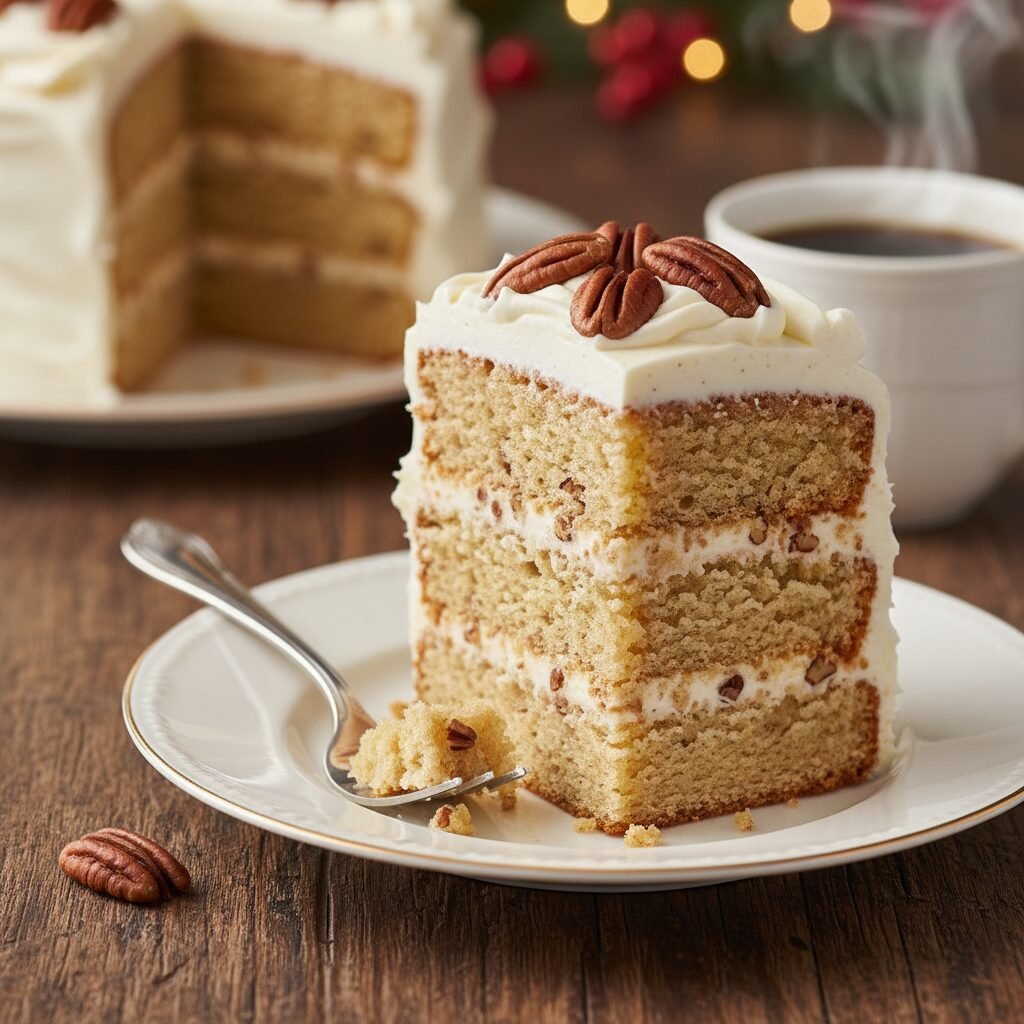
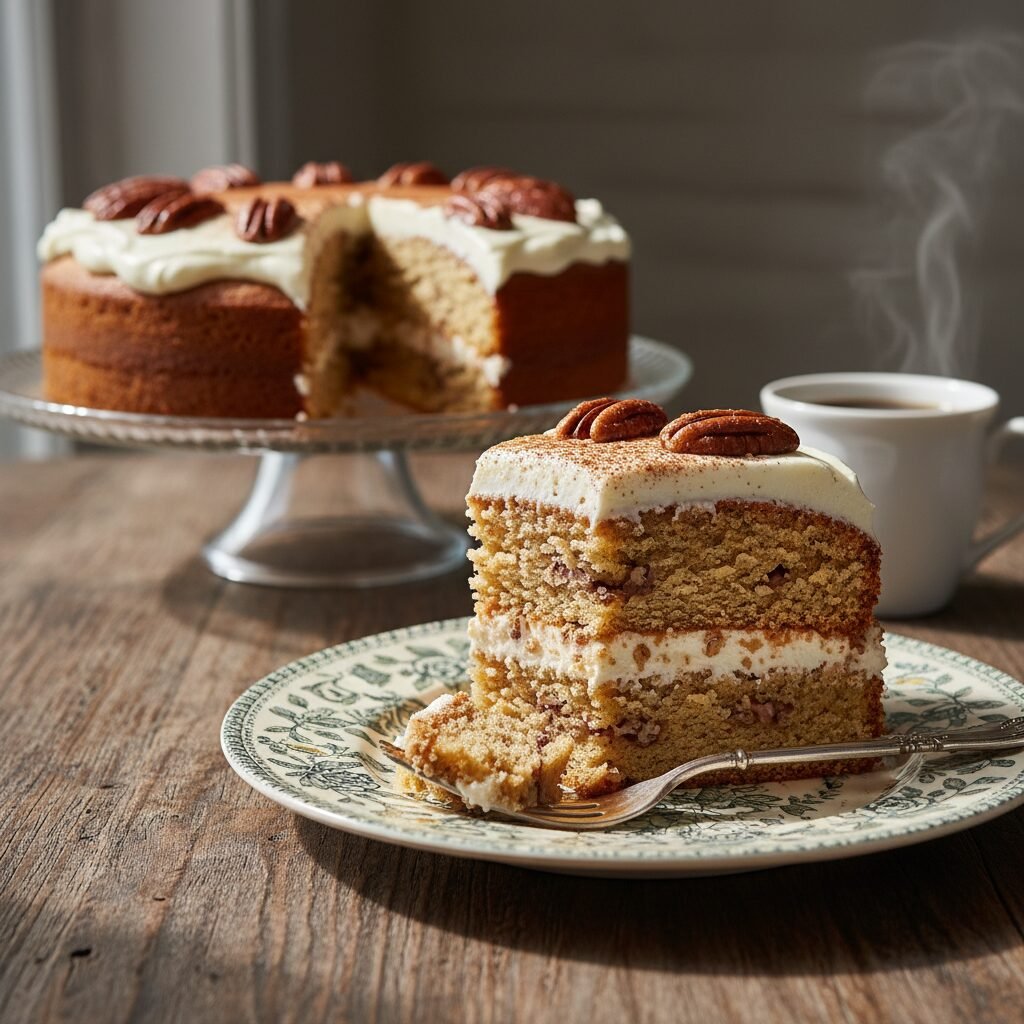
- Assemble the cake: Place one layer on a serving plate. Spread a generous layer of frosting over the top. Repeat with the second and third layers. Frost the outside of the cake with the remaining frosting.
- Press the reserved 1/2 cup toasted pecans onto the sides or top of the cake for decoration. Chill for 30 minutes before slicing to set the frosting.
Expert Cooking Tips
- ✓Room temperature ingredients are crucial. Ensure your butter, eggs, buttermilk, and cream cheese are all at room temperature to create a smooth, emulsified batter and frosting.
- ✓Do not skip toasting the pecans. It dramatically enhances the flavor profile and texture of the final cake.
- ✓Measure flour correctly. Use the spoon-and-level method or a kitchen scale to avoid packing the flour, which leads to a dry cake.
- ✓Don’t overmix the batter once the flour is added. Overmixing develops gluten and will make the cake tough instead of tender.
- ✓Cool completely before frosting. If the cake is even slightly warm, the butter-based cream cheese frosting will slide right off.
- ✓Use full-fat ingredients. This is not the time for low-fat cream cheese or milk; the fat provides the necessary structure and richness.
Substitutions and Variations
Baking is a science, so substitutions should be made with care, but there is some flexibility. If you don’t have buttermilk, you can make a quick substitute by adding 1 tablespoon of white vinegar or lemon juice to a measuring cup and filling it to the 1-cup line with whole milk; let it sit for 5 minutes before using. For the nuts, while this is a pecan cake, walnuts are an excellent alternative that offers a similar texture and earthy flavor. If you prefer a spice cake profile, feel free to add 1 teaspoon of cinnamon and 1/2 teaspoon of nutmeg to the dry ingredients. Regarding the oil, you can use melted coconut oil for a slight tropical hint, or stick to grapeseed or canola for a neutral taste. For a gluten-free version, substitute the all-purpose flour with a high-quality 1:1 gluten-free baking flour blend that contains xanthan gum.
Common Mistakes to Avoid
The most common mistake with this recipe is rushing the process, specifically regarding temperature. Using cold cream cheese for the frosting will result in tiny lumps that are impossible to whip out later. Similarly, adding hot toasted pecans to the batter can melt the butter and scramble the eggs, ruining the emulsion. Another pitfall is opening the oven door too early to check on the cake; the rush of cool air can cause the center to collapse. Trust the timing and use the oven light. Finally, be careful not to over-bake. Pecan cakes can go from moist to dry very quickly. Check it a few minutes before the timer goes off; a few moist crumbs on the toothpick are actually preferred over a bone-dry stick.
Serving Suggestions
This cake is a showstopper on its own, but it pairs beautifully with a few simple accompaniments. Serve a slice with a hot cup of dark roast coffee or an espresso to cut through the sweetness of the frosting. For a dessert course, a small scoop of vanilla bean ice cream or a dollop of lightly sweetened whipped cream on the side adds a lovely temperature contrast. If you are serving this for a holiday brunch, it goes wonderfully alongside fresh berries, which provide a tart freshness that cleanses the palate between bites of the rich, nutty cake.
Storage and Reheating Tips
Because of the cream cheese frosting, this cake should be stored in the refrigerator. It can be left out at cool room temperature for a few hours during a party, but for long-term storage, keep it chilled. Place the cake in an airtight cake carrier or cover the cut sections with plastic wrap to prevent drying out. It will last in the fridge for up to 5 days. For freezing, you can freeze individual slices wrapped tightly in plastic wrap and then foil for up to 3 months. Thaw overnight in the fridge or on the counter for an hour before eating. In fact, many find the cake tastes even better the next day as the flavors have time to meld.
Nutrition Facts (Estimated)
| Serving Size | 1 slice |
| Calories | 650 |
| Fat | 42g |
| Saturated Fat | 18g |
| Unsaturated Fat | 22g |
| Trans Fat | 0g |
| Cholesterol | 95mg |
| Sodium | 320mg |
| Carbohydrates | 68g |
| Fiber | 3g |
| Sugar | 45g |
| Protein | 7g |
Frequently Asked Questions
Can I bake this in a 9×13 pan instead of layers?
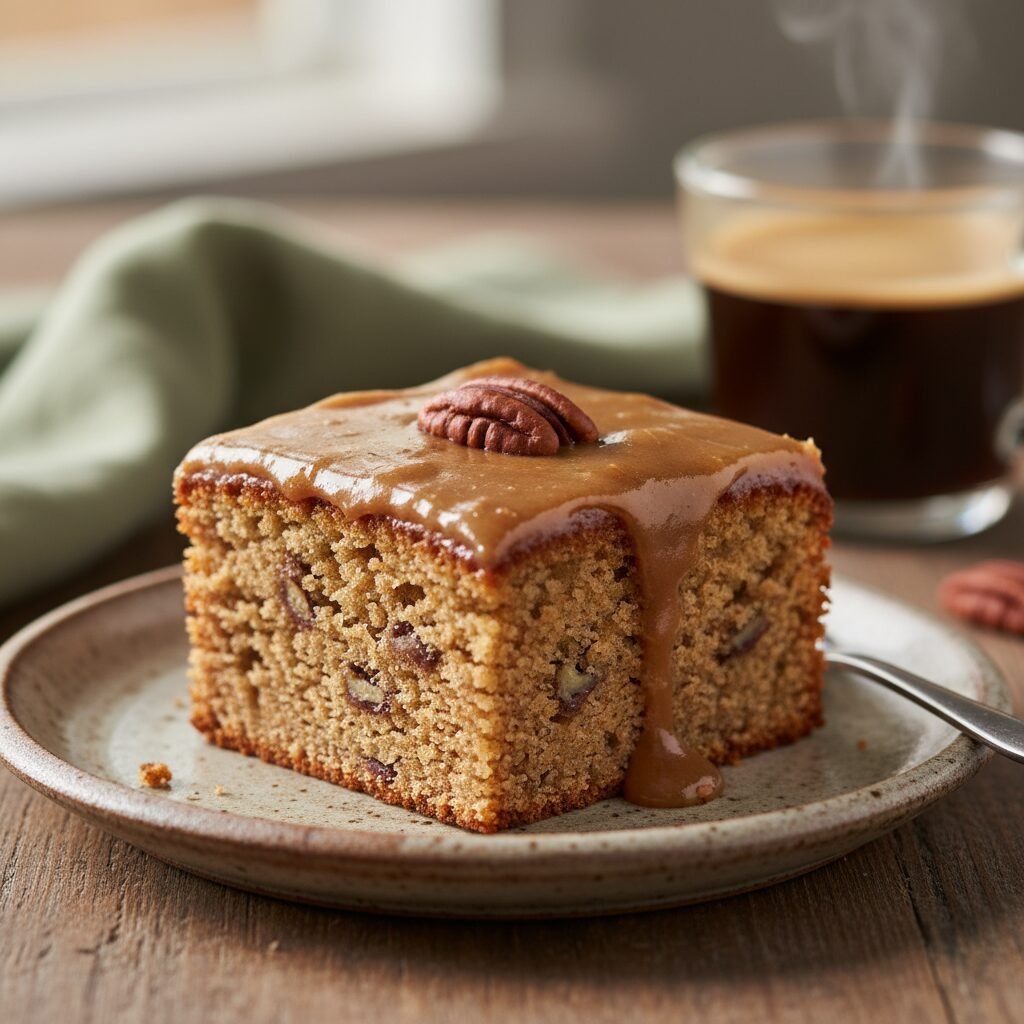
Yes, absolutely. A 9×13 inch pan will work well. You will likely need to increase the baking time to 40-50 minutes. Check for doneness with a toothpick.
Why did my pecans sink to the bottom?
Pecans are heavy and can sink in a light batter. To prevent this, ensure you toss the chopped nuts in a tablespoon of the flour mixture before folding them into the batter. This creates friction that holds them in place.
Can I make the cake layers ahead of time?
Yes. You can bake the layers, let them cool completely, wrap them tightly in plastic wrap, and freeze them for up to a month. Frost them while frozen or thawed; frosting frozen layers is actually easier as fewer crumbs come loose.
My frosting is too runny, what do I do?
This usually happens if the butter or cream cheese was too warm or melted. Try refrigerating the frosting bowl for 20 minutes and whipping it again. If it’s still too soft, add more sifted powdered sugar, a quarter cup at a time.
Can I use salted butter?
You can, but it’s harder to control the salt content. If you use salted butter, reduce the added salt in the cake recipe to 1/2 teaspoon and omit the pinch of salt in the frosting.
Is this cake very sweet?
It is a rich dessert cake. The cake layers are moderately sweet, but the cream cheese frosting adds significant sweetness. The tang of the cream cheese and the savory nuttiness of the pecans help balance it out.
Can I use store-bought roasted pecans?
Yes, but make sure they are unsalted. If they are salted roasted pecans, you must reduce the salt in the recipe significantly to avoid a salty cake.
How do I get smooth sides on my cake?
Use a crumb coat first. Apply a very thin layer of frosting to seal in the crumbs, refrigerate for 20 minutes, and then apply the final thick layer of frosting with an offset spatula.
Conclusion
There are few things in life as satisfying as a slice of homemade cake that has been made with love and quality ingredients. This Moist Pecan Cake with Cream Cheese Frosting is a testament to the power of classic baking traditions. It’s robust yet delicate, sweet yet complex, and undeniably delicious. Whether you are an experienced baker or trying your hand at a layer cake for the first time, this recipe is designed to guide you to success. So preheat that oven, toast those pecans, and get ready to enjoy a dessert that will surely become a requested favorite for years to come. Happy baking!