Moist Pecan Pound Cake Recipe
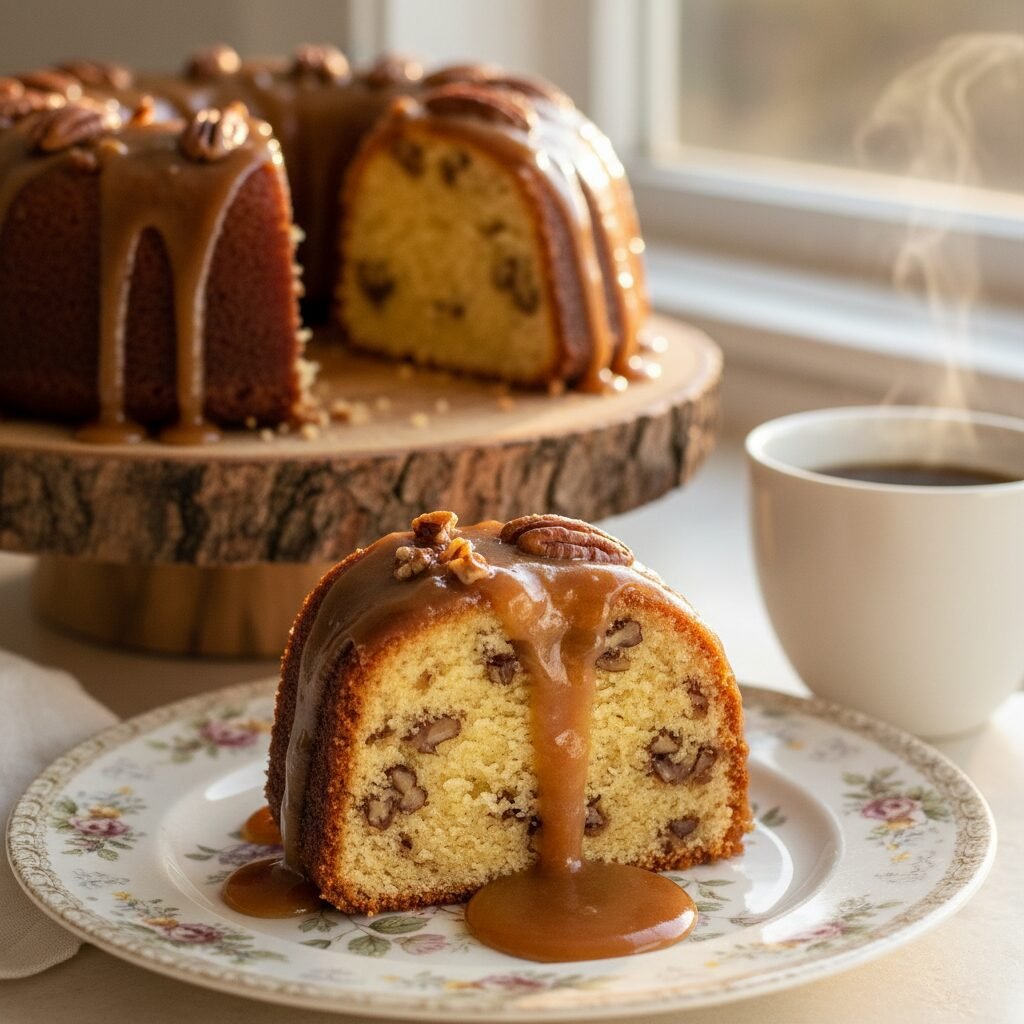
This Southern-style Pecan Pound Cake is the definition of comfort, featuring a dense, velvety crumb loaded with buttery, toasted pecans. Finished with a rich brown sugar glaze, it is the perfect companion for your morning coffee or a holiday dessert table.
20 minutes
1 hour 15 minutes
1 hour 35 minutes
12-16 servings
Dessert
Baking
American (Southern)
Vegetarian
There are few things in the culinary world that evoke a sense of home and hospitality quite like a slice of homemade pound cake. But not just any pound cake—we are talking about a Moist Pecan Pound Cake that strikes the perfect balance between a dense, buttery crumb and the satisfying crunch of toasted nuts. This recipe is a love letter to Southern baking traditions, where time is an essential ingredient and flavor is never compromised. Unlike airy sponge cakes that disappear in a bite, this pound cake has a substantial, velvety texture that melts in your mouth, enriched by the tang of sour cream and the warmth of vanilla. The star of the show, however, is the pecan. By toasting the pecans before folding them into the batter, we unlock a depth of nutty flavor that permeates every single slice. Whether you are baking for a festive holiday gathering, a Sunday brunch, or simply because you crave something sweet with your afternoon tea, this cake delivers on all fronts. It is robust enough to stand up to dunking in coffee yet elegant enough to serve on your finest china. In this post, I’m sharing all my secrets for achieving that elusive moist texture—no dry crumbs here!—and how to create a simple yet decadent brown sugar glaze that hardens into a sweet, crackly shell. Get your bundt pans ready, because your kitchen is about to smell like heaven.
History & Origins
The history of the pound cake is as rich and dense as the cake itself. Dating back to the early 18th century, the original recipe derived its name from the simple, mnemonic ratio of ingredients: one pound each of flour, butter, eggs, and sugar. This formula, first recorded in ‘The Art of Cookery’ by Hannah Glasse in 1747, was designed to feed large crowds and required no chemical leavening agents like baking powder or baking soda. Instead, the rise came entirely from the laborious task of beating air into the batter, often for an hour or more. As the recipe migrated to the American colonies, and specifically into the American South, it evolved. Bakers began adapting the heavy, original formula to create lighter, more flavorful variations. The introduction of chemical leaveners in the 19th century allowed for a lighter crumb, while the abundance of local ingredients influenced the flavor profiles. The addition of pecans is a distinctly American twist. Pecans are native to North America, thriving in the river valleys of the Mississippi and becoming a staple crop in states like Georgia and Texas. Combining the European tradition of the pound cake with the native American pecan created a fusion that became a hallmark of Southern hospitality. Over decades, the recipe was further refined with the addition of ‘moisturizers’ like sour cream, buttermilk, or cream cheese, departing from the strict 1:1:1:1 ratio to prioritize texture and shelf-life. Today, the Pecan Pound Cake stands as a culinary icon, representing a history of adaptation, local agriculture, and the timeless joy of sharing sweets.
Why This Recipe Works
This specific recipe succeeds where many others fail because it meticulously addresses the two biggest complaints about pound cake: dryness and lack of flavor. First, the moisture factor is tackled through a dual-fat approach. We use high-quality butter for that classic flavor, but we also incorporate full-fat sour cream. The acidity in the sour cream tenderizes the gluten strands in the flour, resulting in a crumb that is soft rather than tough, while its fat content ensures the cake remains moist for days after baking. Secondly, we utilize the ‘creaming method’ to its fullest extent. By beating the butter and sugar until pale and fluffy (a process that takes a good 5-7 minutes), we create a mechanical leavening structure that traps air, preventing the cake from becoming a heavy brick. Regarding flavor, the critical step often skipped by novice bakers is toasting the pecans. Raw nuts inside a batter simply steam and soften; toasted nuts, however, release their essential oils and retain a pleasant crunch, providing a textural contrast to the soft cake. Finally, the brown sugar glaze adds a caramel-like finish that complements the nuttiness, sealing the moisture inside the cake as it cools.
Why You’ll Love This Recipe
- ✓Incredibly moist texture thanks to the addition of sour cream.
- ✓Deep, nutty flavor profile from pre-toasted pecans.
- ✓Stays fresh for days, making it perfect for make-ahead events.
- ✓The brown sugar glaze adds a beautiful, professional finish.
- ✓Freezer-friendly, so you can save half for later.
- ✓A classic Southern recipe that appeals to all ages.
Equipment You’ll Need
- ✓10-12 cup Bundt Pan
- ✓Stand Mixer or Electric Hand Mixer
- ✓Large Mixing Bowl
- ✓Medium Mixing Bowl
- ✓Rubber Spatula
- ✓Wire Cooling Rack
- ✓Measuring Cups and Spoons
- ✓Small Saucepan (for glaze)
Ingredients
- ✓1 1/2 cups unsalted butter, softened to room temperature
- ✓3 cups granulated sugar
- ✓6 large eggs, room temperature
- ✓3 cups all-purpose flour
- ✓1/2 teaspoon baking powder
- ✓1/2 teaspoon salt
- ✓1 cup full-fat sour cream, room temperature
- ✓2 teaspoons pure vanilla extract
- ✓1 1/2 cups chopped pecans, toasted
- ✓For the Glaze: 1/2 cup packed light brown sugar
- ✓For the Glaze: 1/4 cup butter
- ✓For the Glaze: 2 tablespoons milk or heavy cream
- ✓For the Glaze: 1/2 cup powdered sugar, sifted
Instructions
- Preheat your oven to 325°F (165°C). Generously grease your Bundt pan with butter or shortening and dust with flour (or use a baking spray with flour included). Shake out excess flour.
- Spread the chopped pecans on a baking sheet and toast in the preheating oven for 5-7 minutes until fragrant. Watch them closely so they don’t burn. Remove and let cool completely.
- In a medium bowl, whisk together the flour, baking powder, and salt. Set aside.
- In the bowl of a stand mixer fitted with the paddle attachment, cream the softened butter and granulated sugar on medium-high speed for 5-7 minutes. The mixture should look very pale yellow and fluffy.
- Add the eggs one at a time, beating well after each addition. Scrape down the sides and bottom of the bowl with a rubber spatula as needed to ensure even mixing.
- Reduce the mixer speed to low. Add the flour mixture in three parts, alternating with the sour cream, starting and ending with the flour. Mix only until just combined; do not overmix.
- Stir in the vanilla extract. Gently fold in the cooled, toasted pecans by hand using a spatula.
- Pour the batter into the prepared Bundt pan and smooth the top. Tap the pan gently on the counter to release any large air bubbles.
- Bake for 1 hour and 10 minutes to 1 hour and 20 minutes, or until a long wooden skewer inserted into the center comes out clean or with just a few moist crumbs.
- Allow the cake to cool in the pan for exactly 10-15 minutes. Then, invert it onto a wire rack to cool completely.
- To make the glaze: In a small saucepan over medium heat, combine brown sugar, butter, and milk. Bring to a gentle boil, stirring constantly. Remove from heat and whisk in the powdered sugar until smooth.
- Drizzle the warm glaze over the completely cooled cake. Let the glaze set for 15 minutes before slicing.
Expert Cooking Tips
- ✓Room Temperature is Key: Ensure your butter, eggs, and sour cream are at room temperature. This creates a smooth emulsion which traps air for a better rise.
- ✓Don’t Skimp on Creaming: Beating the butter and sugar for the full 5-7 minutes is crucial for the cake’s texture.
- ✓Proper Pan Prep: Bundt pans are notorious for sticking. Grease every nook and cranny thoroughly, even if the pan is non-stick.
- ✓Toast the Nuts: Never skip toasting the pecans. It enhances the flavor significantly and keeps them crunchy.
- ✓Cooling Time: Do not try to remove the cake from the pan immediately. The 10-15 minute resting period allows the structure to firm up so it doesn’t fall apart.
- ✓Measure Flour Correctly: Spoon the flour into the measuring cup and level it off. Scooping directly can pack the flour and lead to a dry cake.
- ✓Glaze Timing: Wait until the cake is cool to glaze it, otherwise, the glaze will melt and soak into the cake rather than sitting on top.
Substitutions and Variations
Baking is a science, but there is some room for flexibility in this recipe. If you don’t have sour cream, full-fat plain Greek yogurt is an excellent 1:1 substitution that provides a similar tang and moisture content. In a pinch, buttermilk can work, though the batter will be slightly thinner. For the flour, while all-purpose is standard, you can use cake flour for an even finer, lighter crumb, though you may need to increase the amount by 2 tablespoons per cup. If you are out of pecans, walnuts are a great alternative, offering a similar earthiness, though the flavor profile will shift slightly. For those watching their salt intake, you can use salted butter and omit the added salt in the recipe. Regarding the extract, almond extract pairs beautifully with pecans; try swapping half the vanilla for almond extract for a ‘bakery’ flavor. Lastly, if you prefer a simple dusting, you can skip the brown sugar glaze and use powdered sugar, or make a simple lemon glaze for a citrus twist.
Common Mistakes to Avoid
The most common mistake with pound cake is overmixing the batter once the flour is added. Overmixing develops gluten, which turns a tender cake into a tough, rubbery one. Only mix until the flour streaks disappear. Another frequent error is opening the oven door too early. Pound cakes are heavy and take a long time to set; opening the door releases heat and can cause the cake to collapse in the center. Rely on your oven light until at least an hour has passed. Using cold ingredients is another pitfall; if you add cold eggs to creamed butter, the mixture will curdle and break, leading to an uneven bake. Finally, using old baking powder can result in a dense cake that doesn’t rise. Check the expiration date on your leaveners before starting. Lastly, failing to grease the Bundt pan adequately is a heartbreaker—ensure you get into every crevice!
Serving Suggestions
This Moist Pecan Pound Cake is versatile enough to be served in various ways. For a classic presentation, serve a thick slice simply with a cup of strong black coffee or Earl Grey tea; the bitterness of the drink balances the sweet richness of the cake. If you are serving this as a dessert for a dinner party, elevate it by adding a dollop of freshly whipped cream or a scoop of vanilla bean ice cream on the side. Fresh berries, such as raspberries or blackberries, add a pop of color and a tart contrast that cuts through the butteriness. For a fall twist, serve it with warm sautéed cinnamon apples or pears. It also pairs wonderfully with a drizzle of salted caramel sauce if you want to double down on the decadence.
Storage and Reheating Tips
Pound cake is one of those magical baked goods that often tastes better the next day as the flavors meld and the moisture redistributes. To store, wrap the cake tightly in plastic wrap or store it in an airtight cake carrier at room temperature for up to 3-4 days. Avoid refrigerating the cake as the cold air can dry out the crumb and alter the texture, making it seem stale. If you need to keep it longer, pound cake freezes beautifully. Wrap the whole cake or individual slices tightly in plastic wrap, followed by a layer of aluminum foil to prevent freezer burn. It can be frozen for up to 3 months. Thaw the wrapped cake on the counter at room temperature before serving. If serving from frozen, you can warm a slice in the microwave for 10-15 seconds to revive that ‘just-baked’ warmth.
Nutrition Facts (Estimated)
| Serving Size | 1 slice |
| Calories | 450 |
| Fat | 26g |
| Saturated Fat | 14g |
| Unsaturated Fat | 10g |
| Trans Fat | 0g |
| Cholesterol | 95mg |
| Sodium | 180mg |
| Carbohydrates | 52g |
| Fiber | 2g |
| Sugar | 32g |
| Protein | 6g |
Frequently Asked Questions
Why did my pound cake sink in the middle?
Sinking usually happens because the cake was underbaked (the center was still raw), the oven door was opened too early causing a temperature drop, or there was too much leavening agent used.
Can I bake this in a loaf pan instead of a Bundt pan?
Yes, this recipe yields a large amount of batter, so you will likely need two 9×5 inch loaf pans. The baking time will need to be adjusted, likely checking around the 50-60 minute mark.
Why is my cake dry?
Dryness is usually caused by over-baking or measuring the flour incorrectly (packing it down). It can also happen if you use low-fat ingredients instead of the full-fat sour cream and butter called for.
Can I add other mix-ins like chocolate chips?
Absolutely! You can add up to 1 cup of chocolate chips, dried fruit, or coconut. Toss them in a tablespoon of flour before adding to the batter to prevent them from sinking to the bottom.
How do I know exactly when it’s done?
Use the skewer test. Insert a long wooden skewer into the deepest part of the cake. It should come out clean or with a few moist crumbs attached. If it has wet batter, it needs more time.
My glaze is too thick/thin, what do I do?
If the glaze is too thick, add milk one teaspoon at a time until it reaches a pourable consistency. If it is too thin, whisk in a little more powdered sugar.
Do I have to use a stand mixer?
No, a hand electric mixer works fine. However, it might take a few minutes longer to achieve the proper creamed consistency with the butter and sugar. Mixing by hand is not recommended as it’s hard to incorporate enough air.
Can I make this cake gluten-free?
Yes, you can substitute the all-purpose flour with a high-quality 1:1 Gluten-Free Baking Flour blend that contains xanthan gum. The texture may be slightly different, but it still works well.
Conclusion
Mastering the Moist Pecan Pound Cake is a rite of passage for any home baker, and with this recipe, you are guaranteed a result that is as delicious as it is impressive. The combination of the tender, tangy crumb and the roasted, crunchy pecans creates a symphony of textures that store-bought cakes simply cannot replicate. Whether you are looking to impress guests during the holidays, need a reliable contribution for a potluck, or just want to fill your home with the comforting aroma of butter and vanilla, this cake is the answer. Don’t rush the process; enjoy the rhythm of measuring, mixing, and baking. Once you take that first bite of warm, glazed cake, you’ll understand why this recipe is a keeper. Happy baking!