Moist Raspberry Snack Cake Recipe
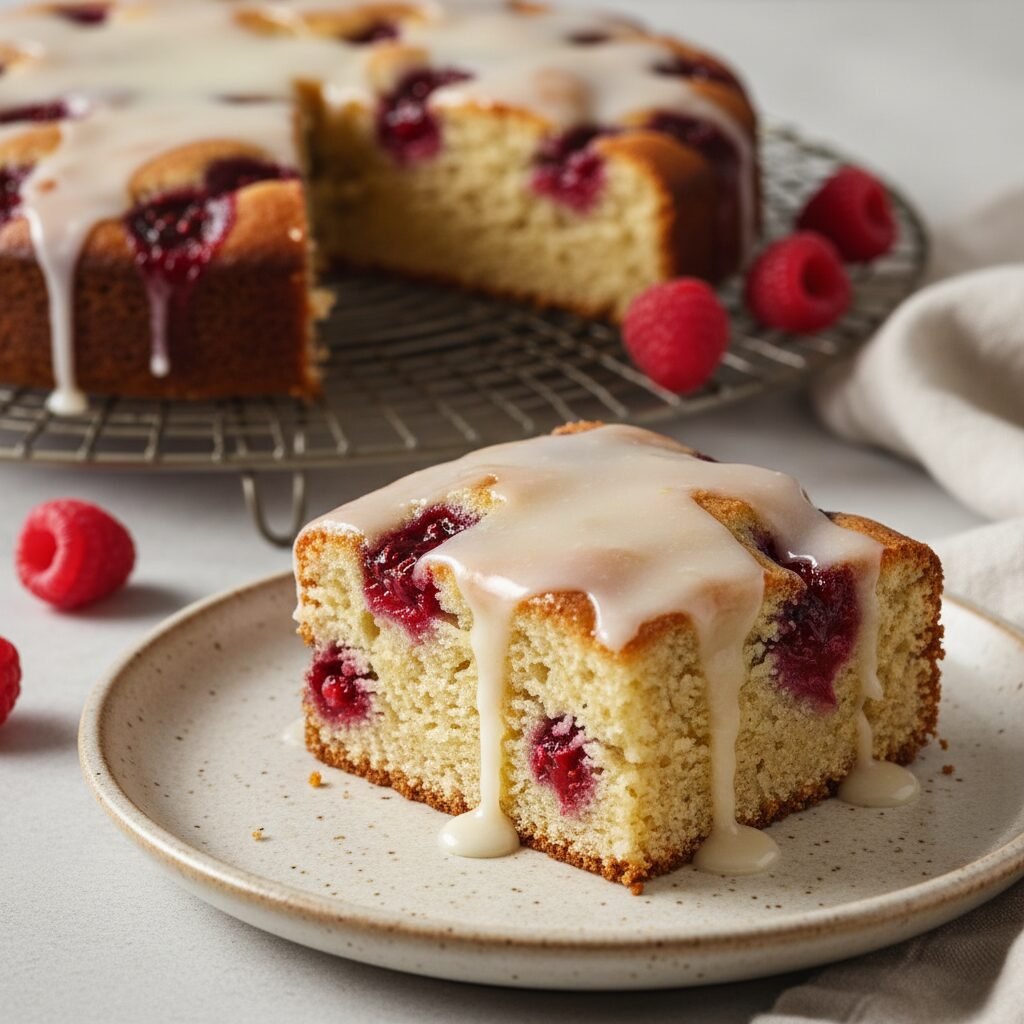
This incredibly tender Raspberry Snack Cake is the perfect balance of sweet and tart, featuring a buttery crumb studded with juicy fresh raspberries. It comes together quickly in one bowl and is topped with a zesty lemon glaze, making it the ideal companion for your morning coffee or an afternoon treat.
15 minutes
40 minutes
55 minutes
9 large squares
Dessert
Baking
American
Vegetarian
There is something undeniably comforting about a snack cake. Unlike its towering, frosted cousins that demand special occasions and tiered stands, the humble snack cake is accessible, unpretentious, and arguably more delicious in its simplicity. This Moist Raspberry Snack Cake is a love letter to effortless baking, designed for those moments when you crave something homemade but don’t have the energy for a complex project. The crumb is exceptionally tender—almost velvety—thanks to the inclusion of full-fat sour cream, which breaks down the gluten strands and adds a subtle tang that complements the fruit.
What makes this recipe truly standout is the interplay of textures and flavors. The exterior develops a slight, sugary crust during baking, while the interior remains soft and dense, similar to a high-quality pound cake but lighter. The raspberries burst during baking, creating pockets of jammy tartness that cut through the rich, buttery batter. We finish it off with a simple lemon glaze that seeps into the warm cake, adding a bright citrus note that elevates the entire flavor profile. Whether you are serving this for a casual brunch, packing it into lunchboxes, or enjoying a slice secretly at midnight, this cake delivers pure satisfaction. It evokes the nostalgia of after-school treats while possessing a sophisticated flavor profile that adults will adore. It is the kind of recipe that becomes a household staple, printed out and stained with vanilla extract, passed down because it simply never fails to delight.
History & Origins
The term ‘snack cake’ is distinctly American, emerging prominently in the mid-20th century alongside the rise of convenience cooking and the post-war suburban boom. However, the lineage of this specific style of cake traces back much further to traditional European ‘cutting cakes’ or ‘tray bakes,’ and the early American ‘buckle.’ A buckle is essentially a single-layer cake with fruit mixed into the batter, causing the surface to look buckled or bumpy as it rises around the fruit.
In the 1950s and 60s, as marketing for baking mixes and convenience foods ramped up, the concept of a cake that could be mixed in minutes, baked in a square pan, and eaten out of hand became a staple of the American kitchen. These were often referred to as ‘pan cakes’ (not to be confused with pancakes) or ‘busy day cakes.’ They were designed to be sturdy enough to hold up in a lunchbox yet moist enough to last on the counter for several days.
The incorporation of raspberries into these cakes has roots in the rich agricultural history of the Pacific Northwest and New England, where berry picking is a seasonal tradition. Historically, when berry seasons peaked, home cooks needed versatile recipes to utilize the abundance of fruit before it spoiled. While blueberries are the most common fruit for these types of cakes (often morphing into coffee cakes), raspberries offer a unique historical variation, favored in Victorian-era sponge cakes for their distinct floral aroma and vibrant color. This modern iteration combines that old-world fruit appreciation with the mid-century American desire for baking efficiency.
Why This Recipe Works
This recipe succeeds where many fruit cakes fail due to three critical chemical and physical factors: batter density, acidity, and fat content. First, the issue of ‘sinking fruit’ is common in lighter batters. This recipe utilizes a reverse-creaming hybrid technique that results in a thick, sturdy batter. This density provides enough structural integrity to suspend the raspberries evenly throughout the cake as it rises, rather than letting them plummet to the bottom.
Secondly, the inclusion of sour cream is scientifically pivotal. Sour cream is acidic; this acidity reacts with the baking soda to create carbon dioxide, providing lift. More importantly, the acid tenderizes the gluten in the flour. Without this, a batter thick enough to hold fruit might turn out tough or rubbery. The sour cream ensures the crumb remains delicate and ‘melt-in-your-mouth’ soft despite the structural density.
Finally, we use a combination of butter and a high ratio of sugar. Sugar is hygroscopic, meaning it attracts and holds water. By optimizing the sugar content, we ensure the cake retains moisture for days after baking. The fat from the butter coats the flour proteins, further inhibiting gluten formation (shortening the strands), which creates that desirable fine crumb structure. The result is a cake that is robust enough to slice but soft enough to crumble delicately on the tongue.
Why You’ll Love This Recipe
- ✓Requires only one bowl and minimal cleanup.
- ✓Uses sour cream for an impossibly moist texture.
- ✓Fresh raspberries provide natural tartness to balance the sugar.
- ✓Can be made with fresh or frozen berries.
- ✓Freezes beautifully for meal prep or future snacks.
- ✓Versatile enough for breakfast, brunch, or dessert.
Equipment You’ll Need
- ✓8×8 or 9×9 inch square baking pan
- ✓Large mixing bowl
- ✓Electric hand mixer or stand mixer
- ✓Rubber spatula
- ✓Whisk
- ✓Parchment paper
- ✓Wire cooling rack
Ingredients
- ✓1/2 cup (1 stick) unsalted butter, softened
- ✓1 cup granulated sugar
- ✓2 large eggs, room temperature
- ✓1/2 cup full-fat sour cream or Greek yogurt
- ✓1 teaspoon pure vanilla extract
- ✓1 1/2 cups all-purpose flour
- ✓1 1/2 teaspoons baking powder
- ✓1/2 teaspoon salt
- ✓6 oz (approx. 1 1/2 cups) fresh raspberries, washed and dried
- ✓1 tablespoon flour (for tossing berries)
- ✓1/2 cup powdered sugar (for glaze)
- ✓1 tablespoon fresh lemon juice (for glaze)
Instructions
- Preheat your oven to 350°F (175°C). Line an 8×8 or 9×9 inch square baking pan with parchment paper, leaving an overhang on the sides for easy removal. Grease the paper lightly with butter or non-stick spray.
- In a large mixing bowl, cream together the softened butter and granulated sugar using an electric mixer on medium-high speed. Beat for about 3-4 minutes until the mixture is pale, fluffy, and aerated.
- Add the eggs one at a time, beating well after each addition. Scrape down the sides of the bowl with a rubber spatula to ensure even mixing.
- Mix in the sour cream (or Greek yogurt) and vanilla extract until combined. The mixture may look slightly curdled at this stage; this is normal.
- In a separate small bowl, whisk together the 1 1/2 cups flour, baking powder, and salt. With the mixer on low speed, gradually add the dry ingredients to the wet ingredients. Mix only until just combined and no streaks of flour remain. Do not overmix.
- In a small bowl, toss the fresh raspberries with the reserved 1 tablespoon of flour. This coating helps prevent them from sinking to the bottom of the cake.
- Gently fold the flour-coated raspberries into the thick batter using a rubber spatula. Be careful not to crush the berries excessively, though a few broken ones are fine and create nice swirls.
- Transfer the batter to the prepared baking pan. Use an offset spatula or the back of a spoon to spread it evenly into the corners and smooth the top.
- Bake for 35-45 minutes, or until the top is golden brown and a toothpick inserted into the center comes out clean or with just a few moist crumbs attached. (Avoid hitting a raspberry with the toothpick for an accurate test).
- Remove the cake from the oven and let it cool in the pan for at least 20 minutes. Then, use the parchment paper overhang to lift the cake out onto a wire rack to cool completely.
- While the cake cools, prepare the glaze. Whisk together the powdered sugar and fresh lemon juice in a small bowl until smooth. If it is too thick, add more juice; if too thin, add more sugar.
- Drizzle the glaze over the cooled cake. Allow the glaze to set for 10 minutes before slicing into squares.
Expert Cooking Tips
- ✓Ensure all cold ingredients (eggs, sour cream, butter) are at room temperature before starting to ensure a smooth emulsion.
- ✓Do not skip tossing the berries in flour; this is the secret to even fruit distribution.
- ✓If using frozen raspberries, do not thaw them beforehand. Add them frozen and increase bake time by 3-5 minutes.
- ✓Measure flour using the ‘spoon and level’ method to avoid a dense, dry cake.
- ✓If the top is browning too quickly before the center is cooked, tent the pan loosely with aluminum foil.
- ✓For an extra crunch, sprinkle 1 tablespoon of coarse sparkling sugar (turbinado) on top of the batter before baking.
- ✓Let the cake cool completely before glazing, otherwise, the glaze will melt and disappear into the crumb.
Substitutions and Variations
This recipe is quite forgiving and allows for several substitutions. If you do not have sour cream, full-fat plain Greek yogurt is the best alternative and provides a similar protein and acid profile. In a pinch, buttermilk can work, though the batter will be thinner, so you may need an extra tablespoon of flour. For a gluten-free version, use a high-quality 1:1 gluten-free all-purpose flour blend that contains xanthan gum; the texture will remain surprisingly similar. You can substitute the raspberries for blackberries, blueberries, or chopped strawberries, though larger fruits should be chopped to the size of a raspberry. If you prefer to avoid refined white sugar, coconut sugar can be used, but it will darken the color of the cake significantly and add a caramel flavor. For a dairy-free version, use a high-quality plant-based butter block and a coconut yogurt or dairy-free sour cream alternative.
Common Mistakes to Avoid
The most common mistake with snack cakes is overmixing the batter once the flour is added. Overmixing develops the gluten too much, resulting in a tough, rubbery texture rather than a tender crumb. Stop mixing as soon as the flour streaks disappear. Another frequent error is using berries that are still wet from washing. Excess water on the fruit can create soggy pockets in the cake and cause the batter around the fruit to remain undercooked. Always pat your berries completely dry with paper towels. Additionally, opening the oven door too frequently to check doneness can cause the cake to sink in the middle due to temperature fluctuation. Trust the timer and only check when you are near the end of the baking window. Finally, cutting the cake while it is still hot will cause it to crumble and fall apart; the starch needs time to set as it cools.
Serving Suggestions
This cake is versatile enough to be served at various temperatures and times of day. For a cozy breakfast, serve a slice slightly warmed in the microwave for 10 seconds, accompanied by a dollop of Greek yogurt and a drizzle of honey. For an afternoon ‘fika’ or tea time, serve it at room temperature with the lemon glaze and a cup of Earl Grey tea or black coffee. If you want to elevate it for a dinner party dessert, skip the lemon glaze and instead serve the cake warm with a scoop of vanilla bean ice cream and a garnish of fresh mint and lemon zest. It also pairs beautifully with a dollop of lightly sweetened whipped cream and extra fresh berries on the side.
Storage and Reheating Tips
Because this cake contains fresh fruit and high moisture content, storage requires some care. It can be kept at room temperature in an airtight container for up to 2 days. If you live in a very hot or humid climate, it is safer to store it in the refrigerator to prevent the fruit from fermenting; it will last up to 5 days in the fridge. Allow refrigerated slices to come to room temperature before eating for the best flavor and texture. For long-term storage, this cake freezes exceptionally well. Wrap individual slices tightly in plastic wrap, then place them in a heavy-duty freezer bag. They can be frozen for up to 3 months. Thaw on the counter for 1-2 hours before serving.
Nutrition Facts (Estimated)
| Serving Size | 1 square |
| Calories | 320 |
| Fat | 14g |
| Saturated Fat | 8g |
| Unsaturated Fat | 5g |
| Trans Fat | 0g |
| Cholesterol | 65mg |
| Sodium | 180mg |
| Carbohydrates | 44g |
| Fiber | 3g |
| Sugar | 22g |
| Protein | 5g |
Frequently Asked Questions
Can I use frozen raspberries instead of fresh?
Yes, absolutely. Do not thaw the frozen raspberries before adding them to the batter, as this will cause them to bleed into the dough and make it gray. Toss them in flour while frozen and fold them in gently. You may need to add 3-5 minutes to the baking time.
Why did my berries sink to the bottom?
Berries usually sink if the batter is too thin or if the berries weren’t coated in flour. The flour coating provides friction, and the thick sour cream-based batter helps hold them in suspension. Ensure you measured your flour correctly.
Can I double this recipe?
Yes, you can double the ingredients and bake it in a 9×13 inch rectangular pan. The baking time will likely need to be increased to 45-55 minutes. Keep an eye on the center to ensure it sets.
Why is my cake dry?
Dry cake is usually the result of over-baking or over-measuring flour. Always spoon your flour into the measuring cup and level it off, rather than scooping directly from the bag which packs the flour down. Also, check your oven temperature with an oven thermometer.
Can I make this cake ahead of time?
Yes, this cake actually tastes even better the next day as the moisture equilibrates and the flavors meld. It is perfect for making the night before a brunch.
Do I have to use a stand mixer?
No, a hand mixer works perfectly fine. You can even make this by hand with a whisk and a wooden spoon if you use plenty of elbow grease to cream the butter and sugar properly.
Can I use other fruits?
Definitely. Blueberries, blackberries, chopped peaches, or cranberries all work well. Stick to about 1.5 cups of fruit total to maintain the batter-to-fruit ratio.
Is the glaze necessary?
It is not strictly necessary, but it adds a lovely zesty contrast to the sweet cake. If you prefer less sugar, a simple dusting of powdered sugar before serving is a great alternative.
Conclusion
This Moist Raspberry Snack Cake is the epitome of low-effort, high-reward baking. It proves that you don’t need fancy techniques or exotic ingredients to create something truly memorable in the kitchen. The combination of the buttery, tender crumb with the bright pops of raspberry and lemon makes every bite a delight. Whether you are a seasoned baker looking for a reliable quick recipe or a novice wanting to impress friends, this cake is a guaranteed winner. We hope it brings a little sweetness and brightness to your kitchen table. Happy baking!