
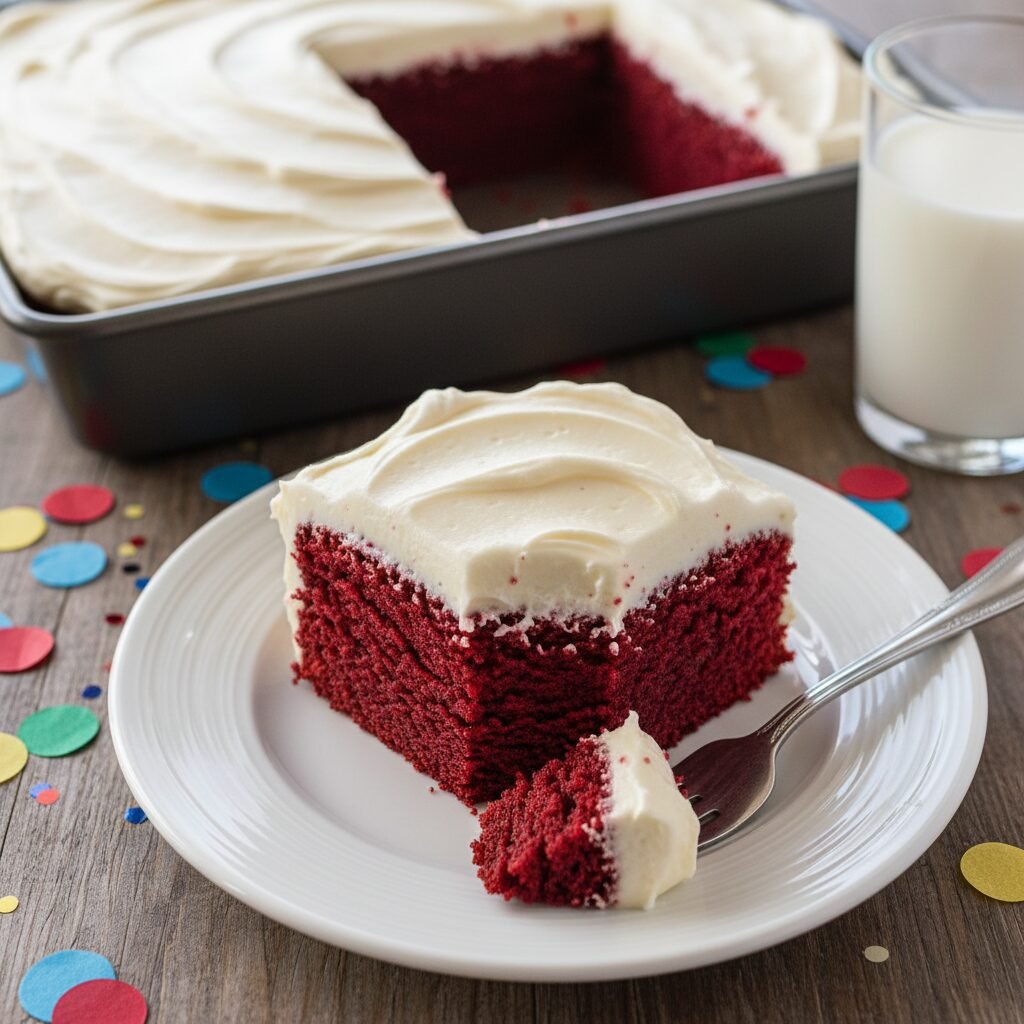
Moist Red Velvet Sheet Cake For Birthday Recipe
Say goodbye to the stress of stacking layers and hello to the easiest, most delicious birthday cake you will ever bake! This Red Velvet Sheet Cake is impossibly moist, striking that perfect balance between vanilla and cocoa, all smothered in a rich cream cheese frosting.
20 minutes
30 minutes
50 minutes + cooling
24 squares
Dessert
Baking
American
Vegetarian
Hey there, busy mamas and party planners! If you are anything like me, you absolutely love the idea of a stunning, towering birthday cake, but the reality involves a lot of stress, uneven layers, and a sink full of dirty pans. That is exactly why this Moist Red Velvet Sheet Cake has become my go-to secret weapon for birthday parties. It delivers all the drama and flavor of a bakery-style cake with a fraction of the effort. We are talking about a melt-in-your-mouth texture that literally stays soft for days, thanks to a few special ingredients we will talk about later!
There is something so nostalgic and magical about Red Velvet. Is it chocolate? Is it vanilla? It is this beautiful mystery in between that pleases just about everyone. Plus, that vibrant red color just screams "celebration!" whether you are turning five or fifty. I have brought this sheet cake to potlucks, school events, and countless family birthdays, and I promise you, the pan always comes home licked clean. The best part? You bake it right in a 9×13 pan, frost it in the pan, and serve it straight from the pan. No leveling, no stacking, no crumb coating required. It is a total mom-win!
In this post, I am going to walk you through exactly how to get that velvety crumb (hint: it is not butter!), how to achieve that signature red hue, and how to whip up a cream cheese frosting so good you will want to eat it with a spoon. Let’s get baking!
History & Origins
Red Velvet cake has a surprisingly fascinating history that dates back way before Pinterest made it a trend! Originally, in the Victorian era, "velvet" cakes were simply cakes with a very fine, soft crumb, usually achieved by using almond flour or cornstarch. But the Red Velvet we know has a bit of a debate surrounding its origin. Some claim it started at the famous Waldorf-Astoria Hotel in New York City in the 1920s, known as the Waldorf-Astoria cake. Others say it originated in the South.
Interestingly, the "red" color wasn’t originally from food dye! Back in the day, raw cocoa powder was not Dutch-processed (alkalized). When this natural cocoa powder reacted with the acidic ingredients in the batter—like buttermilk and vinegar—it revealed a reddish-brown mahogany hue. It was subtle, but beautiful. During the Great Depression and World War II, when foods were rationed, bakers sometimes used beet juice to keep cakes moist and enhance the color.
The bright, neon red we see today really took off when the Adams Extract company in Texas wanted to sell more food coloring and dyes in the mid-20th century. They printed a Red Velvet recipe on cards to sell with their red dye, and boom—a star was born! Today, it is a staple of American baking, beloved for its unique flavor profile and festive look.
Why This Recipe Works
You might be wondering, what makes this specific recipe so incredibly moist compared to others? It comes down to the science of baking! First and foremost, we use oil instead of butter for the cake base. While I love butter for flavor, oil is 100% fat and remains liquid at room temperature, which guarantees the cake stays soft and moist on the counter much longer than a butter-based cake, which can firm up as it cools.
Secondly, the combination of buttermilk and vinegar is crucial. This acidity does two things: it tenderizes the gluten in the flour, preventing the cake from becoming tough, and it reacts vigorously with the baking soda. This reaction creates carbon dioxide bubbles that give the cake a tremendous lift and an airy, velvety texture—hence the name! Finally, we use just a hint of cocoa powder. Too much cocoa would dry it out and make it a chocolate cake; we want just enough to give it that signature earthy depth without overpowering the vanilla notes.
Why You’ll Love This Recipe
- ✓One-pan wonder: No stacking or leveling required.
- ✓Stays moist for up to 4 days thanks to the oil-based batter.
- ✓Perfect balance of tangy buttermilk and sweet vanilla.
- ✓Vibrant red color makes it perfect for photos.
- ✓Cream cheese frosting is fluffy, not overly sweet.
- ✓Feeds a crowd easily—perfect for parties!
Equipment You’ll Need
- ✓9×13 inch Baking Pan
- ✓Large Mixing Bowl
- ✓Medium Mixing Bowl
- ✓Whisk
- ✓Electric Hand Mixer or Stand Mixer
- ✓Rubber Spatula
- ✓Measuring Cups and Spoons
- ✓Offset Spatula (for frosting)
Ingredients
- ✓2 1/2 cups All-Purpose Flour (spooned and leveled)
- ✓1 1/2 cups Granulated Sugar
- ✓1 tsp Baking Soda
- ✓1 tsp Salt
- ✓2 tbsp Unsweetened Cocoa Powder (regular, not Dutch-process)
- ✓1 1/2 cups Vegetable Oil (or Canola Oil)
- ✓1 cup Buttermilk, room temperature
- ✓2 large Eggs, room temperature
- ✓1 tsp Distilled White Vinegar
- ✓2 tsp Vanilla Extract
- ✓1 oz Red Food Coloring (approx. 2 tbsp liquid dye or 1-2 tsp gel)
- ✓16 oz Cream Cheese, softened (for frosting)
- ✓1/2 cup Unsalted Butter, softened (for frosting)
- ✓4 cups Powdered Sugar (for frosting)
- ✓2 tsp Vanilla Extract (for frosting)
- ✓1 tbsp Heavy Cream or Milk (optional, for consistency)
Instructions
- Preheat your oven to 350°F (175°C). Grease a 9×13 inch baking pan with non-stick spray or butter. For extra easy cleanup, you can line the bottom with parchment paper, but it is not strictly necessary for a sheet cake.
- In a large mixing bowl, sift together the flour, sugar, baking soda, salt, and cocoa powder. Whisk them well to ensure the cocoa and baking soda are evenly distributed. This prevents any bitter lumps in your batter.
- In a separate medium bowl, whisk together the oil, buttermilk, eggs, vinegar, vanilla extract, and red food coloring. Whisk vigorously until the eggs are broken down and the mixture is a uniform bright red liquid.
- Pour the wet ingredients into the bowl with the dry ingredients. Using a whisk or a rubber spatula, mix gently until just combined. Do not overmix! Stop as soon as the flour streaks disappear to keep the cake tender.
- Pour the batter into your prepared baking pan. Tap the pan on the counter twice to release any large air bubbles.
- Bake for 28-32 minutes, or until a toothpick inserted into the center comes out clean or with just a few moist crumbs attached. Be careful not to overbake, or the cake will lose its moisture.
- Remove the cake from the oven and place the pan on a wire rack. Let it cool completely in the pan before frosting. If you frost a warm cake, the frosting will melt and slide right off!
- While the cake cools, make the frosting. In a large bowl using a hand mixer (or stand mixer fitted with the paddle attachment), beat the softened cream cheese and butter together on medium-high speed until smooth and creamy (about 2-3 minutes).
- Turn the mixer to low speed and gradually add the powdered sugar about one cup at a time. Once incorporated, add the vanilla extract and a pinch of salt. Increase speed to high and whip for 2 minutes until fluffy. If it’s too thick, add a tablespoon of milk.
- Spread the frosting generously over the cooled cake using an offset spatula. Add sprinkles if desired for a birthday touch!
- Slice into squares and serve. Enjoy the compliments!
Expert Cooking Tips
- ✓Room Temperature Ingredients: Make sure your buttermilk, eggs, cream cheese, and butter are all at room temperature. This ensures they emulsify properly for a smooth batter and frosting.
- ✓Don’t Skimp on the Dye: Red velvet is all about the color. If you use liquid dye, you need the whole bottle (usually 1 oz). If using gel paste, start with 1 teaspoon and add more until the batter is a very deep red.
- ✓Measure Flour Correctly: Don’t scoop the flour directly with the measuring cup, as this packs it down. Spoon the flour into the cup and level it off with a knife for a light, fluffy cake.
- ✓Cocoa Choice: Use regular unsweetened cocoa powder, not Dutch-process. The regular cocoa is acidic and reacts better with the baking soda and buttermilk.
- ✓Cooling is Key: I know it smells amazing, but do not try to frost this cake until it is cool to the touch in the center. Patience pays off!
Substitutions and Variations
Running low on a few things? No panic, mama! Here are some easy swaps you can make. If you don’t have buttermilk, you can make your own sour milk by adding 1 tablespoon of lemon juice or white vinegar to a cup of regular milk and letting it sit for 5 minutes. If you prefer not to use red food dye, you can use beet powder or natural food coloring, though the color will be more of a brownish-red. You can swap the vegetable oil for melted coconut oil or canola oil, but avoid olive oil as the flavor is too strong. For a gluten-free version, simply swap the all-purpose flour for a high-quality 1:1 Gluten-Free Baking Flour blend.
Common Mistakes to Avoid
The biggest mistake I see with Red Velvet is overbaking. Because the cake is dark red, it’s hard to see it browning. Trust the toothpick test and check it at the 28-minute mark. Another common error is overmixing the batter. Once the wet and dry ingredients meet, the gluten starts to develop. If you mix too aggressively, you’ll end up with a rubbery cake instead of a velvet texture. Lastly, using cold cream cheese for the frosting will result in tiny lumps that are impossible to get out. Let that block sit on the counter for at least an hour!
Serving Suggestions
This cake is rich, so I like to cut it into smaller squares—you can easily get 24 servings out of a 9×13 pan. It pairs beautifully with a cold glass of milk or a hot cup of coffee. For a birthday party, I love adding festive sprinkles on top of the white frosting to match the party theme. You can also crumble some leftover cake crumbs (if you trim the edges) on top for that classic bakery look. If serving for an adult dinner party, a fresh raspberry or strawberry on each square adds a lovely fresh element.
Storage and Reheating Tips
Because of the cream cheese frosting, this cake does need to be refrigerated if you aren’t eating it within a few hours. However, cold cake can taste a bit dry. The secret is to store it in the fridge in an airtight container (or covered tightly with plastic wrap) for up to 5 days, but let it sit on the counter for 30 minutes before serving to bring it back to room temperature. You can also freeze individual slices! Wrap them in plastic wrap and foil, and freeze for up to 3 months. Just thaw on the counter when a craving strikes.
Nutrition Facts (Estimated)
| Serving Size | 1 slice |
| Calories | 340 |
| Fat | 16g |
| Saturated Fat | 6g |
| Unsaturated Fat | 9g |
| Trans Fat | 0g |
| Cholesterol | 45mg |
| Sodium | 210mg |
| Carbohydrates | 45g |
| Fiber | 1g |
| Sugar | 28g |
| Protein | 4g |
Frequently Asked Questions
Can I make this cake ahead of time?
Absolutely! In fact, I think it tastes even better the next day as the flavors meld. You can bake the cake, let it cool, cover it, and leave it at room temperature overnight, then frost it the next day. Or frost it, refrigerate, and bring to room temp before the party.
Why do I need vinegar in a cake recipe?
It sounds weird, right? But the vinegar is essential for the chemistry! It reacts with the baking soda to create the rise (fluffiness) and helps preserve the red color. You won’t taste the pickle flavor at all, I promise!
Can I use butter instead of oil?
You can, but I highly recommend sticking with oil for Red Velvet. Butter adds flavor, but oil adds moisture. Since Red Velvet has a mild chocolate flavor and a heavy frosting, the moisture from the oil is more important for the texture than the butter flavor in the cake base.
My cake turned out brown, not red. Why?
This usually happens if you didn’t use enough dye or if you used a high-fat Dutch-process cocoa powder which neutralizes acids. Make sure to use regular cocoa and verify the strength of your food coloring.
Can I turn this into cupcakes?
Yes! This recipe makes about 24-30 standard cupcakes. Bake them at 350°F for about 18-22 minutes.
Is this cake suitable for stacking?
This specific recipe is very soft and moist, making it perfect for a sheet cake. If you want to make a tall layer cake, I recommend chilling the layers thoroughly before stacking to make them easier to handle, but yes, it can be done!
Do I have to use cream cheese frosting?
Technically no, but it is the classic pairing! The tanginess cuts through the sweetness of the cake. If you really dislike cream cheese, a vanilla buttercream or a cooked flour frosting (Ermine frosting) works well too.
How do I get the frosting so smooth?
The key is room temperature butter and cream cheese, and sifting your powdered sugar. Also, beat the butter and cream cheese together before adding the sugar to ensure no lumps.
Conclusion
There you have it, friends! The only Red Velvet Sheet Cake recipe you will ever need. I truly hope this cake brings as much joy to your family celebrations as it has to mine. It is simple, reliable, and honestly just incredibly delicious. Whether it is for a big birthday bash, a Valentine’s Day treat, or just because you survived a chaotic week of parenting, this cake is the perfect reward.
If you try this recipe, please leave a comment below or tag me on Pinterest! I absolutely love seeing your creations. Happy baking!

