Moist Strawberry Cake With Strawberry Frosting Recipe
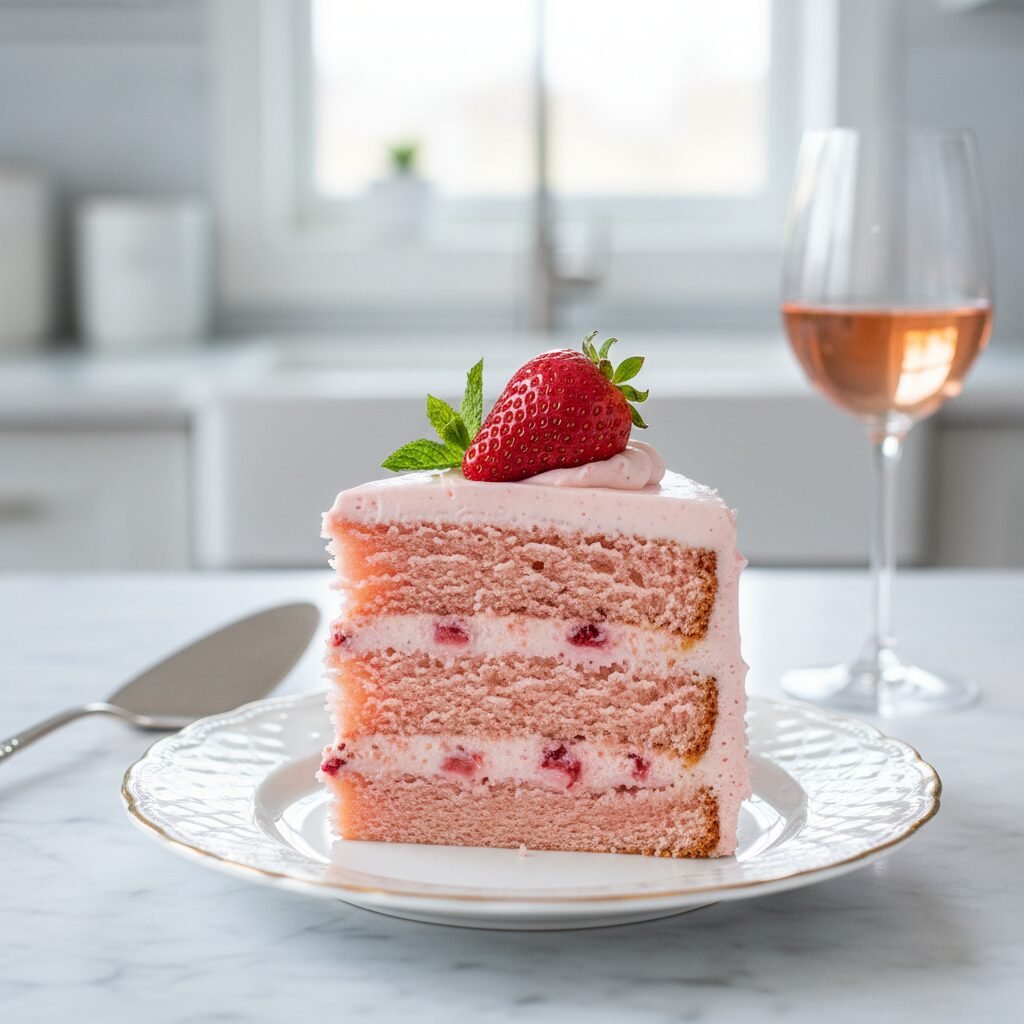
Experience the authentic taste of summer with this incredibly moist strawberry cake, made entirely from fresh strawberry reduction without any artificial flavors or boxed mixes. Paired with a silky, pink strawberry buttercream, this recipe strikes the perfect balance of fluffy texture and intense berry flavor.
45 minutes
35 minutes
1 hour 20 minutes
12-14 servings
Dessert
Baking
American
Vegetarian
There is something undeniably nostalgic and cheerful about a slice of pink strawberry cake. For many of us, the memory is tied to the convenience of a box mix, chemically sweet and neon pink, often served at childhood birthday parties. However, as our palates mature, the desire for that whimsical pink hue remains, but the craving shifts towards something authentic—the taste of real, sun-ripened strawberries. This Moist Strawberry Cake recipe is a labor of love that completely reimagines the classic. Gone are the days of relying on flavored gelatin packets or artificial extracts that leave a metallic aftertaste. Instead, this recipe harnesses the power of fresh fruit, transformed through a slow reduction process that concentrates the essence of the berry while removing excess water that can make cakes heavy or gummy.
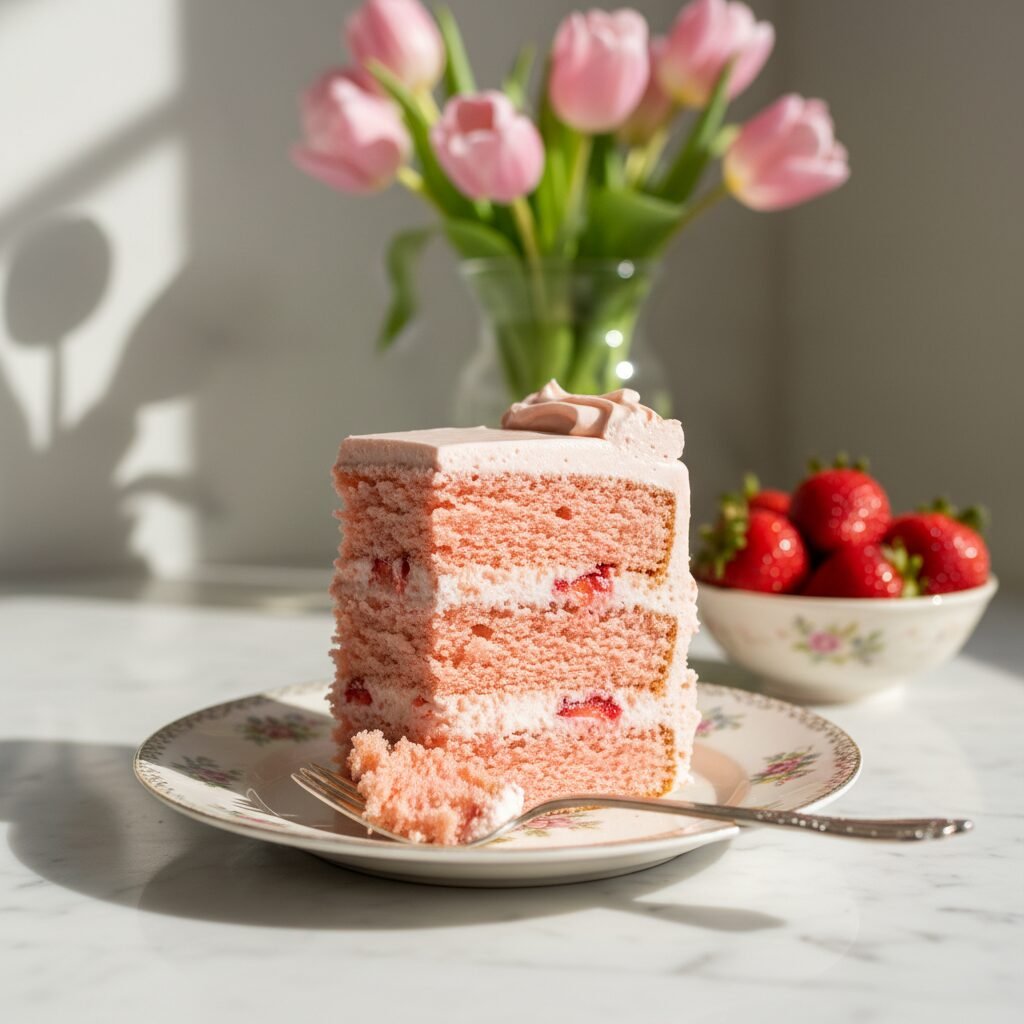
Imagine a crumb that is tender, velvety, and light, speckled with tiny bits of real strawberry, all wrapped in a buttercream that tastes like a bowl of strawberries and cream. This cake is a celebration of natural flavor. It is perfect for Valentine’s Day, Mother’s Day, Easter brunches, or simply when the strawberry season hits its peak and the berries are ruby red and bursting with juice. While it requires a bit more effort than a standard vanilla cake—specifically the step of reducing the strawberry purée—the result is a dessert that is sophisticated enough for a wedding yet comforting enough for a Sunday family dinner. The natural pink color is stunning, and the aroma that fills your kitchen as it bakes is nothing short of intoxicating. Get ready to bake the best strawberry cake of your life.
History & Origins
The history of fruit-flavored cakes is a journey through the evolution of baking technology and food preservation. In the early days of cake baking, prior to the 20th century, adding fresh fruit to a batter was a risky endeavor. The high water content of fruit often threw off the delicate chemistry of baking, resulting in soggy, dense, or collapsed cakes. Most fruit cakes were of the dried variety—dense, heavy loaves meant to last for months. It wasn’t until the advent of chemical leaveners like baking powder and baking soda in the mid-19th century that lighter, fluffier cakes became the norm.
The specific popularity of the ‘Strawberry Cake’ as an icon of American baking really surged in the mid-20th century, coinciding with the rise of convenience foods. In the 1950s and 60s, food companies marketed cake mixes and flavored gelatin (like Jell-O) as modern miracles for the housewife. The ‘Poke Cake’ and recipes involving adding a box of strawberry gelatin to a white cake mix became staples in Southern community cookbooks and church potlucks. These cakes were beloved for their moisture and striking color, even if the flavor was largely artificial.
However, the culinary revolution of the late 20th and early 21st centuries brought a renewed focus on ‘scratch’ cooking and natural ingredients. Bakers began experimenting with freeze-dried fruits and fruit reductions to achieve that same iconic flavor profile without the chemicals. This modern recipe represents the pinnacle of that evolution: honoring the cultural nostalgia of the pink party cake while elevating it with French baking techniques and pure, natural ingredients.
Why This Recipe Works
The biggest challenge when baking with fresh fruit is water content. Strawberries are over 90% water. If you simply purée fresh strawberries and dump them into a cake batter, you add too much liquid, which activates gluten excessively and throws off the fat-to-flour ratio, resulting in a rubbery, dense, or soggy cake. Conversely, if you don’t add enough fruit, the flavor is barely detectable.
This recipe solves that dilemma through the technique of a ‘Strawberry Reduction.’ By puréeing the berries and simmering them down on the stovetop, we evaporate the majority of the water while concentrating the flavor compounds, natural sugars, and pectin. You are left with a thick, potent jam-like paste that packs a massive punch of strawberry flavor without wrecking the cake’s structural integrity.
Furthermore, we use egg whites instead of whole eggs. The yolks would add a yellow tint that turns the pink strawberry batter into a muddy orange color. Using whites keeps the crumb pale, allowing the natural pink of the strawberries to shine through. We also utilize a combination of butter and oil; butter provides the classic flavor, while a touch of oil ensures the cake stays moist for days, as oil remains liquid at room temperature.
Why You’ll Love This Recipe
- ✓Uses 100% fresh strawberries for authentic flavor.
- ✓No artificial dyes or gelatin packets required.
- ✓Strawberry reduction technique prevents sogginess.
- ✓Stays moist for days due to a butter-oil blend.
- ✓Silky, natural strawberry buttercream frosting.
- ✓Beautiful, natural soft pink color.
Equipment You’ll Need
- ✓High-speed blender or food processor
- ✓Small saucepan
- ✓Stand mixer with paddle attachment
- ✓Three 8-inch round cake pans
- ✓Parchment paper
- ✓Wire cooling rack
- ✓Rubber spatula
- ✓Offset spatula
Ingredients
- ✓1.5 lbs fresh strawberries (hulled and chopped)
- ✓3 cups cake flour (sifted)
- ✓2 cups granulated sugar
- ✓1 tbsp baking powder
- ✓1/2 tsp baking soda
- ✓1 tsp salt
- ✓1 cup unsalted butter (room temperature)
- ✓1/2 cup whole milk (room temperature)
- ✓1/4 cup sour cream (room temperature)
- ✓6 large egg whites (room temperature)
- ✓2 tsp pure vanilla extract
- ✓1 drop pink gel food coloring (optional, for deeper color)
- ✓For the Frosting: 1.5 cups unsalted butter (softened)
- ✓5 cups powdered sugar
- ✓1/4 cup heavy cream
- ✓Pinch of salt
Instructions
- 1. Make the Strawberry Reduction: Place the chopped strawberries in a blender and purée until completely smooth. Pour the purée into a small saucepan over medium-low heat. Simmer, stirring occasionally, for about 20-30 minutes until the mixture has reduced by half (you should have about 3/4 to 1 cup of thick purée). Remove from heat and let it cool completely to room temperature. This is critical.
- 2. Prep the Oven and Pans: Preheat your oven to 350°F (175°C). Grease three 8-inch round cake pans with butter or non-stick spray, line the bottoms with parchment paper, and grease the parchment.
- 3. Mix Dry Ingredients: In the bowl of a stand mixer fitted with the paddle attachment, whisk together the sifted cake flour, granulated sugar, baking powder, baking soda, and salt.
- 4. Reverse Creaming: Add the room temperature butter to the dry ingredients. Mix on low speed until the mixture resembles coarse sand. This coats the flour proteins in fat, inhibiting gluten formation for a tender cake.
- 5. Combine Wet Ingredients: In a separate medium bowl, whisk together the egg whites, milk, sour cream, vanilla extract, and 1/2 cup of your cooled strawberry reduction (reserve the rest for the frosting).
- 6. Make the Batter: With the mixer on low, slowly pour the wet ingredients into the sandy flour mixture. Once added, increase speed to medium and beat for exactly 2 minutes to build structure. Scrape down the sides and bottom of the bowl to ensure everything is incorporated.
- 7. Bake: Divide the batter evenly among the three prepared pans (use a kitchen scale for accuracy). Bake for 30-35 minutes, or until a toothpick inserted into the center comes out clean or with just a few moist crumbs.
- 8. Cool: Allow the cakes to cool in the pans for 10 minutes, then carefully turn them out onto a wire rack to cool completely before frosting.
- 9. Make the Frosting: In a clean mixer bowl, beat the 1.5 cups of softened butter on medium-high speed until pale and creamy (about 5 minutes). Lower the speed and gradually add the powdered sugar. Once incorporated, add the heavy cream, salt, and the remaining strawberry reduction. Whip on high speed for 3-4 minutes until light, airy, and fluffy.
- 10. Assemble: Level the tops of the cooled cake layers with a serrated knife if they are domed. Place one layer on a cake stand, spread a layer of frosting, and repeat with the remaining layers. Cover the outside with the remaining frosting and garnish with fresh strawberries.
Expert Cooking Tips
- ✓Cool the Reduction: Never add hot strawberry reduction to your batter or frosting. It will melt the butter and ruin the emulsion. It must be room temperature.
- ✓Room Temperature Ingredients: Ensure your butter, milk, sour cream, and egg whites are all at room temperature. Cold ingredients will seize the butter and create a lumpy batter.
- ✓Weigh Your Flour: If you don’t have a scale, spoon and level your flour. Scooping directly packs the flour and leads to a dry cake.
- ✓Don’t Overmix: Once the wet and dry ingredients are combined, only mix as directed. Overmixing makes the cake tough.
- ✓Use Cake Flour: Cake flour has a lower protein content than all-purpose flour, which is essential for that velvety, melt-in-your-mouth texture.
- ✓Scrape the Bowl: Stand mixers often leave a pocket of unmixed flour at the very bottom. Scrape thoroughly before pouring into pans.
Substitutions and Variations
If you cannot find cake flour, you can make a DIY version by measuring 1 cup of all-purpose flour, removing 2 tablespoons, and replacing them with 2 tablespoons of cornstarch. Sift this mixture twice to aerate. For a dairy-free version, replace the butter with a high-quality plant-based butter stick (not tub margarine), use almond or oat milk instead of cow’s milk, and use a dairy-free sour cream or yogurt. If fresh strawberries are out of season, you can use frozen strawberries. Thaw them completely, but do not drain the liquid; purée the berries with their juices and then proceed with the reduction step. Note that frozen berries may take slightly longer to reduce due to higher water content released during freezing. For the egg whites, you can use carton egg whites, but ensure they are 100% egg whites without added gums.
Common Mistakes to Avoid
The most common mistake with this recipe is rushing the strawberry reduction. If the reduction is too watery, it adds excess liquid to the batter, causing the cake to sink in the middle or become dense and rubbery. You must reduce it until it is thick, like tomato paste. Another frequent error is frosting the cake before it is 100% cool. Even a slightly warm cake will melt the butter in the frosting, causing the layers to slide apart and the frosting to become greasy. Lastly, using salted butter instead of unsalted can make the sweet creaminess of the frosting taste off; always use unsalted butter so you can control the sodium level yourself.
Serving Suggestions
This cake is a showstopper on its own, but it pairs beautifully with a glass of cold milk or a dry rosé wine if you are serving it at an adult gathering. For presentation, garnish the top with whole, fresh strawberries (leaves on for contrast) or delicate edible flowers like pansies or chamomile. If serving for a summer barbecue, a side of vanilla bean ice cream or a dollop of freshly whipped cream helps cut the richness. For a birthday, simple white sprinkles look elegant against the pink frosting. Slice with a sharp knife dipped in hot water and wiped dry for clean, professional-looking cuts.
Storage and Reheating Tips
Because this cake contains fresh fruit reduction and dairy, it is best stored in the refrigerator, especially in warm weather. However, buttercream tastes best at room temperature. Store the cake in an airtight cake keeper in the fridge for up to 4 days. Remove the cake (or slices) from the fridge 30 to 60 minutes before serving to allow the butter in the cake and frosting to soften. If you want to freeze the cake, you can freeze the unfrosted layers wrapped tightly in plastic wrap for up to 3 months. You can also freeze individual slices of the finished cake; place them on a baking sheet to freeze the frosting solid, then wrap tightly in plastic wrap and foil.
Nutrition Facts (Estimated)
| Serving Size | 1 Slice |
| Calories | 580 |
| Fat | 28g |
| Saturated Fat | 16g |
| Unsaturated Fat | 10g |
| Trans Fat | 0g |
| Cholesterol | 85mg |
| Sodium | 320mg |
| Carbohydrates | 78g |
| Fiber | 2g |
| Sugar | 45g |
| Protein | 6g |
Frequently Asked Questions
Can I use freeze-dried strawberries instead of fresh?
Yes! If you want to skip the reduction step, you can pulverize freeze-dried strawberries into a fine powder. Use about 1 cup of strawberry powder in the dry ingredients and 1/2 cup in the frosting. This yields a very intense flavor but a slightly different texture.
Why did my cake sink in the middle?
This usually happens if the oven door was opened too early, releasing heat, or if the batter had too much liquid (meaning the strawberry reduction wasn’t reduced enough). It can also be caused by expired baking powder.
Can I make this into cupcakes?
Absolutely. This recipe will make approximately 24-30 cupcakes. Bake them at 350°F for 18-22 minutes. Watch them closely so they don’t dry out.
Do I have to use food coloring?
No, the food coloring is completely optional. The strawberry reduction will give the cake a natural, dusty pink color. Adding a drop of gel color just makes it pop more for photos.
Can I use all-purpose flour?
You can, but the texture will be more bread-like and less delicate. If you must use all-purpose, reduce the amount by 2 tablespoons per cup to prevent toughness.
How do I know when the reduction is done?
The purée should darken in color, become very thick, and coat the back of a spoon without dripping off easily. It should resemble the consistency of tomato paste or thick jam.
Can I use a different fruit?
Yes, this method works well with raspberries or blackberries. Just be sure to strain out the seeds for those fruits before reducing, as their seeds are larger and harder than strawberry seeds.
Why is my frosting curdled?
If your butter was too soft or your reduction was too cold (or vice versa), the emulsion can break. To fix it, whip a small amount of the frosting in a separate bowl until smooth, then gradually add the broken frosting to it, or briefly warm the bowl with a hair dryer while whipping.
Conclusion
Baking this Moist Strawberry Cake is more than just following a recipe; it’s about creating a moment of pure joy. From the scent of simmering strawberries filling your home to the first forkful of tender, berry-infused crumb, this cake delivers on every promise of summer sweetness. It proves that taking the extra time to work with fresh ingredients yields results that boxed mixes simply cannot replicate. Whether you are an experienced baker or trying your hand at a layer cake for the first time, this recipe is designed to guide you to success. So, grab your strawberries, preheat your oven, and get ready to slice into a little piece of pink heaven. Don’t forget to share your creation and tag us on social media!