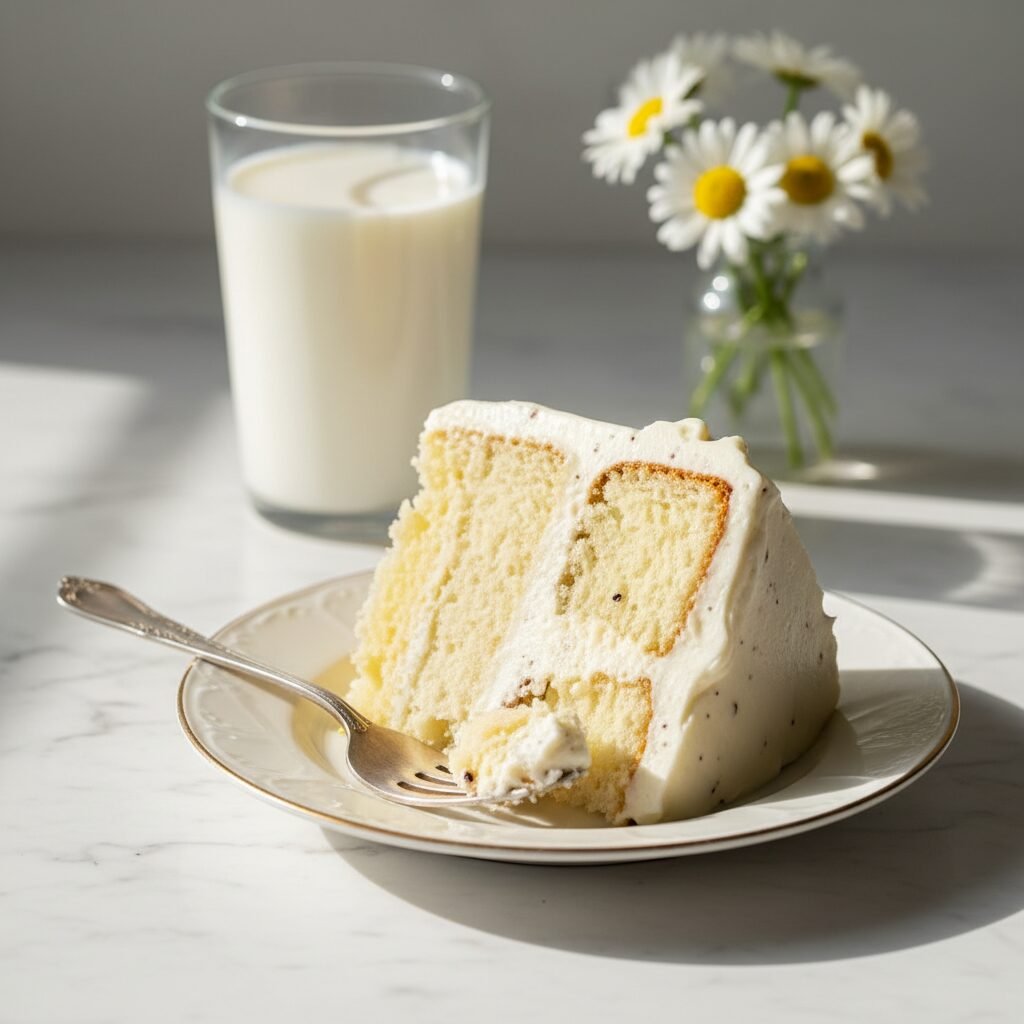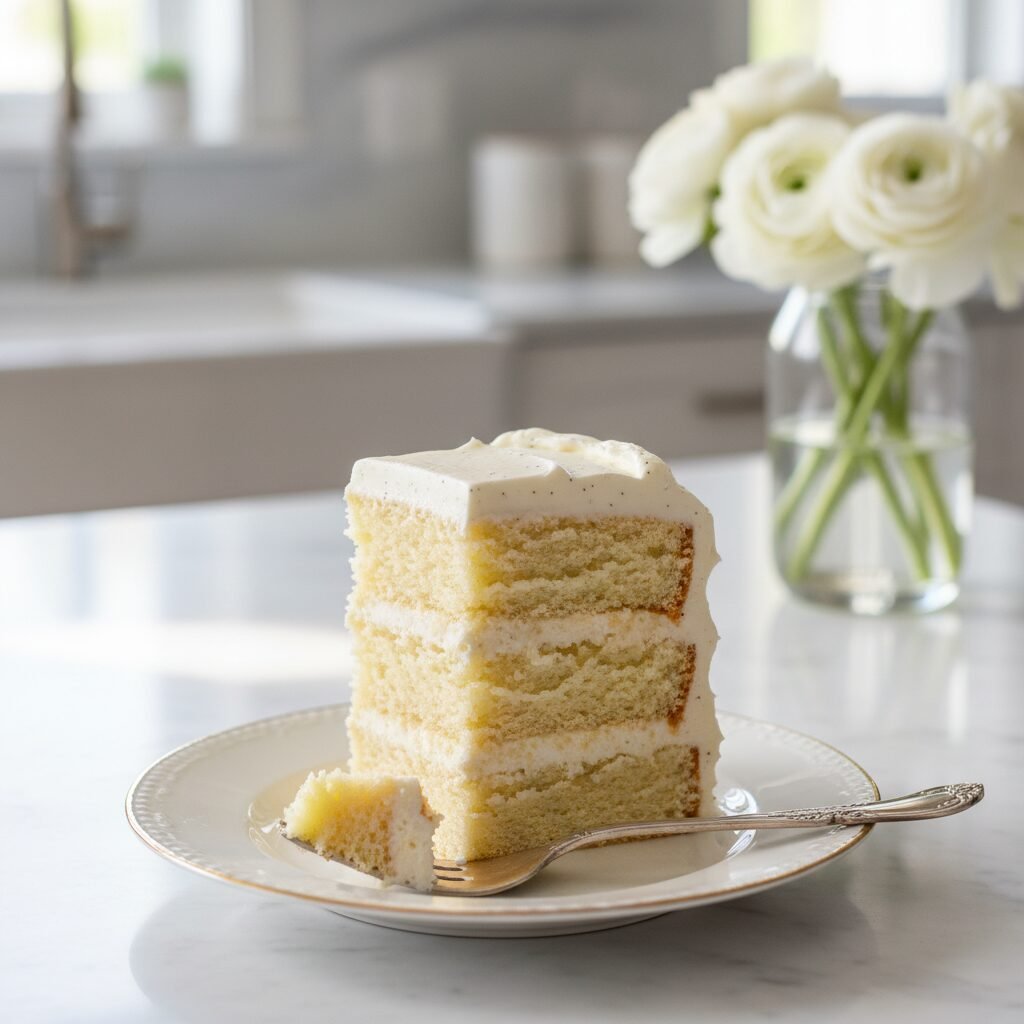

Moist Vanilla Birthday Cake For Small Family Recipe
Finally, a scratch-made vanilla cake recipe designed perfectly for smaller gatherings! This 6-inch moist vanilla birthday cake delivers a tender, velvety crumb and rich buttery flavor without the overwhelming leftovers of a standard size. It is the perfect celebration treat for 4 to 6 people.
20 minutes
30 minutes
50 minutes
6-8 servings
Dessert
Baking
American
Vegetarian
There is something undeniably magical about a classic vanilla birthday cake. It is the nostalgic center of our most cherished childhood memories, a symbol of celebration, and, quite frankly, the best vehicle for buttercream frosting known to man. However, for many of us, the standard 9-inch, multi-layer cake recipes found in old cookbooks or on the back of flour bags are simply too much. When you are baking for a small family, a couple, or a close-knit group of friends, a massive cake often leads to days of stale leftovers or the guilt of food waste. That is where this Moist Vanilla Birthday Cake for Small Families comes in to save the day.
This isn’t just a standard recipe cut in half; it is a carefully calibrated formula designed specifically for 6-inch cake pans. The texture is paramount here. We are looking for a crumb that is tight enough to hold its shape when sliced but tender enough to melt in your mouth. By utilizing a specific blend of fats—butter for that unmistakable flavor and a touch of oil for lasting moisture—along with the acidity of sour cream, we achieve a texture that rivals the best high-end bakeries. The vanilla flavor is pure and prominent, acting as a perfect canvas for sprinkles, fruit fillings, or a classic chocolate fudge frosting. Whether you are celebrating a milestone or just need a sweet treat for a Tuesday night, this cake proves that good things truly do come in small packages. It is intimate, manageable, and utterly delicious.
History & Origins
The concept of the birthday cake has a rich and surprisingly ancient lineage that dates back centuries, though it looked quite different from the fluffy, frosted confections we enjoy today. The ancient Greeks baked round cakes using honey to honor Artemis, the goddess of the moon, lighting candles on top to mimic the moon’s glow. However, the birthday cake as we recognize it began to take shape in medieval Germany during ‘Kinderfest,’ a celebration for children’s birthdays. These cakes were more bread-like and not nearly as sweet as modern versions, but they established the tradition of celebrating another year of life with a special baked good.
By the 17th century, elaborate cakes with icing and layers became available, but they were exclusively the domain of the wealthy due to the high cost of sugar and refined ingredients. The true democratization of the birthday cake occurred during the Industrial Revolution in the 19th century. With mass production making ingredients like sugar, flour, and baking powder affordable and accessible, home bakers began creating multi-layered cakes for family celebrations. Vanilla, originally an exotic orchid fruit from Mexico, became the standard flavor profile in the US following the widespread availability of vanilla extract in the late 1800s.
In recent decades, as family sizes have shrunk and urban living has increased, the demand for ‘small batch’ baking has surged. The shift from the massive sheet cakes of the 1950s to curated, smaller celebrations reflects a modern desire for quality over quantity. This 6-inch cake recipe is a modern evolution of that history, adapting the grandeur of the traditional birthday cake to fit the lifestyle of the contemporary small family.
Why This Recipe Works
The science behind this small-batch vanilla cake focuses heavily on the interaction between fats and flour proteins. In many cake recipes, butter is the sole fat used. While butter provides exceptional flavor, it is about 20% water, which can sometimes lead to a drier cake once stored. To combat this, this recipe introduces a small amount of neutral oil. Oil remains liquid at room temperature, which ensures the cake stays moist and soft for days after baking, not just on the day it is made.
Furthermore, the inclusion of sour cream is a game-changer. Sour cream adds acidity to the batter, which does two things: it tenderizes the gluten strands in the flour, preventing the cake from becoming tough, and it activates the baking soda more efficiently for a better rise. We also use the ‘creaming method’—beating the butter and sugar until pale and fluffy—to incorporate air into the batter. This mechanical leavening works in tandem with chemical leavening agents to create a light, airy structure. Finally, the ratio of sugar to flour is kept high; sugar is hygroscopic, meaning it attracts and holds water, locking moisture into the crumb. This precise balance ensures a cake that is sturdy enough to stack but delicate enough to enjoy thoroughly.
Why You’ll Love This Recipe
- ✓Perfect 6-inch size reduces waste and leftovers.
- ✓Uses both butter and oil for maximum flavor and moisture.
- ✓Sour cream ensures a tender, velvety crumb.
- ✓Sturdy enough for stacking and decorating.
- ✓Classic vanilla flavor that pairs with any frosting.
- ✓Quick baking time compared to larger cakes.
Equipment You’ll Need
- ✓Two 6-inch round cake pans
- ✓Electric stand mixer or hand mixer
- ✓Mixing bowls
- ✓Rubber spatula
- ✓Wire cooling rack
- ✓Measuring cups and spoons
- ✓Parchment paper
Ingredients
- ✓1 1/2 cups All-Purpose Flour (spooned and leveled)
- ✓1 teaspoon Baking Powder
- ✓1/4 teaspoon Baking Soda
- ✓1/2 teaspoon Salt
- ✓1/2 cup Unsalted Butter, softened to room temperature
- ✓1 cup Granulated Sugar
- ✓1 large Egg, room temperature
- ✓1 large Egg White, room temperature
- ✓2 teaspoons Pure Vanilla Extract
- ✓1/4 cup Vegetable Oil (or Canola Oil)
- ✓1/3 cup Sour Cream, room temperature
- ✓1/3 cup Whole Milk, room temperature
Instructions
- Preheat your oven to 350°F (175°C). Grease two 6-inch round cake pans generously with butter or cooking spray. Line the bottoms with parchment paper rounds and grease the paper as well. Dust with a little flour, tapping out the excess.
- In a medium mixing bowl, whisk together the flour, baking powder, baking soda, and salt until well combined. Set this dry mixture aside.
- In the bowl of a stand mixer fitted with the paddle attachment (or a large bowl using a hand mixer), beat the softened butter and granulated sugar together on medium-high speed for about 3-4 minutes. The mixture should look creamy, pale, and fluffy.
- Scrape down the sides of the bowl. Add the vegetable oil and vanilla extract, beating on medium speed until combined.
- Add the whole egg and the egg white one at a time, beating well after each addition. Scrape down the bowl again to ensure everything is incorporated.
- In a small bowl or measuring cup, whisk together the sour cream and whole milk until smooth.
- Reduce the mixer speed to low. Add the dry ingredients in three additions, alternating with the wet milk/sour cream mixture in two additions. Start and end with the dry ingredients (Dry – Wet – Dry – Wet – Dry).
- Mix only until the flour streaks have just disappeared. Do not overmix. Use a spatula to give the batter one final gentle fold by hand to catch any ingredients at the bottom of the bowl.
- Divide the batter evenly between the two prepared cake pans. You can use a kitchen scale to ensure the layers are perfectly even.
- Bake for 28-32 minutes, or until a toothpick inserted into the center comes out clean or with just a few moist crumbs attached. The tops should be golden and spring back when lightly touched.
- Remove the cakes from the oven and place the pans on a wire rack. Let them cool in the pans for about 10-15 minutes.
- Run a knife around the edges to loosen the cakes, then invert them onto the wire rack to cool completely before frosting.
Expert Cooking Tips
- ✓Room temperature ingredients are non-negotiable; cold eggs or dairy will curdle the batter.
- ✓Measure flour correctly by spooning it into the cup and leveling it off, rather than scooping directly from the bag.
- ✓Do not overmix the batter once the flour is added, or the cake will be dense and chewy.
- ✓Use parchment paper rounds to guarantee the cakes release from the pans perfectly.
- ✓If your oven has hot spots, rotate the pans halfway through the baking time.
- ✓Tap the pans on the counter before baking to release any large air bubbles.
Substitutions and Variations
Baking is chemistry, so substitutions should be made with care, but there is some flexibility here. If you do not have sour cream, full-fat plain Greek yogurt is an excellent 1:1 substitute that provides similar acidity and moisture. Buttermilk can also be used in place of the milk and sour cream mixture, though the batter may be slightly thinner. For the oil, any neutral-flavored oil like canola, vegetable, or grapeseed oil works perfectly; melted coconut oil can be used but may impart a slight coconut flavor. If you need to make this gluten-free, use a high-quality 1:1 gluten-free baking flour blend that contains xanthan gum. For egg allergies, commercial egg replacers work reasonably well, though the cake may not rise quite as high. Do not substitute the sugar for liquid sweeteners like honey or maple syrup without altering the other liquid ratios significantly.
Common Mistakes to Avoid
The most common mistake when baking this cake is using cold ingredients. When butter, eggs, and milk are cold, they do not emulsify properly, leading to a batter that looks curdled and a final cake that is dense or unevenly baked. Another frequent error is over-baking. Small cakes bake faster than their large counterparts, and leaving them in the oven even two minutes too long can dry them out. Always check for doneness a few minutes before the timer goes off. Lastly, skipping the parchment paper is a recipe for disaster. Even with a greased pan, the bottom of the cake can stick, causing it to tear when you try to remove it. Taking the extra minute to cut a circle of parchment paper ensures a perfect release every time.
Serving Suggestions
This moist vanilla cake is incredibly versatile. For a classic birthday vibe, frost it with a rich chocolate buttercream or a colorful vanilla American buttercream with sprinkles. If you prefer something lighter, a whipped cream cheese frosting with fresh berries between the layers is delightful. For a sophisticated twist, try a lemon curd filling with a swiss meringue buttercream exterior. Serve slices at room temperature to ensure the butter in the cake is soft and the texture is at its peak. A scoop of vanilla bean ice cream or a hot cup of coffee makes for the perfect accompaniment.
Storage and Reheating Tips
To keep this cake moist, storage is key. An unfrosted cake can be wrapped tightly in plastic wrap and stored at room temperature for up to 2 days. If you have already frosted the cake, it can be stored under a cake dome at room temperature for 3 days, provided the kitchen isn’t too hot. For longer storage, wrap the cake layers individually in plastic wrap, then foil, and freeze for up to 3 months. Thaw frozen layers in the refrigerator overnight before decorating. If you have leftover sliced cake, press a piece of plastic wrap directly against the cut surface to prevent it from drying out before placing it in an airtight container.
Nutrition Facts (Estimated)
| Serving Size | 1 slice (1/8 of cake) |
| Calories | 320 |
| Fat | 16g |
| Saturated Fat | 9g |
| Unsaturated Fat | 6g |
| Trans Fat | 0g |
| Cholesterol | 65mg |
| Sodium | 180mg |
| Carbohydrates | 40g |
| Fiber | 0.5g |
| Sugar | 22g |
| Protein | 4g |
Frequently Asked Questions
Can I bake this in a standard 9-inch pan instead?
This recipe yields too little batter for a standard 9-inch pan. It would result in a very thin, pancake-like layer. If you only have a 9-inch pan, you would need to double the recipe, but watch the bake time closely.
Can I make cupcakes with this batter?
Absolutely! This recipe makes approximately 10-12 standard cupcakes. Bake them at 350°F for 18-22 minutes.
Why did my cake sink in the middle?
Sinking usually happens if the oven door was opened too early, causing a temperature drop, or if the cake was underbaked. It can also happen if there was too much leavening (baking powder/soda).
Can I use salted butter?
Yes, you can use salted butter. If you do, reduce the added salt in the recipe to 1/4 teaspoon to avoid an overly salty taste.
How do I know when the cake is done?
Insert a toothpick into the center of the cake. It should come out clean or with a few moist crumbs. If it has wet batter on it, it needs more time.
Can I make the batter ahead of time?
It is best to bake the batter immediately after mixing. The baking powder and soda begin reacting as soon as they get wet, so waiting too long can affect the rise.
My cake came out dry, what happened?
You likely measured the flour by scooping the cup into the bag, which packs it down and adds too much flour. Always spoon and level. Alternatively, you may have overbaked it.
Can I double this recipe for a 3-layer 6-inch cake?
Yes, you can double the ingredients to make three thicker 6-inch layers or four thinner ones. Adjust baking time slightly if the layers are thicker.
What is the best way to frost a small cake?
Chill the cake layers first to reduce crumbs. Apply a thin ‘crumb coat’ of frosting, chill again for 20 minutes, and then apply the final layer of frosting for a smooth finish.
Conclusion
Baking a birthday cake from scratch is a labor of love, regardless of the size of the guest list. This Moist Vanilla Birthday Cake for Small Families proves that you don’t need a crowd to justify a spectacular dessert. With its perfect balance of fluffy texture, rich vanilla flavor, and manageable size, it is destined to become your go-to recipe for intimate celebrations, anniversaries, or those days when you just need a slice of comfort. So, dust off those 6-inch pans, grab your sprinkles, and get ready to bake a little magic. Happy baking!