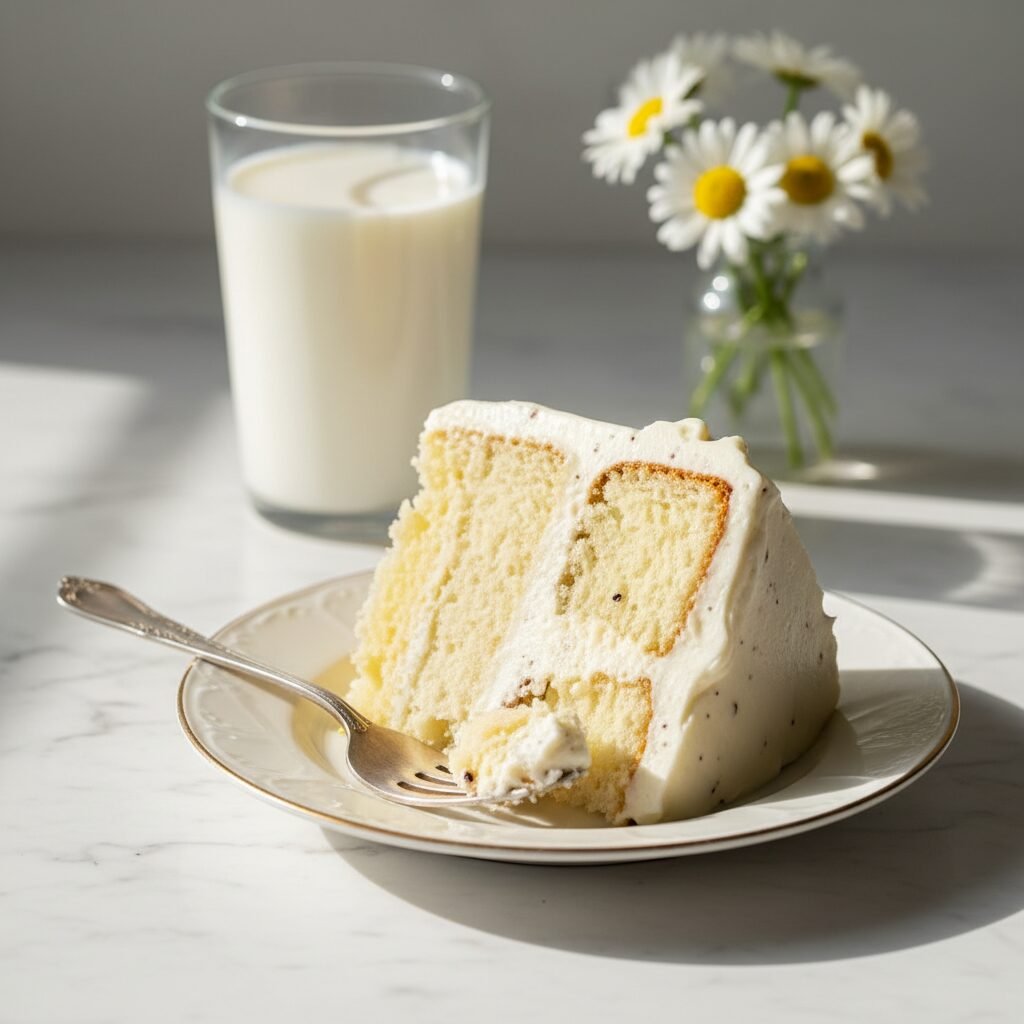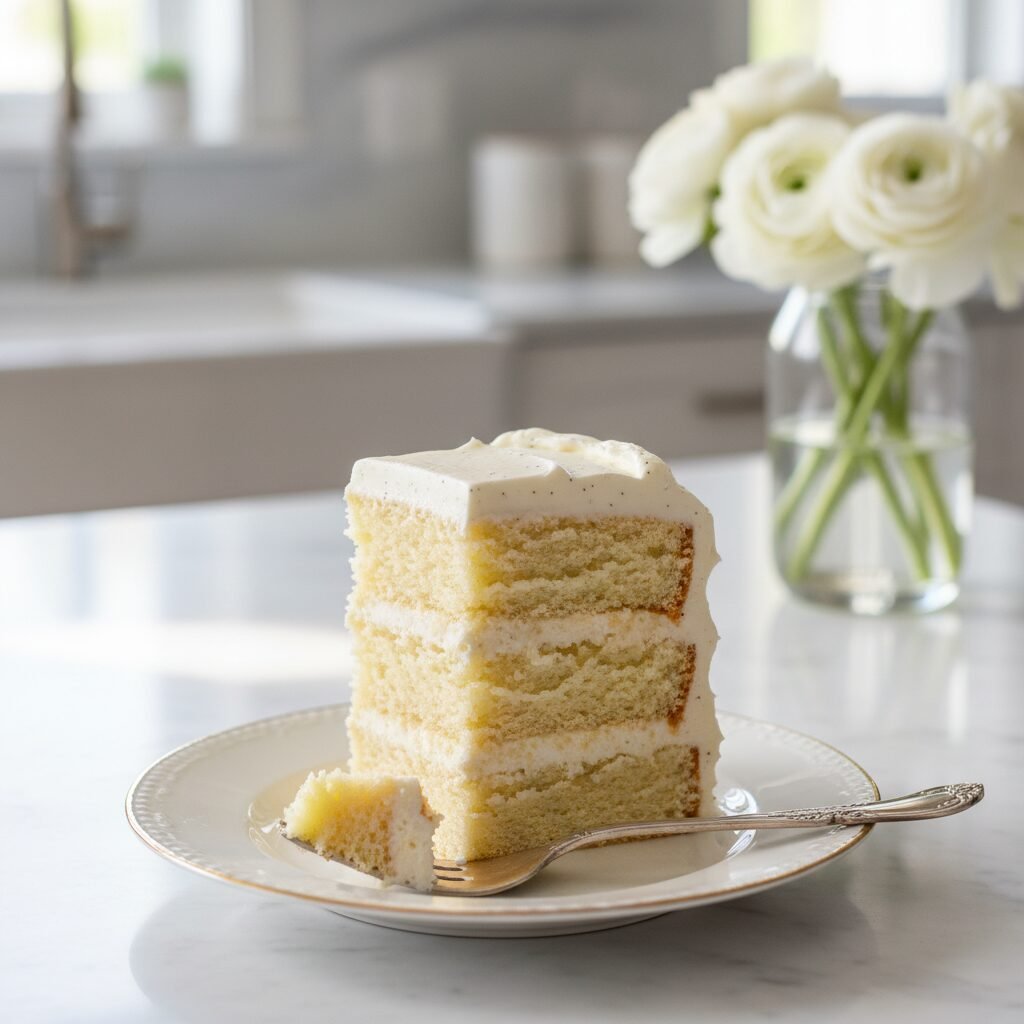

Moist Vanilla Birthday Cake With Cream Cheese Frosting Recipe
Discover the secret to the perfect birthday treat with this incredibly moist vanilla cake recipe. Paired with a tangy, velvety cream cheese frosting and festive sprinkles, it delivers a tender crumb and rich flavor that stays fresh for days, making it the ultimate centerpiece for any celebration.
45 minutes
35 minutes
1 hour 20 minutes
12-14 servings (3-layer 8-inch cake)
Dessert
Baking
American
Vegetarian
There is something undeniably magical about a classic vanilla birthday cake. It is the culinary equivalent of a warm hug—nostalgic, comforting, and universally loved. However, finding a recipe that balances the delicate flavor of vanilla with a texture that isn’t dry or dense can be a lifelong quest for many home bakers. This recipe is the culmination of that search. We are talking about a cake with a crumb so tender it practically melts in your mouth, yet sturdy enough to hold up to towering layers of frosting. The secret lies in the precise balance of fat and acidity, utilizing both butter for that distinct rich flavor and oil to ensure the cake remains moist days after baking.
But a cake is only as good as its frosting, and while American buttercream is the standard, we believe cream cheese frosting creates a superior flavor profile. The slight tang of the cream cheese cuts through the sweetness of the sugar and the richness of the butter cake, creating a sophisticated harmony that keeps you coming back for ‘just one more sliver.’ This isn’t just a dessert; it is a celebration on a plate. Whether you are baking for a child’s first birthday, a milestone anniversary, or simply because you crave something sweet on a Tuesday, this Moist Vanilla Birthday Cake with Cream Cheese Frosting is guaranteed to impress. Prepare your kitchen for the aroma of pure vanilla bean and sweet butter, because you are about to bake the best cake of your life.
History & Origins
The concept of the birthday cake dates back centuries, though it looked quite different from the fluffy, frosted confections we enjoy today. The ancient Greeks baked round cakes to honor Artemis, the goddess of the moon, placing lit candles on top to make them glow like the moon itself. However, the modern birthday cake as we know it has its roots in 18th-century Germany with the ‘Kinderfest,’ a celebration for children. These early cakes were more like bread—sweet and coarse—rather than the light sponges of today.
The evolution into the ‘vanilla cake’ is tied directly to the history of vanilla itself and advancements in baking technology. Vanilla, native to Mexico, was a rare and expensive luxury introduced to Europe by Spanish conquistadors. It wasn’t until the mid-19th century, with the invention of chemical leavening agents like baking powder, that cakes could achieve a light, airy texture without the labor-intensive process of beating eggs for hours. As vanilla became more accessible in the form of extract, it became the standard flavoring for ‘white cakes’ or ‘yellow cakes’ in American households.
Cream cheese frosting is a newer addition to the canon, gaining massive popularity in the United States in the mid-20th century, largely associated with the rise of carrot cake and red velvet cake. Marrying this tangy, creamy topping with a traditional vanilla sponge is a modern twist that elevates the simple profile of the cake. Today, the vanilla birthday cake stands as a cultural icon in the West—a symbol of joy, aging, and gathering, proving that some traditions only get sweeter with time.
Why This Recipe Works
This recipe succeeds where others fail because it scientifically addresses the two biggest complaints about vanilla cake: dryness and lack of flavor. Most recipes use either butter or oil. Butter provides the delicious flavor we crave but contains water, which evaporates during baking, potentially leading to a dry crumb. Oil, being 100% fat, keeps the cake incredibly moist and tender but lacks flavor. This recipe utilizes a hybrid approach, using both unsalted butter for that premium taste and vegetable oil to lock in moisture, ensuring the cake stays soft for days.
Furthermore, the inclusion of buttermilk is crucial. The acidity in buttermilk does two things: it breaks down the long strands of gluten in the flour, resulting in a more tender, ‘melt-in-your-mouth’ texture, and it reacts with the baking soda to provide a powerful lift, making the cake fluffy rather than dense. We also use a method called ‘reverse creaming’ or a modified mixing method where the dry ingredients are coated with the fat before the liquids are added. This coats the flour proteins in fat, inhibiting gluten formation even further than traditional creaming methods. The result is a velvety, plush crumb that is robust enough to stack but delicate enough to feel luxurious.
Why You’ll Love This Recipe
- ✓Uses a butter-oil blend for maximum flavor and lasting moisture.
- ✓Tangy cream cheese frosting balances the sweetness perfectly.
- ✓Reverse creaming method ensures a tender, velvety crumb.
- ✓Stays fresh and moist for up to 4 days at room temperature.
- ✓Versatile base recipe that can be adapted for cupcakes or other flavors.
Equipment You’ll Need
- ✓Three 8-inch round cake pans
- ✓Stand mixer with paddle attachment
- ✓Large mixing bowls
- ✓Kitchen scale
- ✓Wire cooling rack
- ✓Offset spatula
- ✓Parchment paper
- ✓Sifter
Ingredients
- ✓3 cups (360g) cake flour, sifted
- ✓2 cups (400g) granulated sugar
- ✓1 tbsp baking powder
- ✓1/2 tsp baking soda
- ✓1 tsp salt
- ✓1 cup (226g) unsalted butter, cold and cubed
- ✓1/2 cup (120ml) vegetable oil
- ✓1 cup (240ml) buttermilk, room temperature
- ✓4 large eggs, room temperature
- ✓1 tbsp pure vanilla extract
- ✓16 oz (450g) full-fat block cream cheese, slightly softened
- ✓1 cup (226g) unsalted butter (for frosting), softened
- ✓5 cups (600g) powdered sugar, sifted
- ✓1 tsp vanilla bean paste (for frosting)
- ✓Pinch of salt (for frosting)
- ✓Rainbow sprinkles (optional)
Instructions
- Preheat your oven to 350°F (175°C). Grease three 8-inch round cake pans with butter, line the bottoms with parchment paper, and dust the sides with flour. Tap out excess flour.
- In the bowl of a stand mixer fitted with the paddle attachment, combine the sifted cake flour, granulated sugar, baking powder, baking soda, and salt. Mix on low speed for 30 seconds to blend.
- Add the cold, cubed butter and the vegetable oil to the dry ingredients. Mix on low speed until the mixture resembles coarse sand or damp crumbs. This coats the flour in fat, preventing over-development of gluten.
- In a separate medium bowl, whisk together the room temperature buttermilk, eggs, and vanilla extract until well combined.
- With the mixer on low, slowly pour in about half of the wet ingredients. Increase speed to medium-high and beat for 1-2 minutes to build structure. The batter should look pale and fluffy.
- Scrape down the sides and bottom of the bowl. Turn the mixer to low and add the remaining wet ingredients in two batches, mixing just until incorporated. Do not overmix at this stage.
- Divide the batter evenly among the three prepared pans. Use a kitchen scale for precision if available (approx. 450g per pan).
- Bake for 30-35 minutes, or until a toothpick inserted into the center comes out clean or with just a few moist crumbs. Avoid opening the oven door too early.
- Remove cakes from the oven and let them cool in the pans for 10-15 minutes. Then, carefully invert them onto a wire rack to cool completely before frosting.
- To make the frosting: In a clean mixer bowl, beat the softened butter and cream cheese on medium-high speed until creamy and smooth (about 3 minutes).
- Reduce speed to low and gradually add the sifted powdered sugar, one cup at a time. Once all sugar is added, increase speed to high and whip for 3-4 minutes until fluffy.
- Add the vanilla bean paste and a pinch of salt. Mix for another minute.
- Assemble the cake: Place one cake layer on a serving plate or cake stand. Spread a generous layer of frosting on top. Repeat with the second and third layers.
- Apply a thin crumb coat of frosting over the entire cake and refrigerate for 20 minutes to set. This locks in crumbs for a clean finish.
- Apply the remaining frosting decoratively over the top and sides. Garnish with rainbow sprinkles if desired.
- Slice and serve at room temperature for the best texture.
Expert Cooking Tips
- ✓Ensure all cold ingredients (eggs, buttermilk) are at room temperature to prevent the batter from curdling.
- ✓Weigh your flour! Using a measuring cup often leads to packing too much flour, resulting in a dry cake.
- ✓Do not skip the parchment paper; it guarantees your cake layers will release perfectly from the pans.
- ✓Use full-fat brick style cream cheese for the frosting, not the tub variety, to ensure stability.
- ✓If the frosting is too soft to pipe, refrigerate it for 15-20 minutes to firm up.
- ✓Tap the cake pans on the counter before baking to release large air bubbles.
- ✓Cool the cakes completely before frosting; even a slightly warm cake will melt the butter in the frosting.
Substitutions and Variations
Baking is chemistry, so substitutions should be made with care. If you do not have cake flour, you can make a DIY version by measuring 1 cup of all-purpose flour, removing 2 tablespoons, and replacing them with 2 tablespoons of cornstarch; sift together twice before using. If buttermilk is unavailable, you can make ‘sour milk’ by adding 1 tablespoon of white vinegar or lemon juice to a cup of whole milk and letting it sit for 5 minutes. However, real buttermilk yields the best flavor. You can replace the vegetable oil with melted coconut oil or canola oil, but avoid strong-flavored oils like olive oil. For the frosting, if you prefer a less tangy flavor, you can swap half the cream cheese for more butter, essentially making a cream cheese-buttercream hybrid. Gluten-free 1:1 baking flour blends generally work well in this recipe, though the texture may be slightly denser.
Common Mistakes to Avoid
The most common mistake is overmixing the batter after adding the wet ingredients. Once the liquid hits the flour, gluten begins to form. While some gluten is necessary for structure, too much will create a tough, bread-like texture rather than a tender crumb. Stop mixing as soon as the ingredients are combined. Another pitfall is baking at the wrong temperature. If your oven runs hot, the outside will burn before the inside cooks; if it’s too cool, the cake won’t rise properly. Use an oven thermometer to verify accuracy. Regarding the frosting, using tub cream cheese or low-fat cream cheese will result in a runny, soupy mess that won’t hold its shape. Always use full-fat blocks. Finally, rushing the cooling process is a disaster waiting to happen—frosting a warm cake will cause the layers to slide apart.
Serving Suggestions
This cake is a showstopper on its own, but it pairs beautifully with fresh berries—strawberries, raspberries, or blueberries—which add a fresh, tart contrast to the sweet frosting. A scoop of vanilla bean ice cream or a dollop of freshly whipped cream is always a welcome addition. For a beverage pairing, a cold glass of milk is classic, but a hot cup of dark roast coffee or Earl Grey tea balances the sweetness wonderfully. If serving at a party, garnish the plate with a drizzle of raspberry coulis or caramel sauce for an elegant touch.
Storage and Reheating Tips
Because of the cream cheese in the frosting, this cake should ideally be stored in the refrigerator if you are keeping it for more than 24 hours. However, it tastes best at room temperature. Store the cake in an airtight cake carrier or cover the cut sections with plastic wrap to prevent drying out. It will keep in the fridge for up to 5 days. To serve, remove slices from the fridge 30-60 minutes beforehand to allow the butter and crumb to soften. For long-term storage, you can freeze individual slices wrapped tightly in plastic wrap and then foil for up to 3 months. Thaw in the fridge overnight before eating.
Nutrition Facts (Estimated)
| Serving Size | 1 slice |
| Calories | 650 |
| Fat | 34g |
| Saturated Fat | 18g |
| Unsaturated Fat | 14g |
| Trans Fat | 0g |
| Cholesterol | 95mg |
| Sodium | 320mg |
| Carbohydrates | 82g |
| Fiber | 1g |
| Sugar | 45g |
| Protein | 6g |
Frequently Asked Questions
Can I make this recipe into cupcakes?
Yes! This batter works perfectly for cupcakes. It will yield approximately 24-30 cupcakes. Bake them at 350°F (175°C) for 18-22 minutes.
Why did my cake sink in the middle?
Sinking usually happens if the oven door was opened too early, causing a sudden temperature drop, or if the cake was underbaked. It can also result from using too much leavening (baking powder/soda).
Can I make the cake layers ahead of time?
Absolutely. You can bake the layers, let them cool completely, wrap them tightly in plastic wrap, and freeze them for up to a month. Frosting frozen layers is actually easier as there are fewer crumbs.
My frosting is too runny, how do I fix it?
If your kitchen is warm or the butter was too soft, the frosting may be loose. chill it in the fridge for 20 minutes. If it’s still runny, add more sifted powdered sugar, 1/4 cup at a time.
Do I really need room temperature ingredients?
Yes. Room temperature ingredients emulsify much better, creating a smooth, uniform batter that traps air properly. Cold ingredients can cause the batter to break or curdle.
Can I use salted butter instead of unsalted?
You can, but you should reduce the added salt in the recipe to 1/4 tsp. Unsalted butter is preferred because it gives you total control over the sodium level.
How do I get flat cake layers?
You can use cake strips (fabric strips soaked in water) wrapped around the pans to ensure even baking. Alternatively, simply trim the domed tops with a serrated knife after cooling.
Is this cake sturdy enough for fondant?
Yes, the reverse creaming method produces a fairly sturdy crumb that can support the weight of fondant, though you should chill the cake thoroughly first.
Conclusion
Baking the perfect birthday cake is an act of love that pays dividends in smiles and memories. This Moist Vanilla Birthday Cake with Cream Cheese Frosting is more than just a recipe; it is a reliable companion for your most cherished celebrations. With its tender crumb, rich vanilla flavor, and tangy-sweet frosting, it sets a new standard for what a homemade cake should be. We hope this guide gives you the confidence to preheat that oven and create a masterpiece that your friends and family will talk about for years to come. Happy baking!