
Moist Vanilla Birthday Cake With Strawberry Frosting Recipe
Discover the secret to the most tender, melt-in-your-mouth vanilla cake paired with a vibrant, real-fruit strawberry frosting. This nostalgic yet elevated birthday classic guarantees a perfect crumb and natural berry flavor that will steal the show at any celebration.
45 minutes
35 minutes
1 hour 20 minutes
12-14 servings
Dessert
Baking
American
Vegetarian
There is something undeniably magical about a classic vanilla birthday cake. It is the centerpiece of our most cherished childhood memories, standing tall with flickering candles and the promise of a sweet wish coming true. However, as many home bakers know, finding the ‘perfect’ vanilla cake recipe is a lifelong quest. Too often, they turn out dry, dense, or lacking in that distinct buttery aroma we crave. This recipe for Moist Vanilla Birthday Cake with Strawberry Frosting is the result of years of testing, tweaking, and tasting to solve those exact problems. We have created a cake that balances the structural integrity needed for layering with an incredibly soft, plush crumb that stays moist for days. The secret lies in a carefully calculated ratio of fat to flour, utilizing both butter for flavor and oil for lasting moisture, alongside sour cream which tenderizes the gluten strands.
But a cake is only as good as its frosting. Forget the artificial, neon-pink tubs from the grocery store. This strawberry buttercream is a revelation, flavored and colored exclusively with real strawberries. By reducing fresh strawberry purée down to a concentrated jam-like consistency, we inject an explosion of tart-sweet berry flavor into the creamy butter base without compromising its stability. The result is a pale pink, speckled masterpiece that tastes like summer in a bowl. Whether you are baking for a milestone birthday, a casual weekend treat, or simply to bring a smile to someone’s face, this cake delivers on every level. It is nostalgic comfort food elevated to gourmet status, proving that the simplest flavors, when executed perfectly, are often the most extraordinary.
History & Origins
The tradition of the birthday cake has a rich and varied history that dates back centuries, evolving significantly to become the sugary staple we recognize today. While the Ancient Greeks baked honey cakes for the moon goddess Artemis, adorned with lit candles to mimic the moon’s glow, the modern birthday cake finds its truest roots in the German ‘Kinderfest’ of the Middle Ages. These celebrations for children featured sweet cakes, though they were more bread-like and coarse compared to today’s standards. The candles represented the ‘light of life,’ with one added for each year plus one for good luck.
However, the light and fluffy vanilla cake we adore is a product of the culinary revolutions of the 18th and 19th centuries. Before this era, cakes were leavened with yeast, making them dense and time-consuming. The invention of chemical leavening agents like baking soda and baking powder in the mid-1800s changed everything, allowing for the creation of the modern ‘butter sponge.’ Vanilla, once a rare and exotic spice from Mexico, became more accessible during this time, solidifying its place as the standard flavor for celebratory confections in the West. The pairing of vanilla cake with fruit frostings became popular in the mid-20th century American kitchen, driven by the post-war boom in home baking and the availability of electric mixers. This specific combination—golden yellow cake with pink strawberry frosting—became an icon of American birthday parties, immortalized on cake mix boxes and in bakery windows across the country.
Why This Recipe Works
This recipe succeeds where many others fail because it scientifically addresses the two biggest complaints about vanilla cake: dryness and lack of flavor. First, we use a ‘reverse creaming’ method (or a modified version thereof) where the fats coat the flour particles before the liquid is added. This inhibits gluten formation, ensuring a tender, velvety crumb rather than a tough, bready texture. We also employ a dual-fat strategy. Butter is essential for that classic, rich flavor that shortening or oil alone cannot provide. However, butter is about 18-20% water, which evaporates during baking. Vegetable oil is 100% fat and remains liquid at room temperature, which guarantees the cake stays moist on the palate long after it has cooled.
Furthermore, the inclusion of sour cream adds acidity, which interacts with the baking soda to create a superior lift while also tenderizing the protein structure of the flour. For the frosting, the common pitfall is adding fresh fruit juice, which causes the buttercream to curdle or separate due to excess water. Our method involves cooking down fresh or frozen strawberries into a thick reduction. This evaporates the water content, leaving behind a potent strawberry essence and pigment that blends seamlessly into the fat of the buttercream, resulting in a frosting that is stable, pipeable, and intensely flavorful.
Why You’ll Love This Recipe
- ✓Uses both butter and oil for superior flavor and lasting moisture.
- ✓Strawberry frosting is naturally colored and flavored—no artificial dyes.
- ✓Sour cream ensures a tender, soft crumb that doesn’t dry out.
- ✓Sturdy enough for stacking layers but light enough to melt in your mouth.
- ✓Can be made ahead of time, as the flavor improves after settling.
- ✓Perfect balance of sweet vanilla and tart berry notes.
Equipment You’ll Need
- ✓Three 8-inch round cake pans
- ✓Stand mixer with paddle attachment
- ✓Medium saucepan (for strawberry reduction)
- ✓Food processor or blender
- ✓Rubber spatula
- ✓Wire cooling racks
- ✓Offset spatula
- ✓Parchment paper
Ingredients
- ✓3 cups (360g) cake flour, sifted
- ✓1 tablespoon baking powder
- ✓1/2 teaspoon baking soda
- ✓1 teaspoon salt
- ✓1 cup (226g) unsalted butter, softened to room temperature
- ✓1/4 cup vegetable oil
- ✓1 3/4 cups (350g) granulated sugar
- ✓4 large eggs, room temperature
- ✓1 tablespoon pure vanilla extract
- ✓1 cup (240g) full-fat sour cream, room temperature
- ✓1/2 cup (120ml) whole milk, room temperature
- ✓For the Frosting: 1 1/2 cups fresh strawberries, hulled and chopped
- ✓1 1/2 cups (340g) unsalted butter, softened
- ✓5-6 cups (600-720g) powdered sugar, sifted
- ✓1 teaspoon vanilla extract
- ✓Pinch of salt
- ✓1-2 tablespoons heavy cream (optional, for consistency)
Instructions
- 1. Prepare the Strawberry Reduction: Place the chopped strawberries in a food processor and puree until smooth. Transfer the puree to a small saucepan over medium heat. Simmer, stirring occasionally, until the mixture has reduced by at least half and is thick like tomato paste (about 15-20 minutes). You should have about 1/3 to 1/2 cup of reduction. Remove from heat and let it cool completely to room temperature.
- 2. Preheat and Prep: Preheat your oven to 350°F (175°C). Grease three 8-inch round cake pans with butter or cooking spray, line the bottoms with parchment paper, and grease the parchment. Dust with flour and tap out the excess.
- 3. Mix Dry Ingredients: In a medium bowl, whisk together the sifted cake flour, baking powder, baking soda, and salt. Set aside.
- 4. Cream Butter and Sugar: In the bowl of a stand mixer fitted with the paddle attachment, beat the softened butter, vegetable oil, and granulated sugar on medium-high speed for 5 minutes until pale, fluffy, and aerated. Scrape down the sides of the bowl.
- 5. Add Eggs and Vanilla: Reduce speed to medium. Add the eggs one at a time, beating well after each addition. Stir in the vanilla extract.
- 6. Combine Wet and Dry: In a small measuring cup, whisk together the sour cream and whole milk. With the mixer on low speed, add the dry ingredients in three parts alternating with the wet ingredients in two parts, starting and ending with the flour mixture. Mix only until just combined. Do not overmix.
- 7. Bake: Divide the batter evenly among the prepared cake pans (using a kitchen scale helps ensure accuracy). Bake for 30-35 minutes, or until a toothpick inserted into the center comes out clean or with a few moist crumbs. The tops should be golden brown and spring back when lightly touched.
- 8. Cool: Allow the cakes to cool in the pans for 10 minutes, then turn them out onto a wire rack to cool completely before frosting.
- 9. Make the Frosting: Wipe out your mixer bowl. Beat the softened butter on medium-high speed for about 3-4 minutes until creamy and pale. Gradually add 3 cups of powdered sugar, mixing on low until incorporated. Add the cooled strawberry reduction, vanilla, and salt.
- 10. Whip Frosting: Add the remaining powdered sugar one cup at a time until you reach your desired sweetness and consistency. Increase speed to high and whip for 2-3 minutes until light and airy. If the frosting is too stiff, add a tablespoon of heavy cream.
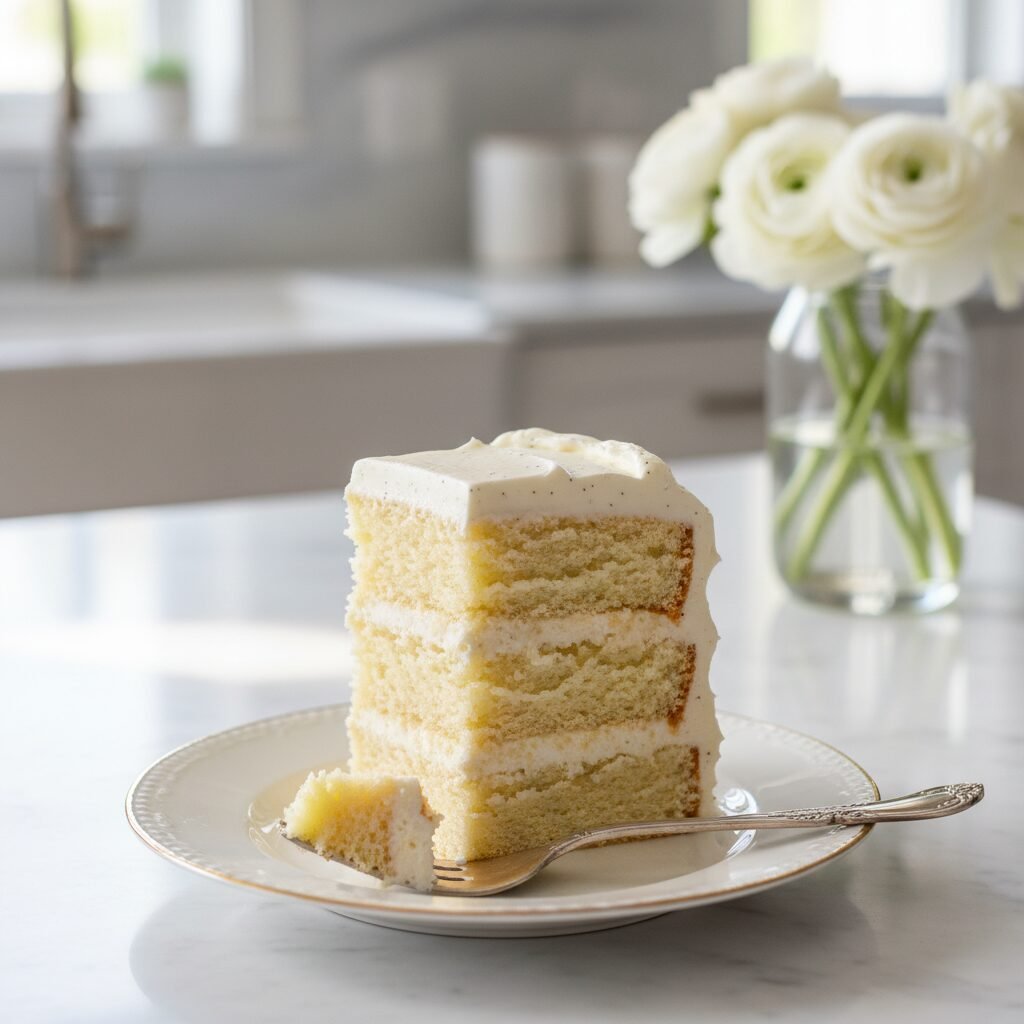
- 11. Assemble: Place one cake layer on your serving plate. Spread a generous layer of frosting on top. Repeat with the second and third layers. Cover the top and sides of the cake with the remaining frosting. Garnish with fresh strawberries if desired.
Expert Cooking Tips
- ✓Room Temperature Ingredients: Ensure your butter, eggs, sour cream, and milk are all at room temperature. This creates an emulsion that traps air, leading to a fluffier cake.
- ✓Weigh Your Flour: Using a kitchen scale is far more accurate than cups. Excess flour is the number one cause of dry cakes.
- ✓Don’t Skip the Reduction: Using raw strawberry puree will make your frosting runny and unstable. You must cook out the water.
- ✓Cool Completely: Never frost a warm cake. The butter in the frosting will melt, causing the layers to slide.
- ✓Scrape the Bowl: Frequently scrape the bottom and sides of your mixing bowl to ensure all ingredients are evenly incorporated.
- ✓Cake Strips: If you have them, use damp cake strips around your pans to ensure flat, even layers without doming.
Substitutions and Variations
If you do not have cake flour on hand, you can make a DIY version by measuring 1 cup of all-purpose flour, removing 2 tablespoons, and replacing them with 2 tablespoons of cornstarch. Sift this mixture twice before using. For the sour cream, full-fat plain Greek yogurt is an excellent 1:1 substitute that provides similar acidity and moisture. If you need to make this dairy-free, use a high-quality plant-based butter stick (not tub margarine) and a dairy-free milk like almond or soy; replace the sour cream with a dairy-free yogurt alternative. For the frosting, frozen strawberries work just as well as fresh ones for the reduction—just thaw them slightly before pureeing. If you prefer a different berry, raspberries or blackberries can be used following the exact same reduction method to control the moisture content.
Common Mistakes to Avoid
The most common mistake when baking this cake is overmixing the batter once the flour has been added. Overmixing develops the gluten excessively, turning a tender cake into a tough, rubbery loaf. Stop mixing as soon as the white streaks of flour disappear. Another pitfall is opening the oven door too early. This can cause the temperature to drop suddenly, leading the cake to collapse in the center. Wait until at least 25 minutes have passed before checking. Regarding the frosting, a frequent error is adding the strawberry reduction while it is still warm. This will immediately melt the butter, resulting in a soupy mess that cannot be salvaged. Patience is key—let the reduction cool completely to room temperature or chill it briefly in the fridge.
Serving Suggestions
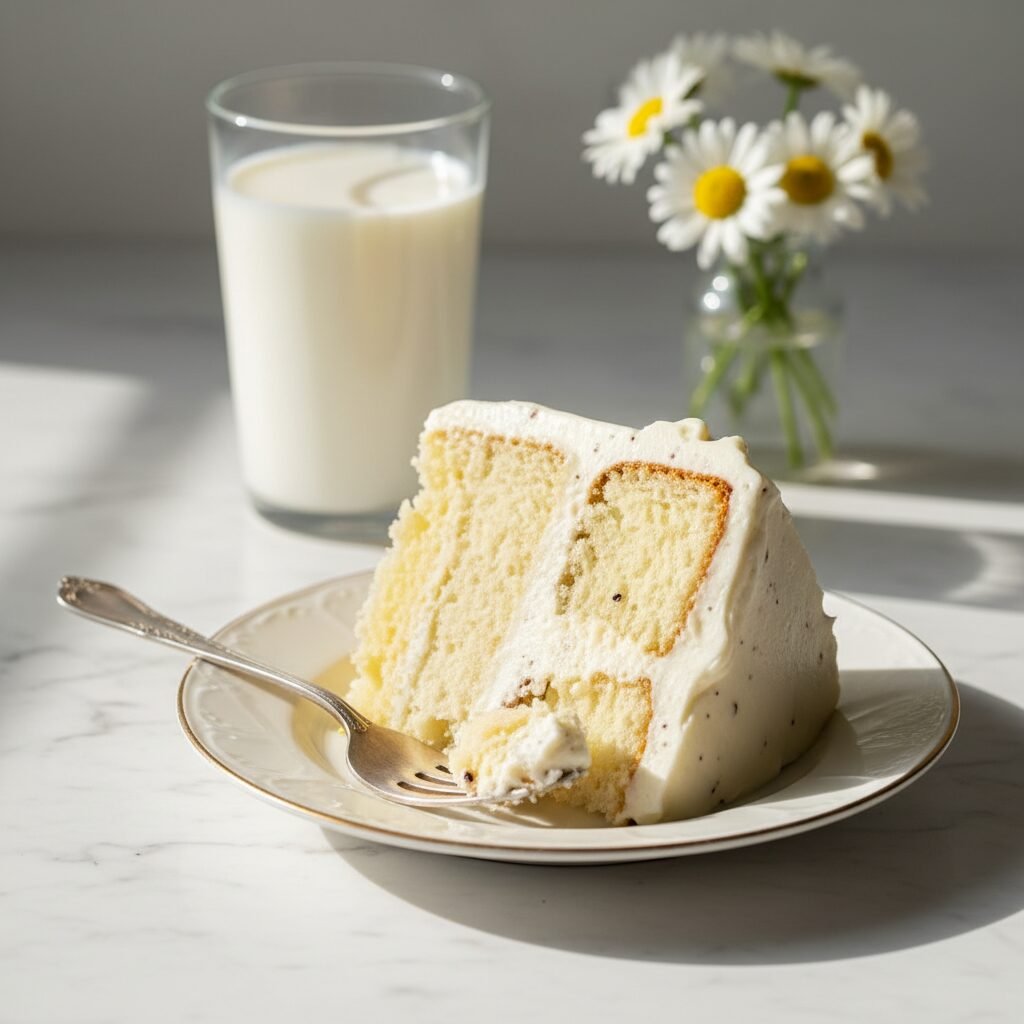
This cake is a showstopper on its own, but it shines even brighter when served with specific accompaniments. Slice it generously and serve on delicate dessert plates. A glass of cold milk is the classic pairing, balancing the sweetness of the buttercream. for a more adult gathering, a glass of chilled Prosecco or a Rosé pairs beautifully with the strawberry notes. If you want to add texture, sprinkle some crushed freeze-dried strawberries or white chocolate shavings on top of the cake just before serving. For a summer birthday, serve alongside a scoop of high-quality vanilla bean ice cream or a dollop of freshly whipped cream to cut through the richness.
Storage and Reheating Tips
Because this cake contains dairy in both the batter and the frosting, it is best stored in a cool environment. It can sit at cool room temperature (below 70°F/21°C) in an airtight cake carrier for up to 2 days. If your kitchen is warm, or for longer storage, keep the cake in the refrigerator for up to 5 days. However, butter-based cakes can feel dense when cold, so always let the slices sit at room temperature for 30-60 minutes before eating to revive the soft texture. You can also freeze the cake layers (unfrosted) for up to 3 months by wrapping them tightly in plastic wrap and then foil. The finished frosted cake can also be frozen; place it in the freezer uncovered for an hour to set the frosting, then wrap tightly.
Nutrition Facts (Estimated)
| Serving Size | 1 slice |
| Calories | 580 |
| Fat | 28g |
| Saturated Fat | 16g |
| Unsaturated Fat | 10g |
| Trans Fat | 0.5g |
| Cholesterol | 85mg |
| Sodium | 310mg |
| Carbohydrates | 76g |
| Fiber | 1g |
| Sugar | 42g |
| Protein | 5g |
Frequently Asked Questions
Can I make this cake into cupcakes instead?
Yes, absolutely! This batter will yield approximately 24-30 standard cupcakes. Bake them at 350°F (175°C) for 18-22 minutes, or until a toothpick comes out clean.
Why did my cake sink in the middle?
Sinking is usually caused by underbaking (the structure wasn’t set yet), opening the oven door too early, or using expired baking powder/soda. Ensure your oven temperature is accurate using an oven thermometer.
Can I use fresh strawberries between the layers?
You can, but be cautious. Fresh sliced strawberries release moisture which can make the cake soggy if stored for too long. If you do this, assemble the cake on the day you plan to serve it.
My frosting is curdled. How do I fix it?
If the frosting looks separated, it’s likely due to temperature differences (butter too cold or reduction too cold/hot). You can fix this by taking a scoop of the frosting, melting it in the microwave, and pouring it back into the mixer while whipping on high.
Do I really need both butter and oil?
For the best texture, yes. Butter provides the delicious flavor we associate with birthday cake, while oil coats the flour proteins better to prevent toughness and keeps the cake moist for days.
Can I use store-bought strawberry jam instead of the reduction?
It is not recommended. Jam is much sweeter and has a different consistency due to added pectin and sugar. It may make your frosting overly sweet and less stable. The reduction offers a pure, intense fruit flavor.
Is it necessary to sift the cake flour?
Yes. Cake flour is very fine and clumps easily. Sifting ensures it distributes evenly into the batter, preventing lumps and ensuring a light, airy rise.
Can I make the cake layers ahead of time?
Yes, baking the layers a day in advance is actually beneficial as it makes them easier to handle. Wrap the cooled layers in plastic wrap and leave them at room temperature overnight, or freeze them for longer storage.
Conclusion
In a world of instant mixes and grocery store bakeries, taking the time to bake a scratch-made Moist Vanilla Birthday Cake with Strawberry Frosting is an act of love. The aroma of vanilla filling your kitchen, the process of whipping butter and sugar into a cloud, and the joy of spreading that vibrant, natural pink frosting are all part of the celebration. This recipe bridges the gap between nostalgic comfort and gourmet quality, offering a texture and flavor profile that simply cannot be bought in a box. Whether you are a seasoned baker or a novice in the kitchen, this recipe is designed to guide you to success. So, preheat your oven, gather your ingredients, and prepare to bake a memory that your friends and family will talk about for years to come. Happy baking!