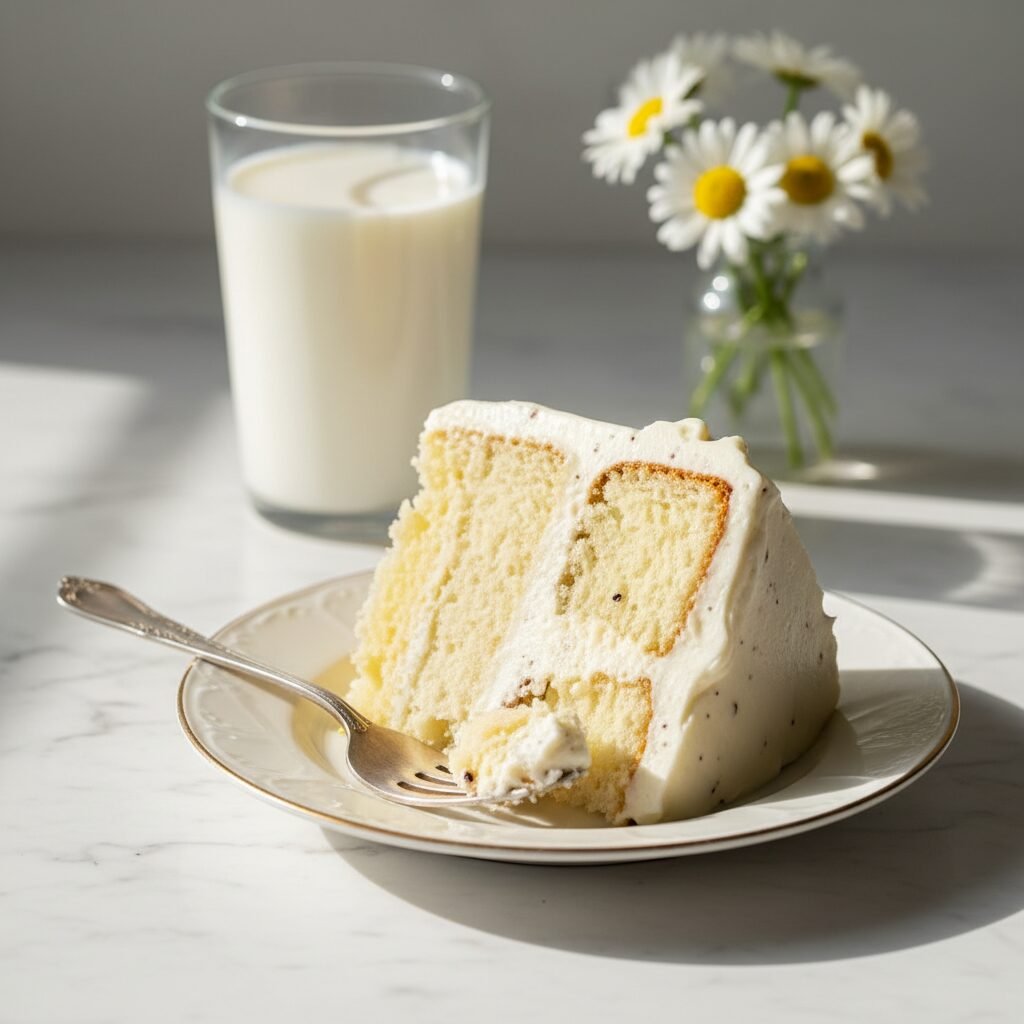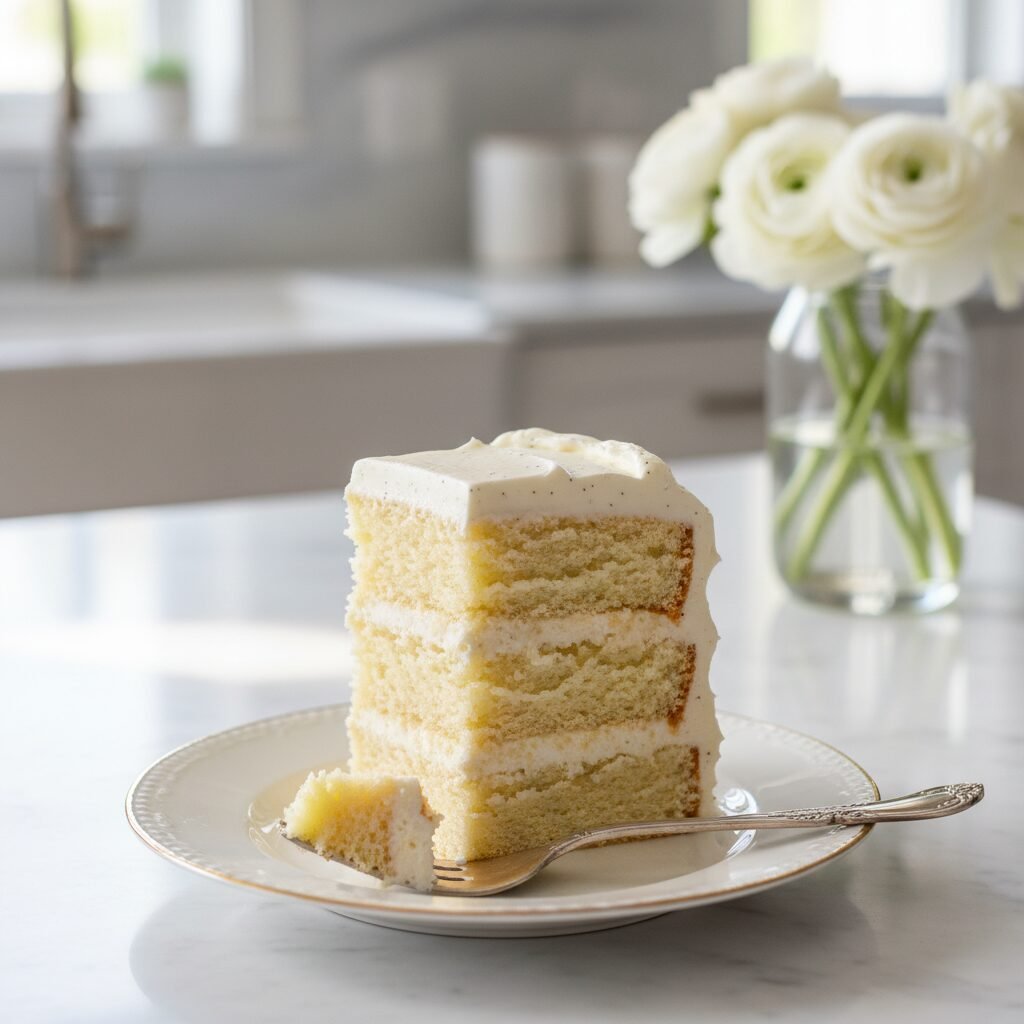

Moist Vanilla Birthday Cake With Whipped Cream Frosting Recipe
Experience the pure joy of a classic birthday celebration with this incredibly moist vanilla cake recipe. Featuring a tender, melt-in-your-mouth crumb and topped with a cloud-like, stabilized whipped cream frosting, this cake strikes the perfect balance between lightness and indulgence for your special day.
30 minutes
30 minutes
1 hour 30 minutes
12-14 servings
Dessert
Baking
American
Vegetarian
There is something undeniably magical about a classic vanilla birthday cake. It is the centerpiece of childhood memories, the grand finale of celebrations, and a symbol of pure, unadulterated joy. However, finding the perfect recipe that balances a sturdy structure with a truly moist texture can be a lifelong quest for many home bakers. Too often, vanilla cakes end up dry, dense, or lacking in flavor, relying heavily on sugary frosting to compensate. This recipe changes everything. We are ditching the dry, crumbly textures of the past for a cake that stays soft for days. The secret lies in a carefully calibrated balance of fats and the use of specific dairy ingredients that tenderize the crumb. Unlike heavy buttercream-laden cakes that can leave you feeling sluggish, this masterpiece is adorned with a stabilized whipped cream frosting. It is light, airy, and just sweet enough to complement the vanilla bean notes without overpowering them. This isn’t just a cake; it is a celebration of texture and flavor. Whether you are baking for a first birthday, a golden jubilee, or just a Tuesday night craving, this moist vanilla cake with whipped cream frosting promises to be the best version you have ever tasted. Get ready to impress your guests and perhaps even outshine the presents.
History & Origins
The concept of the birthday cake has deep roots in history, dating back to ancient Rome, though those early cakes were more bread-like and sweetened with honey. The modern iteration of the birthday cake, specifically with candles, is widely believed to have originated in Germany during the 18th century with the celebration of ‘Kinderfest,’ a birthday festival for children. Unlike the rich, dense fruitcakes of the era, these cakes were lighter and sweeter, though still yeast-based. The true revolution in cake baking came in the mid-19th century with the invention of chemical leavening agents like baking soda and baking powder. This innovation allowed home cooks to create lighter, fluffier sponges without the long rising times required by yeast. The vanilla cake as we know it became a staple in American households in the 20th century, coinciding with the mass availability of pure vanilla extract and refined sugar. The tradition of whipped cream frosting has European influences, particularly from the French ‘Crème Chantilly,’ but became a popular lighter alternative to American buttercream in the post-war era when refrigeration became standard in households. Today, the vanilla birthday cake stands as a global icon of celebration, evolving from simple sweetened breads to the complex, chemically perfected sponges we enjoy today.
Why This Recipe Works
This recipe succeeds where others fail due to three critical scientific principles: fat blending, acid tenderization, and stabilization. First, we utilize a blend of both unsalted butter and neutral oil. Butter provides that undeniable, rich flavor that oil lacks, while oil remains liquid at room temperature, ensuring the cake stays sensationally moist and soft long after it has cooled. Relying solely on butter can lead to a dry cake once it returns to room temperature, but the oil prevents this. Second, the inclusion of buttermilk is non-negotiable. The acidity in buttermilk breaks down the long strands of gluten in the flour, resulting in a significantly more tender crumb, while also reacting with the baking soda to provide a superior lift. Finally, the whipped cream frosting is ‘stabilized’ using a small amount of mascarpone cheese or gelatin. Regular whipped cream weeps and loses volume over time. By incorporating a stabilizer, we create a frosting that holds its shape and pipeable definition for days without turning into a soupy mess, giving you the mouthfeel of fresh cream with the durability of a buttercream.
Why You’ll Love This Recipe
- ✓Uses a blend of butter and oil for maximum moisture and flavor retention.
- ✓Stabilized whipped cream frosting holds its shape for days without melting.
- ✓Buttermilk ensures a tender, soft crumb that never tastes dry.
- ✓Perfectly balanced sweetness that appeals to both kids and adults.
- ✓Versatile base recipe that can be adapted for cupcakes or tiered cakes.
Equipment You’ll Need
- ✓Stand mixer with paddle and whisk attachments
- ✓Two 8-inch or 9-inch round cake pans
- ✓Mixing bowls
- ✓Whisk
- ✓Rubber spatula
- ✓Parchment paper
- ✓Wire cooling rack
- ✓Offset spatula
- ✓Piping bag and tips (optional)
Ingredients
- ✓2 1/2 cups Cake flour (sifted)
- ✓2 cups Granulated sugar
- ✓1 tbsp Baking powder
- ✓1/2 tsp Baking soda
- ✓1 tsp Fine sea salt
- ✓3/4 cup Unsalted butter (room temperature, cut into cubes)
- ✓1/4 cup Vegetable oil (or canola oil)
- ✓3 Large eggs (room temperature)
- ✓2 tsp Pure vanilla extract
- ✓1 cup Buttermilk (room temperature)
- ✓2 cups Heavy whipping cream (cold)
- ✓1/2 cup Powdered sugar (sifted)
- ✓1/4 cup Mascarpone cheese (cold, for stabilization)
- ✓1 tsp Vanilla bean paste (for frosting)
Instructions
- 1. Preheat your oven to 350°F (175°C). Grease two 8-inch or 9-inch round cake pans with butter or cooking spray, line the bottoms with parchment paper, and grease the paper. Dust with a little flour, tapping out the excess.
- 2. In a medium bowl, whisk together the cake flour, baking powder, baking soda, and salt until well combined. Set aside.
- 3. In the bowl of a stand mixer fitted with the paddle attachment, beat the room temperature butter and vegetable oil together on medium-high speed for about 2 minutes until creamy.
- 4. Gradually add the granulated sugar and continue beating on medium-high speed for 4-5 minutes until the mixture is pale, light, and fluffy. Do not rush this step; aeration is key.
- 5. Reduce the mixer speed to low and add the eggs one at a time, mixing just until the yolk disappears before adding the next. Stir in the vanilla extract.
- 6. Add one-third of the flour mixture to the butter mixture and mix on low speed until just combined. Pour in half of the buttermilk and mix gently. Repeat with half of the remaining flour, then the rest of the buttermilk, ending with the final portion of flour. Mix only until no streaks of dry flour remain. Do not overmix.
- 7. Divide the batter evenly between the prepared pans. smooth the tops with a spatula. Tap the pans gently on the counter to release large air bubbles.
- 8. Bake for 28-32 minutes, or until a toothpick inserted into the center comes out clean or with just a few moist crumbs. The tops should spring back when lightly touched.
- 9. Remove from the oven and let the cakes cool in the pans for 10 minutes. Then, carefully turn them out onto a wire rack to cool completely before frosting.
- 10. To make the frosting: Chill your mixer bowl and whisk attachment in the freezer for 10 minutes. Place the cold heavy cream, powdered sugar, vanilla bean paste, and mascarpone cheese into the chilled bowl.
- 11. Whisk on low speed to combine, then gradually increase to high speed. Whip until stiff peaks form. Watch closely to avoid over-whipping into butter.
- 12. Once the cakes are completely cool, place one layer on a serving plate. Spread a generous layer of whipped cream frosting over the top. Place the second layer on top. Cover the top and sides with the remaining frosting. Decorate as desired.
Expert Cooking Tips
- ✓Ensure all cold ingredients (butter, eggs, buttermilk) are at room temperature before starting the batter to prevent curdling.
- ✓Weigh your flour using a kitchen scale for the most accurate results; too much flour is the main cause of dry cakes.
- ✓Do not skip the parchment paper; it guarantees your cake layers come out of the pan perfectly intact.
- ✓Stop mixing the batter as soon as the flour is incorporated to keep the cake tender.
- ✓Chill the frosted cake for 20 minutes before slicing to set the whipped cream for cleaner cuts.
Substitutions and Variations
If you do not have cake flour, you can make a substitute by removing 2 tablespoons of all-purpose flour from every cup and replacing it with 2 tablespoons of cornstarch, sifting several times. If buttermilk is unavailable, create a sour milk alternative by adding 1 tablespoon of white vinegar or lemon juice to a cup of whole milk and letting it sit for 5 minutes. For the vegetable oil, melted coconut oil or grapeseed oil are excellent alternatives. In the frosting, if you cannot find mascarpone cheese, you can use full-fat cream cheese (softened slightly) or a teaspoon of unflavored gelatin dissolved in water to stabilize the whipped cream. For a gluten-free version, use a high-quality 1:1 gluten-free baking flour blend that includes xanthan gum.
Common Mistakes to Avoid
The most common mistake is overmixing the batter after adding the flour, which develops gluten and results in a tough, rubbery cake rather than a tender one. Another frequent error is frosting the cake before it has cooled completely; even a slightly warm cake will melt the whipped cream instantly, causing the layers to slide. Using cold ingredients straight from the fridge prevents the batter from emulsifying properly, leading to an uneven bake. Finally, opening the oven door too early during baking can cause the center of the cake to collapse due to the sudden drop in temperature.
Serving Suggestions
This cake is a stunning canvas for fresh fruit. Serve it topped with fresh strawberries, raspberries, or sliced peaches to cut through the richness of the cream. For a true birthday extravaganza, cover it in rainbow sprinkles or edible confetti. It pairs beautifully with a scoop of vanilla bean ice cream or a hot cup of coffee. If you are serving this at an adult party, a drizzle of raspberry liqueur or a side of champagne makes for an elegant pairing.
Storage and Reheating Tips
Because of the whipped cream frosting, this cake must be stored in the refrigerator. Place it in an airtight cake carrier or cover it gently with plastic wrap (using toothpicks to keep the wrap off the frosting) to prevent it from absorbing fridge odors. It will stay fresh for up to 3 days. Allow slices to sit at room temperature for 15-20 minutes before eating for the best texture. Unfrosted cake layers can be wrapped tightly in plastic wrap and foil and frozen for up to 3 months. Thaw frozen layers in the refrigerator overnight before frosting.
Nutrition Facts (Estimated)
| Serving Size | 1 slice |
| Calories | 450 |
| Fat | 24g |
| Saturated Fat | 14g |
| Unsaturated Fat | 8g |
| Trans Fat | 0g |
| Cholesterol | 85mg |
| Sodium | 210mg |
| Carbohydrates | 52g |
| Fiber | 0.5g |
| Sugar | 28g |
| Protein | 5g |
Frequently Asked Questions
Can I make this cake ahead of time?
Yes, you can bake the cake layers a day in advance. Wrap them tightly in plastic wrap once cooled and store them at room temperature. Make the whipped cream frosting on the day you plan to serve for the best volume and texture.
Why did my cake sink in the middle?
Sinking usually happens if the oven door was opened too early, the leavening agents (baking powder/soda) were expired, or the batter was over-beaten, incorporating too much air that collapsed during baking.
Can I use all-purpose flour instead of cake flour?
Yes, but the texture will be slightly denser and more bread-like. Cake flour has less protein, which yields a finer, softer crumb essential for this recipe’s ‘melt-in-your-mouth’ quality.
How do I stabilize the whipped cream without cheese?
You can use unflavored gelatin. Bloom 1 teaspoon of gelatin in 4 teaspoons of cold water, then gently melt it in the microwave (5-10 seconds). Let it cool slightly and whisk it into the cream as it begins to thicken.
Can I turn this recipe into cupcakes?
Absolutely. This recipe yields approximately 24 standard cupcakes. Bake them at 350°F for 18-22 minutes, checking for doneness with a toothpick.
Is salted butter okay to use?
We recommend unsalted butter to control the sodium level. If you only have salted butter, reduce the added salt in the recipe to 1/4 teaspoon.
My frosting is grainy, what happened?
Grainy whipped cream is a sign of over-whipping, where the fat has started to separate into butter. If it’s only slightly grainy, you might be able to save it by folding in a little more cold liquid cream by hand.
Can I use low-fat milk instead of buttermilk?
It is not recommended. The fat and acid in buttermilk are crucial for the texture. If you must, use whole milk with vinegar added, but avoid skim or low-fat milk as the cake will be less rich.
Conclusion
This Moist Vanilla Birthday Cake with Whipped Cream Frosting is more than just a dessert; it is a reliable, crowd-pleasing classic that brings warmth and nostalgia to any table. The combination of the tender, buttery crumb and the light, airy frosting creates a sensory experience that heavy, store-bought cakes simply cannot match. By following the tips on ingredient temperature and stabilization, you guarantee a bakery-quality result right in your own kitchen. Whether you are blowing out candles or simply treating yourself to a slice of happiness, this recipe is sure to become a cherished favorite in your baking repertoire. Happy baking!