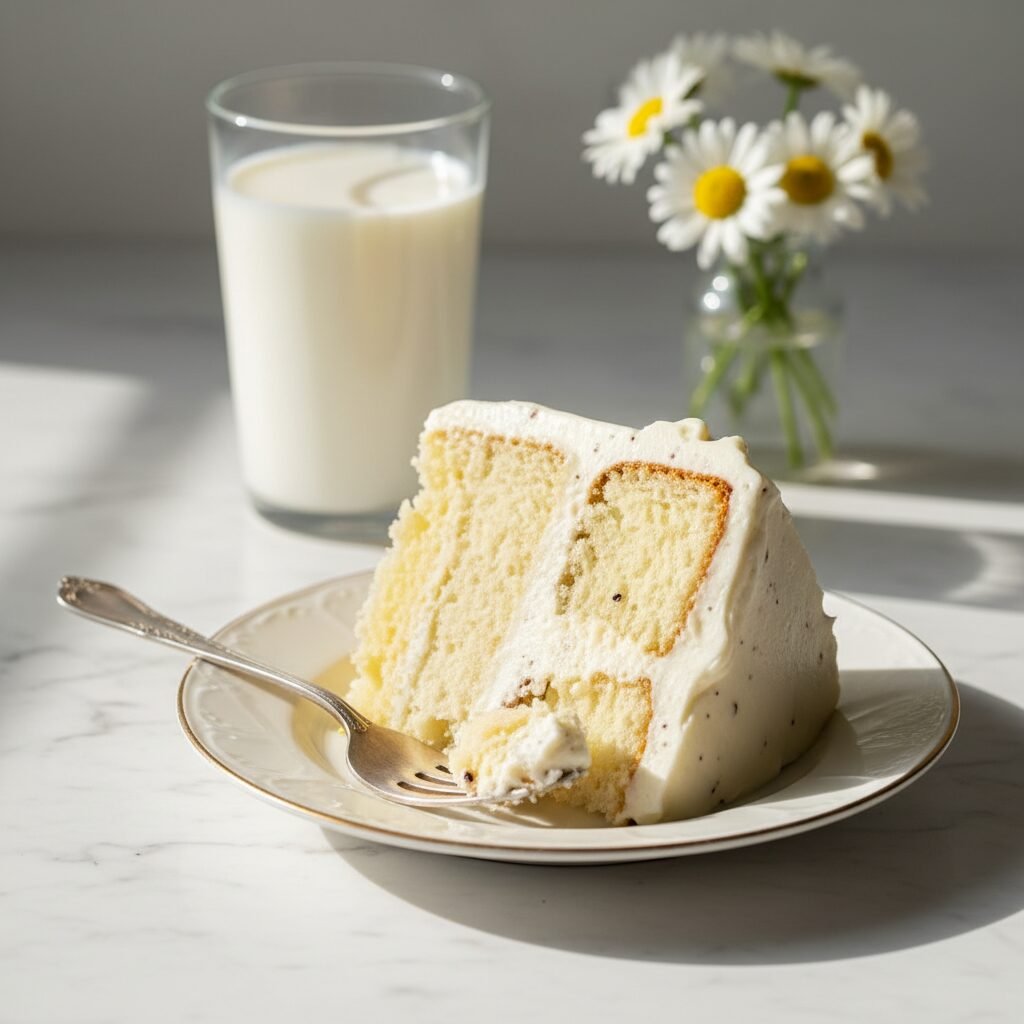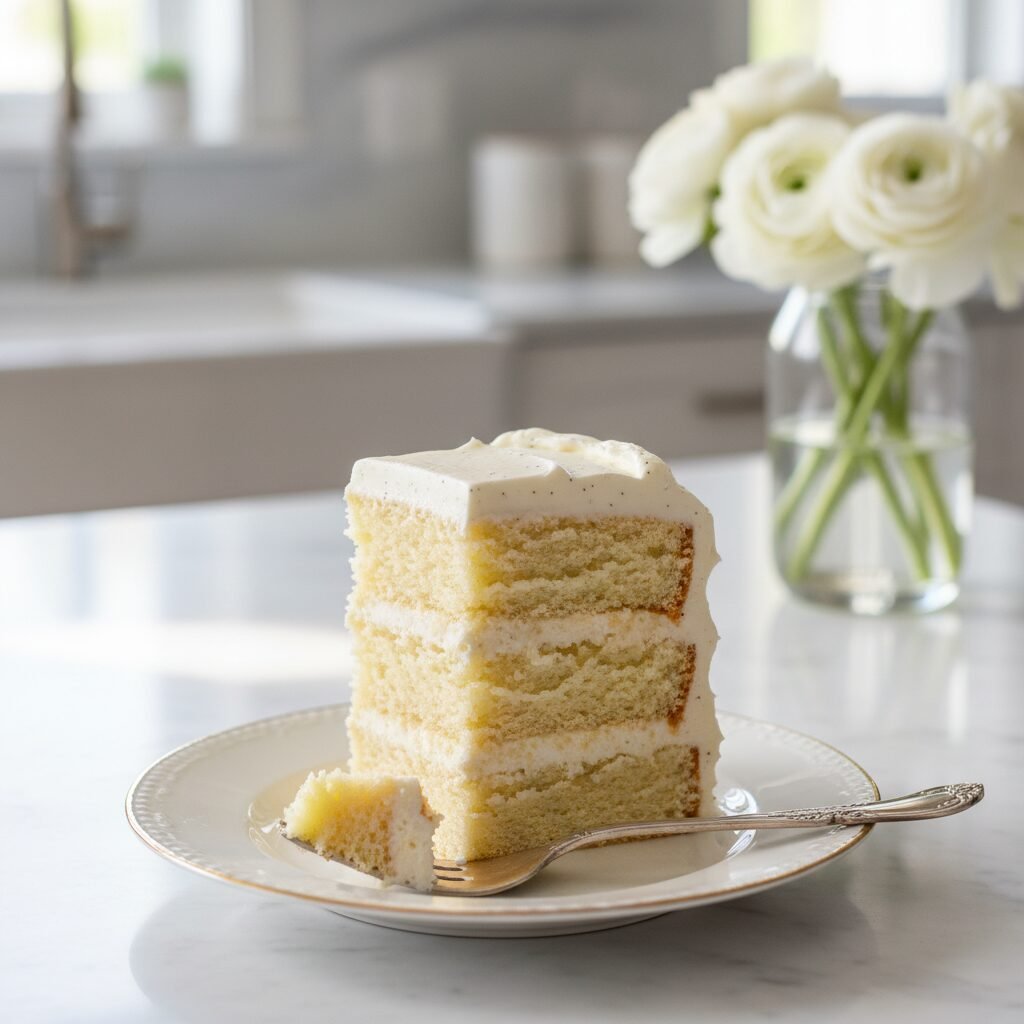

Moist Vanilla Layer Cake For Small Family Recipe
Finally, a celebration-worthy dessert designed for smaller gatherings! This small batch vanilla layer cake yields a tender, velvety crumb and rich vanilla flavor without the leftovers of a standard size, making it the perfect sweet treat for a family of four to six.
30 minutes
25 minutes
55 minutes
6-8 Servings
Dessert
Baking
American
Vegetarian
In the world of baking, the classic vanilla cake is often the standard by which all other desserts are measured. However, for small families, couples, or intimate dinner parties, a standard 9-inch, three-layer cake is simply too much food. It often leads to stale leftovers or the guilt of tossing out hard work. Enter the solution: The Ultimate Moist Small Batch Vanilla Layer Cake. This recipe is not just a halved version of a larger recipe; it has been meticulously engineered to maintain the structural integrity and moisture of a bakery-style cake while fitting perfectly into 6-inch pans.
The allure of this cake lies in its texture. We are moving away from the dry, cornbread-like texture that often plagues homemade vanilla cakes. Instead, we are aiming for a ‘plush’ crumb—one that is soft, slightly dense but fluffy, and melts in your mouth. The flavor profile is pure and nostalgic, relying on high-quality vanilla extract and the rich, buttery undertones of sweet cream butter. Whether you are celebrating a birthday, an anniversary, or simply the fact that it is Friday, this cake brings the grandeur of a celebration into a manageable, delicious scale. It is elegant enough for a party but easy enough for a weekend baking project with the kids. Prepare to fall in love with baking on a smaller scale, where quality truly trumps quantity.
History & Origins
The history of the vanilla cake is a journey through the evolution of milling, global trade, and chemical leavening. Before the mid-19th century, ‘cakes’ were often yeast-leavened breads enriched with dried fruits and nuts, or sponge cakes leavened solely by the arduous task of beating eggs for nearly an hour. The texture we recognize today as a ‘butter cake’ or ‘layer cake’ only became possible with the invention of baking powder around the 1840s and 1850s. This chemical leavener allowed for a rise that was reliable and created a finer, more tender crumb than yeast ever could.
Simultaneously, the flavor profile of cakes was shifting. For centuries, spices like nutmeg, mace, and caraway were the dominant flavorings because they were shelf-stable. Vanilla, an orchid native to Mexico, was a rare luxury. It wasn’t until the mid-to-late 19th century, when vanilla began to be cultivated in places like Madagascar and Réunion (thanks to the discovery of hand-pollination techniques), that it became more accessible to the home baker. By the 20th century, with the rise of industrial food production and the availability of consistent white flour and refined sugar, the white or yellow vanilla cake became an icon of American birthdays and weddings. This ‘small batch’ iteration pays homage to that history, scaling down the excess of the post-war era ‘bigger is better’ mentality to suit modern, smaller household sizes while retaining the classic technique.
Why This Recipe Works
Achieving a moist cake in a small batch requires a delicate balance of fats and liquids. Many vanilla cakes turn out dry because they rely 100% on butter. While butter provides the best flavor, it is about 18-20% water, which evaporates during baking. Oil, however, is 100% fat and remains liquid at room temperature, coating the flour proteins to inhibit gluten formation and keeping the cake moist for days. This recipe utilizes a hybrid fat method: we use butter for that unmistakable flavor and a neutral oil to ensure long-lasting moisture.
Furthermore, the inclusion of sour cream is scientifically crucial. Sour cream is acidic; this acidity tenderizes the gluten strands in the flour, resulting in a softer crumb. It also adds thickness to the batter, which helps suspend the air bubbles created during the creaming process, ensuring the cake rises evenly rather than collapsing. Finally, we use cake flour instead of all-purpose flour. Cake flour has a lower protein content (usually around 7-9%), which means less gluten development. This is essential for a cake that is meant to be tender and velvety rather than chewy like bread. The combination of these elements creates a foolproof batter that is forgiving and consistently delicious.
Why You’ll Love This Recipe
- ✓Perfect 6-inch size reduces waste for small families.
- ✓Hybrid butter-oil method ensures maximum moisture and flavor.
- ✓Sour cream addition creates a tender, velvety crumb.
- ✓Sturdy enough for stacking but soft enough to melt in your mouth.
- ✓Uses simple pantry staples with no obscure ingredients.
- ✓Pairs perfectly with any frosting, from buttercream to ganache.
Equipment You’ll Need
- ✓Two 6-inch round cake pans
- ✓Electric stand mixer or hand mixer
- ✓Mixing bowls
- ✓Rubber spatula
- ✓Measuring cups and spoons
- ✓Wire cooling rack
- ✓Parchment paper
- ✓Offset spatula
Ingredients
- ✓1 1/2 cups cake flour, sifted
- ✓1 1/2 tsp baking powder
- ✓1/4 tsp salt
- ✓1/2 cup unsalted butter, room temperature
- ✓2 tbsp vegetable or canola oil
- ✓3/4 cup granulated white sugar
- ✓2 large eggs, room temperature
- ✓1 1/2 tsp pure vanilla extract
- ✓1/3 cup full-fat sour cream, room temperature
- ✓1/4 cup whole milk, room temperature
Instructions
- Preheat your oven to 350°F (175°C). Grease two 6-inch round cake pans with butter and line the bottoms with parchment paper rounds. Dust the sides with flour and tap out the excess.
- In a medium mixing bowl, whisk together the sifted cake flour, baking powder, and salt until well combined. Set aside.
- In the bowl of a stand mixer fitted with the paddle attachment (or a large bowl using a hand mixer), beat the room temperature butter, oil, and sugar on medium-high speed for about 3-4 minutes. The mixture should look pale, fluffy, and aerated.
- Reduce the mixer speed to low and add the eggs one at a time, mixing just until the yellow yolk disappears before adding the next. Scrape down the sides and bottom of the bowl with a rubber spatula.
- Mix in the vanilla extract and the sour cream until combined. The mixture might look slightly curdled at this stage; this is normal.
- With the mixer on the lowest speed, add half of the dry flour mixture. Mix until just barely combined.
- Pour in the milk and mix gently.
- Add the remaining flour mixture and mix until just combined. Do not over-mix! Use a spatula to finish folding the batter by hand to ensure no flour pockets remain at the bottom.
- Divide the batter evenly between the two prepared cake pans. Smooth the tops with an offset spatula.
- Bake for 23-28 minutes, or until a toothpick inserted into the center comes out clean or with just a few moist crumbs attached. The tops should be pale golden and spring back when lightly touched.
- Allow the cakes to cool in the pans for 10 minutes. Then, run a knife around the edges and invert them onto a wire rack to cool completely before frosting.
Expert Cooking Tips
- ✓Ingredients MUST be at room temperature. Cold eggs or milk will shock the butter, causing the batter to curdle and the cake to bake unevenly.
- ✓Measure flour correctly. Ideally, use a kitchen scale. If using cups, spoon the flour into the cup and level it off; do not scoop directly from the bag.
- ✓Don’t skip the parchment paper. It guarantees your cakes will release from the pan without breaking.
- ✓Tap the pans on the counter before baking to release any large air bubbles trapped in the batter.
- ✓Check for doneness early. Small cakes can dry out quickly if overbaked by even 2-3 minutes.
- ✓Chill the layers before frosting. A cold cake is much easier to frost and produces fewer crumbs.
- ✓Use clear vanilla extract if you want a stark white cake, though pure vanilla extract offers superior flavor.
Substitutions and Variations
Baking is chemistry, so substitutions should be made with caution. If you do not have cake flour, you can make a DIY version: measure 1 1/2 cups of all-purpose flour, remove 3 tablespoons, and replace them with 3 tablespoons of cornstarch. Sift this mixture twice. For the sour cream, full-fat plain Greek yogurt is an excellent 1:1 substitute that provides similar acidity and moisture. If you need to be dairy-free, you can use a high-quality plant-based butter stick and unsweetened almond milk mixed with a teaspoon of vinegar (to mimic buttermilk), though the texture may be slightly less rich. The vegetable oil can be swapped for any neutral oil like grapeseed or melted coconut oil, but avoid olive oil as the flavor is too strong for a delicate vanilla cake.
Common Mistakes to Avoid
The most common mistake is over-mixing the batter once the flour is added. This activates the gluten and results in a dense, rubbery cake rather than a tender one. Stop mixing as soon as the white streaks of flour disappear. Another frequent error is using a pan size other than 6-inch rounds without adjusting baking time. If you try to bake this batter in a single 8-inch pan, it will be very thin and dry out. Lastly, opening the oven door too often during baking causes temperature fluctuations that can make the center of the cake sink. Trust your timer and only check towards the end.
Serving Suggestions
This cake is incredibly versatile. For a classic birthday vibe, frost it with a chocolate fudge buttercream and add colorful sprinkles. For a lighter summer dessert, use fresh whipped cream and layer with macerated strawberries or fresh raspberries. It also pairs beautifully with lemon curd filling and a vanilla bean Swiss meringue buttercream for a more sophisticated flavor profile. Serve slices at room temperature, as cold butter-based cakes can taste firm.
Storage and Reheating Tips
An unfrosted cake can be wrapped tightly in plastic wrap and stored at room temperature for 2 days or frozen for up to 3 months. If the cake is frosted, it can stay at room temperature for 3 days (covered with a cake dome). If you are in a hot climate, store the frosted cake in the fridge, but be sure to remove it 1-2 hours before serving to allow the buttercream and cake crumb to soften. Cut slices should have a piece of plastic wrap pressed directly against the crumb to prevent drying out.
Nutrition Facts (Estimated)
| Serving Size | 1 slice (1/8th of cake) |
| Calories | 380 |
| Fat | 18g |
| Saturated Fat | 10g |
| Unsaturated Fat | 8g |
| Trans Fat | 0g |
| Cholesterol | 65mg |
| Sodium | 210mg |
| Carbohydrates | 48g |
| Fiber | 1g |
| Sugar | 28g |
| Protein | 4g |
Frequently Asked Questions
Can I double this recipe for standard 9-inch pans?
Yes, you can double the ingredients exactly to fill two 8-inch or 9-inch pans. You will need to increase the baking time to approximately 30-35 minutes.
Why did my cake sink in the middle?
This usually happens if the oven door was opened too early, the oven wasn’t fully preheated, or there was too much leavening (baking powder). Ensure your baking powder is fresh and measured accurately.
Can I make this into cupcakes?
Absolutely. This batter makes approximately 10-12 standard cupcakes. Bake them at 350°F for 15-18 minutes.
Why is my cake dry?
Dryness usually comes from over-baking or measuring too much flour. Use the spoon-and-level method for flour and check the cake a few minutes before the timer goes off.
Can I use salted butter?
You can, but you should reduce the added salt in the recipe to just a pinch. Unsalted butter gives you more control over the final flavor.
Do I have to use a mixer?
While a hand mixer or stand mixer yields the best aeration for the butter and sugar, you can mix by hand with a whisk and a lot of elbow grease. Just ensure the butter and sugar are truly pale and fluffy.
How do I get flat cake tops?
You can use ‘cake strips’ soaked in water wrapped around the pan, which cools the edges and promotes even rising. Alternatively, just trim the domes off with a serrated knife before frosting—it’s a great excuse to taste test!
Can I freeze the batter?
No, cake batter with baking powder should be baked immediately after mixing because the chemical reaction begins as soon as the wet and dry ingredients meet.
Conclusion
This Moist Vanilla Layer Cake for Small Families proves that you don’t need a crowd to enjoy a high-quality, homemade dessert. It strikes the perfect chord between convenience and indulgence, offering a bakery-quality crumb in a portion size that fits your life. Whether you are a novice baker looking for a manageable first project or a seasoned pro wanting a quick sweet fix without the excess, this recipe is sure to become a staple in your kitchen. Happy baking!