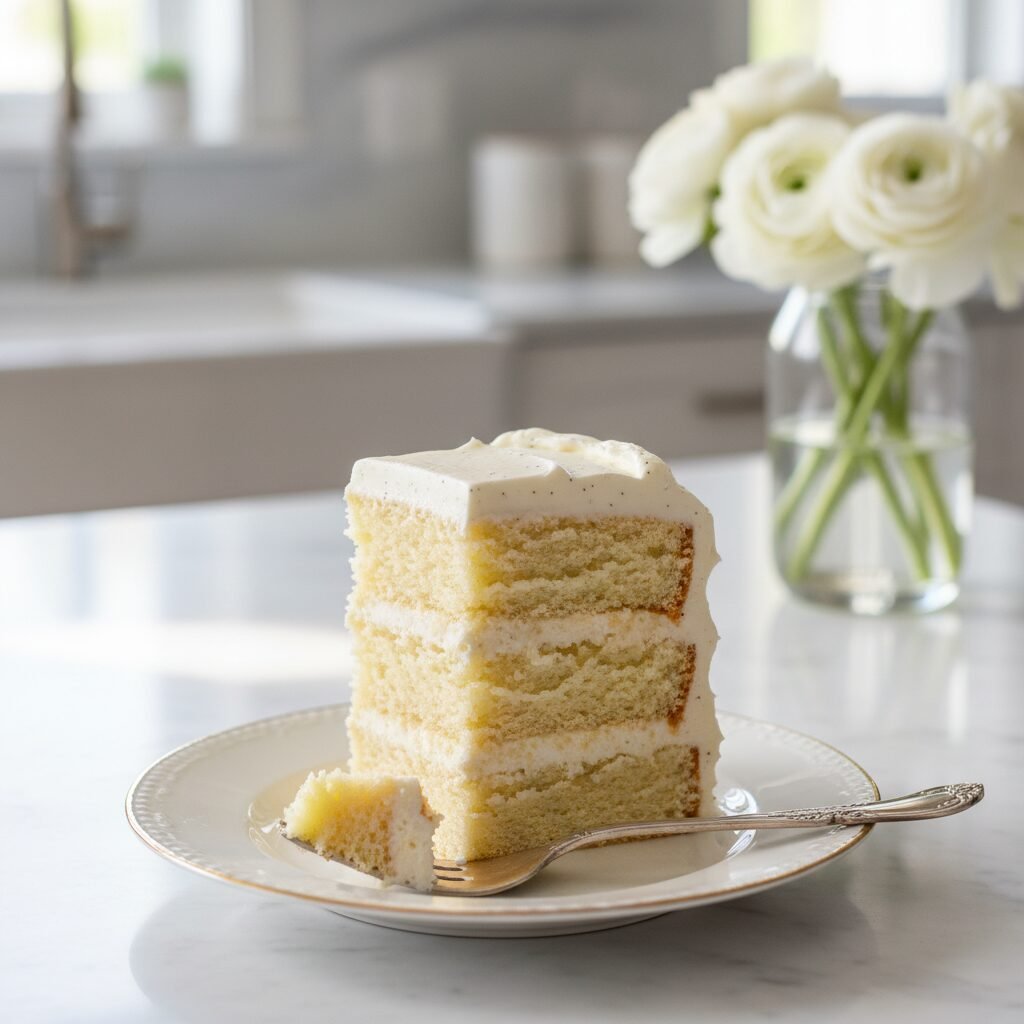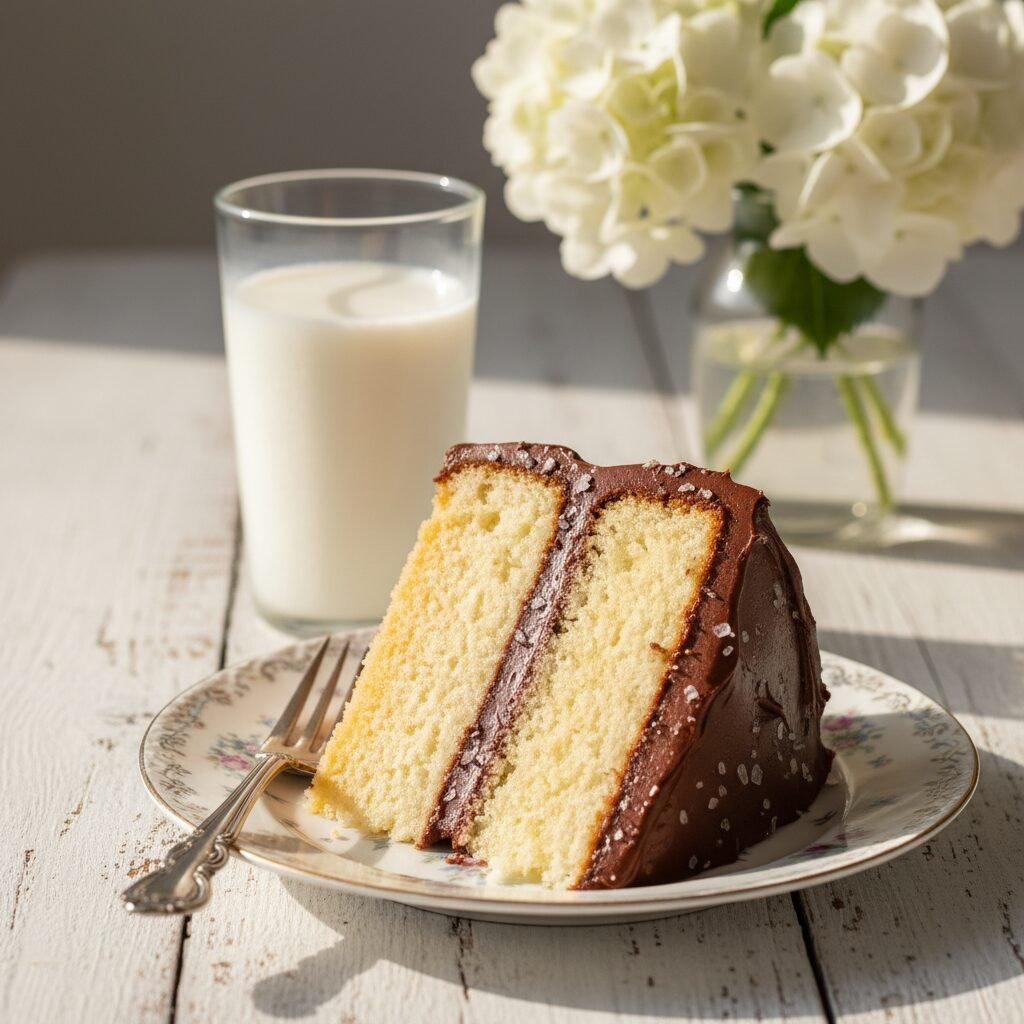
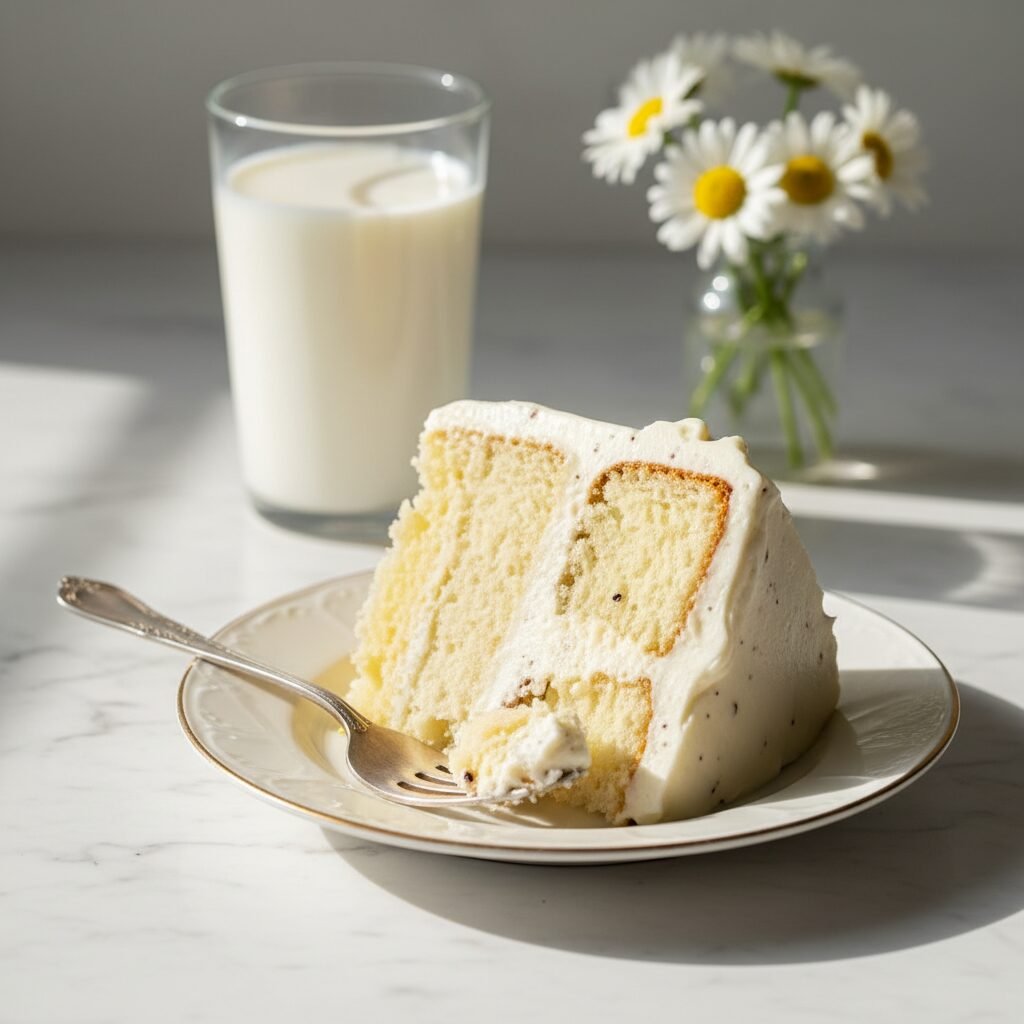
Moist Vanilla Layer Cake Recipe
Discover the secret to the perfect vanilla cake that stays incredibly moist for days. This bakery-style recipe combines the buttery richness you crave with a tender, velvety crumb that pairs perfectly with any frosting. It is the ultimate blank canvas for your baking creativity.
30 minutes
35 minutes
1 hour 5 minutes
12-14 servings (3 8-inch layers)
Dessert
Baking
American
Vegetarian
There is something undeniably nostalgic and comforting about a classic vanilla cake, yet finding the perfect recipe can be a lifelong quest for many home bakers. We have all been there: slicing into a beautiful, towering layer cake only to find it dry, crumbly, or lacking in flavor. A true vanilla cake should not just be a vehicle for frosting; it should stand on its own with a complex, floral vanilla aroma and a texture that melts in your mouth.
This recipe is the result of years of testing, tweaking, and tasting. I wanted to bridge the gap between the sturdy, dense pound cakes of the past and the ultra-light, airy sponge cakes that often lack substance. The goal was a ‘velvet’ crumb—soft and plush, yet sturdy enough to hold up to layers of fruit fillings, curds, or heavy buttercream. This Moist Vanilla Layer Cake is the answer. It uses a specific combination of fats and a unique mixing method to ensure that every bite is tender. Whether you are baking for a birthday, a wedding, or just a Tuesday afternoon craving, this cake delivers a bakery-quality experience right from your home kitchen. The flavor is buttery and rich, amplified by a generous amount of pure vanilla extract, while the texture remains light enough to leave you wanting a second slice. Get ready to ditch the box mix forever, because this scratch-made delight is about to become your new family heirloom recipe.
History & Origins
The history of the vanilla cake is deeply intertwined with the history of baking powder and the global trade of vanilla beans. In the early days of European baking, cakes were leavened primarily with yeast or by mechanically beating eggs to incorporate air, resulting in sponge cakes or heavy, bread-like sweet loaves. It wasn’t until the mid-19th century, with the invention of chemical leavening agents like baking soda and eventually baking powder, that the modern ‘butter cake’ style became possible. This innovation allowed for cakes with a finer, more consistent crumb and a higher rise without the labor-intensive process of beating egg whites for hours.
Vanilla itself, native to Mexico and cultivated by the Totonac people and later the Aztecs, was introduced to Europe by Spanish conquistadors. However, for centuries, it was an incredibly expensive luxury reserved for the aristocracy, often used to flavor chocolate drinks rather than baked goods. It wasn’t until the mid-19th century, when a method for hand-pollinating vanilla orchids was discovered, that vanilla became more accessible. As vanilla extract became a pantry staple in American households in the 20th century, the ‘white cake’ or ‘yellow cake’ flavored with vanilla became the standard for celebrations. The distinction between white and yellow cake lies in the eggs: white cakes use only egg whites for a pristine color and delicate texture, while yellow cakes use whole eggs or extra yolks for richness and a golden hue. This recipe leans towards the yellow cake tradition, utilizing whole eggs to honor that classic, rich, custard-like flavor profile that has defined American birthday parties for generations.
Why This Recipe Works
This recipe succeeds where others fail due to the precise balance of ingredients and the ‘reverse creaming’ technique (also known as the paste method), although a traditional creaming method can also work if done carefully. However, for this specific version, we utilize a hybrid approach that guarantees moisture. First, we use a combination of butter and oil. Butter provides that undeniable, classic flavor that shortening just cannot replicate. However, butter is about 18-20% water, which can evaporate and lead to dryness. Vegetable oil, being 100% fat, remains liquid at room temperature and coats the flour proteins effectively, preventing gluten formation and keeping the cake sensationally moist for days.
Secondly, the use of buttermilk is non-negotiable. The acidity in buttermilk does two critical things: it tenderizes the gluten in the flour, leading to a softer crumb, and it reacts with the baking soda to create a robust rise. We also use cake flour instead of all-purpose flour. Cake flour has a lower protein content, which means less gluten development, resulting in a texture that is silky rather than chewy. Finally, the ratio of sugar to flour is high; sugar is hygroscopic, meaning it attracts and holds onto water molecules, locking moisture into the cake structure during and after baking. This scientific synergy creates a cake that is structurally sound for stacking but texturally divine.
Why You’ll Love This Recipe
- ✓Stays moist for up to 4 days thanks to the butter-oil blend.
- ✓Robust vanilla flavor using pure extract and vanilla bean paste.
- ✓Sturdy enough for fondant or heavy stacking, yet soft to eat.
- ✓Versatile base that pairs with fruit, chocolate, or caramel.
- ✓Beautiful, tight, tender crumb that doesn’t crumble when cut.
Equipment You’ll Need
- ✓Three 8-inch round cake pans
- ✓Stand mixer with paddle attachment or electric hand mixer
- ✓Large mixing bowls
- ✓Kitchen scale
- ✓Sifter or fine-mesh sieve
- ✓Rubber spatula
- ✓Wire cooling racks
- ✓Parchment paper
Ingredients
- ✓3 cups (345g) cake flour, sifted
- ✓2 1/2 teaspoons baking powder
- ✓1/2 teaspoon baking soda
- ✓1 teaspoon fine sea salt
- ✓1 cup (226g) unsalted butter, softened to room temperature
- ✓1/4 cup (60ml) vegetable oil or canola oil
- ✓1 3/4 cups (350g) granulated sugar
- ✓4 large eggs, room temperature
- ✓1 tablespoon pure vanilla extract
- ✓1 teaspoon vanilla bean paste (optional for speckles)
- ✓1 1/4 cups (300ml) buttermilk, room temperature
Instructions
- Preheat your oven to 350°F (175°C). Grease three 8-inch round cake pans with butter or baking spray, line the bottoms with parchment paper rounds, and grease the parchment. Dust with a little flour and tap out the excess.
- In a medium bowl, sift together the cake flour, baking powder, baking soda, and salt. Whisk to ensure the leavening agents are evenly distributed. Set aside.
- In the bowl of a stand mixer fitted with the paddle attachment, beat the softened butter on medium-high speed for about 3 minutes until it is creamy and pale.
- Add the vegetable oil and granulated sugar to the butter. Continue to beat on medium-high speed for another 4-5 minutes. The mixture should look fluffy, white, and aerated. Scrape down the sides and bottom of the bowl.
- Reduce the mixer speed to medium-low. Add the eggs one at a time, beating well after each addition until fully incorporated. Scrape down the bowl again to ensure no streaks of butter remain.
- Stir in the vanilla extract and vanilla bean paste.
- Reduce the mixer speed to low. Add one-third of the flour mixture to the batter and mix just until combined.
- Pour in half of the buttermilk and mix gently.
- Add another third of the flour mixture, followed by the remaining buttermilk, and finish with the final portion of flour. Mix only until the flour streaks disappear. Do not overmix.
- Use a rubber spatula to give the batter one final gentle stir by hand, scraping the bottom to ensure everything is incorporated.
- Divide the batter evenly among the three prepared cake pans (use a kitchen scale for precision). Smooth the tops with an offset spatula.
- Bake for 30-35 minutes, or until a toothpick inserted into the center comes out clean or with just a few moist crumbs attached. The tops should be golden and spring back lightly when touched.
- Remove from the oven and let the cakes cool in the pans for 10-15 minutes. Then, carefully invert them onto wire racks to cool completely before frosting.
Expert Cooking Tips
- ✓Ingredients must be at room temperature (70°F). Cold eggs or buttermilk can curdle the batter and prevent proper emulsification.
- ✓Weigh your flour. Scooping with a cup often packs the flour down, leading to a dry, dense cake. If you don’t have a scale, use the spoon-and-level method.
- ✓Do not skip the parchment paper. It guarantees your layers will release perfectly from the pans without breaking.
- ✓Stop mixing as soon as the flour is incorporated. Overmixing develops gluten, which results in a tough, chewy texture rather than a tender crumb.
- ✓Tap the pans on the counter before baking to release any large air bubbles that could create holes in your cake.
- ✓Use an oven thermometer. Most home ovens are not calibrated correctly, and baking at the wrong temperature can ruin the rise.
Substitutions and Variations
If you cannot find cake flour, you can make a DIY version by measuring 1 cup of all-purpose flour, removing 2 tablespoons, and replacing them with 2 tablespoons of cornstarch. Sift this mixture twice before using. For the buttermilk, you can make a ‘sour milk’ substitute by adding 1 tablespoon of white vinegar or lemon juice to a measuring cup and filling it to the 1 1/4 cup line with whole milk; let it sit for 5-10 minutes until curdled. However, real buttermilk yields superior results. You can replace the vegetable oil with melted coconut oil, though it may impart a slight coconut flavor. If you are looking to reduce sugar, be careful, as sugar provides moisture and structure, not just sweetness; reducing it by more than 10% can affect the texture. For a gluten-free version, use a high-quality 1-to-1 gluten-free baking flour blend that includes xanthan gum.
Common Mistakes to Avoid
The most common mistake is rushing the creaming process. Beating the butter and sugar introduces air, which acts as a mechanical leavener; cutting this short results in a dense cake. Another error is opening the oven door too early. The rush of cold air can cause the cake to collapse in the center before the structure has set. Wait until at least 25 minutes have passed before checking. Using old baking powder is also a culprit for flat cakes; check the expiration date or test it in hot water to see if it fizzes vigorously. Finally, frosting the cake while it is still warm is a recipe for disaster—the butter in the frosting will melt, and the layers will slide apart. Patience is key.
Serving Suggestions
This moist vanilla layer cake is incredibly versatile. For a classic birthday feel, pair it with a chocolate fudge buttercream or a Swiss meringue buttercream with sprinkles. For a lighter, summer dessert, fill the layers with lemon curd and fresh raspberries, covering the outside with a whipped cream cheese frosting. It also pairs beautifully with coffee or tea as an afternoon treat. To plate, slice generous wedges and serve on dessert plates, perhaps with a side of fresh berries or a drizzle of salted caramel sauce if you are feeling indulgent. A scoop of vanilla bean ice cream is never a bad idea.
Storage and Reheating Tips
Store the frosted cake at room temperature in a cake keeper or under a glass dome for up to 3 days; the sugar and fat content keep it safe and moist. If you are in a very hot or humid climate, you may need to refrigerate it. If refrigerated, let the slices come to room temperature before eating for the best texture, as cold butter makes the cake feel dense. Unfrosted cake layers can be wrapped tightly in plastic wrap, then foil, and frozen for up to 3 months. Thaw frozen layers in the refrigerator overnight before assembling your cake.
Nutrition Facts (Estimated)
| Serving Size | 1 slice |
| Calories | 450 |
| Fat | 22g |
| Saturated Fat | 12g |
| Unsaturated Fat | 8g |
| Trans Fat | 0.5g |
| Cholesterol | 85mg |
| Sodium | 280mg |
| Carbohydrates | 58g |
| Fiber | 1g |
| Sugar | 35g |
| Protein | 5g |
Frequently Asked Questions
Can I make this recipe as cupcakes?
Yes! This recipe makes approximately 24-30 standard cupcakes. Bake them at 350°F for 18-22 minutes. Check for doneness sooner than you would for cake layers.
Why did my cake sink in the middle?
This usually happens if the oven door was opened too early, the oven wasn’t hot enough, or the batter was overmixed. It can also occur if there is too much leavening agent.
Can I use salted butter instead of unsalted?
You can, but you should reduce the added salt in the recipe to 1/4 teaspoon. Unsalted butter is preferred because it allows you to control the sodium level precisely.
Can I bake this in two 9-inch pans instead?
Absolutely. Two 9-inch pans will work fine. The baking time may need to be adjusted slightly; start checking around the 25-30 minute mark as the layers will be thinner.
How do I get flat cake layers?
You can use ‘cake strips’—wet fabric strips wrapped around the outside of the pan—to insulate the edges and promote even rising. Alternatively, simply trim the domes off with a serrated knife after cooling.
Why is my cake dry?
Dryness is usually caused by over-baking or measuring too much flour. Ensure you are using an oven thermometer and weighing your ingredients.
Can I make the batter ahead of time?
It is not recommended. The baking powder and soda begin reacting as soon as they touch the liquid ingredients. If you wait too long to bake, the cake won’t rise properly.
What is the best frosting for this cake?
This cake is sturdy enough for American Buttercream but delicate enough for Swiss Meringue or Italian Meringue Buttercream. Cream Cheese frosting is also a delicious, tangy option.
Conclusion
Mastering the perfect Moist Vanilla Layer Cake is a milestone for any home baker. It is the foundation upon which countless memories and celebrations are built. With this recipe, you no longer have to worry about dry crumbs or lackluster flavor. You have a reliable, bakery-quality formula that is sure to impress anyone who takes a bite. So, preheat that oven, measure out your ingredients, and get ready to bake the best vanilla cake of your life. Happy baking!