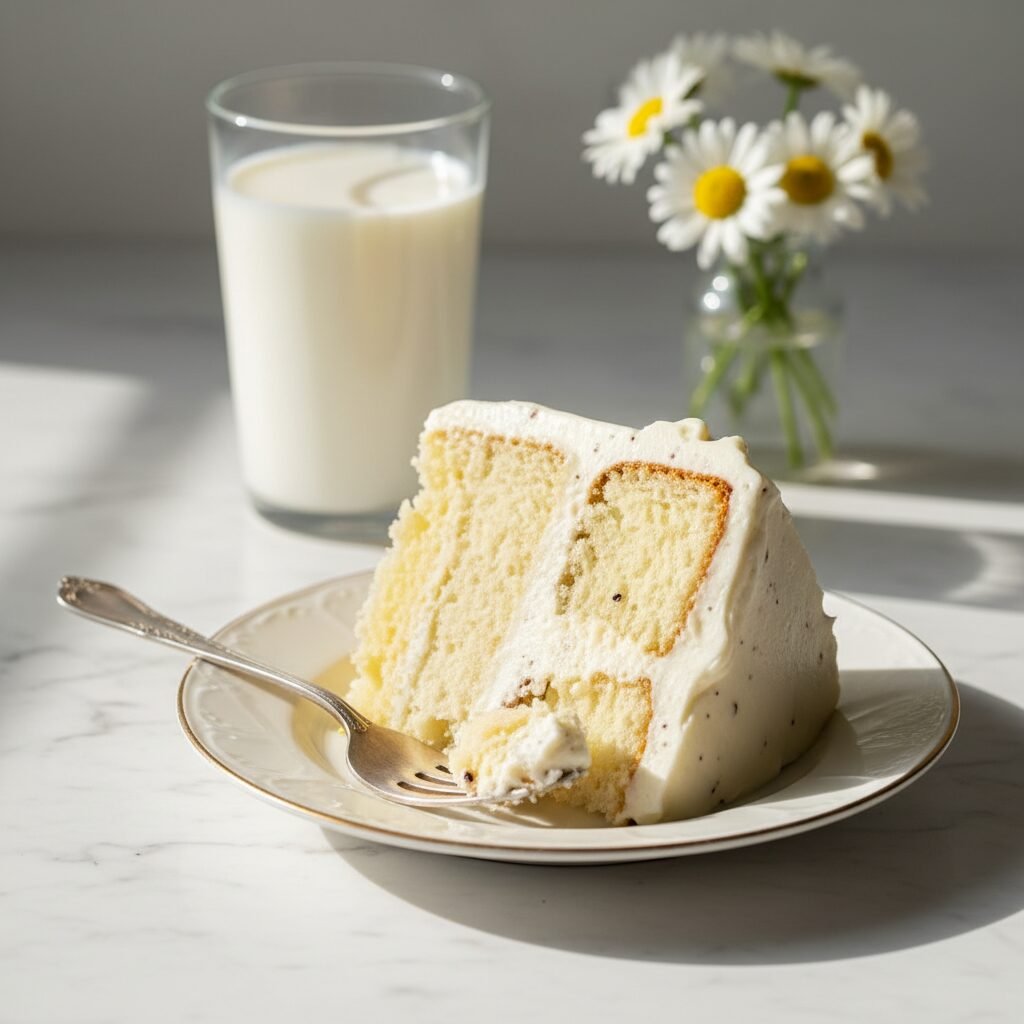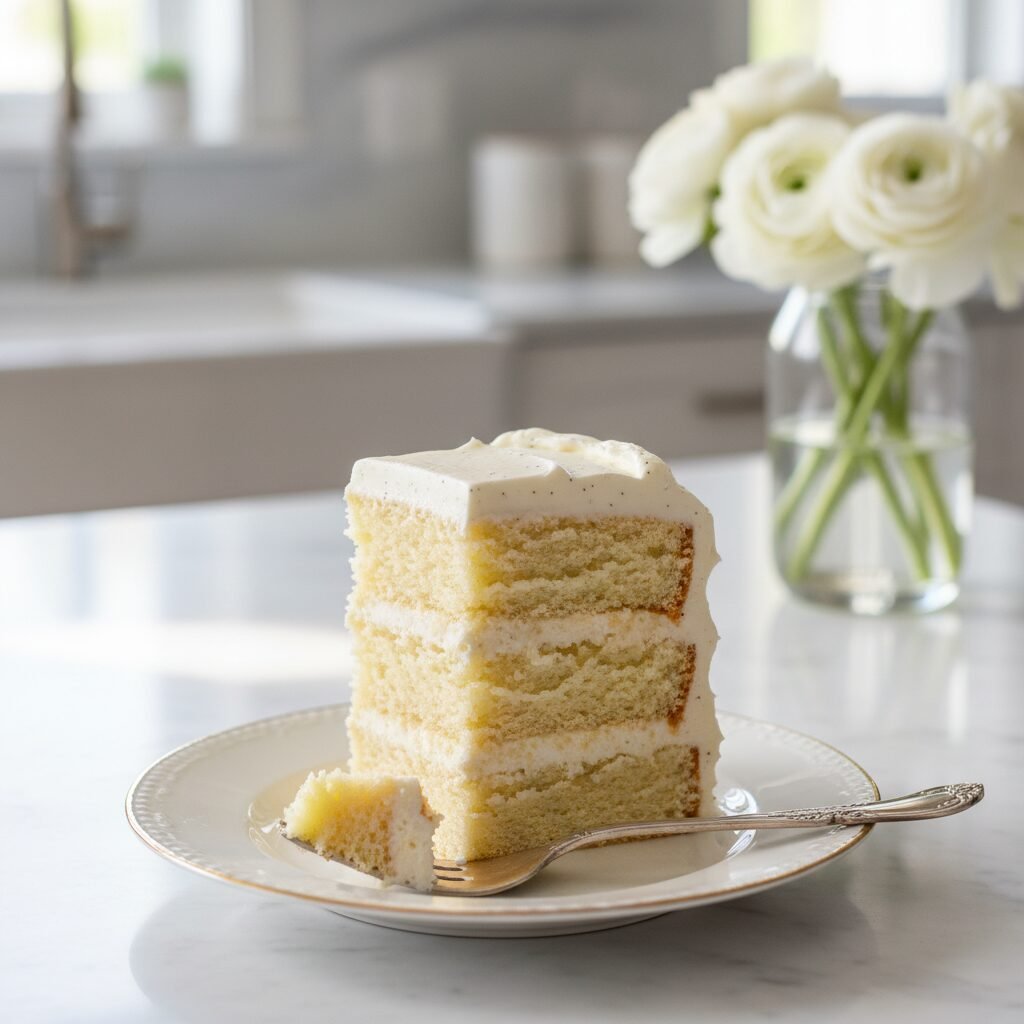
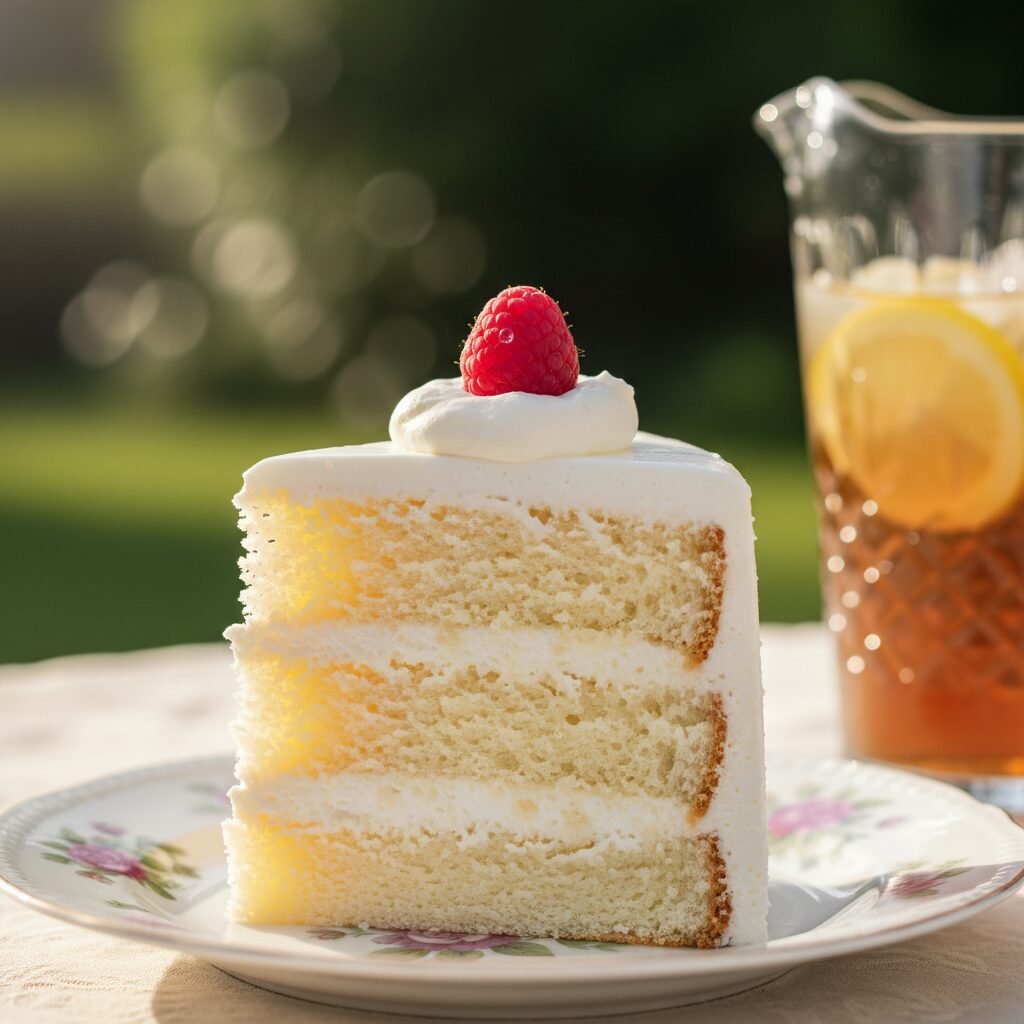
Moist Vanilla Layer Cake With Whipped Cream Frosting Recipe
Discover the holy grail of baking with this incredibly moist vanilla layer cake recipe. Paired with a cloud-like, stabilized whipped cream frosting that isn’t too sweet, this dessert is the perfect centerpiece for birthdays, weddings, or any celebration calling for a touch of elegance.
45 minutes
30 minutes
1 hour 15 minutes
12-14 servings
Dessert
Baking
American
Vegetarian
There is something undeniably nostalgic and comforting about a classic vanilla cake, yet finding the perfect recipe—one that balances a tender crumb with profound moisture—can feel like an endless quest. Many vanilla cakes lean towards the dry side or lack that distinct buttery depth we crave. This Moist Vanilla Layer Cake with Whipped Cream Frosting is the answer to those baking woes. It is designed to be the softest, most velvety cake you will ever bake, boasting a plush texture that stays fresh for days. The secret lies in a carefully calibrated balance of fats and liquids, ensuring that every bite melts in your mouth without feeling heavy or greasy.
Unlike the dense, sugary weight of traditional American buttercream, this cake is crowned with a stabilized whipped cream frosting. This topping is airy, light, and sophisticated, offering a creamy richness that complements the vanilla bean-flecked sponge perfectly. It evokes the style of high-end Asian bakery cakes, known for their feather-light textures and subtle sweetness. Whether you are a seasoned baker looking to refine your repertoire or a novice wanting to impress guests at a dinner party, this recipe delivers consistent, bakery-quality results. Imagine slicing into three glorious layers of white velvet, stacked with pillows of sweet cream—it is pure, edible joy on a plate.
History & Origins
The evolution of the vanilla cake is a journey through culinary history, tracing back to the discovery of the vanilla orchid in Mexico. Originally cultivated by the Totonacs and later the Aztecs, vanilla was primarily used to flavor chocolate drinks. It wasn’t until the Spanish conquest that vanilla traveled to Europe, where it eventually became a prized flavoring for desserts in royal courts. However, the ‘cake’ as we know it—light, fluffy, and leavened—is a relatively modern invention. Early European cakes were yeast-based, more akin to brioche or panettone.
The game-changer arrived in the mid-19th century with the invention of chemical leavening agents like baking soda and baking powder. This innovation allowed home cooks to produce lighter sponges without the labor-intensive process of beating eggs for hours or relying on yeast fermentation. The ‘white cake’ or ‘silver cake’ became a symbol of refinement in American baking, often distinguishing itself from yellow cakes by using only egg whites to achieve a pristine, snowy appearance. Over the decades, the classic vanilla cake has seen many iterations, from the dense pound cakes of the South to the airy chiffon cakes popular in the mid-20th century. This specific recipe draws inspiration from both the sturdy structure of American butter cakes and the tenderness of oil-based chiffon cakes, bridging two centuries of baking evolution into one perfect slice.
Why This Recipe Works
This recipe succeeds where others fail due to a specific interplay of ingredients known as ‘functional baking.’ First, we utilize a combination of butter and vegetable oil. Butter provides that irreplaceable flavor and mouthfeel, while neutral oil ensures the cake remains moist even when refrigerated, as oil does not solidify like butter does. Second, the use of cake flour instead of all-purpose flour is non-negotiable here; the lower protein content in cake flour inhibits gluten formation, resulting in a fine, tender crumb rather than a chewy bread-like texture.
Furthermore, we incorporate buttermilk and sour cream. The acidity in these dairy products not only tenderizes the gluten strands but also reacts with the baking soda to create a superior rise. For the frosting, standard whipped cream often weeps or deflates after a few hours. Our ‘why this works’ secret for the topping is the addition of mascarpone cheese or a small amount of gelatin. This stabilizes the heavy cream, allowing it to hold intricate piping shapes and withstand room temperature for longer periods without sacrificing that ethereal, cloud-like texture that makes this cake so special.
Why You’ll Love This Recipe
- ✓Stays moist for up to 4 days thanks to the oil-butter blend.
- ✓Features a snowy white crumb perfect for wedding cakes.
- ✓Frosting is light and airy, not heavy or overly sweet.
- ✓Uses the reverse creaming method for a flatter, more even bake.
- ✓Versatile base that pairs with fruit fillings or curds.
- ✓Stabilized whipped cream holds its shape for piping.
Equipment You’ll Need
- ✓Three 8-inch round cake pans
- ✓Stand mixer with paddle and whisk attachments
- ✓Large mixing bowls
- ✓Digital kitchen scale
- ✓Sifter or fine-mesh sieve
- ✓Offset spatula
- ✓Cake turntable (optional)
- ✓Parchment paper
- ✓Cooling racks
Ingredients
- ✓3 cups (345g) cake flour, sifted
- ✓2 cups (400g) granulated sugar
- ✓1 tbsp baking powder
- ✓1/2 tsp baking soda
- ✓1 tsp salt
- ✓1 cup (226g) unsalted butter, cold and cubed
- ✓1/3 cup (80ml) vegetable oil
- ✓1 cup (240ml) buttermilk, room temperature
- ✓1/2 cup (120g) sour cream, room temperature
- ✓5 large egg whites, room temperature
- ✓1 tbsp pure vanilla extract
- ✓FOR THE FROSTING:
- ✓3 cups (720ml) heavy whipping cream, cold
- ✓8 oz (225g) mascarpone cheese, cold
- ✓1 cup (120g) powdered sugar, sifted
- ✓2 tsp pure vanilla extract or vanilla bean paste
Instructions
- Preheat your oven to 350°F (175°C). Grease three 8-inch round cake pans, line the bottoms with parchment paper, and grease the parchment. Dust with flour and tap out the excess.
- In the bowl of a stand mixer fitted with the paddle attachment, combine the sifted cake flour, granulated sugar, baking powder, baking soda, and salt. Mix on low speed for 30 seconds to combine.
- Add the cold, cubed butter and the vegetable oil to the dry ingredients. Mix on low speed until the mixture resembles coarse sand or breadcrumbs. This technique (reverse creaming) coats the flour proteins with fat, preventing toughness.
- In a separate medium bowl, whisk together the buttermilk, sour cream, egg whites, and vanilla extract until smooth.
- With the mixer on low speed, slowly pour in half of the wet ingredients. Increase speed to medium and beat for 2 minutes to build structure. Scrape down the sides and bottom of the bowl.
- Add the remaining liquid mixture in two batches, mixing on low speed just until incorporated after each addition. Do not overmix.
- Divide the batter evenly among the three prepared pans. Use a digital scale for accuracy if desired (approx. 450g-500g per pan).
- Bake for 25-30 minutes, or until a toothpick inserted into the center comes out clean or with a few moist crumbs. The cakes should be pale golden, not browned.
- Remove from the oven and let the cakes cool in the pans for 10 minutes. Then, gently invert them onto a wire rack to cool completely before frosting.
- To make the frosting: In a chilled stainless steel bowl, combine the cold mascarpone cheese, powdered sugar, and vanilla. Mix on medium speed just until smooth (about 30 seconds).
- Slowly pour in the cold heavy cream while the mixer is running on low. Once all cream is added, increase speed to high and whip until stiff peaks form. Watch closely to avoid turning it into butter.
- To assemble: Place one cake layer on a serving plate or turntable. Spread a generous layer of whipped cream frosting over the top. Repeat with the second layer. Top with the final layer.
- Cover the top and sides of the cake with the remaining frosting. Use an offset spatula to create swirls or smooth the sides. Garnish with fresh berries or sprinkles if desired. Refrigerate for at least 30 minutes before slicing to set the layers.
Expert Cooking Tips
- ✓Ingredients MUST be at room temperature (except for the frosting ingredients). Cold ingredients in the cake batter can cause the emulsion to break, leading to a dense texture.
- ✓Weigh your flour. Scooping with a cup often compacts the flour, leading to a dry cake. If you don’t have a scale, spoon the flour into the cup and level it off.
- ✓Do not skip the parchment paper. This cake is very tender and might stick to the pan without the paper barrier.
- ✓Chill the bowl and whisk attachment before making the whipped cream to get the maximum volume.
- ✓For ultra-white layers, ensure you use clear vanilla extract, though pure brown vanilla extract offers superior flavor.
- ✓Tap the pans on the counter before baking to release any large air bubbles.
Substitutions and Variations
If you cannot find cake flour, you can make a DIY version by measuring 1 cup of all-purpose flour, removing 2 tablespoons, and replacing them with 2 tablespoons of cornstarch. Sift this mixture 3-4 times to aerate it thoroughly. For the buttermilk, you can make a substitute by adding 1 tablespoon of white vinegar or lemon juice to a cup of whole milk and letting it sit for 10 minutes to curdle. If you prefer not to use mascarpone in the frosting, you can stabilize the whipped cream using gelatin (dissolve 1 teaspoon of unflavored gelatin in 1 tablespoon of water, microwave for 10 seconds, let cool slightly, and stream into the whipping cream) or use full-fat cream cheese, though cream cheese will add a tangier flavor profile. For a dairy-free version, this recipe is difficult to adapt perfectly, but high-quality vegan butter and a plant-based heavy whipping cream alternative can work, though the texture will differ.
Common Mistakes to Avoid
The most common mistake with this cake is overmixing the batter after adding the wet ingredients. Overmixing develops gluten, turning a tender cake into a rubbery one. Stop mixing as soon as the liquid is absorbed. Another error is baking at an incorrect temperature; oven thermostats are often inaccurate, so use an oven thermometer to ensure it is actually at 350°F. Opening the oven door too early to peek can cause the cakes to sink in the middle due to the sudden drop in temperature. Regarding the frosting, over-whipping is a disaster; once the cream reaches stiff peaks, stop immediately, or it will become grainy and separate into butter and buttermilk. Finally, frosting the cake while it is still slightly warm will cause the whipped cream to melt and slide off—patience is key.
Serving Suggestions
This cake is elegant enough to be served on its own, but it pairs beautifully with fresh fruit. A compote of strawberries, raspberries, or crushed pineapple between the layers adds a refreshing tartness that cuts through the creaminess. For a summer gathering, serve slices with a side of lemon curd or a drizzle of passion fruit syrup. In the winter, a garnish of candied cranberries and rosemary sprigs makes it festive. Beverage-wise, this cake complements a glass of cold milk, a cup of Earl Grey tea, or a flute of sparkling rosé champagne. Serve the cake slightly chilled or let it sit at room temperature for 15 minutes before serving for the best texture.
Storage and Reheating Tips
Because of the whipped cream and mascarpone frosting, this cake must be stored in the refrigerator. It is best kept in an airtight cake carrier or under a cake dome to prevent the frosting from absorbing fridge odors and drying out. The cake will stay fresh for up to 4 days in the fridge. If you have leftover slices, press a piece of plastic wrap directly against the cut sides of the cake to keep the sponge moist. For freezing, flash freeze the frosted cake (or individual slices) uncovered for an hour until hard, then wrap tightly in two layers of plastic wrap and one layer of aluminum foil. It can be frozen for up to 2 months. Thaw overnight in the refrigerator before serving.
Nutrition Facts (Estimated)
| Serving Size | 1 slice |
| Calories | 450 |
| Fat | 24g |
| Saturated Fat | 14g |
| Unsaturated Fat | 8g |
| Trans Fat | 0g |
| Cholesterol | 85mg |
| Sodium | 310mg |
| Carbohydrates | 52g |
| Fiber | 1g |
| Sugar | 28g |
| Protein | 5g |
Frequently Asked Questions
Can I make this cake ahead of time?
Yes, you can bake the cake layers up to 2 days in advance. Wrap the cooled layers tightly in plastic wrap and store them at room temperature or in the fridge. Make the whipped cream frosting just before you are ready to assemble the cake for the freshest taste.
Why did my cake sink in the middle?
Sinking usually happens if the cake was underbaked, the oven door was opened too early, or there was too much leavening (baking powder/soda) measured. Ensure your oven temperature is accurate and avoid opening the door until the minimum bake time has passed.
Can I use all butter instead of oil?
You can, but the texture will be different. The oil is what keeps the cake soft even when cold. Using 100% butter will result in a cake that is firmer and slightly drier when refrigerated, which is necessary for this recipe due to the dairy frosting.
How do I get my frosting smooth?
Whipped cream is naturally more textured than buttercream, but for a smoother finish, avoid over-whipping. Use a long offset spatula or a bench scraper, and run the tool under hot water (drying it off completely) before smoothing the final coat.
Can I turn this into cupcakes?
Absolutely. This recipe yields approximately 24-30 cupcakes. Bake them at 350°F for 18-22 minutes. Check for doneness early, as cupcakes dry out faster than whole cakes.
Why use egg whites only?
Using only egg whites preserves the pure white color of the cake and creates a lighter, more delicate structure. Yolks add yellow color and fat that creates a richer, denser crumb, more like a yellow birthday cake.
Is the mascarpone necessary?
The mascarpone acts as a stabilizer, giving the whipped cream structure so it doesn’t deflate. It also adds a lovely richness. If you omit it, your whipped cream will be very soft and may not hold up well between the layers.
Can I add sprinkles to the batter?
Yes, you can fold in about 1/2 cup of sprinkles at the very end to make a Funfetti version. Toss the sprinkles in a teaspoon of flour first to prevent them from sinking to the bottom.
Conclusion
In a world of complex desserts and trendy flavors, the Moist Vanilla Layer Cake with Whipped Cream Frosting stands as a testament to the beauty of simplicity done right. It is a recipe that respects the fundamentals of baking while delivering a texture that feels like a modern luxury. Whether you are celebrating a milestone or simply treating your family to a Sunday dessert, this cake promises to be a showstopper. The contrast between the plush, vanilla-scented sponge and the cool, creamy frosting is a culinary experience that will have everyone asking for a second slice. Happy baking, and may your layers be level and your frosting be fluffy!