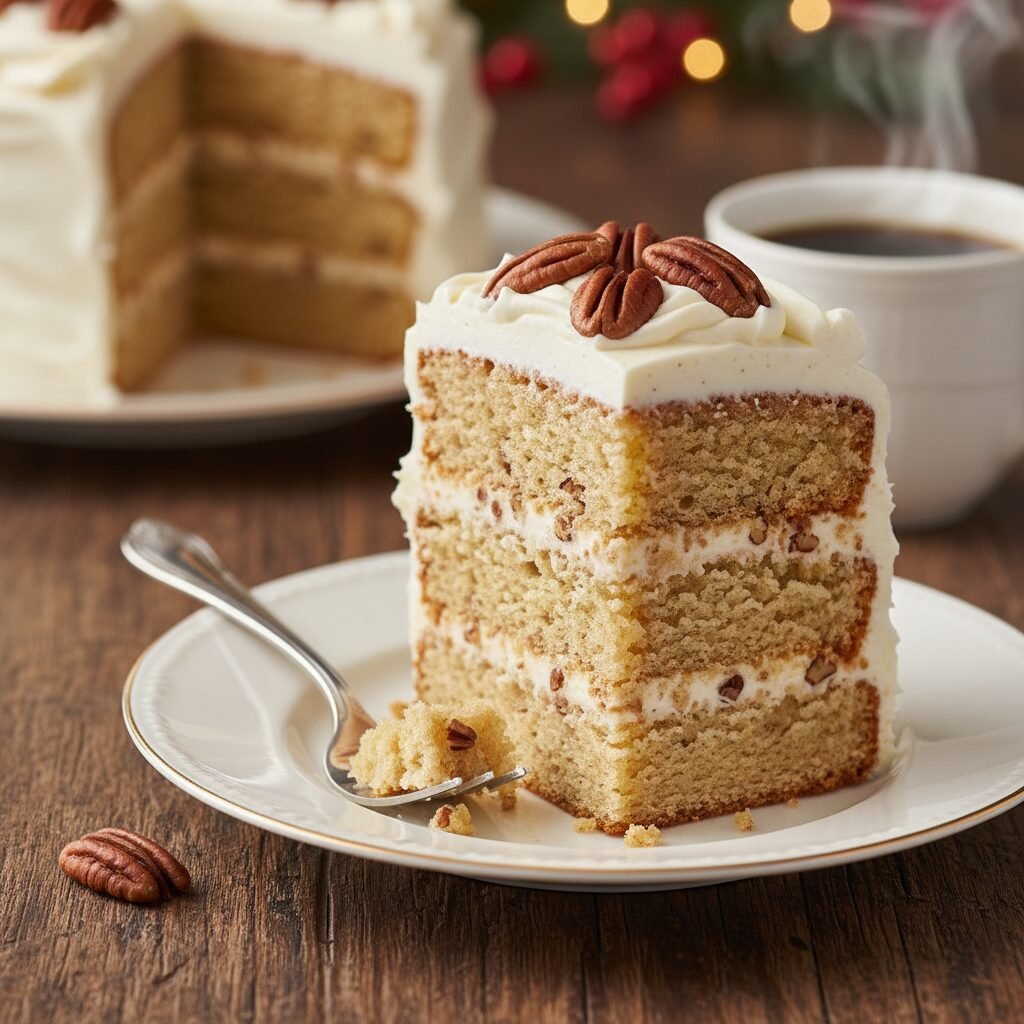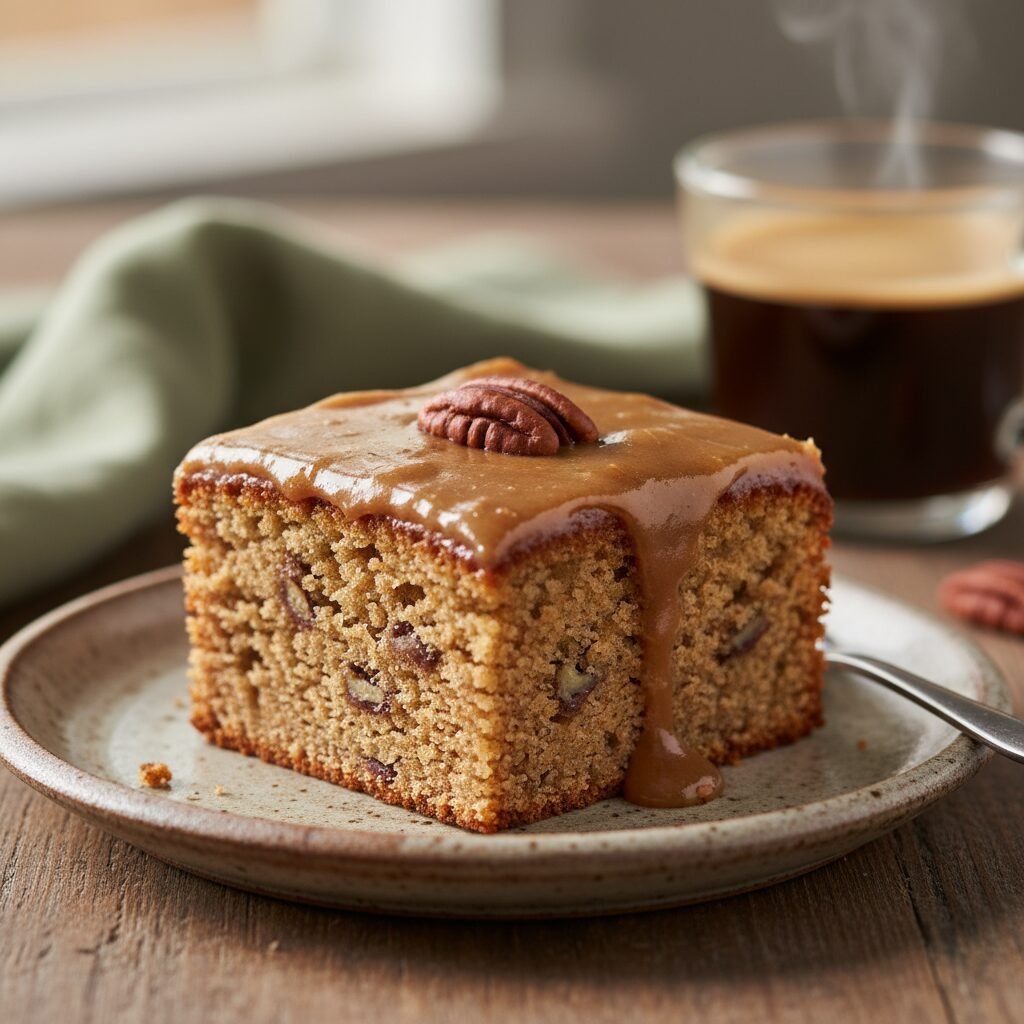
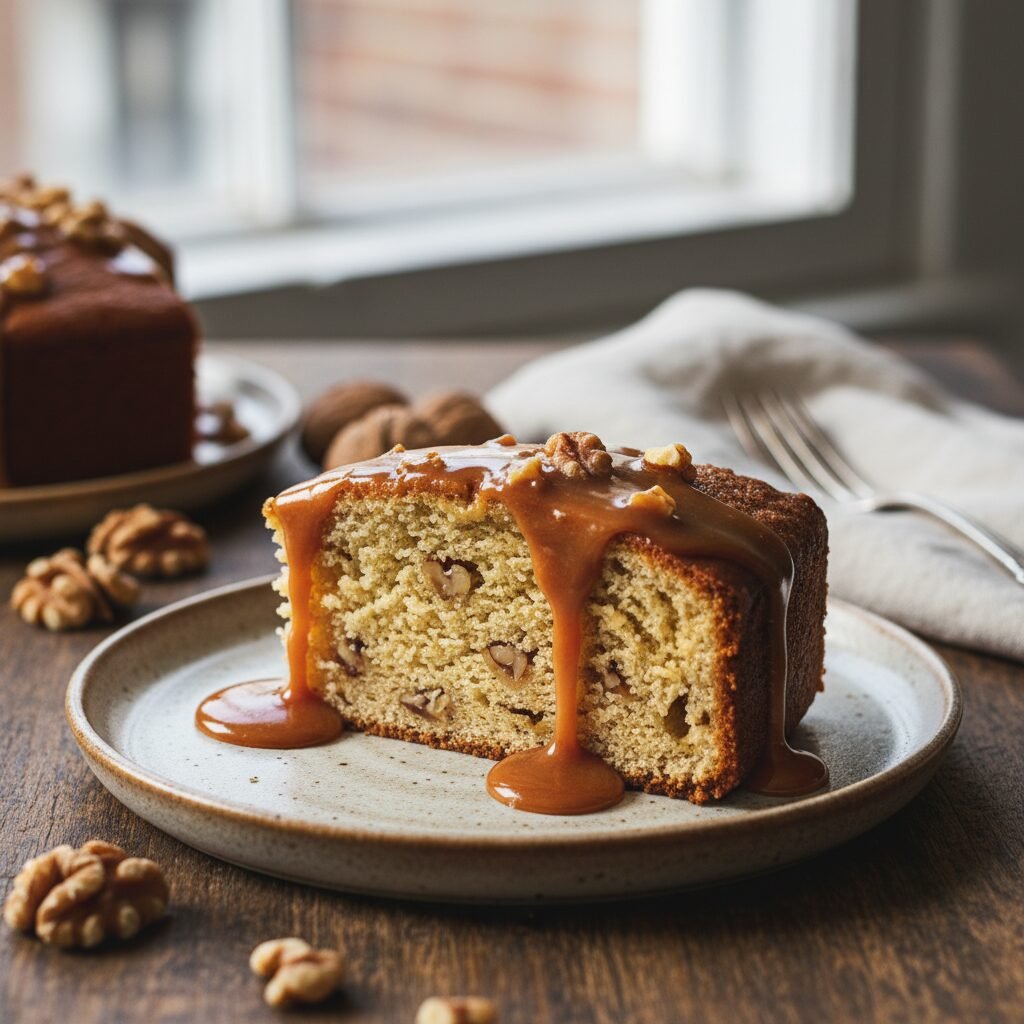
Moist Walnut Cake With Caramel Glaze Recipe
Experience the perfect balance of nutty richness and sweet indulgence with this incredibly moist walnut cake. Drenched in a homemade salted caramel glaze, this recipe is a guaranteed showstopper for holiday tables or cozy coffee breaks.
20 minutes
55 minutes
1 hour 15 minutes
12 servings
Dessert
Baking
American / European Fusion
Vegetarian
There are few things in the culinary world as comforting as the aroma of toasted nuts and brown sugar wafting through the kitchen on a crisp afternoon. This Moist Walnut Cake with Caramel Glaze is not just a dessert; it is an experience that evokes nostalgia, warmth, and the simple pleasures of home baking. Unlike many nut-based cakes that can lean towards the dry or crumbly side, this recipe has been meticulously crafted to ensure a tender, almost velvet-like crumb that melts in your mouth. The secret lies in the balance of fats and the inclusion of sour cream, which tenderizes the gluten strands while adding a subtle tang that cuts through the richness.
The star of the show, however, is the interplay of textures. You have the soft, buttery sponge, the satisfying crunch of toasted walnuts folded throughout the batter, and finally, the sticky, glossy finish of the caramel glaze that sets into a decadent shell. It is a cake that bridges the gap between a sophisticated European torte and a rustic American coffee cake. Whether you are serving this as the grand finale to a dinner party or enjoying a slice in solitude with your morning espresso, the flavors are robust enough to stand out yet familiar enough to feel like a hug. In this detailed guide, we will walk through every step to ensure your walnut cake rises perfectly, stays moist for days, and is crowned with the most luscious caramel glaze you have ever tasted.
History & Origins
The history of the walnut cake is as rich and layered as the dessert itself. Walnuts, often referred to as the ‘royal nut,’ have origins tracing back to ancient Persia (modern-day Iran), where they were reserved for royalty and considered a symbol of intellect due to their brain-like shape. As trade routes like the Silk Road expanded, walnuts traveled to Europe, finding a permanent home in French and Italian patisseries. The concept of the ‘nut cake’ or ‘torte’ became a staple in European baking, often using ground nuts in place of flour to create dense, rich confections.
However, the version of the walnut cake we know and love today—lighter, fluffier, and baked in bundt or tube pans—is largely influenced by American culinary evolution in the mid-20th century. With the invention of chemical leaveners like baking powder and the mass production of bundt pans in the 1950s and 60s, American housewives began adapting traditional European nut tortes into more airy, sponge-like cakes. The addition of caramel, a confection made by heating sugars, dates back to the 17th century but became a popular topping for American cakes in the South, where sugar and dairy were abundant. This specific recipe pays homage to those mid-century classics found in community cookbooks, marrying the old-world density of European nut cakes with the moist, tender crumb preferred in modern American baking.
Why This Recipe Works
This recipe succeeds where others fail due to three critical scientific principles: fat emulsification, acid-base reaction, and texture contrast. First, we utilize a ‘creaming method’ that requires beating butter and sugar until airy. This incorporates micro-bubbles into the batter, which expand during baking to create lift. However, the true game-changer here is the inclusion of sour cream. The acidity in the sour cream breaks down the long gluten strands in the flour, preventing the cake from becoming tough or rubbery. It also adds density without dryness, resulting in that coveted ‘moist’ texture that stays fresh for days.
Secondly, we address the ‘sinking nut’ phenomenon. By tossing the chopped walnuts in a small amount of flour before folding them into the batter, we create friction that holds the nuts in suspension, ensuring every bite has a crunch rather than finding them all at the bottom of the pan. Finally, the caramel glaze is designed to be poured warm. As it cools on the room-temperature cake, the butter and sugar recrystallize slightly, creating a glossy finish that doesn’t soak in completely but sits on top as a delicious, sticky barrier, sealing moisture inside the cake.
Why You’ll Love This Recipe
- ✓Incredibly moist crumb thanks to sour cream and butter.
- ✓Rich, nutty flavor enhanced by pre-toasting the walnuts.
- ✓Versatile: Perfect for breakfast, brunch, or dessert.
- ✓The salted caramel glaze sets to a perfect, sticky finish.
- ✓Freezes beautifully for make-ahead meal prep.
- ✓Simple ingredients found in any standard pantry.
Equipment You’ll Need
- ✓10-inch Bundt pan or Tube pan
- ✓Stand mixer or electric hand mixer
- ✓Large mixing bowls
- ✓Medium saucepan (for glaze)
- ✓Whisk
- ✓Rubber spatula
- ✓Cooling rack
- ✓Measuring cups and spoons
Ingredients
- ✓2 1/2 cups All-Purpose Flour (divided)
- ✓1 tsp Baking Powder
- ✓1/2 tsp Baking Soda
- ✓1/2 tsp Salt
- ✓1 cup Unsalted Butter, softened to room temperature
- ✓1 1/2 cups Granulated Sugar
- ✓3 Large Eggs, room temperature
- ✓1 tsp Pure Vanilla Extract
- ✓1 cup Sour Cream or Full-Fat Greek Yogurt
- ✓1 1/2 cups Chopped Walnuts (toasted)
- ✓1/2 cup Unsalted Butter (for glaze)
- ✓1/2 cup Light Brown Sugar, packed (for glaze)
- ✓2 tbsp Heavy Cream (for glaze)
- ✓1/2 tsp Sea Salt (for glaze)
Instructions
- 1. Preheat your oven to 350°F (175°C). Generously grease and flour a 10-inch Bundt pan or tube pan to prevent sticking.
- 2. Spread the chopped walnuts on a baking sheet and toast in the preheating oven for 5-7 minutes until fragrant. Watch closely to avoid burning. Remove and let cool.
- 3. In a medium bowl, sift together 2 1/4 cups of flour, baking powder, baking soda, and salt. Set aside.
- 4. Toss the cooled walnuts with the remaining 1/4 cup of flour. This prevents them from sinking to the bottom of the cake.
- 5. In the bowl of a stand mixer fitted with the paddle attachment, cream the softened butter and granulated sugar on medium-high speed for 4-5 minutes until pale and fluffy.
- 6. Add the eggs one at a time, beating well after each addition. Scrape down the sides of the bowl. Mix in the vanilla extract.
- 7. Reduce mixer speed to low. Add the flour mixture in three parts, alternating with the sour cream in two parts, starting and ending with the flour. Mix only until just combined—do not overmix.
- 8. Gently fold in the flour-coated walnuts using a rubber spatula.
- 9. Pour the batter evenly into the prepared pan and smooth the top. Bake for 50-60 minutes, or until a toothpick inserted into the center comes out clean or with just a few moist crumbs.
- 10. Allow the cake to cool in the pan for 10 minutes, then invert onto a wire rack to cool completely.
- 11. While the cake cools, make the glaze. In a small saucepan over medium heat, combine the butter, brown sugar, heavy cream, and salt. Bring to a gentle boil, whisking constantly.
- 12. Let the glaze boil for 1 minute, then remove from heat. Allow it to cool and thicken slightly for about 5-8 minutes.
- 13. Drizzle the warm caramel glaze over the cooled cake, letting it drip down the sides. Allow the glaze to set for 15 minutes before slicing.
Expert Cooking Tips
- ✓Room temperature ingredients are non-negotiable; they emulsify better creating a finer crumb.
- ✓Toast your walnuts! Raw walnuts can be bitter, but toasting brings out their natural sweetness and crunch.
- ✓Do not overmix the batter once the flour is added, or the cake will be tough.
- ✓Grease every nook and cranny of your Bundt pan, even if it’s non-stick, to ensure a perfect release.
- ✓If the top of the cake is browning too quickly in the oven, tent it loosely with aluminum foil after 30 minutes.
- ✓Let the glaze cool slightly before pouring; if it’s too hot, it will run right off the cake without sticking.
- ✓Use a serrated knife to slice the cake to cut through the nuts cleanly without tearing the sponge.
Substitutions and Variations
This recipe is quite resilient and allows for several substitutions depending on dietary needs or pantry availability. If you do not have walnuts, pecans are an excellent 1:1 substitute and offer a slightly sweeter profile. For a nut-free version, you can omit the nuts entirely or substitute them with chocolate chips or dried cranberries, though you will lose the signature crunch. If sour cream is unavailable, full-fat plain Greek yogurt or buttermilk can be used; however, buttermilk will make the batter slightly thinner, so check doneness 5 minutes early. For the flour, a high-quality 1:1 Gluten-Free Baking Flour blend works well for those with gluten sensitivities, though the texture may be slightly denser. In the glaze, you can substitute half-and-half for heavy cream, but avoid using skim milk as the caramel will not thicken properly. Dark brown sugar can replace light brown sugar in the glaze for a deeper molasses flavor.
Common Mistakes to Avoid
The most common mistake with this cake is over-baking, which dries out the crumb. Because Bundt pans vary in thickness and material (dark metal vs. light metal vs. silicone), start checking your cake at the 45-minute mark. Another frequent error is not preparing the pan correctly. Bundt pans are notorious for sticking; use a baking spray with flour included, or butter thoroughly and dust with flour, tapping out the excess. Regarding the nuts, failing to toss them in flour before adding them to the batter will almost certainly result in a layer of nuts at the bottom of the cake and none in the middle. Finally, be patient with the cooling process. Trying to invert the cake too soon (when it’s piping hot) can cause it to break apart, while leaving it in the pan until it’s cold can cause the sugars to act like glue, sticking it to the pan.
Serving Suggestions
This Moist Walnut Cake is versatile enough to stand alone, but a few accompaniments can elevate it to restaurant quality. Serve slightly warm with a dollop of unsweetened whipped cream to balance the sweetness of the caramel glaze. A scoop of vanilla bean ice cream is classic, but butter pecan ice cream pairs exceptionally well with the flavor profile. For a breakfast or brunch setting, serve alongside a hot cup of dark roast coffee or an Earl Grey tea; the tannins in the tea cut through the richness of the cake beautifully. If you want to add a pop of color and freshness, garnish the plate with fresh berries, such as raspberries or blackberries, which provide a tart contrast to the sugary glaze.
Storage and Reheating Tips
To keep your walnut cake fresh, store it in an airtight cake carrier or container at room temperature for up to 3 days. The caramel glaze acts as a barrier, helping to keep the moisture in. If you live in a particularly hot or humid climate, it is safer to store the cake in the refrigerator for up to 5-6 days, though you should let slices come to room temperature before eating for the best texture. This cake also freezes exceptionally well. You can freeze individual slices wrapped tightly in plastic wrap and then foil for up to 3 months. Thaw on the counter for an hour before serving. If freezing the whole cake, it is best to do so without the glaze, adding the glaze fresh after thawing the cake.
Nutrition Facts (Estimated)
| Serving Size | 1 slice |
| Calories | 485 |
| Fat | 28g |
| Saturated Fat | 14g |
| Unsaturated Fat | 12g |
| Trans Fat | 0g |
| Cholesterol | 85mg |
| Sodium | 210mg |
| Carbohydrates | 52g |
| Fiber | 2g |
| Sugar | 32g |
| Protein | 7g |
Frequently Asked Questions
Can I use a loaf pan instead of a Bundt pan?
Yes, you can divide the batter between two 9×5 inch loaf pans. However, the baking time will change. Start checking for doneness around 40-45 minutes.
Why did my cake sink in the middle?
Sinking usually happens if the oven door was opened too early, causing a temperature drop, or if there was too much leavening (baking powder/soda). Ensure your oven is fully preheated and avoid opening the door until the end of the baking time.
My glaze turned out grainy. What happened?
Grainy caramel is caused by undissolved sugar crystals. When making the glaze, ensure the sugar is completely dissolved in the butter and cream before you stop stirring. Avoid high heat; gentle simmering is key.
Can I make this cake ahead of time?
Absolutely. In fact, this cake often tastes better the next day as the flavors have time to meld and the moisture redistributes. Just cover it tightly.
Is it necessary to use unsalted butter?
It is highly recommended. Using unsalted butter allows you to control the salt level. If you only have salted butter, reduce the added salt in the cake recipe to 1/4 teaspoon.
How do I know when the cake is perfectly done?
The toothpick test is best. Insert a wooden skewer into the thickest part of the cake. It should come out with a few moist crumbs attached, but no wet batter.
Can I add spices to the batter?
Yes! Cinnamon, nutmeg, or cardamom are wonderful additions. Add 1 teaspoon of cinnamon and 1/4 teaspoon of nutmeg with the dry ingredients for a spiced version.
What if I don’t have a stand mixer?
An electric hand mixer works perfectly fine. You can even mix by hand with a whisk and wooden spoon, though it will require some serious elbow grease to cream the butter and sugar properly.
Can I use oil instead of butter?
You can substitute half the butter for a neutral oil (like canola) to increase moisture further, but using all oil will result in a loss of the rich, buttery flavor that characterizes this cake.
My walnuts sank to the bottom even with flour. Why?
If the batter is too thin or overmixed, it won’t hold the nuts. Also, make sure you chop the walnuts into medium pieces; if they are too large and heavy, gravity will pull them down regardless of the flour coating.
Conclusion
There is something profoundly satisfying about slicing into a homemade cake that delivers on every promise: taste, texture, and appearance. This Moist Walnut Cake with Caramel Glaze is a testament to the magic of baking, transforming humble ingredients into a dessert that feels luxurious and special. Whether you are an experienced baker looking for a reliable classic or a novice wanting to impress your family, this recipe is forgiving, fun, and fundamentally delicious. The crunch of the toasted walnuts against the soft, buttery crumb, all enveloped in that rich salted caramel, creates a bite that is pure bliss. So, preheat your oven, brew a fresh pot of coffee, and treat yourself to a slice of comfort.