Moist Walnut Cake With Cream Cheese Frosting Recipe
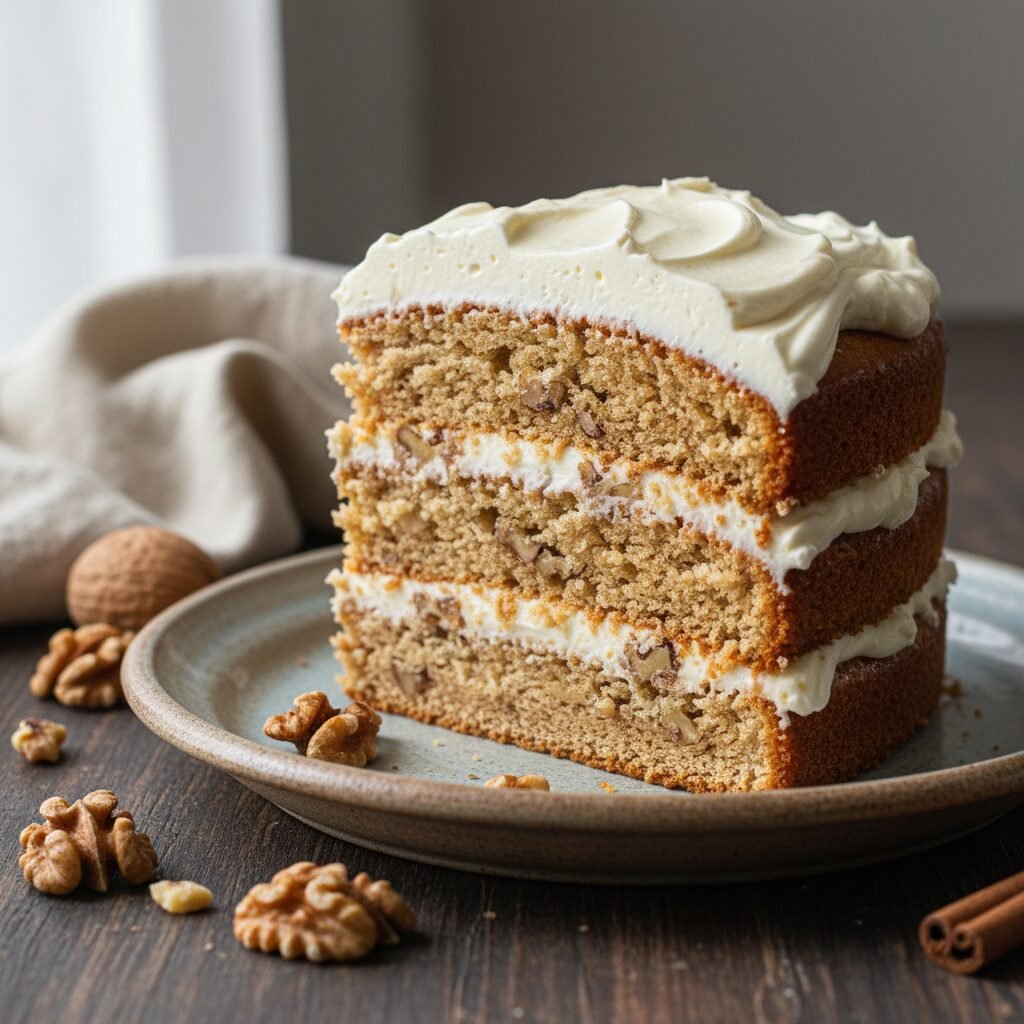
Experience the perfect balance of earthy crunch and velvety sweetness with this Ultimate Moist Walnut Cake. Featuring a tender, spice-infused crumb loaded with toasted walnuts and smothered in a rich, tangy cream cheese frosting, this dessert is a guaranteed crowd-pleaser for any occasion.
25 minutes
35 minutes
1 hour 30 minutes
12 servings
Dessert
Baking
American
Vegetarian
There are few things in the baking world as comforting and satisfying as a properly made nut cake. While chocolate and vanilla often steal the spotlight, the humble walnut brings a depth of flavor and a sophisticated texture that transforms a simple batter into a rustic masterpiece. This Moist Walnut Cake with Cream Cheese Frosting is a celebration of that earthy richness, designed for those who appreciate a dessert that isn’t just sugary, but deeply flavorful and texturally complex. The magic begins with the aroma; as the cake bakes, the scent of toasted nuts, brown sugar, and a hint of cinnamon fills the kitchen, evoking memories of cozy holidays and afternoon tea times.
What sets this particular recipe apart is its incredible crumb. We have all suffered through dry, dense nut cakes that require a gallon of milk to wash down. This recipe, however, utilizes a specific blend of oil and buttermilk to ensure a moisture level that stays fresh for days. The crumb is tender and light, yet sturdy enough to hold a generous suspension of chopped walnuts. And then, there is the frosting. A walnut cake without cream cheese frosting is like a day without sunshine. The tangy sharpness of the cream cheese cuts through the sweetness of the cake and the richness of the nuts, creating a harmonious balance on the palate. Whether you are baking for a special birthday, a holiday gathering, or simply to treat yourself after a long week, this cake promises to deliver a slice of pure, homemade happiness.
History & Origins
The tradition of using nuts in cakes dates back centuries, long before the advent of modern leavening agents. In Medieval Europe, and particularly in regions like Austria and Hungary, ‘tortes’ were often made almost exclusively with ground nuts, sugar, and eggs, as wheat flour was sometimes scarce or reserved for bread. Walnuts, specifically, have a storied history, originating in ancient Persia (modern-day Iran) where they were reserved for royalty. As trade routes expanded, the ‘Persian Walnut’ became the ‘English Walnut’ due to the English merchant marines who traded them globally.
However, the specific iteration of a fluffy, leavened walnut cake paired with cream cheese frosting is a distinctly American evolution. In the Southern United States, nut cakes—often featuring pecans or walnuts—became staples of community cookbooks in the 19th and 20th centuries. These cakes were prized for their ability to stay moist in the humid Southern climate. The addition of cream cheese frosting is a newer culinary phenomenon, gaining massive popularity in the United States during the 1930s and 1960s. Originally associated with carrot cake, the tangy frosting was quickly identified by home bakers as the perfect partner for spice cakes and nut cakes. This recipe pays homage to that cross-Atlantic journey: combining the European love for nut-forward confections with the American ingenuity of moist, oil-based batters and that iconic, creamy, tangy topping.
Why This Recipe Works
This recipe succeeds where many others fail due to three critical chemical interactions: the fat source, the acidity, and the pre-treatment of the nuts. First, we use vegetable oil instead of butter for the cake batter. While butter adds flavor, it is about 18% water; oil is 100% fat. This means the cake remains moist and tender far longer than a butter-based cake, which tends to dry out as it returns to room temperature. To compensate for the flavor loss of not using butter, we rely on the rich, oily nature of the walnuts and a generous amount of vanilla.
Secondly, the inclusion of buttermilk is non-negotiable. The acidity in buttermilk reacts with the baking soda to create carbon dioxide, which gives the cake a superior lift and a lighter crumb, preventing it from becoming dense or heavy despite the weight of the nuts. Furthermore, the acid breaks down long strands of gluten, ensuring the cake melts in your mouth. Finally, this recipe calls for toasting the walnuts before adding them to the batter. Raw walnuts can be somewhat bitter and waxy. Toasting them releases their essential oils, intensifies their nutty flavor, and ensures they maintain a pleasant crunch rather than turning soggy within the moist batter.
Why You’ll Love This Recipe
- ✓Incredibly moist crumb that stays fresh for days
- ✓Perfect balance of sweet cake and tangy frosting
- ✓Rich, toasted nutty flavor in every bite
- ✓Simple pantry ingredients with no complex techniques
- ✓Versatile enough for breakfast, tea time, or dessert
- ✓Freezes beautifully for make-ahead convenience
Equipment You’ll Need
- ✓Two 9-inch round cake pans
- ✓Stand mixer or electric hand mixer
- ✓Large mixing bowls
- ✓Whisk
- ✓Rubber spatula
- ✓Wire cooling rack
- ✓Offset spatula
- ✓Parchment paper
Ingredients
- ✓2 cups all-purpose flour
- ✓1 teaspoon baking soda
- ✓1/2 teaspoon baking powder
- ✓1/2 teaspoon salt
- ✓1 teaspoon ground cinnamon
- ✓3 large eggs, room temperature
- ✓1 cup granulated sugar
- ✓1/2 cup light brown sugar, packed
- ✓1 cup vegetable oil or canola oil
- ✓1 cup buttermilk, room temperature
- ✓2 teaspoons pure vanilla extract
- ✓1 1/2 cups walnuts, toasted and chopped (divided)
- ✓8 oz full-fat cream cheese, softened (Frosting)
- ✓1/2 cup unsalted butter, softened (Frosting)
- ✓3 cups powdered sugar (Frosting)
- ✓1 teaspoon vanilla extract (Frosting)
- ✓Pinch of salt (Frosting)
Instructions
- Preheat your oven to 350°F (175°C). Grease two 9-inch round cake pans with butter or cooking spray and line the bottoms with parchment paper.
- Spread the walnuts on a baking sheet and toast in the preheating oven for 5-7 minutes until fragrant. Let them cool completely, then chop coarsely. Reserve 1/4 cup for decoration.
- In a medium bowl, whisk together the flour, baking soda, baking powder, salt, and cinnamon. Set aside.
- In a large mixing bowl or stand mixer fitted with the paddle attachment, beat the eggs, granulated sugar, and brown sugar on medium-high speed for about 3 minutes until pale and slightly thickened.
- With the mixer on low, slowly drizzle in the vegetable oil until combined. Add the vanilla extract.
- Add the flour mixture in three parts, alternating with the buttermilk in two parts, beginning and ending with the flour. Mix only until just combined to avoid overworking the gluten.
- Gently fold in 1 1/4 cups of the chopped toasted walnuts using a rubber spatula.
- Divide the batter evenly between the prepared pans. Bake for 30-35 minutes, or until a toothpick inserted into the center comes out clean or with just a few moist crumbs.
- Remove from the oven and let the cakes cool in the pans for 10 minutes. Then, invert them onto a wire rack to cool completely before frosting.
- To make the frosting: In a large bowl, beat the softened cream cheese and butter together until smooth and creamy (about 2-3 minutes).
- Gradually add the powdered sugar, one cup at a time, beating on low speed until incorporated. Add the vanilla and a pinch of salt, then increase speed to high and whip for 2 minutes until fluffy.
- Once the cakes are cool, place one layer on a serving plate. Spread a generous layer of frosting on top. Place the second cake layer on top.
- Frost the top and sides of the cake with the remaining frosting. Garnish with the reserved toasted walnuts.
- Refrigerate the cake for at least 30 minutes before slicing to set the frosting.
Expert Cooking Tips
- ✓Always toast your walnuts; raw walnuts lack the depth of flavor and crunch needed for this cake.
- ✓Ensure all cold ingredients (eggs, buttermilk, cream cheese, butter) are at room temperature to ensure a smooth emulsion.
- ✓Do not overmix the batter once the flour is added, or the cake will become dense and tough.
- ✓Weigh your flour using a kitchen scale for the most accurate results; too much flour causes dryness.
- ✓Cool the cakes completely before frosting; even a slightly warm cake will melt the butter in the frosting and cause it to slide off.
- ✓If your frosting is too soft, refrigerate it for 15 minutes to firm up before spreading.
- ✓Tap the cake pans on the counter before baking to release any large air bubbles.
Substitutions and Variations
This recipe is quite forgiving and allows for several substitutions. If you do not have buttermilk, you can make a sour milk substitute by adding one tablespoon of lemon juice or white vinegar to a cup of regular milk and letting it sit for 5 minutes. For a gluten-free version, substitute the all-purpose flour with a high-quality 1:1 gluten-free baking flour blend that contains xanthan gum. If you prefer a different nut profile, pecans are an excellent 1:1 swap for walnuts, offering a slightly sweeter flavor. For a healthier fat option, you can substitute half of the oil with unsweetened applesauce, though this will change the texture slightly, making it denser. In the frosting, mascarpone cheese can be used in place of cream cheese for a milder, creamier flavor, though it is less tangy.
Common Mistakes to Avoid
The most common mistake with this cake is overbaking. Because of the oil content, the cake should be moist; if you wait until the toothpick is bone dry, the cake may already be overdone. Look for a few moist crumbs clinging to the toothpick. Another frequent error is using cold cream cheese for the frosting. If the cream cheese is cold, it will not blend with the butter, resulting in a lumpy frosting that is impossible to fix without melting the mixture. Additionally, failing to line the pans with parchment paper often leads to the cake sticking to the bottom, causing it to break when you try to invert it. Finally, skipping the toasting step for the nuts is a missed opportunity for flavor; raw nuts can taste bland and soft inside a baked cake.
Serving Suggestions
This Moist Walnut Cake is rich and pairs beautifully with beverages that have a bit of bitterness to cut through the sweetness. Serve a slice with a hot cup of black coffee, an espresso, or an Earl Grey tea. For an elegant dessert presentation, serve the slice with a drizzle of salted caramel sauce or a dollop of unsweetened whipped cream on the side. It is also fantastic served slightly chilled, which firms up the cream cheese frosting, creating a cheesecake-like texture. If serving for a festive occasion, garnish the top with candied walnuts or a dusting of cinnamon for extra flair.
Storage and Reheating Tips
Because of the cream cheese frosting, this cake must be stored in the refrigerator. It can be left out at cool room temperature for up to 2 hours for serving, but should be chilled otherwise. Store the cake in an airtight cake carrier or wrap slices individually in plastic wrap to prevent them from absorbing fridge odors. The cake keeps well in the refrigerator for up to 5 days. For long-term storage, you can freeze the frosted cake. Place the cake (whole or slices) in the freezer uncovered for an hour to harden the frosting, then wrap tightly in two layers of plastic wrap and one layer of foil. It will last in the freezer for up to 3 months. Thaw overnight in the refrigerator before serving.
Nutrition Facts (Estimated)
| Serving Size | 1 slice |
| Calories | 580 |
| Fat | 38g |
| Saturated Fat | 10g |
| Unsaturated Fat | 26g |
| Trans Fat | 0g |
| Cholesterol | 65mg |
| Sodium | 310mg |
| Carbohydrates | 54g |
| Fiber | 2g |
| Sugar | 42g |
| Protein | 7g |
Frequently Asked Questions
Can I make this cake ahead of time?
Yes, this cake actually tastes better the next day as the flavors have time to meld. You can bake the layers one day in advance, wrap them tightly in plastic, and frost them the next day, or store the fully frosted cake in the fridge for up to 2 days before serving.
Why did my cake sink in the middle?
Cakes usually sink because the oven door was opened too early, causing a drop in temperature, or because the cake was underbaked. It can also happen if there was too much leavening (baking soda/powder) or if the batter was overmixed.
Can I use olive oil instead of vegetable oil?
Yes, but be aware that extra virgin olive oil has a strong flavor that might compete with the walnuts. If you want to use olive oil, choose a ‘light’ or ‘refined’ olive oil which has a neutral flavor profile.
How do I chop the walnuts easily?
The best way is to pulse them briefly in a food processor. Be careful not to over-process, or you will end up with walnut butter. Alternatively, place them in a ziplock bag and crush them lightly with a rolling pin for a more rustic texture.
Can I bake this as a sheet cake instead of layers?
Absolutely. You can bake this in a 9×13 inch rectangular pan. The baking time will likely need to be adjusted to 35-45 minutes. Check for doneness starting at the 30-minute mark.
Is it necessary to use both baking powder and baking soda?
Yes. The baking soda neutralizes the acid in the buttermilk and brown sugar to provide lift, while the baking powder provides additional leavening to ensure a fluffy texture. Removing one will affect the rise.
My frosting is too runny, how do I fix it?
If the frosting is runny, it likely got too warm or wasn’t beaten enough. Try refrigerating it for 20 minutes. If it’s still too thin, add more powdered sugar, 1/4 cup at a time, until it reaches the desired consistency.
Can I turn this recipe into cupcakes?
Yes, this batter makes excellent cupcakes. Line a muffin tin with liners and fill 2/3 full. Bake at 350°F for 18-22 minutes. This recipe yields approximately 24 cupcakes.
Conclusion
This Moist Walnut Cake with Cream Cheese Frosting is more than just a dessert; it is a comforting embrace in the form of food. It bridges the gap between a rustic morning coffee cake and an elegant after-dinner treat. The combination of the tender, oil-based crumb and the rich, crunchy walnuts creates a texture that is truly addictive, while the tangy cream cheese frosting provides the perfect finish. Whether you are an experienced baker or a novice in the kitchen, this recipe is straightforward, forgiving, and incredibly rewarding. We hope this cake becomes a staple in your recipe box, bringing joy and deliciousness to your table for years to come. Happy baking!