Moist Walnut Pound Cake Recipe
Discover the secret to the perfect crumb with this incredibly moist walnut pound cake recipe. Infused with buttery richness and studded with toasted walnuts, this classic dessert is elevated with a silky vanilla bean glaze, making it the ultimate companion for your morning coffee or afternoon tea.
20 minutes
60 minutes
1 hour 20 minutes
1 Loaf (10-12 slices)
Dessert
Baking
American
Vegetarian
There is something profoundly comforting about a classic pound cake. It is the kind of dessert that doesn’t need to shout to be heard; its elegance lies in its simplicity and its texture. This Moist Walnut Pound Cake is a love letter to traditional baking, where butter, sugar, and eggs come together to create magic. But this isn’t just any dry, dense loaf. We have re-engineered the classic ratios to ensure a crumb that is tender, velvety, and undeniably moist, staying fresh for days on end.
The star of the show here is undoubtedly the walnut. Far from being an afterthought, the walnuts are toasted to golden perfection before being folded into the batter, releasing their essential oils and providing a satisfying, earthy crunch that contrasts beautifully with the sweet, dense cake. The addition of sour cream is the secret weapon, breaking down the gluten strands just enough to ensure tenderness while adding a subtle tang that cuts through the richness of the butter.
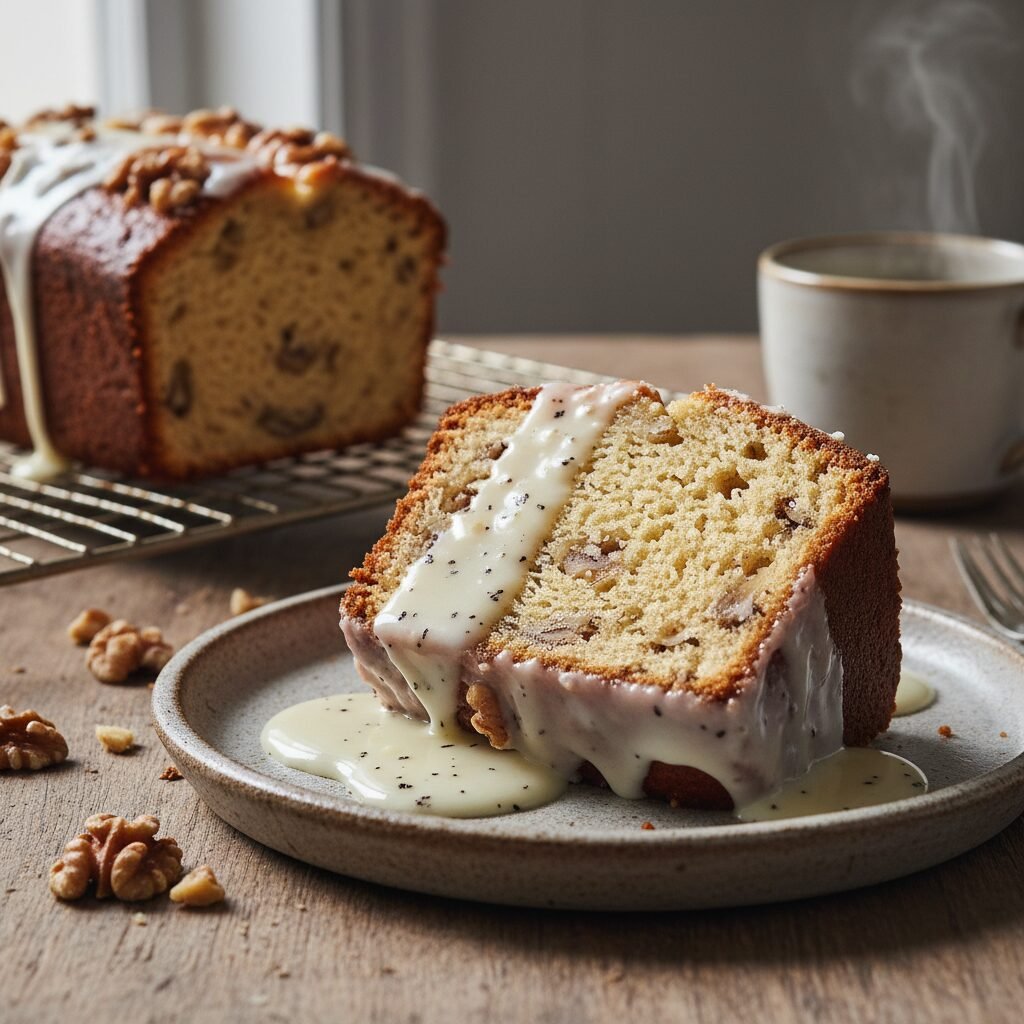
Imagine slicing into a loaf that is golden-brown on the outside, with a heavy, satisfying weight in your hand. As you take a bite, the vanilla bean glaze melts on your tongue, followed by the buttery cake and the roasted flavor of walnuts. It is nostalgia on a plate, reminiscent of grandmother’s kitchen but with a sophisticated, modern twist. Whether you are baking for a holiday gathering, a Sunday brunch, or simply to have a sweet treat on the counter, this recipe promises to deliver comfort and luxury in every slice. It is a recipe that begs to be shared, pinned, and baked on repeat.
History & Origins
The history of the pound cake is as rich and dense as the cake itself. Dating back to the early 1700s in Northern Europe, the original recipe was named for its simple, easy-to-remember formula: one pound each of flour, butter, eggs, and sugar. This massive cake would have been large enough to feed a small army—or at least a very large family gathering—and was baked in pans that resembled loaves or bundts. Because leavening agents like baking powder and baking soda had not yet been invented, the lift in these early cakes came entirely from beating air into the butter and eggs, a labor-intensive process that required significant arm strength.
As the recipe migrated to America, specifically the South, it became a staple of hospitality. Over the centuries, bakers began to tweak the ratios to produce a lighter, more palatable texture. By the mid-19th century, chemical leaveners were introduced, allowing for a less dense crumb. The addition of nuts, particularly walnuts and pecans, became popular in the United States where these nuts were abundant. Walnuts, with their slightly bitter skin and rich, oily meat, became a favorite mix-in because they balanced the intense sweetness of the sugar.
In this modern iteration, we pay homage to the original ‘pound’ concept while embracing modern food science. We have moved away from the strict 1:1:1:1 ratio to incorporate ingredients like sour cream and vanilla extract, which were not present in the 18th-century versions. However, the spirit of the cake remains the same: honest ingredients, simple preparation, and a result that stands the test of time. This walnut variation connects us to generations of bakers who understood that the best things in life are often the simplest.
Why This Recipe Works
This recipe succeeds where many other pound cakes fail—in the battle against dryness. Traditional pound cakes can often turn out heavy and brick-like, but this version employs a few specific scientific principles to guarantee a moist and tender result. First, the use of room-temperature ingredients is non-negotiable. When the butter, eggs, and sour cream are all at the same temperature, they emulsify perfectly when beaten, trapping air bubbles that expand during baking to create a uniform lift.
Secondly, the inclusion of full-fat sour cream is transformative. Sour cream adds acidity and fat. The acid tenderizes the gluten in the flour, preventing the cake from becoming tough, while the fat content ensures the crumb remains moist long after the cake has cooled. We also use a combination of granulated sugar and a touch of brown sugar; the molasses in the brown sugar is hygroscopic, meaning it attracts and holds moisture from the air, further preventing the cake from drying out.
Finally, the technique of toasting the walnuts before adding them to the batter is crucial. Raw walnuts can have a waxy texture and a slightly astringent taste. Toasting them releases their natural oils and enhances their nutty flavor, ensuring that every bite has a crisp, savory counterpoint to the sweet cake. We also toss the nuts in a small amount of flour before folding them in, which provides friction and prevents them from sinking to the bottom of the pan, ensuring even distribution throughout the loaf.
Why You’ll Love This Recipe
- ✓Incredibly moist crumb thanks to the secret addition of sour cream.
- ✓Rich, toasted walnut flavor in every single bite.
- ✓Stays fresh and delicious for up to 5 days.
- ✓Freezes beautifully for make-ahead meal prep.
- ✓Topped with a luxurious vanilla bean glaze.
Equipment You’ll Need
- ✓9×5 inch Loaf Pan
- ✓Stand Mixer or Hand Mixer
- ✓Large Mixing Bowl
- ✓Medium Mixing Bowl
- ✓Rubber Spatula
- ✓Wire Cooling Rack
- ✓Whisk
- ✓Parchment Paper
Ingredients
- ✓1 1/2 cups All-Purpose Flour (spooned and leveled)
- ✓1 tsp Baking Powder
- ✓1/2 tsp Salt
- ✓1 cup Unsalted Butter, softened to room temperature
- ✓1 cup Granulated Sugar
- ✓1/4 cup Light Brown Sugar, packed
- ✓4 Large Eggs, room temperature
- ✓2 tsp Pure Vanilla Extract
- ✓1/2 cup Full-Fat Sour Cream, room temperature
- ✓1 cup Chopped Walnuts, toasted
- ✓For the Glaze: 1 cup Powdered Sugar
- ✓For the Glaze: 2-3 tbsp Heavy Cream or Milk
- ✓For the Glaze: 1/2 tsp Vanilla Bean Paste or Extract
Instructions
- 1. Preheat your oven to 325°F (163°C). Grease a 9×5 inch loaf pan generously with butter or non-stick spray and line it with parchment paper, leaving an overhang on the sides for easy removal.
- 2. Spread the chopped walnuts on a baking sheet and toast in the preheating oven for 5-7 minutes until fragrant. Watch closely to prevent burning. Remove and let cool completely. Once cool, toss them with 1 tablespoon of the flour mixture to prevent sinking.
- 3. In a medium bowl, whisk together the remaining flour, baking powder, and salt until well combined. Set aside.
- 4. In the bowl of a stand mixer fitted with the paddle attachment (or using a hand mixer), cream the softened butter, granulated sugar, and brown sugar on medium-high speed for 5-7 minutes. The mixture should look pale, fluffy, and aerated. Do not rush this step.
- 5. Add the eggs one at a time, beating well after each addition. Scrape down the sides and bottom of the bowl with a rubber spatula as needed. Mix in the vanilla extract.
- 6. Reduce the mixer speed to low. Add half of the flour mixture and mix until just combined. Add the sour cream and mix until incorporated. Add the remaining flour mixture and mix until no streaks of flour remain. Do not overmix.
- 7. Gently fold in the flour-dusted toasted walnuts using a rubber spatula by hand.
- 8. Pour the batter into the prepared loaf pan and smooth the top with a spatula. Tap the pan gently on the counter to release any large air bubbles.
- 9. Bake for 55-65 minutes, or until a toothpick inserted into the center comes out clean or with just a few moist crumbs attached. If the top browns too quickly, tent it loosely with aluminum foil after 40 minutes.
- 10. Remove from the oven and let the cake cool in the pan for 15 minutes. Then, lift the cake out using the parchment paper overhang and transfer it to a wire rack to cool completely.
- 11. While the cake cools, prepare the glaze. Whisk together the powdered sugar, heavy cream, and vanilla bean paste until smooth. If it is too thick, add more cream; if too thin, add more sugar.
- 12. Once the cake is entirely cool, drizzle the glaze over the top, allowing it to drip down the sides. Slice and serve.
Expert Cooking Tips
- ✓Room Temperature is Key: Ensure butter, eggs, and sour cream are truly at room temperature to prevent the batter from curdling.
- ✓Don’t Skimp on Creaming: Beating the butter and sugar for the full 5-7 minutes creates the structure and lift for the cake.
- ✓Toast the Nuts: Never skip toasting the walnuts; it intensifies the flavor and improves the texture significantly.
- ✓Measure Flour Correctly: Use a kitchen scale or the spoon-and-level method. Scooping directly with the cup packs the flour and leads to a dry cake.
- ✓Cool Before Glazing: If you glaze the cake while it’s warm, the glaze will simply melt and soak into the cake rather than sitting beautifully on top.
Substitutions and Variations
Baking is a science, but there is some room for flexibility in this recipe. If you do not have sour cream, you can substitute it with full-fat Greek yogurt or buttermilk. If using buttermilk, the batter may be slightly thinner, but the result will still be moist. For the nuts, pecans are an excellent 1:1 substitute for walnuts if you prefer a sweeter, milder nut flavor. If you are allergic to nuts, you can omit them entirely or replace them with chocolate chips or dried cranberries. To make this gluten-free, use a high-quality 1:1 gluten-free baking flour blend that contains xanthan gum. For a dairy-free version, use vegan butter blocks (not tub margarine) and a dairy-free sour cream alternative, though the texture may be slightly less rich.
Common Mistakes to Avoid
The most common mistake with pound cake is overmixing the batter once the flour is added. Overmixing activates the gluten too much, resulting in a dense, rubbery texture rather than a tender crumb. Stop mixing as soon as the flour streaks disappear. Another frequent error is overbaking. Pound cakes are dense and take a long time to bake, but leaving them in even 5 minutes too long can dry them out. Start checking for doneness 5-10 minutes before the recipe says. Lastly, using cold ingredients is a recipe for disaster; the emulsion will break, and the cake won’t rise properly, leading to a greasy, flat loaf.
Serving Suggestions
This cake is versatile enough for breakfast or dessert. Serve a thick slice slightly warmed with a dollop of freshly whipped cream and berries for an elegant dessert. For breakfast, it pairs beautifully with a dark roast coffee or an Earl Grey tea. You can also grill slices of the pound cake with a little butter and top them with vanilla ice cream and caramel sauce for a decadent treat.
Storage and Reheating Tips
This walnut pound cake stores exceptionally well. Keep it in an airtight container at room temperature for up to 3-4 days; the flavor actually improves on the second day. For longer storage, wrap the cooled loaf tightly in plastic wrap, then in aluminum foil, and freeze for up to 3 months. Thaw the frozen loaf on the counter overnight before serving. Individual slices can also be wrapped and frozen for a quick grab-and-go treat.
Nutrition Facts (Estimated)
| Serving Size | 1 slice |
| Calories | 420 |
| Fat | 24g |
| Saturated Fat | 12g |
| Unsaturated Fat | 10g |
| Trans Fat | 0g |
| Cholesterol | 85mg |
| Sodium | 180mg |
| Carbohydrates | 48g |
| Fiber | 2g |
| Sugar | 28g |
| Protein | 6g |
Frequently Asked Questions
Why did my walnuts sink to the bottom?
Nuts sink because they are heavy and the batter becomes less viscous as it heats up. To prevent this, chop the nuts into smaller pieces and toss them in a tablespoon of flour before folding them into the batter. The flour adds friction, helping them stay suspended.
Can I use salted butter instead of unsalted?
Yes, you can, but you should reduce the added salt in the recipe to 1/4 teaspoon. Unsalted butter is generally preferred in baking because it allows you to control the exact sodium level.
How do I know exactly when the cake is done?
Insert a wooden skewer or toothpick into the deepest part of the center crack. It should come out clean or with a few moist crumbs. If there is wet batter on the stick, it needs more time.
Why is my pound cake dry?
Dryness is usually caused by overbaking or measuring too much flour. Always spoon and level your flour or use a scale. Also, ensure your oven temperature is accurate by using an oven thermometer.
Can I make this in a bundt pan?
This specific recipe yields enough for a standard loaf pan. To make a bundt cake, you would typically need to double the recipe. Be sure to grease the bundt pan very well to prevent sticking.
What does the sour cream do?
Sour cream adds moisture and fat without thinning the batter like milk or water would. Its acidity also helps tenderize the gluten, resulting in a softer, velvety crumb.
Can I reduce the sugar?
Sugar does more than just sweeten; it provides moisture and structure. Reducing it significantly will affect the texture and shelf life of the cake. We recommend sticking to the recipe for the best results.
Why does my cake have a crack on top?
A crack down the center is actually the signature look of a classic pound cake! The batter on the outside sets first, forcing the rising batter in the middle to push up and crack the crust. It is a sign of a good rise.
Conclusion
We hope this Moist Walnut Pound Cake recipe becomes a staple in your kitchen. It is the perfect balance of rustic charm and refined flavor, offering a slice of comfort whenever you need it most. The combination of the buttery, tender crumb and the earthy crunch of walnuts is truly unmatched. Don’t forget to pin this recipe for later and share your creations with us on social media—we love seeing how your cakes turn out! Happy baking!