Moist Yellow Sheet Cake For 9×13 Pan Recipe
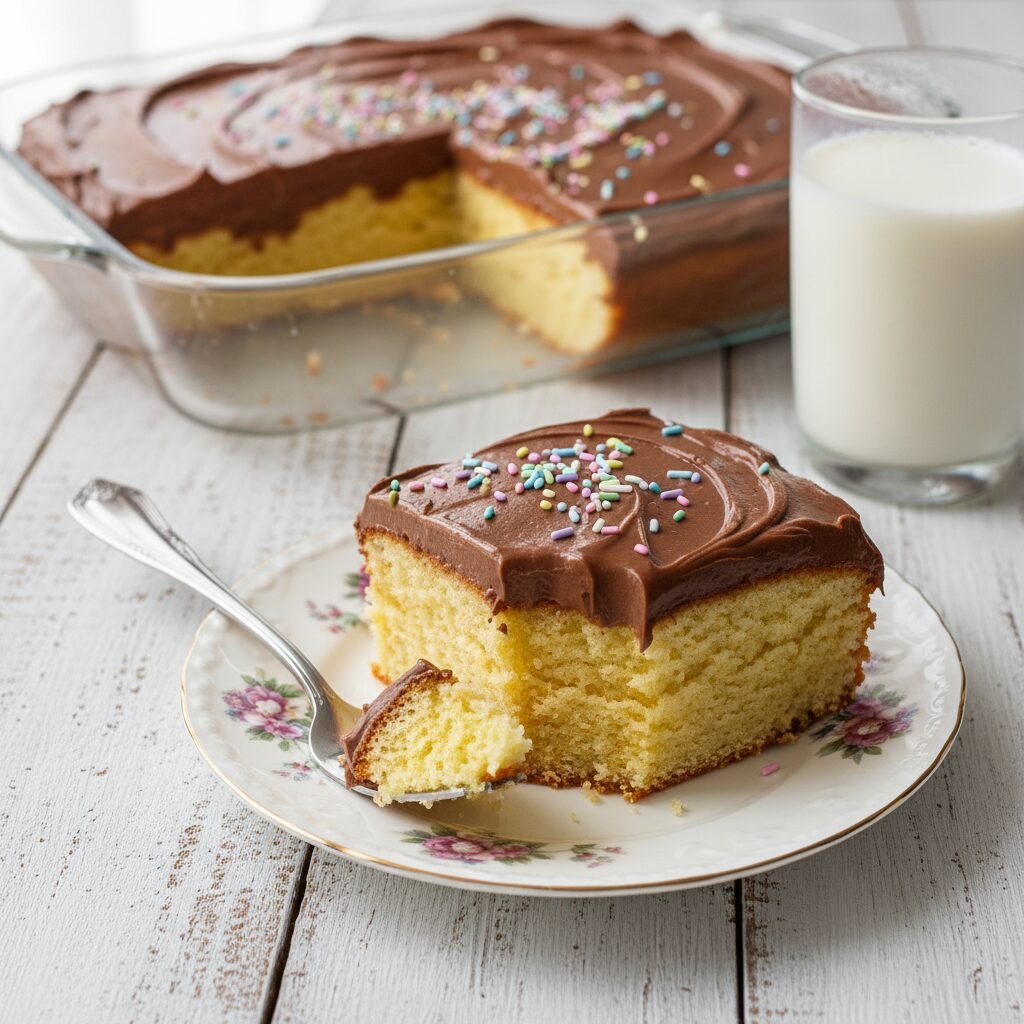
Forget the box mix; this homemade yellow sheet cake is the gold standard of classic desserts. Featuring a tender, buttery crumb and a rich chocolate buttercream frosting, this easy 9×13 recipe is perfect for birthdays, potlucks, and satisfying sweet cravings.
20 minutes
35 minutes
1 hour 30 minutes
12-15 servings
Dessert
Baking
American
Vegetarian
There is something profoundly nostalgic about a classic yellow sheet cake. It is the quintessential birthday cake of childhood, the centerpiece of church potlucks, and the reliable comfort food that signals a celebration. However, for too long, many home bakers have relied on yellow boxes from the grocery store aisle, believing that achieving that specific, fluffy texture at home was impossible. This recipe is here to prove otherwise. In fact, this Moist Yellow Sheet Cake for a 9×13 pan is not just a replacement for the box mix; it is a significant upgrade. While box mixes often rely on artificial flavorings and preservatives to achieve their shelf life and texture, this scratch-made version uses high-quality butter, tangy buttermilk, and fresh eggs to create a flavor profile that is rich, authentic, and deeply satisfying. The texture is the real star here. We have engineered this recipe to avoid the common pitfalls of homemade yellow cakes, which can sometimes turn out dry or dense. By utilizing a specific blend of fat sources and the right flour, we achieve a crumb that is tight yet incredibly tender, sturdy enough to hold a thick layer of frosting but soft enough to melt in your mouth. Topped with a luscious, whipped chocolate buttercream that strikes the perfect balance between sweet and salty, this cake represents the pinnacle of American home baking. Whether you are celebrating a milestone or simply need a pick-me-up on a Tuesday night, this yellow sheet cake delivers pure happiness in every square.
History & Origins
The history of the yellow cake is deeply intertwined with the evolution of American baking and the availability of ingredients. Before the mid-19th century, cakes were primarily leavened with yeast or by the laborious process of beating egg whites to incorporate air, resulting in sponge cakes. The modern ‘butter cake,’ which includes our beloved yellow cake, emerged with the invention of chemical leaveners like baking soda and baking powder in the mid-1800s. These innovations allowed home cooks to create lighter, fluffier cakes with significantly less physical effort. The term ‘yellow cake’ specifically refers to a cake that uses whole eggs, and often extra yolks, distinguishing it from ‘white cake,’ which uses only egg whites, or ‘silver cake.’ In the early 20th century, the ‘1-2-3-4 cake’ became a standard recipe memorized by home bakers across the country (1 cup butter, 2 cups sugar, 3 cups flour, 4 eggs). This formula was the grandfather of the modern yellow cake. However, the sheet cake format specifically gained massive popularity in the post-WWII era. As suburban life expanded and social gatherings became more casual, the 9×13 rectangular pan—often made of Pyrex or aluminum—became a kitchen staple. The sheet cake was easier to transport, easier to frost (no stacking layers required), and easier to slice for a crowd than a traditional round layer cake. It became the symbol of mid-century American hospitality. While the introduction of boxed cake mixes in the late 1940s by companies like Betty Crocker and Duncan Hines threatened to make scratch baking obsolete, the desire for the authentic, preservative-free taste of a homemade yellow cake has sparked a massive resurgence in recent years, reclaiming its place as a culinary icon.
Why This Recipe Works
This recipe succeeds where many others fail because it meticulously balances the ratio of fat, sugar, and flour to ensure moisture without sacrificing structure. Many yellow cake recipes rely solely on butter. While butter is unbeatable for flavor, it contains water and milk solids that can lead to a drier texture once the cake cools. Oil, on the other hand, is 100% fat and remains liquid at room temperature, which guarantees a moist cake that stays soft for days. This recipe utilizes a hybrid approach: we use butter for that classic, creamy flavor and vegetable oil to lock in moisture. Furthermore, we use Cake Flour instead of All-Purpose Flour. Cake flour has a lower protein content (usually around 7-8%), which inhibits gluten formation. Less gluten means a softer, more tender crumb that mimics the delicate texture of a box mix but with superior structural integrity. We also incorporate buttermilk, which is acidic. This acidity reacts with the baking soda to create carbon dioxide, giving the cake a superior lift, while simultaneously breaking down the long strands of gluten to further tenderize the crumb. Finally, the addition of extra egg yolks enriches the batter with emulsifying fats and provides that signature golden hue that gives yellow cake its name.
Why You’ll Love This Recipe
- ✓Stays moist for days thanks to a butter-oil blend.
- ✓Uses cake flour for a bakery-style tender crumb.
- ✓Easy one-pan preparation with no layering required.
- ✓Rich, homemade chocolate buttercream pairs perfectly.
- ✓Better flavor and texture than any box mix.
- ✓Crowd-pleasing yield perfect for parties.
Equipment You’ll Need
- ✓9×13 inch baking pan
- ✓Stand mixer or electric hand mixer
- ✓Large mixing bowl
- ✓Medium mixing bowl
- ✓Whisk
- ✓Rubber spatula
- ✓Wire cooling rack
- ✓Measuring cups and spoons
Ingredients
- ✓2 1/2 cups Cake flour (sifted)
- ✓1 1/2 cups Granulated sugar
- ✓1 1/2 tsp Baking powder
- ✓1/2 tsp Baking soda
- ✓1/2 tsp Salt
- ✓1/2 cup Unsalted butter (room temperature)
- ✓1/4 cup Vegetable oil (or canola oil)
- ✓2 large Eggs (room temperature)
- ✓2 large Egg yolks (room temperature)
- ✓1 tbsp Pure vanilla extract
- ✓1 cup Buttermilk (room temperature)
- ✓FOR THE FROSTING:
- ✓1 cup Unsalted butter (softened)
- ✓3 cups Powdered sugar
- ✓3/4 cup Unsweetened cocoa powder
- ✓1/4 cup Heavy cream
- ✓2 tsp Vanilla extract
- ✓1/4 tsp Salt
Instructions
- 1. Preheat your oven to 350°F (175°C). Grease a 9×13 inch baking pan generously with butter or non-stick cooking spray. You can also line the bottom with parchment paper for extra security.
- 2. In a medium bowl, whisk together the sifted cake flour, baking powder, baking soda, and salt. Set this dry mixture aside.
- 3. In the bowl of a stand mixer fitted with the paddle attachment (or a large bowl with a hand mixer), beat the room temperature butter, granulated sugar, and vegetable oil on medium-high speed for about 3-4 minutes. The mixture should look pale, fluffy, and aerated. Do not rush this step.
- 4. Lower the mixer speed to medium and add the eggs and egg yolks one at a time, beating well after each addition. Scrape down the sides and bottom of the bowl with a rubber spatula to ensure everything is incorporated. Stir in the vanilla extract.
- 5. Reduce the mixer speed to low. Add the flour mixture in three parts, alternating with the buttermilk in two parts, starting and ending with the flour (Flour, Buttermilk, Flour, Buttermilk, Flour). Mix only until the flour streaks disappear. Do not overmix.
- 6. Pour the batter into the prepared 9×13 pan and use an offset spatula to smooth the top into an even layer. Tap the pan gently on the counter once to release large air bubbles.
- 7. Bake for 30-35 minutes, or until a toothpick inserted into the center comes out clean or with just a few moist crumbs attached. The top should be golden brown and spring back when lightly pressed.
- 8. Remove the cake from the oven and place the pan on a wire cooling rack. Allow the cake to cool completely in the pan before frosting. Frosting a warm cake will cause the buttercream to melt.
- 9. While the cake cools, make the frosting. In a large bowl, beat the softened butter until creamy. Add the cocoa powder and mix until combined.
- 10. Gradually add the powdered sugar, one cup at a time, alternating with the heavy cream and vanilla extract. Beat on high speed for 3 minutes until the frosting is fluffy and glossy. Add the salt to taste.
- 11. Once the cake is cool, spread the chocolate buttercream generously over the top. Slice into squares and serve.
Expert Cooking Tips
- ✓Room temperature ingredients are non-negotiable. Cold eggs or buttermilk can cause the batter to curdle, leading to an uneven bake.
- ✓Measure your flour correctly. Use a kitchen scale for accuracy, or the spoon-and-level method. Scooping directly with the cup packs the flour and leads to a dry cake.
- ✓Do not overmix the batter once the flour is added. Overmixing develops gluten, which results in a tough, rubbery texture instead of a tender crumb.
- ✓If you don’t have buttermilk, you can make a substitute by adding 1 tablespoon of lemon juice or white vinegar to a cup of whole milk and letting it sit for 5 minutes.
- ✓Use high-quality vanilla extract. Since yellow cake is a simple flavor profile, the quality of the vanilla shines through.
- ✓Sift your cocoa powder when making the frosting to avoid small bitter lumps of cocoa in your buttercream.
- ✓Keep an eye on the oven. All ovens vary, so start checking for doneness at the 30-minute mark to prevent drying out.
Substitutions and Variations
Baking is a science, so substitutions should be made with care, but there are options available. If you cannot find cake flour, you can make a DIY version: measure 1 cup of all-purpose flour, remove 2 tablespoons, and replace them with 2 tablespoons of cornstarch. Sift this mixture twice before using. For the fat, you can substitute the vegetable oil with melted coconut oil or grapeseed oil, though coconut oil may impart a slight flavor. If you prefer a dairy-free cake, use a high-quality plant-based butter stick instead of dairy butter, and substitute the buttermilk with almond milk mixed with a teaspoon of apple cider vinegar. For the eggs, this recipe relies heavily on them for structure, so vegan egg replacers may result in a denser cake, but a commercial gluten-free 1-to-1 baking flour blend usually works well if you need to avoid wheat. In the frosting, half-and-half or whole milk can be used instead of heavy cream, though the texture will be slightly less rich.
Common Mistakes to Avoid
The most common mistake with yellow cake is overbaking. Because the cake is yellow, it can be hard to tell when it is browned sufficiently. Rely on the toothpick test and the ‘spring back’ test rather than just color. Another frequent error is using cold butter for the creaming process. If the butter is too cold, it won’t emulsify with the sugar properly to create air pockets; if it is melted, the cake will be greasy and dense. It must be soft but cool to the touch. Additionally, many bakers rush the cooling process. Putting frosting on a cake that is even slightly warm will result in a greasy, sliding mess. Finally, failing to scrape the bowl during mixing is a silent killer of cakes; it leaves streaks of unmixed butter or flour that create weird textures in the final bake.
Serving Suggestions
This cake is a versatile classic that shines on its own, but can be dressed up for various occasions. For a birthday party, rainbow sprinkles are a mandatory addition atop the chocolate frosting. For a more sophisticated dessert, serve a square with a side of fresh raspberries or strawberries to cut through the richness of the chocolate. A scoop of vanilla bean ice cream is the perfect companion, especially if the cake is served slightly warmed (though store it cool). Coffee is the ideal beverage pairing, as the bitterness of the roast balances the sweetness of the buttercream. You can also garnish with chocolate shavings or crushed walnuts for added texture.
Storage and Reheating Tips
This yellow sheet cake stores beautifully, which is one of its best features. Because of the oil content, it stays moist at room temperature for up to 3-4 days. Keep it covered tightly with plastic wrap or a fitted lid for the 9×13 pan. If you live in a very hot or humid climate, you may want to store it in the refrigerator to prevent the buttercream from melting or spoiling, but be sure to let it come to room temperature before eating for the best texture. For long-term storage, you can freeze the frosted cake. Place the pan in the freezer uncovered for an hour to harden the frosting, then wrap the entire pan tightly in two layers of plastic wrap and one layer of foil. It will keep for up to 3 months. Thaw in the refrigerator overnight.
Nutrition Facts (Estimated)
| Serving Size | 1 slice |
| Calories | 480 |
| Fat | 24g |
| Saturated Fat | 14g |
| Unsaturated Fat | 9g |
| Trans Fat | 0g |
| Cholesterol | 85mg |
| Sodium | 310mg |
| Carbohydrates | 62g |
| Fiber | 1g |
| Sugar | 38g |
| Protein | 5g |
Frequently Asked Questions
Can I bake this in round pans instead of a 9×13 sheet?
Yes, this recipe yields enough batter for two 8-inch or 9-inch round cake pans. You will need to reduce the baking time to approximately 25-30 minutes. Keep an eye on them and use the toothpick test.
Why did my cake sink in the middle?
Sinking usually happens for two reasons: opening the oven door too early, which causes a sudden temperature drop that collapses the rising structure, or over-beating the batter, which incorporates too much air that the structure can’t support.
Can I use salted butter instead of unsalted?
Yes, you can use salted butter. If you do, reduce the added salt in the recipe to 1/4 teaspoon to prevent the cake from tasting too savory.
How do I make this recipe into cupcakes?
This batter works great for cupcakes. It will make approximately 24 standard cupcakes. Bake them at 350°F for 18-22 minutes.
Why is my cake dry?
Dry cake is almost always caused by measuring flour incorrectly (too much flour) or overbaking. Ensure you spoon and level your flour and check the cake a few minutes before the timer goes off.
Can I make the cake layers ahead of time?
Absolutely. You can bake the cake, let it cool completely, and wrap it tightly in plastic wrap. It can sit at room temperature for 24 hours or be frozen for up to a month before frosting.
Does the frosting need to be refrigerated?
Because of the high sugar content, buttercream is generally safe at cool room temperature for 2-3 days. However, if it contains a lot of heavy cream or your kitchen is warm, refrigeration is safer.
Can I use a different frosting?
Yes! While chocolate is traditional, this yellow cake pairs beautifully with vanilla buttercream, cream cheese frosting, or even a strawberry buttercream.
What creates the yellow color?
The yellow color comes primarily from the egg yolks and the butter. We use extra yolks in this recipe to enhance that classic golden hue naturally.
Conclusion
In a world of instant gratification and quick fixes, taking the time to bake this Moist Yellow Sheet Cake from scratch is a rewarding act of love. The difference in flavor and texture compared to a box mix is undeniable, transforming a simple dessert into a memorable experience. Whether you are an experienced baker or a novice in the kitchen, this recipe is designed to be foolproof, providing you with a reliable go-to for every birthday, anniversary, or potluck on your calendar. So, preheat your oven, grab your favorite mixing bowl, and get ready to enjoy the best slice of yellow cake you have ever tasted. Don’t forget to share—though you might not want to!